

Bipolar Antidepressant Risk Calculator
How Risky Are Antidepressants For You?
This tool calculates your personalized risk of experiencing a mood switch (mania/hypomania) when taking antidepressants based on your bipolar disorder characteristics. The article explains that 12% of people experience mood switches in clinical trials, but this number rises to 31% in real-world settings.
For years, doctors treated bipolar depression the same way they treated regular depression: with antidepressants. It seemed logical. If the symptom is sadness, fatigue, and hopelessness, then an antidepressant should help. But the reality is far more dangerous. In bipolar disorder, antidepressants don’t just treat depression-they can trigger mania, rapid cycling, or even suicidal behavior. This isn’t a rare side effect. It’s a well-documented, predictable risk that’s still ignored in too many clinics today.
Why Antidepressants Can Trigger Mania in Bipolar Disorder
Bipolar disorder isn’t just depression with occasional highs. It’s a brain condition where mood regulation is broken. Antidepressants, especially SSRIs like sertraline or fluoxetine, push the brain’s chemical balance too far in one direction-boosting serotonin to lift mood. But in bipolar brains, that push doesn’t stop at normal. It can flip the switch into mania or hypomania.
Studies show that about 12% of people with bipolar disorder who take antidepressants experience a switch into mania or hypomania when used in clinical trials. In real-world settings, where patients aren’t closely monitored, that number jumps to 31%. That’s more than 1 in 3 people. The risk isn’t random. It’s tied to clear factors: if you’ve had an antidepressant-induced mania before, your risk triples. If you have rapid cycling-four or more mood episodes in a year-your risk is even higher. And if you’re experiencing mixed features during your depression (like agitation, irritability, or racing thoughts alongside sadness), antidepressants can make things worse, not better.
The Numbers Don’t Lie: Benefit vs. Harm
Let’s look at the numbers honestly. For unipolar depression, antidepressants work well. About 1 in 6 to 8 people respond to them. But in bipolar depression? The number needed to treat (NNT) is 29.4. That means you’d need to give antidepressants to nearly 30 people with bipolar disorder to help just one person feel better. Meanwhile, the number needed to harm (NNH)-how many people you’d need to treat before one has a mood switch-is about 200. Sounds safe? Not when you consider that 200 people might include someone who’s already on the edge.
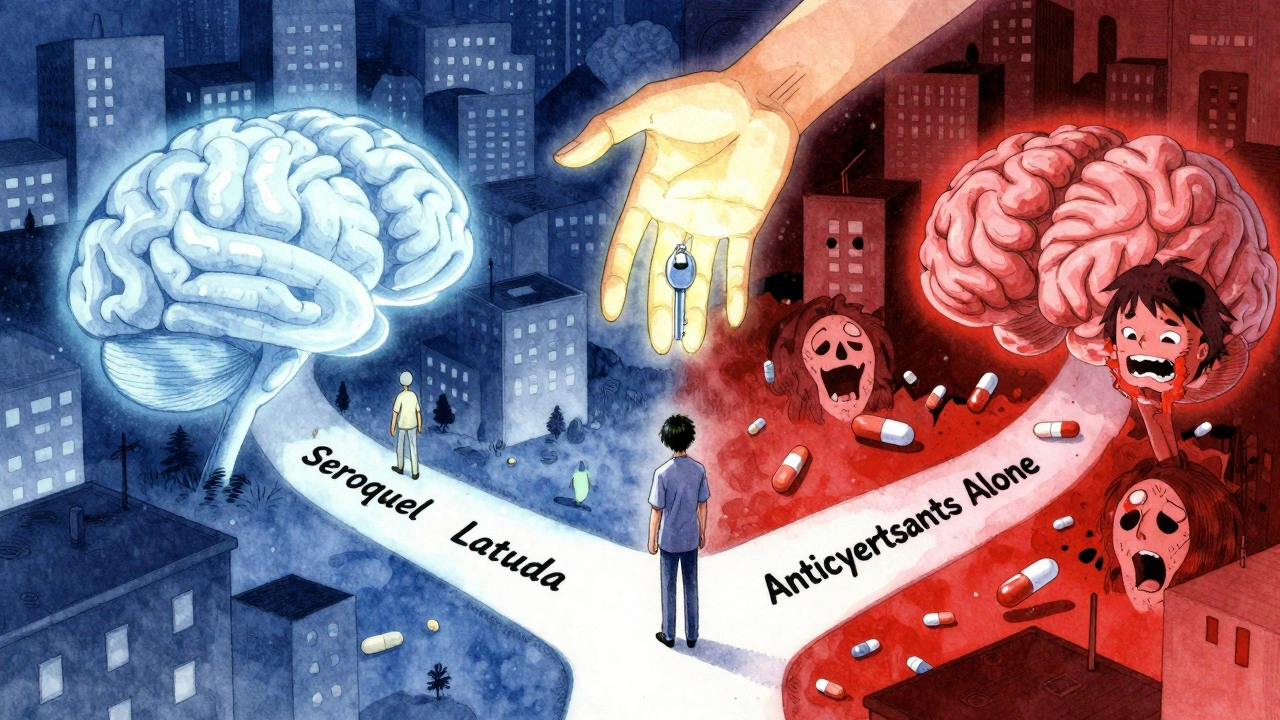
Compare that to FDA-approved treatments for bipolar depression. Quetiapine (Seroquel) helps about half of patients with less than 5% risk of mania. Lurasidone (Latuda) works for half of users with just 2.5% switch risk. Cariprazine (Vraylar) has a 48% response rate with 4.5% risk. These aren’t just alternatives-they’re safer, more reliable options. And yet, antidepressants are still prescribed far more often.
Who’s at Highest Risk?
Not everyone with bipolar disorder reacts the same way. Risk isn’t equal across the board. People with Bipolar I-those who’ve had full-blown manic episodes-are at much higher risk than those with Bipolar II. A history of antidepressant-induced mania increases your chance of another switch by 3.2 times. If you’ve had rapid cycling (which affects 18-25% of people with bipolar disorder), antidepressants can make your mood swings faster and more unpredictable.
Even more concerning: about 20% of people diagnosed with bipolar depression actually have mixed features. That means they’re not just sad-they’re also agitated, irritable, or have racing thoughts. Antidepressants are especially dangerous here. In these cases, switch risk can exceed 30%. Yet, mixed features are often missed because they don’t look like classic mania. A patient might say, “I feel awful but can’t sit still,” and a doctor might think, “That’s just anxiety,” not realizing it’s a warning sign.
What the Guidelines Say-And What Doctors Still Do
The International Society for Bipolar Disorders (ISBD) and the American Psychiatric Association (APA) are clear: antidepressants should never be used alone in bipolar disorder. They should only be considered as a short-term add-on to a mood stabilizer or atypical antipsychotic-and only after other treatments have failed. Even then, they should be used for no longer than 8 to 12 weeks.
But in real life? That’s not what’s happening. A 2021 survey found that only 30% of community psychiatrists follow these guidelines. In academic centers, adherence is better-65%-but outside those settings, most doctors still prescribe antidepressants as if bipolar disorder were just depression with mood swings. Why? Because it’s easier. Patients ask for them. Insurance covers them. And many doctors simply don’t have the training to recognize mixed features or rapid cycling.
One study found that 80% of bipolar patients in community clinics are prescribed antidepressants. Only 50% are on mood stabilizers. And in 30% of cases, antidepressants are used alone. That’s not just outdated-it’s dangerous.
The Hidden Cost: Long-Term Mood Instability
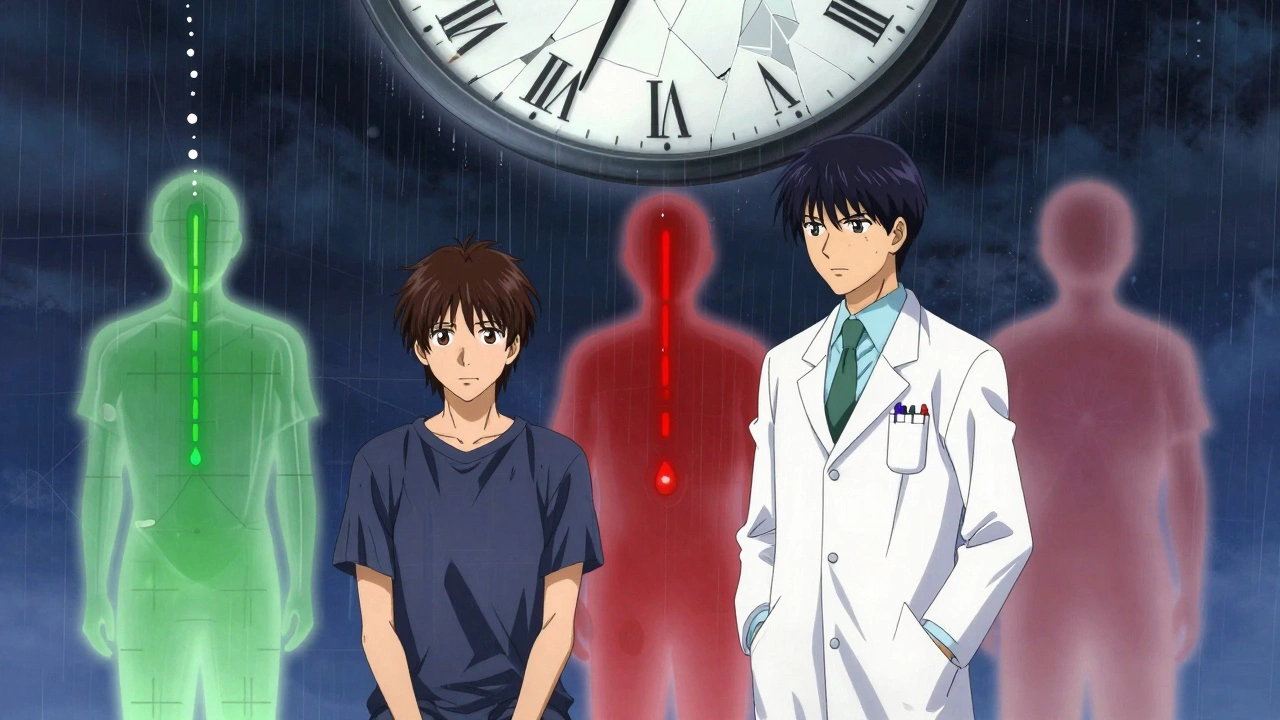
It’s not just about the first manic episode. The real danger of antidepressants in bipolar disorder is what happens over time. Multiple studies show that long-term use-beyond 24 weeks-increases the chance of future depressive and manic episodes. One large study found that people who stayed on antidepressants for more than six months had a 37% higher risk of recurrence compared to those who didn’t.
And it’s not just frequency. Antidepressants can turn a stable pattern into rapid cycling. One study showed a 2.1 times higher chance of developing rapid cycling in people who took antidepressants long-term. That means instead of having one or two mood episodes a year, you might have four, five, or more. Each episode takes a toll-on relationships, jobs, and mental health.
Even more troubling: antidepressants may interfere with the effectiveness of mood stabilizers. Some evidence suggests that when you add an antidepressant to lithium or valproate, the stabilizer doesn’t work as well. It’s like putting a gas pedal on a car that’s already running too fast.
What Should You Do Instead?
If you have bipolar disorder and are struggling with depression, there are better options than antidepressants. Here’s what actually works:
- Quetiapine (Seroquel): Approved for bipolar depression. Works for about half of users with low risk of mania.
- Lurasidone (Latuda): Another FDA-approved option. Less weight gain than quetiapine, with just 2.5% switch risk.
- Cariprazine (Vraylar): Newer option with strong evidence for bipolar depression and low mania risk.
- Olanzapine-fluoxetine combo (Symbyax): The only combination drug approved for bipolar depression. Still carries some risk, but better than antidepressants alone.
- Mood stabilizers like lithium or lamotrigine: Lamotrigine is especially good for preventing depressive episodes without triggering mania.
For people who haven’t responded to any of these, newer treatments like esketamine nasal spray (Spravato) are showing promise. In a 2023 trial, it helped 52% of people with bipolar depression with only 3.1% switch risk.
When Might Antidepressants Be Okay?
There’s one scenario where antidepressants might be considered: Bipolar II depression, with no history of mania or rapid cycling, and no mixed features. Even then, they should only be used as a short-term bridge-no longer than 8 to 12 weeks-and always paired with a mood stabilizer. Bupropion (Wellbutrin) and SSRIs are preferred over tricyclics or SNRIs, which carry higher switch risk.
But even in these cases, caution is key. If you’ve ever had a manic episode after taking an antidepressant, even once, you should never take one again. That’s not a gamble-it’s a rule.
What to Watch For: Signs of a Mood Switch
If you’re on an antidepressant and have bipolar disorder, you need to know the early signs of mania or hypomania. They’re not always obvious:
- Needing less sleep but feeling energized
- Racing thoughts or jumping from idea to idea
- Increased irritability or anger
- Impulsive spending, risky behavior, or reckless decisions
- Feeling unusually confident or grandiose
These don’t have to be extreme. A sudden burst of productivity, staying up all night cleaning the house, or making big financial decisions without thinking-these can be early red flags. If you notice any of these, contact your doctor immediately. Don’t wait. Don’t think it’s “just a good phase.”
How to Talk to Your Doctor
If your doctor is pushing an antidepressant for your bipolar depression, ask these questions:
- Have you checked for mixed features or rapid cycling?
- Am I already on a mood stabilizer or antipsychotic?
- What’s the plan if I start feeling too energetic or irritable?
- How long will I be on this medication?
- Are there FDA-approved alternatives I haven’t tried yet?
If your doctor dismisses your concerns or says, “It’s worth a try,” walk out. That’s not good care. You deserve someone who understands the risks-and who’s willing to explore safer options first.
The Bottom Line
Antidepressants aren’t the answer for most people with bipolar disorder. They offer minimal benefit, carry serious risks, and can make your condition worse over time. The FDA-approved alternatives are safer, more effective, and backed by decades of research. Yet, they’re still underused.
The truth is, treating bipolar depression isn’t about finding the right antidepressant. It’s about finding the right mood stabilizer-and giving it time to work. Patience, monitoring, and the right medication combination can bring stability without the danger of a mood crash or a manic spiral.
If you’re struggling with depression and have bipolar disorder, you’re not alone. But you don’t have to risk your mental health on a treatment that could make things worse. Ask for the alternatives. Push for the evidence. And don’t settle for anything less than a plan that protects your mood as much as it treats your sadness.
Can antidepressants cause mania in bipolar disorder?
Yes. Antidepressants can trigger mania or hypomania in people with bipolar disorder, especially if used without a mood stabilizer. Studies show about 12% of people experience a switch in clinical trials, and up to 31% in real-world settings. Risk is higher if you’ve had a previous switch, have rapid cycling, or have mixed features during depression.
Are SSRIs safer than other antidepressants for bipolar disorder?
SSRIs carry a lower risk of mood switching (8-10%) compared to tricyclic antidepressants (15-25%) or SNRIs. Bupropion is also considered lower risk. But even SSRIs can trigger mania. No antidepressant is safe to use alone in bipolar disorder. They should only be used short-term and always with a mood stabilizer or antipsychotic.
What are the FDA-approved treatments for bipolar depression?
The FDA has approved four medications specifically for bipolar depression: quetiapine (Seroquel), lurasidone (Latuda), cariprazine (Vraylar), and the combination of olanzapine and fluoxetine (Symbyax). These have better safety profiles than antidepressants, with lower risks of triggering mania and proven effectiveness in clinical trials.
How long should antidepressants be used in bipolar disorder?
If used at all, antidepressants should be limited to 8-12 weeks and only as an add-on to a mood stabilizer or antipsychotic. Long-term use increases the risk of rapid cycling, more frequent episodes, and reduced effectiveness of mood stabilizers. Most guidelines recommend discontinuing them after this period, even if depression improves.
Why do doctors still prescribe antidepressants for bipolar depression?
Many doctors prescribe antidepressants because they’re familiar, widely available, and patients request them. Misdiagnosis is common-about 40% of bipolar cases are initially mistaken for unipolar depression. Also, access to specialists who know how to treat bipolar disorder is limited. Only 30% of community psychiatrists follow current guidelines, even though the risks are well-documented.



Linda Migdal
Let’s be real-this isn’t medicine, it’s pharmaceutical roulette. SSRIs are being shoved into bipolar patients like they’re candy at a Halloween party. The data’s been out for decades, but Big Pharma’s marketing teams still run the show. 31% switch rate in the wild? That’s not a side effect-it’s a feature they don’t want you to know about. And don’t get me started on how insurers push cheap SSRIs over FDA-approved antipsychotics because they’re cheaper. This is systemic negligence dressed up as ‘standard care.’
Lucinda Bresnehan
i’ve been there. was prescribed sertraline for ‘depression’ and ended up in the ER after 3 weeks of not sleeping, spending my rent money on crypto, and yelling at my cat for ‘betraying me.’ my psychiatrist said ‘it’s just anxiety’ until i showed him the DSM-5 criteria for mixed features. he apologized. then prescribed lamotrigine. i’ve been stable for 4 years now. please, if you’re bipolar and your doc pushes an antidepressant-ask for the alternatives. you deserve better.
Shannon Gabrielle
Oh wow, a 12% mania rate? That’s cute. In my experience, it’s more like 100% if you’re dumb enough to take an SSRI without a mood stabilizer. Doctors treat bipolar like it’s a bad mood and antidepressants are a magic eraser. Newsflash: your brain isn’t a broken lightbulb. It’s a goddamn nuclear reactor and you just handed someone a match. Congrats, you just turned your disorder into a rollercoaster with no seatbelts.
Nnaemeka Kingsley
man this is so true. in nigeria we dont even have good psych services but i read this and i think-why do doctors here give antidepressants to everyone? even if they dont know the diagnosis? my cousin took fluoxetine for 2 years and now he has 5 episodes a year. he dont even know he has bipolar. this is scary.
Kshitij Shah
lol the fact that people still think antidepressants are safe for bipolar is like using a flamethrower to fix a leaky faucet. and the real joke? doctors act like they’re ‘giving hope’ when they’re just delaying the inevitable crash. i’ve seen it too many times. ‘it worked for 3 months’-yeah, until the mania hit and you lost your job, your car, and your dignity. no thanks.
Tommy Walton
the serotonin myth is just a capitalist delusion. 🧠💸 antidepressants are the pharmaceutical equivalent of a TikTok life hack-quick, flashy, and destined to implode. bipolar isn’t depression with extras-it’s a whole different operating system. you wouldn’t run iOS on an Android phone. why are we doing this to brains?
James Steele
The pharmacokinetic profile of SSRIs in bipolar phenotypes is fundamentally incongruent with the neurochemical homeostasis required for mood stabilization. The monoaminergic modulation induced by these agents precipitates dysregulation in the limbic-prefrontal circuitry, particularly in individuals with pre-existing glutamatergic and dopaminergic hyperactivity. The 31% real-world switch rate isn't anecdotal-it's a direct consequence of pathophysiological misalignment. The continued prescription of these agents without concomitant mood stabilizers constitutes a failure of translational neurology in clinical practice.
Louise Girvan
THIS IS WHY THE GOVERNMENT IS HIDING THE TRUTH!!! THEY KNOW ANTIDEPRESSANTS MAKE PEOPLE CRAZY-SO THEY KEEP PRESCRIBING THEM TO KEEP US TOO BUSY PANICKING TO REALIZE THEY’RE CONTROLLING US!!! I’VE BEEN ON 17 DIFFERENT DRUGS SINCE 2012 AND NOW I KNOW-IT’S ALL A LIE!!! THEY WANT US DEPRESSED SO WE DON’T ASK QUESTIONS!!!
soorya Raju
you think this is bad? wait till you hear about the secret studies where they gave bipolar patients antidepressants on purpose to see how fast they’d go nuts. the results were buried. and now you’re told it’s ‘safe’? nah. they’re testing us. and you’re the lab rat. also, did you know lithium is made from salt? that’s why they hate it-can’t patent salt.
Dennis Jesuyon Balogun
Let me tell you something about the brain. It’s not a machine to be fixed. It’s a living system. When you flood it with serotonin, you’re not healing-you’re hijacking. The real tragedy isn’t just the mania-it’s how we’ve normalized this. We’ve turned healing into a pill-popping ritual. And we call it progress. But I ask you: if the system is broken, why are we only treating the symptom? Where’s the systemic care? Where’s the therapy? The community? The dignity? Antidepressants are a Band-Aid on a hemorrhage. And we’re proud of it.
Grant Hurley
just got off lamotrigine after 3 years-no mania, no crash, just steady. my doc finally listened after i showed him the NNT/NNH stats. i was skeptical at first but wow. i actually sleep now. and i don’t feel like i’m on a rollercoaster. if you’re on an SSRI and bipolar-ask for lamotrigine or quetiapine. it’s not magic, but it’s real. and it doesn’t make you lose your mind.
ANN JACOBS
It is of paramount importance to recognize that the current paradigm of pharmacological intervention in bipolar spectrum disorders remains tragically misaligned with the neurobiological evidence base. The persistence of antidepressant monotherapy in clinical practice represents not merely a failure of evidence-based medicine, but a profound ethical lapse in patient care. One must consider the longitudinal trajectory of mood instability, the iatrogenic acceleration of rapid cycling, and the documented attenuation of mood stabilizer efficacy when antidepressants are co-administered. It is not merely a question of efficacy-it is a question of moral responsibility. We owe our patients more than convenience. We owe them safety. We owe them truth. And we owe them the dignity of being treated with the rigor that their condition demands.