
G6PD Medication Safety Checker
Safety First
If you have G6PD Deficiency, certain common medications can cause rapid destruction of your red blood cells (hemolysis). Use this tool to identify potential risks associated with common treatments.
*Disclaimer: This tool is for informational purposes based on current guidelines. Always consult your doctor before starting or stopping any medication.*
Check Treatment Safety
- Loading...
- Loading...
⚡ Early Warning Signs of Reaction
If you were exposed to a risky drug, watch immediately for:
- 🔴 Urine turning dark brown, tea-colored, or cola-colored
- 🩸 Pale skin or yellow eyes (Jaundice)
- 😓 Sudden extreme fatigue or shortness of breath
The Hidden Risk in Your Medicine Cabinet
Most people take daily medications without a second thought. But if you carry a specific genetic trait known as G6PD Deficiency, standard prescriptions can turn dangerous very quickly. This condition isn't just a minor health footnote; it is a metabolic reality that affects over 400 million people worldwide. Without proper management, a routine dose of malaria medicine or an emergency treatment could strip your body of its ability to carry oxygen.
You might wonder how a vitamin deficiency or a missing enzyme translates to a hospital emergency. The link lies in the fragility of your red blood cells. When these cells face chemical stress from certain drugs, they burst-a process called hemolysis. In severe cases, hemoglobin levels can crash by more than half in just one week. The good news is that prevention works perfectly if you know what to avoid.
Understanding the Mechanics of the Disorder
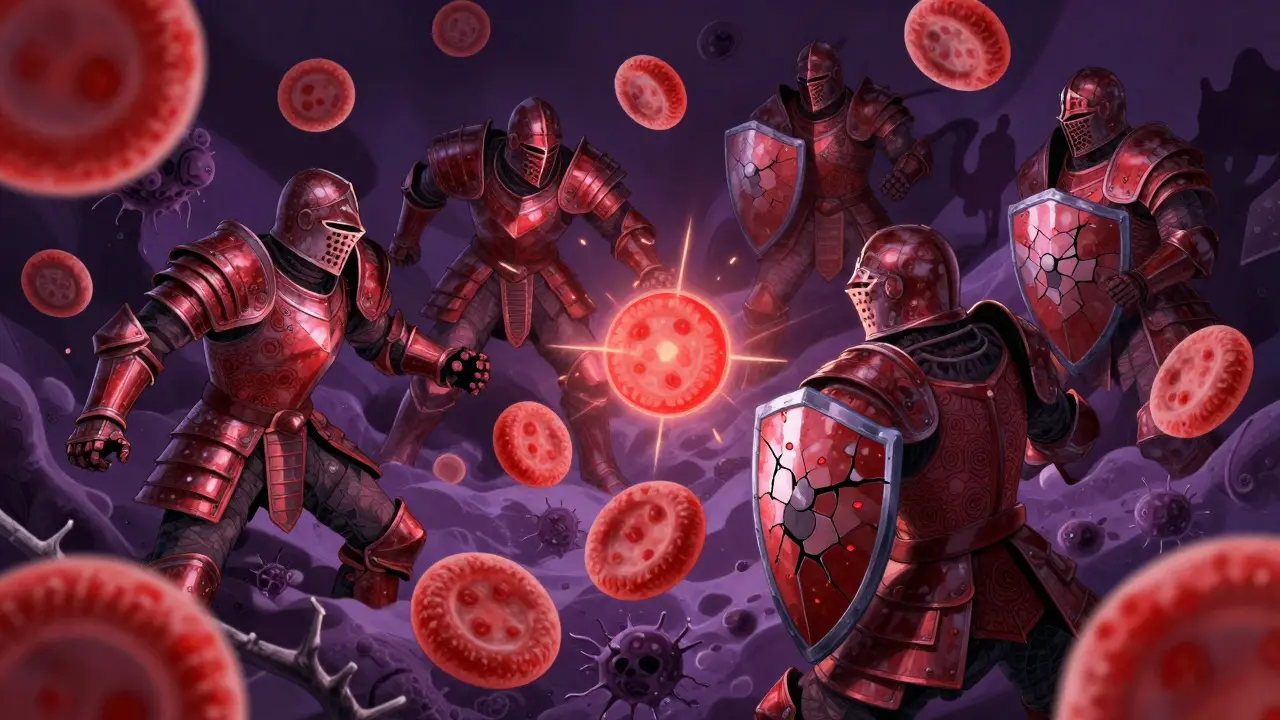
G6PD Deficiency is an X-linked genetic disorder affecting the Glucose-6-Phosphate Dehydrogenase enzyme.This enzyme acts like a shield factory inside your cells. Its job is to produce a molecule called NADPH, which keeps glutathione in a reduced state. You can think of glutathione as the antioxidant bodyguard of your red blood cells. When the shield fails, oxidative damage takes hold.
Historically, this condition has been most common in regions where malaria was prevalent. Evolution favored these genes because the fragile cells made it harder for the malaria parasite to survive. However, in our modern medical world, the protection comes at a cost: specific chemical exposures now trigger the crisis.
Medications That Trigger Crises
Knowing exactly what to skip is the cornerstone of safety. Not all drugs are created equal. Some have a near 100% risk of causing a reaction in deficient individuals. These aren't theoretical risks; regulatory bodies like the FDA have issued black box warnings for several of them.
| Medication Name | Primary Use | Risk Level | Alternative Options |
|---|---|---|---|
| Rasburicase | Tumor Lysis Syndrome | Critical (100% Risk) | Allopurinol |
| Primaquine | Malaria Treatment | Critical (Class I & II) | Chloroquine |
| Methylene Blue | Methemoglobinemia/Dye | Severe (95% Risk) | Vitamin C IV |
| Dapsone | Skin Infections/Acne | High (>80%) | Doxycline |
| Nitrofurantoin | Urinary Tract Infections | Moderate | Cephalexin |
Take Rasburicase as a prime example. While it effectively treats tumor lysis syndrome in cancer care, administering it to a patient with undiagnosed G6PD deficiency results in immediate, catastrophic hemolysis. Similarly, Methylene Blue-often used in surgery as a stain or for treating methemoglobinemia-reacts violently with deficient enzymes. Even common antibiotics like Nitrofurantoin require caution; while not always fatal, they can precipitate an acute drop in hemoglobin.
Navigating Malaria Prevention Safely
Travel adds a layer of complexity. If you live in a malaria-endemic zone or plan to travel there, you face a paradox: the disease itself is deadly, but the cure (Primaquine or Tafenoquine) is also dangerous for your genotype. Standard protocol requires quantitative testing before starting radical cure therapy for *Plasmodium vivax*.
If testing shows you are deficient, guidelines from 2024 recommend switching to Chloroquine for primary prophylaxis, which remains safe for almost all G6PD variants. For travelers, Atovaquone-Proguanil (Malarone) is another reliable option. A 2021 prospective study showed that 95% of deficient travelers avoided hemolysis entirely when switched to these alternatives. Never rely on guessing; a doctor must verify your status before prescribing anti-malarials.
Identifying Early Warning Signs
Hypervigilance saves lives. A hemolytic episode doesn't happen instantly, but the onset is usually swift after exposure. Watch for urine changing to a dark tea or cola color; this indicates free hemoglobin leaking into your kidneys. You may feel sudden fatigue, pale skin, shortness of breath, or jaundice. Unlike other forms of anemia, these symptoms develop rapidly once the trigger enters the bloodstream.
If you suspect you've taken a risky medication, do not wait. Seek medical attention immediately. Treatments during a crisis focus on stopping the trigger and supporting kidney function. While blood transfusions are sometimes necessary, the priority is removing the oxidant agent causing the breakdown.

Testing Advances and New Treatments
By early 2026, diagnostic tools have become significantly faster and more accurate. The STANDARD G6PD Test System, approved in late 2024, provides quantitative results in just eight minutes using a point-of-care device. This speed matters immensely in emergency rooms where doctors need to clear a patient for urgent drugs like Rasburicase.
Research into treatments has also moved past pure avoidance. In 2024, studies published in *Blood Advances* suggested that N-acetylcysteine (NAC) might offer protective buffering for red blood cells when co-administered with necessary but risky drugs. Furthermore, Phase I trials for recombinant human G6PD (rhG6PD) are underway, promising the potential for enzyme replacement therapy later this decade. For now, though, strict avoidance remains the gold standard.
Your Personal Safety Checklist
Living with this condition requires a proactive approach to healthcare administration. Keep these strategies in mind for your next visit:
- Medical Alert Wearable: Wear a bracelet stating "G6PD Deficient - Do Not Give Methylene Blue/Rasburicase." This is often read in unconscious emergencies when you cannot speak.
- Electronic Flagging: Ask your doctor to permanently flag your electronic health record. Systems in many hospitals now auto-block restricted scripts based on these alerts.
- Pre-Procedure Review: Before any elective surgery or new medication plan, explicitly ask: "Is this safe for someone with G6PD?" Do not assume the provider knows automatically.
- Female Awareness: While historically thought to affect only males, X-chromosome inactivation means women can experience significant symptoms too. Testing should not be ignored just because of gender.
Preventing harm is manageable with the right information. The goal isn't fear-it's empowered management. By knowing the triggers and communicating clearly, you maintain control over your health outcomes.
Frequently Asked Questions
Can I take Tylenol (Acetaminophen) safely?
Yes, acetaminophen is generally considered safe for people with G6PD deficiency when taken at recommended doses. It does not typically cause oxidative stress leading to hemolysis, unlike aspirin or non-steroidal anti-inflammatory drugs (NSAIDs) in high amounts.
Are certain foods dangerous for my condition?
Broad beans (fava beans) are the most well-known food trigger and should be avoided strictly. Other items like henna dyes, mothballs (naphthalene), and very bitter oranges may also pose risks. Most other fresh fruits and vegetables are perfectly fine to eat.
How long does a hemolytic crisis last?
Once the triggering substance is removed, the bone marrow compensates relatively quickly. Mild cases resolve in days, while severe anemia may take weeks for full recovery. Recovery speed depends heavily on whether the kidney function remains unaffected by the pigment load.
Does this condition run in families?
Yes, G6PD deficiency is an X-linked genetic trait passed through mothers to their children. Fathers pass the trait carrier status to daughters, who may then pass it to sons. Genetic counseling can help map inheritance patterns in families.
What if I need an MRI with dye?
Standard MRI contrast media (gadolinium-based) are typically safe. However, ensure you inform radiologists about G6PD deficiency before administration, as some specific protocols involving contrast might vary depending on liver function and other comorbidities.