

Snacking doesn’t have to wreck your weight goals. In fact, the right snack can help you lose fat, stay full longer, and even protect your muscle mass. The secret? High-protein, low-calorie snacks. These aren’t just trendy-they’re backed by science. Studies show that eating 20-40g of protein per snack triggers muscle repair and keeps hunger hormones in check. And when you keep calories under 200, you’re not adding extra pounds-you’re building a habit that supports fat loss.
Why Protein Snacks Work Better Than Carbs
Think about the last time you ate a granola bar or a bag of chips. Within an hour, you were hungry again. That’s because carbs spike your blood sugar fast, then crash it. Protein does the opposite. It slows digestion, tells your brain you’re full, and keeps your energy steady.
Research from the American Journal of Clinical Nutrition found that protein snacks reduce next-meal cravings by 12-15%. That’s like eating less without even trying. And it’s not just about feeling full. Protein takes more energy to digest-up to 30% of its calories are burned just processing it. Carbs? Only 5-10%. So you’re literally burning calories by eating protein.
Plus, protein helps preserve muscle when you’re cutting calories. Without enough, your body starts breaking down muscle for fuel. That slows your metabolism. With enough protein, you lose fat, not muscle. That’s the difference between looking lean and looking thin.
Top 10 High-Protein, Low-Calorie Snacks (Under 200 Calories)
Here are the most effective, real-world options that people actually stick with. These aren’t just lab-tested-they’re kitchen-tested.
- Hard-boiled eggs (2 eggs): 12g protein, 156 calories. Simple, portable, and the #1 most logged snack on MyFitnessPal. Sprinkle with salt and pepper. Done.
- Non-fat Greek yogurt (100g): 10g protein, 59 calories. Choose unsweetened. Add a handful of berries for fiber and antioxidants. Total: ~80 calories, 10g protein.
- Cottage cheese (1/2 cup, 1% fat): 14g protein, 90 calories. Mix in chia seeds or sliced cucumber. High in casein-a slow-digesting protein that keeps you full for hours.
- Edamame (1 cup, steamed, unsalted): 17g protein, 189 calories. Sprinkle with sea salt. Also packed with fiber (8g), which boosts fullness even more.
- String cheese (1 stick, part-skim): 7g protein, 80 calories. Perfect for on-the-go. Grab two for 14g protein under 160 calories.
- Hard-boiled egg muffins (2 mini): 12g protein, 140 calories. Make ahead: whisk eggs with spinach, pour into muffin tin, bake 15 mins. Freeze for the week.
- Roasted chickpeas (1/2 cup): 7g protein, 135 calories. Toss canned chickpeas with olive oil, paprika, and roast at 200°C for 25 mins. Crunchy, savory, and fiber-rich.
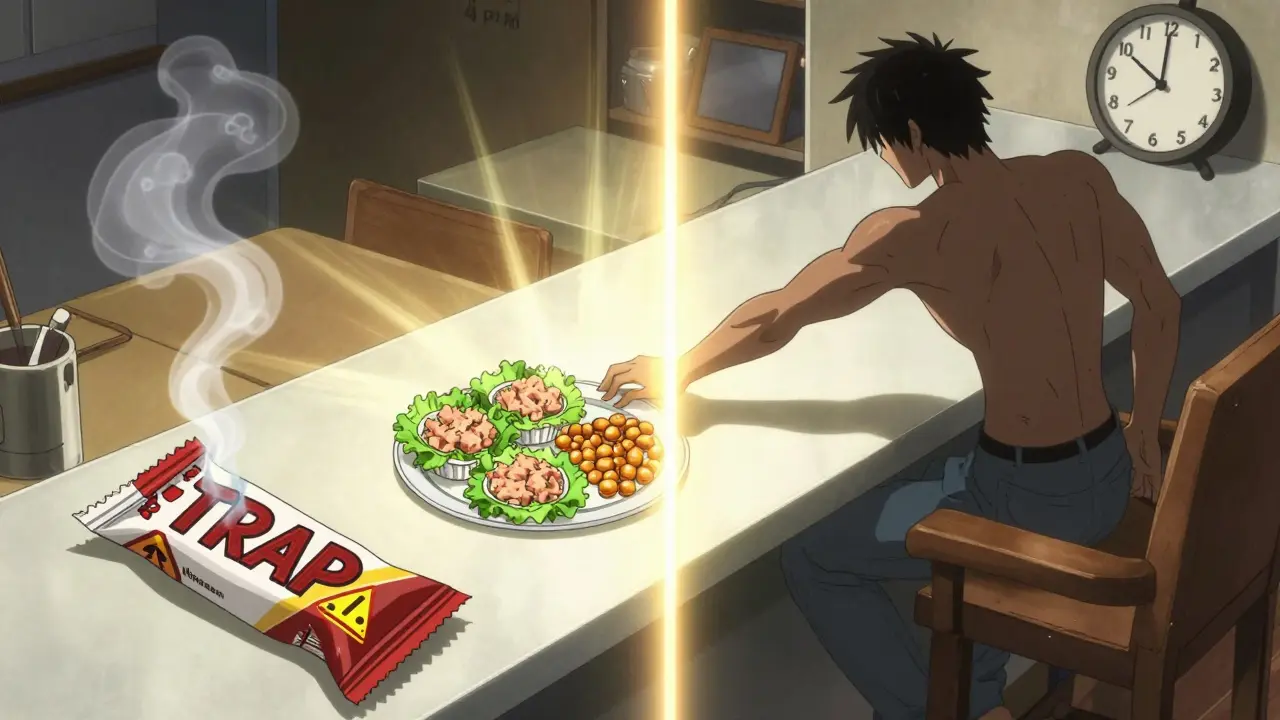
- Tuna salad in lettuce cups (1 can tuna, 2 tbsp Greek yogurt, 1 tbsp mustard): 25g protein, 180 calories. Skip the mayo. Use Greek yogurt instead. Add diced celery for crunch.
- Protein shake (1 scoop whey or casein, water or unsweetened almond milk): 20-25g protein, 120-150 calories. Look for under 5g sugar. Avoid bars with sugar alcohols-they cause bloating.
- Cottage cheese bark (1/4 cup cottage cheese, 1 tbsp dark chocolate chips, 1 tsp chia seeds): 10g protein, 165 calories. Freeze for 2 hours. Break into pieces. Sweet, salty, satisfying.
Plant-Based vs. Animal-Based: Which Is Better?
You don’t need meat to get enough protein. But you do need to know the difference.
Animal proteins-like eggs, dairy, chicken, and fish-are “complete.” That means they contain all nine essential amino acids your body can’t make on its own. They score a perfect 1.0 on the Protein Digestibility Corrected Amino Acid Score (PDCAAS).
Plant proteins-like tofu, lentils, and chickpeas-are often incomplete. Tofu has 9g protein per 100g but only scores 0.8. That’s still good, but you need to pair them. Try hummus with whole grain pita. The combo gives you all the amino acids you need.
But here’s the catch: plant foods come with fiber. A half-cup of edamame gives you 8g fiber. That’s more than most meals. Fiber slows digestion, stabilizes blood sugar, and feeds your gut bacteria. So even if the protein is slightly lower, the combo often keeps you fuller longer.
One study showed snacks with both protein and fiber increased satiety by 30% compared to protein-only options. So if you’re choosing between a cheese stick and edamame, go for the edamame. You get more bang for your calorie buck.

What to Avoid (Even If It’s Labeled “High-Protein”)
Not all protein snacks are created equal. Some are just sugar with a protein label.
Many protein bars have 15-20g protein but also 12-18g sugar. RXBARs use dates for sweetness-13g of sugar per bar. Quest bars use sugar alcohols like erythritol. These can cause bloating, gas, and cramps in 23% of users, according to Amazon reviews.
Jerky is another trap. One ounce can have 700mg sodium-that’s nearly a third of your daily limit. And many brands add sugar and preservatives. Look for brands with just meat, salt, and spices.
Protein bagels? They’re dense, chewy, and often full of added sugar and refined flour. One can have 20g protein but 300+ calories and 10g sugar. Not worth it.
Stick to whole foods. If you can’t read the ingredients or it has more than 5 ingredients, skip it.
How to Make This Easy (Even If You’re Busy)
The biggest reason people quit? It feels like work.
Here’s how to make it effortless:
- Prep eggs on Sunday. Boil a dozen. Peel and store in a container. Grab two anytime.
- Portion cottage cheese. Divide a tub into 1/2-cup servings with rubber bands. Add chia seeds or berries ahead of time.
- Use mason jars. Layer Greek yogurt, berries, and a sprinkle of flaxseed. Seal. Refrigerate. Eat cold.
- Buy pre-cooked shrimp. Toss with a little lime and chili flakes. 20g protein in 5 minutes.
- Keep canned tuna and beans on hand. Drain, rinse, mix with mustard and herbs. Done.
That’s it. Five minutes a week of prep, and you’re set for days. No cooking required.
When and How Often to Snack
You don’t need to snack all day. But timing matters.
Dr. Gabrielle Lyon, a leading expert in muscle health, says protein distribution is more important than total daily intake. Aim for 20-30g of protein every 3-4 hours. That means a snack between breakfast and lunch, and another between lunch and dinner.
After a workout? Have a protein snack within 45 minutes. Your muscles are hungry. A shake or cottage cheese will help them recover faster.
And don’t skip morning protein. After 8 hours of sleep, your body is in muscle-breakdown mode. A 15g protein snack-like two eggs or a cup of Greek yogurt-within 30 minutes of waking helps stop that.
What the Experts Say
Registered dietitian Toby Amidor says the ideal snack has 15-20g protein, under 5g added sugar, and at least 3g fiber. That’s the sweet spot.
Dr. David Ludwig from Harvard adds that protein snacks work best for people with insulin resistance. If you get hungry after carbs, protein is your fix.
But don’t overdo it. Dr. Christopher Gardner warns that more than 40g of protein in one snack doesn’t help more-it just fills you up too much and may crowd out other nutrients.
The Academy of Nutrition and Dietetics reminds us: snacks should complement meals, not replace them. Use them to bridge gaps, not as meals on their own.
Real People, Real Results
Reddit’s r/loseit community voted cottage cheese with berries as the most satisfying snack under 150 calories. Users reported feeling full for over 3 hours.
One user, Sarah from Sydney, lost 12kg over 6 months. Her secret? Two hard-boiled eggs every afternoon. “I used to crave chocolate at 4pm. Now I eat eggs. No cravings. No guilt.”
Another, Mark, swapped his afternoon protein bar for tuna lettuce cups. “I used to get bloated and tired. Now I’m sharp until dinner.”
These aren’t outliers. They’re people using simple science to change their habits.
Final Thought: It’s Not About Restriction
Healthy snacking isn’t about eating less. It’s about eating smarter. You’re not giving up flavor or satisfaction. You’re upgrading it.
High-protein, low-calorie snacks don’t make you hungry. They make you powerful. You control your hunger. You protect your muscle. You avoid energy crashes. And you lose fat without feeling deprived.
Start with one snack a day. Try the eggs. Try the yogurt. Try the edamame. See how you feel in three days. Then add another. In a week, you won’t remember life before it.
Can I eat protein snacks if I’m trying to lose weight?
Yes, and you should. Protein snacks help reduce overall calorie intake by keeping you full longer. Studies show they lower next-meal hunger by 12-15%. Choose snacks under 200 calories with 10-20g protein and minimal added sugar.
What’s the best high-protein snack for beginners?
Start with hard-boiled eggs. Two eggs give you 12g protein and 156 calories-simple, no prep needed, and widely available. Pair with a small apple for fiber. It’s easy to stick with, and most people feel full for 3+ hours.
Are protein bars a good option?
Some are, but many aren’t. Avoid bars with more than 5g added sugar or sugar alcohols like erythritol, which can cause bloating. Look for under 200 calories, 15-20g protein, and fewer than 5 ingredients. RXBARs are clean but high in natural sugar from dates. Quest bars are low in sugar but can cause digestive issues.
Do plant-based protein snacks work as well as animal-based ones?
Yes, but you need to combine them. Tofu, lentils, and chickpeas are great, but they’re incomplete proteins. Pair them with grains like whole wheat pita or quinoa to get all essential amino acids. Plant snacks also give you fiber, which boosts fullness even more than protein alone.
How much protein should I aim for per snack?
Aim for 15-20g per snack. This is the sweet spot to trigger muscle repair and suppress hunger without overloading your system. Snacks under 10g won’t have much effect, and over 40g offers no extra benefit and may crowd out other nutrients.
Can I make these snacks ahead of time?
Absolutely. Hard-boiled eggs, cottage cheese portions, roasted chickpeas, and tuna salad jars all keep well in the fridge for 4-5 days. Prepping 15 minutes on Sunday saves you 10 minutes every day. It’s the key to long-term success.
Why do I feel bloated after eating protein snacks?
If you’re using protein bars or shakes with sugar alcohols (like erythritol or maltitol), that’s likely the cause. These are common in low-sugar products and can cause gas and bloating in 20-30% of people. Switch to whole food snacks like eggs, yogurt, or edamame-they rarely cause this issue.
Are there any risks to eating too many high-protein snacks?
Not if you’re healthy. But eating more than 40g of protein in one snack offers no extra benefit and may reduce your intake of other important nutrients like healthy fats, fiber, and vitamins. Stick to 15-20g per snack and keep snacks between meals, not as meal replacements.


Jesse Naidoo
Okay but have you tried eating one of those protein bars after 8pm? I did. Woke up feeling like my stomach was hosting a rave. Sugar alcohols are a scam. Just eat eggs. They don’t lie.
Lorena Druetta
Thank you for this thoughtful, well-researched piece. It is truly refreshing to encounter content that prioritizes scientific integrity over fleeting trends. Protein distribution throughout the day is not merely a recommendation-it is a physiological imperative for metabolic health. I commend the inclusion of expert citations and practical, accessible options for individuals at all levels of nutritional literacy.
Daz Leonheart
i’ve been doing the hard boiled eggs thing for 3 weeks now and honestly? life changed. no more 4pm chocolate cravings. i used to feel like i was fighting myself. now i just grab two, sprinkle salt, and boom-done. no stress. no guilt. just peace.
Mandy Vodak-Marotta
Okay so I tried the cottage cheese bark last night because I was bored and had zero willpower and it was actually kind of amazing? Like, imagine if someone took ricotta, mixed it with dark chocolate, froze it, and called it dessert instead of a snack? I ate half the batch and didn’t feel like I’d betrayed my goals. Also, chia seeds are magic. They just kinda… sit there and make you feel full without being boring. I’m now officially obsessed with this whole protein-snack-as-treat philosophy. Who knew healthy could taste like a guilty pleasure? Also, I made a whole tray and now my roommate is asking for recipes. We’re basically a protein snack cult now. Send help. Or more chia seeds.
Nathan King
The assertion that plant-based proteins require complementary pairing to achieve complete amino acid profiles is technically accurate, yet misleading in practical application. The concept of ‘protein combining’ at every meal has been largely debunked by modern nutritional science. As long as dietary variety is maintained across the day, the body efficiently pools amino acids. Furthermore, the emphasis on PDCAAS as a definitive metric ignores the role of digestibility, bioavailability, and gut microbiome modulation-factors that render plant proteins not merely ‘inferior,’ but functionally distinct. One cannot equate nutritional utility with a single scoring system.
Harriot Rockey
EDAMAME IS A GAME CHANGER 🌱✨ I used to think snacks had to be sweet to feel satisfying, but steamed edamame with a little sea salt? Crunchy, salty, protein-packed, and fiber-rich. I keep a bag frozen in my car now. I grab it when I’m running late. My coworkers think I’m weird, but I don’t care-I’m full for hours and my skin looks better. Also, the fiber? It’s like a little party for your gut. 💪💚
rahulkumar maurya
You speak of protein as if it were a panacea. The Western obsession with protein quantity over quality is a symptom of industrialized nutrition. Real food does not come in pre-packaged bars labeled ‘high-protein’-that is marketing dressed as science. The true path lies in ancestral eating: whole animals, fermented legumes, seasonal vegetables. You reduce nutrition to grams and calories, ignoring the soul of food. A man who eats eggs and yogurt may be lean, but is he nourished? Or merely optimized for a scale?
Alec Stewart Stewart
just wanted to say i tried the tuna lettuce cups after reading this and wow. i used to eat a bag of chips and feel awful after. now i feel like i actually did something good for myself. no bloating, no crash. just calm energy. also, the mustard + greek yogurt combo? genius. i didn’t even miss mayo. thank you for this. seriously.
Roshan Gudhe
There’s a deeper truth here that’s often missed: snacking isn’t about food-it’s about rhythm. We’ve been taught to eat when we’re hungry, but modern life has fractured our biological rhythms. The real power of protein snacks isn’t the amino acids-it’s the structure they bring. Eating at intervals isn’t dieting; it’s re-establishing a covenant with your body. The eggs, the yogurt, the edamame-they’re not tools. They’re rituals. And rituals, when practiced with presence, don’t just change your weight. They change your relationship with time, with hunger, with yourself. This isn’t a guide to snacks. It’s a meditation on self-respect, served in 200-calorie portions.