
Every year, over a million people in the U.S. get the wrong medication, wrong dose, or wrong instructions from the pharmacy - and most of these mistakes could have been caught right at the counter. You’re not alone if you’ve ever grabbed your pills and walked out without double-checking. But here’s the truth: medication bag audit isn’t just a good idea - it’s your last line of defense against a potentially dangerous error.
Why This 30-Second Check Could Save Your Life
Pharmacists are trained professionals, and they do their best. But mistakes happen. A label gets misprinted. A similar-looking pill is pulled from the wrong bin. A dosage is misread because the handwriting was unclear. According to the Institute for Safe Medication Practices, 87% of these errors are caught only when the patient stops, looks, and asks questions before leaving. This isn’t about trusting or doubting your pharmacist. It’s about adding a second set of eyes - your eyes - to a system that’s only as strong as its weakest link. And the best part? You don’t need medical training. You just need to know these seven simple checks.Step 1: Confirm Your Name Is Exactly Right
Look at the label. Does it say your full legal name? Not “John J.” if your name is Johnathan James. Not “Sarah M.” if you’re Sarah Marie. A 2024 National Community Pharmacists Association audit found that nearly 13% of medication errors involved the wrong patient - usually because two people in the waiting room had similar names. Don’t assume it’s you. Read it out loud. If it’s even slightly off, say something. A pharmacy in Sydney recently caught a mix-up where a patient received her neighbor’s blood pressure medication because the names “Linda Wong” and “Linda Wong” (same spelling, different middle initials) were printed without the middle initial. She noticed it because she read the label.Step 2: Match the Medication Name to Your Prescription
Did your doctor prescribe Lisinopril? Does the bottle say Lisinopril? Or does it say Zestril - the brand name? Or worse, Losartan - a completely different drug? Look-alike, sound-alike drugs cause over 1,800 reported errors each year, according to the FDA. Even small differences matter. A patient in Pennsylvania almost took a diabetes drug instead of a cholesterol pill because both had “-pril” in the name. She caught it because she compared the label to the prescription slip her doctor gave her. If you’re unsure, ask: “Is this the generic or brand version?” and “What’s this medicine for?” If the answer doesn’t match what your doctor told you, stop. Don’t leave.Step 3: Check the Dosage Strength - Numbers and Units Matter
This is where most serious mistakes happen. 5 mg vs. 50 mg. 10 mL vs. 100 mL. One zero can kill. The Institute for Safe Medication Practices says strength errors cause over a third of all serious medication mistakes. That’s why you need to look at the number AND the unit. Is it mg? mcg? mL? IU? A common error: a child’s antibiotic was labeled “5 mL” - but the bottle inside was 50 mg per 5 mL. The pharmacist wrote “give 5” on the label, assuming the patient knew it meant 5 mL. The mother noticed the discrepancy because she remembered the doctor said “one teaspoon.” She asked - and found the label was wrong. That’s a 10-fold overdose avoided.Step 4: Count the Pills - Does It Match What You Were Supposed to Get?
If your prescription says “30 tablets,” does the bottle have 30? Or 60? Or 10? CMS pharmacy audits show 8.3% of errors involve incorrect quantities. Sometimes it’s a counting mistake. Other times, the pharmacy meant to give you a 30-day supply but accidentally gave you a 90-day supply - which could be dangerous if the drug is strong or expensive. Open the bottle. Count them. Don’t just glance. If you’re taking multiple pills a day, make sure the count matches your schedule. A 90-day supply of a blood thinner should be 90 pills. Not 180. Not 45.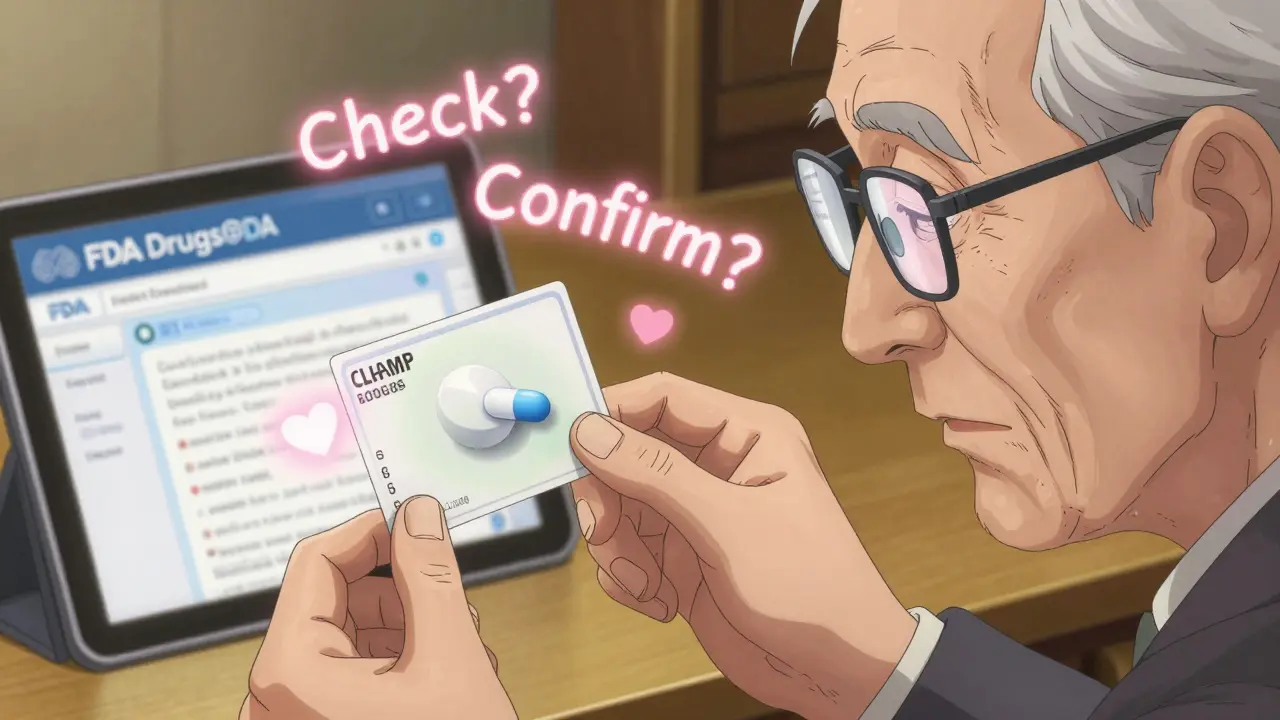
Step 5: Check the Expiration Date - Is It Still Good?
Expired meds don’t always stop working - but they can become less effective, or even harmful. The U.S. Pharmacopeia (USP) recommends that chronic medications - like blood pressure or thyroid pills - should have at least six months left before expiration when dispensed. Why? Because medications degrade over time. A pill that’s 18 months past its date might still be safe, but it might not work as well. And if you’re on a long-term treatment, you need to know you’re getting full potency. If the expiration date is less than six months away, ask: “Can I get a newer batch?” Most pharmacies will replace it without a fuss.Step 6: Compare the Appearance - Color, Shape, Markings
This one’s easy if you’ve taken the same pill before. But if it’s new - or if you’ve switched from brand to generic - the pill might look totally different. Generic versions often change color, shape, or markings. That’s normal. But if the pill looks nothing like what you’ve taken before - and you didn’t expect a change - that’s a red flag. Use the FDA’s Drugs@FDA database (free online) or ask the pharmacist for a picture of what the pill should look like. Many pharmacies now keep printed reference cards with images of common medications. A woman in Melbourne noticed her new cholesterol pill was blue and oval - but her old one was white and round. She asked the pharmacist, who realized a different generic had been dispensed without notification. She was grateful she checked.Step 7: Read the Instructions - Does It Match What Your Doctor Said?
“Take one tablet daily.” But your doctor said “take it in the morning with food.” “Take every 6 hours.” But the label says “take twice daily.” The American Pharmacists Association found that 14% of medication errors involve incorrect directions. That’s not just confusing - it’s dangerous. Taking a blood thinner twice as often as prescribed can cause internal bleeding. Skipping doses of an antibiotic can lead to resistant infections. Read the instructions out loud. Compare them to what your doctor told you. If they don’t match, ask: “Can you confirm this is what my doctor ordered?”What If You Can’t Read the Label?
If you have vision problems, tremors, or trouble reading small print, you’re not alone. Over 40% of seniors struggle with tiny pharmacy labels. Ask for help. Pharmacies are required to provide large-print labels, magnifiers, or even verbal confirmation. Many Walgreens and CVS locations now offer free magnifying cards at the counter. Some pharmacies have voice-guided label readers you can use on a tablet. If you’re helping an elderly parent, make it part of your routine. Sit with them at the pharmacy. Read the label together. Don’t assume they understand it.
Tools That Help - Apps, Cards, and More
You don’t need to memorize all this. The CDC’s Medication Safety Kit gives out free laminated wallet cards with the seven steps printed on them. You can pick one up at 92% of U.S. pharmacies - and many in Australia now carry them too. Apps like MedSafe (version 3.2, released January 2025) let you scan the barcode on your pill bottle. It cross-checks the NDC code against your prescription record. It’s 98.7% accurate - but only if you have a smartphone and know how to use it. For older adults or those uncomfortable with tech, the paper card works just fine. The goal isn’t fancy tech - it’s awareness.What If You Find a Mistake?
Don’t panic. Don’t argue. Just say: “I think there’s an error here.” Pharmacists are trained to handle this. In fact, pharmacies that encourage patient verification see 47% fewer malpractice claims, according to the APhA. They want you to speak up. If the error is serious - wrong drug, wrong dose, wrong patient - ask to speak to the pharmacist in charge. If they dismiss you, go to another pharmacy. Your safety matters more than loyalty.Why This Works - The Science Behind the Check
A 2024 University of California study found that patients who took 30 seconds or more to verify their meds caught 87% of errors. Those who rushed - under 15 seconds - caught only 22%. It’s not magic. It’s attention. When you slow down, you see things you normally miss. Pharmacies that use a “shared verification” model - where the pharmacist says, “Can you confirm the name and dosage?” - reduce errors by 73%. It’s teamwork. You’re not checking them. You’re checking together.Final Thought: This Isn’t Optional
Medication errors don’t happen in hospitals. They happen in your kitchen, your car, your bedroom - after you leave the pharmacy. This audit isn’t about blaming anyone. It’s about protecting yourself. You’re the only one who knows what your body feels like. You’re the only one who knows what your doctor told you. You’re the last person to see the medication before you take it. So next time you walk up to the counter, take a breath. Look at the label. Ask the questions. Don’t leave until you’re sure. It takes 30 seconds. It could save your life.Is it really necessary to check my medication every time I pick it up?
Yes. Even if you’ve taken the same medication for years, mistakes can still happen. Labels change, generics switch, dosages get updated. A 2024 study showed that 40% of errors occurred with patients who had been on the same drug for over a year. Never assume it’s the same.
What if the pharmacist gets annoyed when I ask questions?
A good pharmacist will appreciate it. In fact, pharmacies that encourage patient verification have higher safety ratings and fewer legal issues. If someone reacts negatively, it’s a red flag. You have the right to understand your medication. Walk out and go to another pharmacy - your safety comes first.
Can I use my phone to verify my meds?
Yes, apps like MedSafe (released January 2025) can scan your pill bottle’s barcode and cross-check it with your prescription. They’re accurate and fast. But they’re not foolproof - if the label is wrong, the app won’t catch it. Always combine tech with human verification: look at the label, read the name, confirm the dose.
What should I do if I’ve already taken the wrong pill?
Stop taking it immediately. Call your pharmacist or doctor. If you’re unsure what you took, call Poison Control (13 11 26 in Australia) or go to the nearest emergency room. Don’t wait for symptoms. Some errors cause harm quickly - others take days. Better safe than sorry.
Are there free resources to help me learn how to check my meds?
Yes. The CDC’s Medication Safety Kit includes free wallet cards with the seven verification steps. Many pharmacies in Australia and the U.S. offer them at no cost. You can also download the FDA’s MedCheck app, which gives you quick access to pill images and safety tips. Ask your pharmacist for a copy - they’re required to provide them.


Skye Kooyman
I used to skip this until my grandma took the wrong blood pressure pill. Now I check every time. Just 30 seconds. Seriously.
rasna saha
This is so needed! In India, many elders just trust the pharmacist and don't ask. I printed the CDC card and keep it in my wallet now. Thank you for sharing this!
shivam utkresth
Bro, I used to think this was overkill till I saw a pharmacist hand someone a bottle of insulin labeled as metformin. Same size, same color. I swear, if you don't check, you're playing Russian roulette with your liver, kidneys, and sanity. The FDA's database? Use it. Don't just rely on the label. It's not sacred text.
Robin Van Emous
I'm from the US, and I've had three different pharmacies mess up my thyroid med. Each time, I was too tired to check. Now I say, 'Can you read this back to me?' It feels awkward, but it works. Pharmacists aren't robots. They're humans. And humans make mistakes. I've learned to be the calm, polite one who asks. It's not confrontation. It's collaboration.
Peter Sharplin
I work in a community pharmacy. I can tell you, 90% of the time, when a patient asks a question about their med, it's because they already spotted something off. We don't get annoyed. We're relieved. We'd rather you catch it than have to call you at 2 a.m. because you ended up in the ER. The seven-step check? We hand out those cards because we've seen the aftermath. Don't be shy. You're not being difficult-you're being smart.
Kipper Pickens
NDC code validation via app is statistically significant (p<0.01) in reducing dispensing error variance, especially when cross-referenced with EHR-derived Rx profiles. However, cognitive load during verification remains a confounding variable in elderly cohorts. Recommend dual-mode verification: digital + tactile (counting, visual inspection).
James Nicoll
So let me get this straight... we live in a country where you can buy a gun without a background check, but you need a PhD to make sure your blood pressure pill isn't actually a heart attack in a capsule? 🤡 I mean, I get it. But still. 87% of errors caught by patients? That's not a system failure. That's a national joke.
John Wippler
I used to think I was being paranoid. Then my dad had a stroke because he took the wrong dose of warfarin. The label said 5mg. The bottle had 10mg pills. He didn't count them. Neither did the pharmacist. That's the day I started carrying a small notebook with my meds: name, dose, frequency, why. I write it down. I read it out loud. I don't care who's watching. I'm not losing another family member to a typo.
Aurelie L.
My pharmacist yelled at me once for asking. So I went to another one. Now I go to the one who brings me tea. 🫖
Faisal Mohamed
Bro, I scan every pill with MedSafe now. 📱✅ It tells me if it's legit, the dose, even if it's expired. But I still hold it in my hand. Look at it. Smell it (yes, really). Ask the pharmacist, 'Is this the one?' 🤝 It's not tech vs. human. It's tech + human = survival mode. 🚨💊