
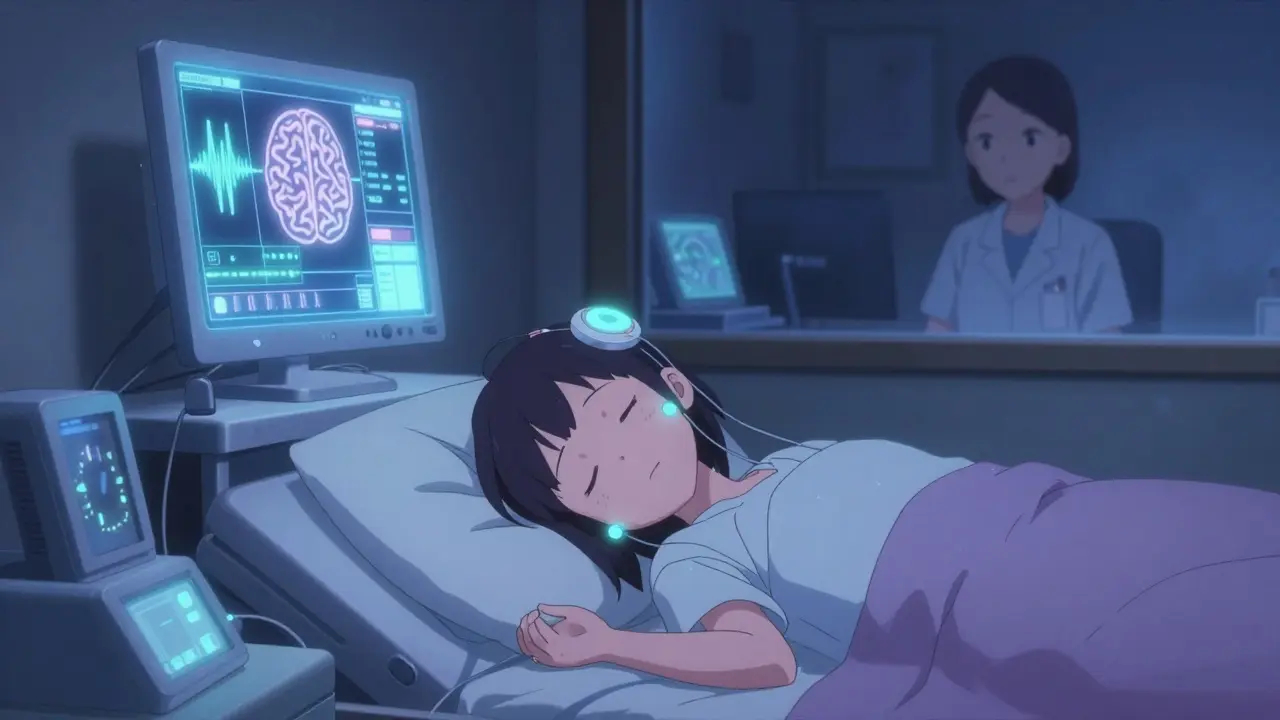
When you’re tired all day but can’t sleep well at night, something deeper might be going on. It’s not just stress or too much coffee. It could be a sleep disorder - and the best way to find out is through a polysomnography, or sleep study. This isn’t a quick checkup. It’s a full overnight scan of your body while you sleep, tracking everything from your brain waves to your breathing. If you’ve been told you need one, you’re probably wondering: What’s it really like? What do they measure? And what do the results actually mean?
What Exactly Is a Polysomnography?
Polysomnography, often called PSG, is the gold standard for diagnosing sleep disorders. The word itself breaks down into three parts: "poly" (many), "somno" (sleep), and "graphy" (recording). So, it’s a multi-parameter recording of your sleep. Unlike a home sleep test that only checks breathing, a polysomnography watches your whole body during sleep. It doesn’t just look for sleep apnea - it can catch narcolepsy, restless legs, night terrors, and even seizures that happen while you’re asleep.This test is done in a sleep center, not at home. You’ll spend the night in a quiet, private room that looks like a hotel room - same bed, same pillow, same TV. But instead of being alone, you’re connected to about 20 sensors and electrodes. These aren’t painful. They’re like sticky patches with wires. You’ll feel them, sure, but most people get used to them quickly.
What Gets Measured During a Sleep Study?
A polysomnography doesn’t just count how many times you stop breathing. It maps your entire sleep cycle. Here’s what it tracks:- Brain waves (EEG): Electrodes on your scalp detect the different stages of sleep - light sleep, deep sleep, and REM. This is how doctors know if you’re entering REM too early (a sign of narcolepsy) or skipping deep sleep entirely.
- Eye movements (EOG): These help identify REM sleep. When your eyes dart back and forth under closed lids, you’re dreaming.
- Muscle activity (EMG): Sensors on your chin and legs check for twitching, grinding, or sudden movements. This catches restless legs syndrome and REM sleep behavior disorder, where people act out their dreams.
- Heart rhythm (ECG): Your heart rate and pattern are monitored. Irregular beats during sleep can signal other health issues.
- Breathing effort: Belts around your chest and abdomen measure how hard you’re trying to breathe. This helps tell the difference between obstructive sleep apnea (blocked airway) and central sleep apnea (brain stops sending the signal to breathe).
- Airflow: A tiny tube under your nose or a sensor near your mouth detects whether air is actually moving in and out.
- Blood oxygen levels: A clip on your finger (like a pulse oximeter at the doctor’s office) tracks how much oxygen your blood carries. Drops below 90% are a red flag.
- Body position: Did you snore more on your back? Did you roll over after an apnea? This helps doctors understand what’s triggering your symptoms.
- Audio and video: A camera and microphone record snoring, gasping, talking, or unusual movements. This is crucial for spotting parasomnias like sleepwalking or night terrors.
All this data is collected in real time. A sleep technologist watches from another room, ready to adjust sensors if they fall off or talk you through anxiety. You’re not alone.
How Is It Different From a Home Sleep Test?
Home sleep apnea tests (HSAT) are cheaper and more convenient. But they’re limited. They usually only measure airflow, breathing effort, oxygen levels, and heart rate - maybe four things. That’s fine if you’re a 55-year-old man with loud snoring and daytime sleepiness. But if you’re a 30-year-old woman with sudden muscle jerks at night, or a teenager who falls asleep in class, a home test won’t cut it.Polysomnography is the only test that can diagnose:
- Narcolepsy (by tracking how fast you enter REM sleep)
- Periodic limb movement disorder
- Parasomnias like sleepwalking or night terrors
- Central sleep apnea (where your brain doesn’t signal your lungs to breathe)
- Unexplained nighttime seizures
Home tests miss up to 20% of cases. They also fail to record sleep stages, so they can’t tell if you’re getting enough deep sleep or if your REM cycle is broken. If your doctor suspects anything beyond simple obstructive sleep apnea, they’ll order a full polysomnography.
What Happens During the Night?
You’ll arrive at the sleep center about an hour before your usual bedtime. A sleep technologist will clean your skin, apply the sensors, and explain how everything works. You can watch TV, read, or relax until you’re ready to sleep.The room is kept between 68-72°F - cool enough to help you sleep, but not freezing. You can use your own pillow. There’s a bathroom right next door. If you need to get up during the night, just say the word. The wires are long enough to let you move around.
Most people sleep at least 4-5 hours, which is enough for a diagnosis. Even if you don’t sleep as well as you do at home, the data is still usable. Technologists see this all the time. They’re trained to work with people who are nervous, anxious, or just not used to sleeping with wires on their head.
Throughout the night, the tech watches your data on a screen. If you stop breathing for 10 seconds or more, they’ll note it. If your oxygen drops, they’ll log it. If you kick your legs 15 times in an hour, they’ll count it. Everything gets recorded.
What Do the Results Show?
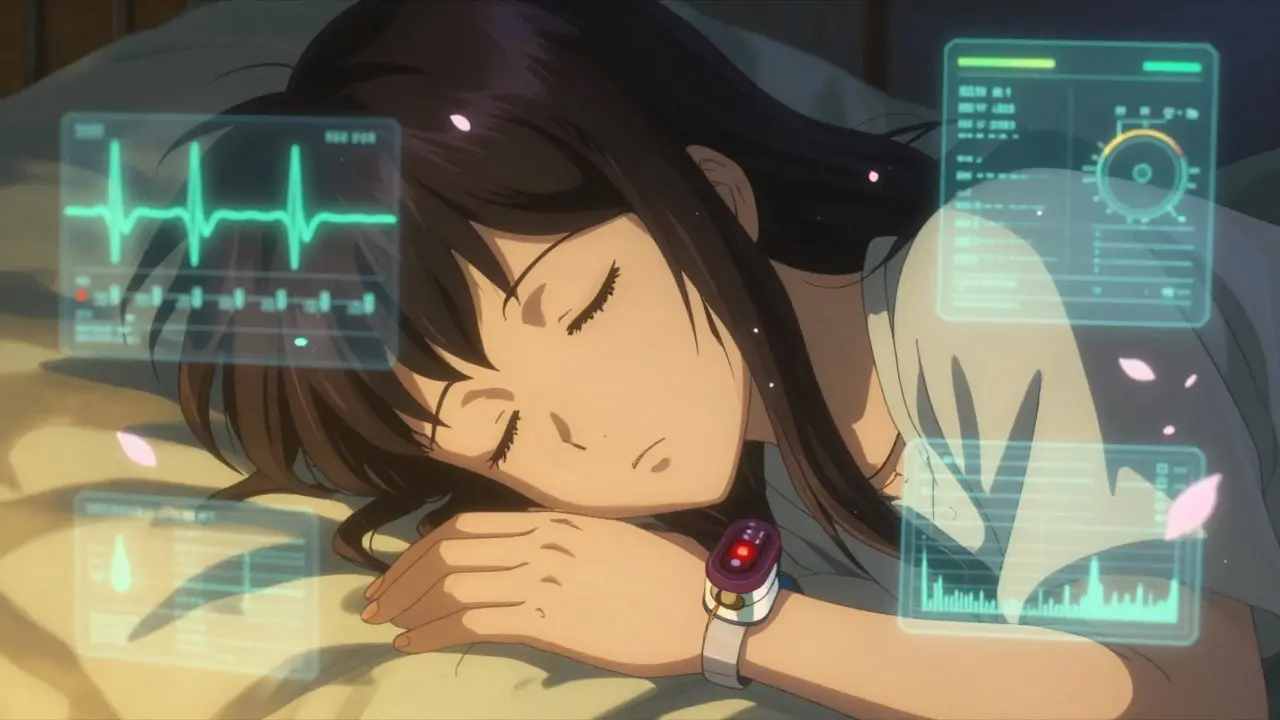
After the study, a board-certified sleep doctor spends 2-3 hours analyzing the data. You’ll get a report that looks like a dense medical chart - but here’s what you need to know:- Apnea-Hypopnea Index (AHI): This is the number of breathing pauses (apneas) and shallow breaths (hypopneas) per hour. Less than 5 is normal. 5-15 is mild sleep apnea. 15-30 is moderate. Over 30 is severe.
- Oxygen saturation: If your oxygen dips below 90% for more than 5% of the night, that’s a problem. Below 85% is dangerous.
- Sleep stages: You should spend about 50% of the night in NREM stage 2, 20% in deep sleep (NREM 3), and 20-25% in REM. If you’re missing deep sleep, you’ll wake up tired. If you’re getting REM too early, it could be narcolepsy.
- Leg movements: More than 15 periodic limb movements per hour is abnormal.
- Snoring and position: If you only snore or stop breathing when on your back, positional therapy might help.
These numbers don’t just diagnose - they guide treatment. If your AHI is 40 and your oxygen drops to 80%, you’ll likely need a CPAP machine. If your brain waves show you’re entering REM within 5 minutes of falling asleep, you might have narcolepsy and need a different test (like the MSLT) to confirm.
What Is a Split-Night Study?
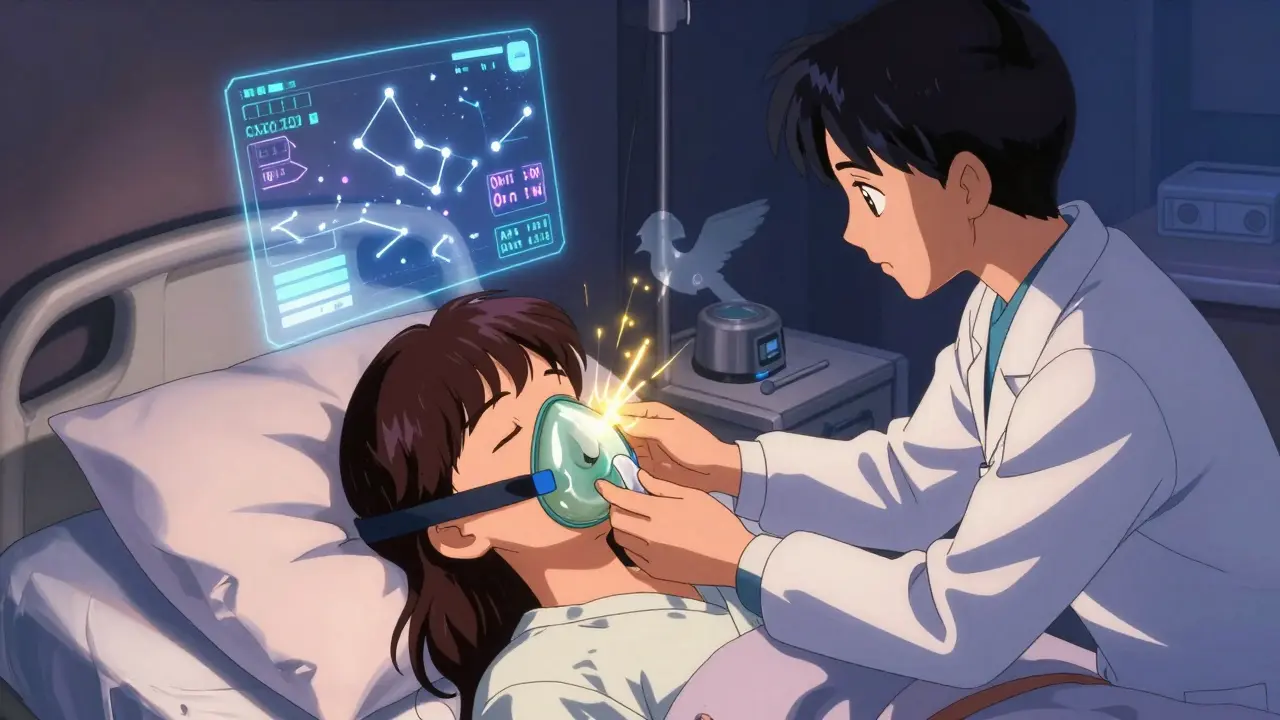
Sometimes, you don’t need two nights. If the first few hours show severe sleep apnea (AHI over 40), the tech will wake you up and fit you with a CPAP mask. They’ll adjust the pressure while you sleep - all in the same night. This is called a split-night study. About 35% of polysomnography studies are now split-night tests. It saves time, money, and hassle.Who Needs a Polysomnography?
You might be a candidate if you have:- Loud, chronic snoring with pauses in breathing
- Daytime sleepiness that doesn’t improve with more sleep
- Waking up gasping or choking
- Restless legs that keep you awake
- Sleepwalking, screaming, or acting out dreams
- Unexplained fatigue, memory issues, or mood swings
- High blood pressure that won’t respond to medication
It’s not just for older adults. Teens, young adults, and even children can have sleep disorders. If your doctor suspects anything beyond simple snoring, they’ll likely order a PSG.
How to Prepare for Your Sleep Study
You don’t need to fast or change your diet. But here’s what helps:- Stick to your normal sleep schedule for 3-4 days before the test.
- Avoid caffeine after 2 p.m. the day before.
- Don’t nap in the afternoon.
- Don’t use alcohol or sedatives - they can mess up your sleep patterns.
- Wash your hair before you go. No conditioner or styling products - they interfere with sensors.
- Bring your own pajamas, pillow, and anything that helps you sleep.
Most people are nervous the night before. But 85% of patients complete the test successfully. The key? Knowing what to expect. If your sleep center gives you a prep guide - read it.
Insurance and Cost
Polysomnography isn’t cheap - it can cost $1,500 to $3,000 without insurance. But Medicare and most private insurers cover it if you have documented symptoms like snoring, witnessed apneas, or excessive daytime sleepiness. You’ll usually need a referral from your doctor and sometimes prior authorization. The test must meet clinical guidelines set by the American Academy of Sleep Medicine.Home tests cost 30-50% less, but if they come back negative and your symptoms persist, you’ll still need a full PSG. So skipping the full study can end up costing more in the long run.
What Happens After the Results?
You’ll get a follow-up appointment with a sleep specialist, usually within 1-2 weeks. They’ll explain your results in plain language and recommend treatment. That could be:- CPAP or BiPAP machine for sleep apnea
- Oral appliance for mild apnea
- Medication for narcolepsy or restless legs
- Behavioral therapy for insomnia
- Changes to sleep position or weight loss
Some people are surprised - they thought they were just tired. But once they see the data - the oxygen drops, the breathing pauses, the lack of deep sleep - it clicks. Treatment works. People who stick with CPAP report feeling like they’ve been given back years of their life.
What’s New in Sleep Studies?
Technology is improving. New wireless sensors cut the number of wires from 20 to under 7. Some centers now use AI to flag abnormal patterns faster. Cloud-based systems let sleep doctors review data remotely. But the core of polysomnography hasn’t changed: it’s still the most complete picture of your sleep you can get.Experts predict it will remain the gold standard through at least 2030. Home tests are useful for screening, but they can’t replace the depth of an in-lab study. If you’re serious about understanding your sleep, this is the test that gives you real answers.
Is a polysomnography painful?
No, it’s not painful. Sensors are attached with gentle adhesive, not needles. You might feel some discomfort from the wires or the mask if you get one, but most people adapt quickly. The sleep center staff will help you adjust and answer any questions during the night.
Can I sleep with all those sensors on?
Yes. Most people sleep enough - at least 4-5 hours - for the test to be useful. Even if you’re not sleeping as well as you do at home, the data is still valid. Sleep technologists are trained to work with people who are anxious or have trouble sleeping in new places.
How long does it take to get results?
It usually takes 1-2 weeks. The raw data is massive - over 1,000 pages of information. A sleep specialist spends 2-3 hours analyzing each study before writing a report. Your doctor will schedule a follow-up to go over the findings and next steps.
Can a polysomnography diagnose narcolepsy?
It can suggest narcolepsy by showing you enter REM sleep unusually fast - within 15 minutes of falling asleep. But to confirm it, you’ll need a second test called the Multiple Sleep Latency Test (MSLT), which measures how quickly you fall asleep during daytime naps.
Will insurance cover this?
Yes, if you have documented symptoms like snoring, witnessed breathing pauses, or excessive daytime sleepiness. Medicare covers 80% of the cost. Most private insurers require a doctor’s referral and sometimes prior authorization. Home sleep tests are cheaper but often not enough - if they’re negative and your symptoms continue, you’ll still need a full polysomnography.
What if I can’t sleep during the study?
It’s common to sleep less than usual. But you don’t need a full 8 hours. As long as you get 4-5 hours of sleep, including at least one full sleep cycle, the data is usable. Technologists can often help you relax with conversation or by adjusting sensors. Most patients still get enough sleep for an accurate diagnosis.




Husain Atther
Polysomnography is one of those tests that sounds intimidating until you actually go through it. I was skeptical about sleeping with wires everywhere, but the staff made it feel like a hotel stay with extra science. The real eye-opener? Seeing my own sleep data - I had no idea I was waking up 17 times an hour without remembering any of it. It’s not just about apnea; it’s about understanding how your body really rests.
Elizabeth Cannon
ok so i got my psog done last month and honestly?? it was way less scary than i thought. they gave me my own pillow and i watched netflix till 1am. the sensors? like sticky notes with wires. no needles, no pain. the tech even checked on me at 3am like a sleep ninja. now i use my cpap and i feel like a new person. also - yes, your partner will be jealous of your fancy sleep lab bed.
Don Foster
Most people don’t realize polysomnography is overkill for 80% of cases. Home sleep tests are 90% as accurate for OSA and way cheaper. The real issue is the sleep medicine industry’s dependency on in-lab studies for revenue. You don’t need EEGs to diagnose snoring. Just get a pulse oximeter and a smartwatch. The rest is overdiagnosis dressed up as science
Sushrita Chakraborty
As someone from India, where sleep disorders are often dismissed as ‘just stress’ or ‘too much chai,’ this article is a much-needed clarification. Polysomnography is not a luxury - it is a medical necessity. In rural areas, access remains limited, but awareness is growing. I’ve seen young patients with unexplained fatigue, only to discover severe sleep apnea after a PSG. The data doesn’t lie. Let us advocate for wider accessibility, not just in the U.S., but globally.
Sawyer Vitela
CPAP works. Stop overcomplicating it.
Helen Leite
THEY’RE WATCHING YOU WHILE YOU SLEEP 😱 I SWEAR I SAW A CAMERA IN THE CORNER AND NOW I THINK THEY’RE SELLING MY DREAMS TO BIG PHARMA 🤫👁️🗨️💤 #SleepStudyConspiracy #TheyKnowWhenIDreamOfFlying
Luke Davidson
Man, I used to think I was just a lazy sleeper - until I saw my sleep report. I was getting 20 minutes of deep sleep a night. TWENTY. I thought I was getting eight hours - turns out I was just lying there. The CPAP was awkward at first, but now I wake up without needing three coffees. Honestly? This test didn’t just diagnose me - it saved my marriage. My wife hasn’t whispered ‘you’re snoring again’ in months. Also - bring your own pillow. It’s the little things.
asa MNG
so i went to the sleep lab and the tech was super nice but like… i think they planted a mic in my pillow? i swear i heard them whispering ‘he’s got a 42 AHI’ while i was half asleep… and then they gave me a cpap mask like it was a free sample?? conspiracy?? also i cried during the study bc i missed my dog 🥺
Kevin Waters
Just want to add - if you’re nervous about the study, ask if they do a ‘practice night’ beforehand. Some centers let you come in early to test the sensors and get comfortable. It’s not standard, but it helps a lot. I did it, and it made the actual night feel way less clinical. Also - wear loose pajamas. No buttons. Trust me.