
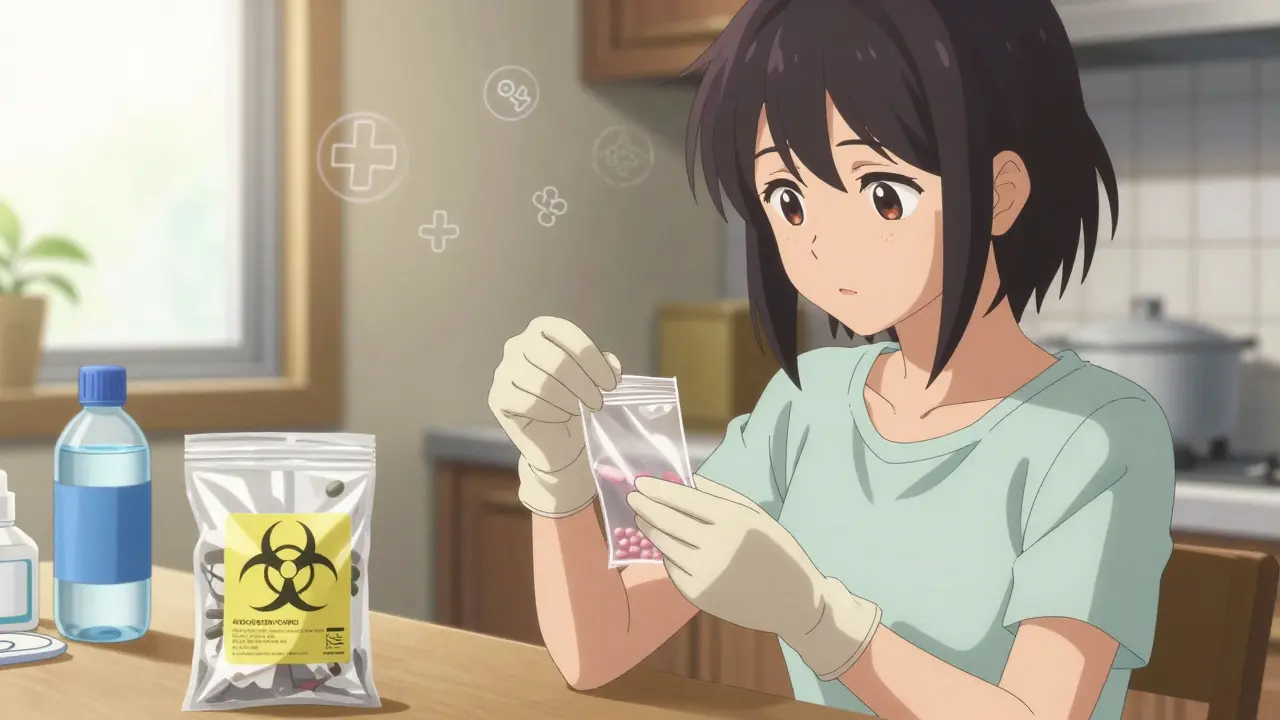
Why Home Chemotherapy Disposal Is Different
When you take a pill for high blood pressure or an antibiotic, you can usually toss it in the trash with coffee grounds or cat litter. But chemotherapy drugs? That’s not safe. These medications are designed to kill fast-growing cells - and that includes healthy ones. Even tiny amounts left in urine, vomit, or on gloves can harm children, pets, or waste workers. The American Cancer Society says active chemotherapy compounds can stay in your body fluids for up to 72 hours after treatment. That means every pill you take, every drop of liquid, every used glove - it’s all hazardous waste.
Flushing these drugs down the toilet is illegal and dangerous. The EPA found detectable levels of cyclophosphamide - a common chemo drug - in two-thirds of U.S. waterways. That’s not a fluke. It’s from improper disposal. And unlike regular meds, you can’t just drop chemo drugs into a MedDrop kiosk. Only about 63% of these collection bins accept chemotherapy waste. Most pharmacies won’t take it. Mail-back programs? Only 28% of U.S. pharmacies offer them for chemo. So what do you do?
What You Need Before You Start
You won’t be able to do this safely without the right tools. Your oncology team should give you these basics when you start home treatment:
- Nitrile gloves - at least 0.07mm thick (6 mil is ideal). Never use latex. They tear too easily.
- Leak-proof plastic bags - two of them. Must meet ASTM D1735 standards. Regular grocery bags? No. They’re not thick enough. Look for bags labeled 1.5 mil or thicker.
- Yellow hazardous waste containers - if your provider supplies them, use them. These are designed for cytotoxic waste and have special labeling.
- Dedicated cleaning supplies - paper towels, wipes, and a spray bottle with water and mild detergent. Keep these separate from your household cleaning items.
Replacing these supplies costs about $15.75 a month on average, according to the National Comprehensive Cancer Network. That’s not cheap - but it’s cheaper than a hospital visit from accidental exposure.
How to Dispose of Oral Chemo Pills
Never crush, break, or chew chemo pills. The dust can become airborne. Even inhaling a tiny bit can be harmful. Here’s how to do it right:
- Put on your nitrile gloves.
- Place the used pill - or any unused pills - into the first leak-proof plastic bag.
- Seal that bag tightly. Use a zip-tie or heat-seal if possible.
- Place that sealed bag into the second leak-proof bag.
- Seal the outer bag the same way.
- Label the outer bag: “Hazardous Chemotherapy Waste - Do Not Open.”
- Store it in a secure place, away from children and pets, until pickup or disposal day.
Some patients ask if they can mix pills with kitty litter or coffee grounds like regular meds. Don’t. That’s not enough. You need double-bagging. Mayo Clinic testing showed this method reduces exposure risk by 92% compared to single bags.
How to Handle Liquid Chemo and IV Bags
Liquid chemo is even riskier. Spills are common. If you’re using a syringe or IV bag at home:
- Always wear gloves, and consider a gown and face shield if you’re handling large volumes.
- Never pour leftover liquid down the sink or toilet.
- Use an absorbent material - like a specialized chemo absorbent pad, or even plain paper towels - to soak up any spills. Never use your regular kitchen sponge.
- Place all used IV tubing, syringes, and absorbent pads into the inner bag.
- Double-bag, seal, label.
If you’re using a portable infusion pump, the manufacturer usually includes disposal instructions. Follow them exactly. Some pumps are designed to be returned to the provider. Others require special pickup.
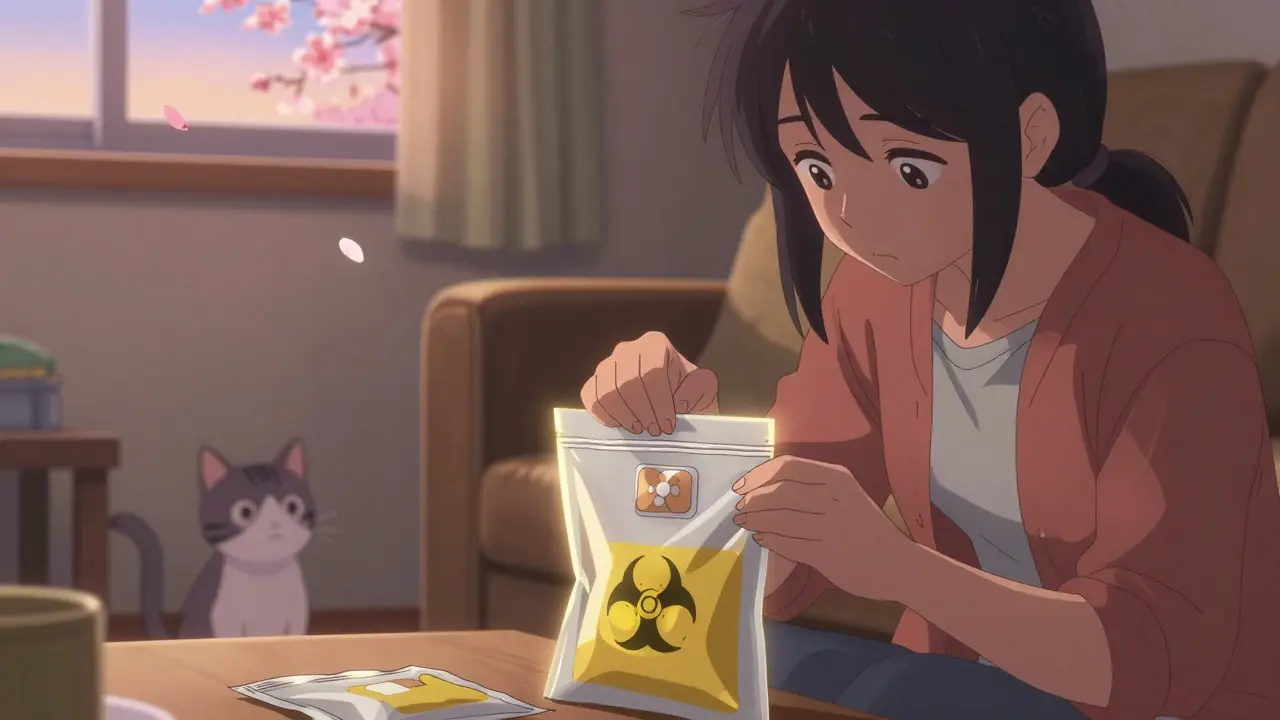
Transdermal Patches - The Hidden Danger
Patches like capecitabine or fluorouracil are easy to use - but dangerous to throw away. The drug is still active on the sticky side. Here’s the trick:
- After removing the patch, immediately fold it in half with the sticky sides pressed together.
- Place it in the inner leak-proof bag.
- Then put it in the second bag.
- Seal and label.
Don’t just throw the patch in the trash like a Band-Aid. One study found that 41% of patients mishandle patches - and that’s the most common cause of accidental exposure in homes.
What About Bodily Waste?
You don’t have to treat your toilet like a biohazard zone - but you do need to be smart.
For 48 to 72 hours after taking chemo, your urine, stool, and vomit can still contain active drugs. Here’s what to do:
- Flush the toilet twice after each use.
- Wash your hands thoroughly with soap and water - even if you wore gloves.
- If you have diarrhea or vomit, clean the area with disposable cloths and the dedicated cleaning spray.
- Wear gloves during cleanup. Put all wipes, tissues, or soiled linens in the inner bag, then the outer bag.
Some patients worry about sharing bathrooms. If possible, use a separate toilet. If not, clean the seat and handle with disinfectant after each use. The CDC says this reduces risk by over 85%.
What You Should Never Do
These are the most common mistakes - and they’re dangerous:
- Never flush chemo drugs - even if the bottle says “flush if no take-back program.” That rule doesn’t apply to chemotherapy.
- Never use Deterra® or similar deactivation systems - they’re approved for pain meds, not chemo. Their website says it outright.
- Never put chemo waste in recycling - even if it’s in a plastic bottle.
- Never give unused chemo to someone else - even if they have cancer. Dosing is precise. One wrong pill can kill.
- Never store chemo in food containers - don’t put pills in a candy jar. That’s how kids get poisoned.
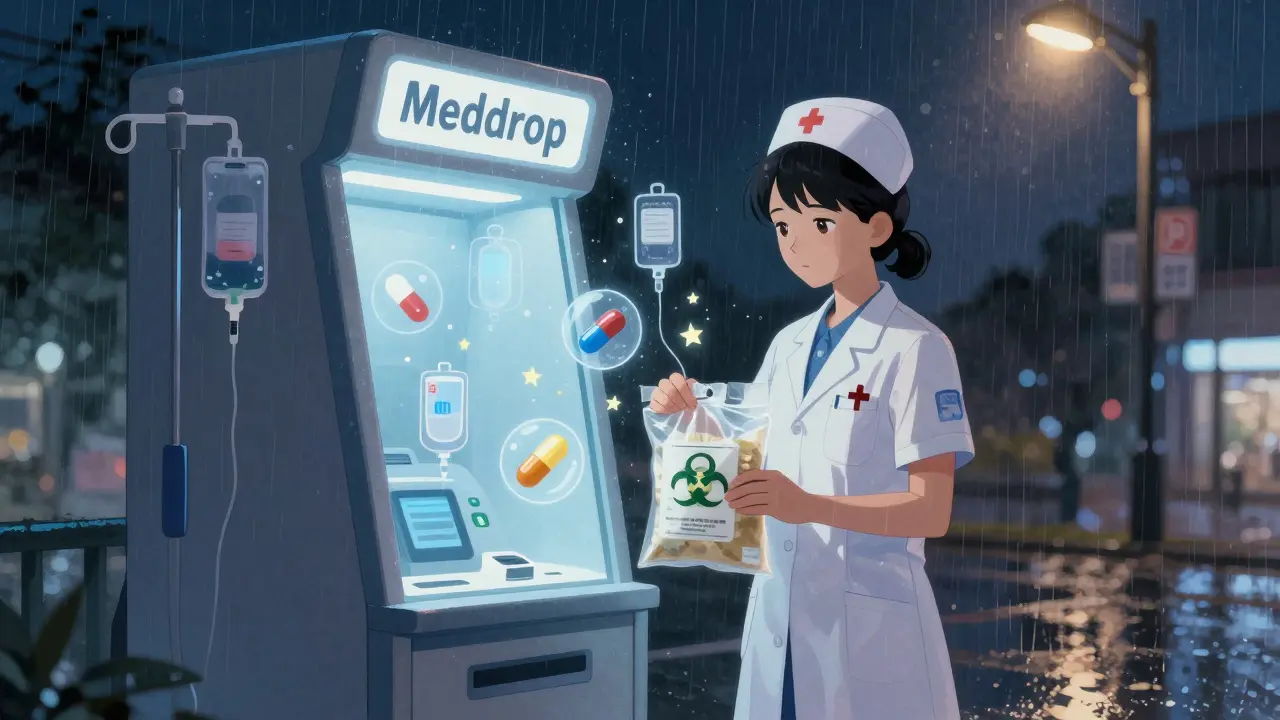
When and Where to Dispose
Most patients hold onto chemo waste for weeks. That’s normal. But you can’t keep it forever. Here’s your plan:
- Ask your oncology nurse - they’ll tell you if your provider offers a pickup service. Many do.
- Check MedDrop kiosks - Stericycle runs over 1,800 of them across 47 states. Go to stericycle.com/meddrop and search by zip code. Not all accept chemo - but many do.
- Call your local hazardous waste facility - some cities have special drop-off days for medical waste. Call ahead. Don’t assume they take chemo.
- Mail-back programs - if your provider gave you a prepaid envelope, use it. If not, ask if they can send one.
Only 19 states have specific laws for chemo disposal. In the rest, rules are vague. That’s why you need to ask your care team - not Google.
What If You Have a Spill?
Spills happen. If you drop a pill, spill liquid, or break a vial:
- Clear the area. Keep kids and pets away.
- Put on gloves, gown, face shield, and mask if available.
- Use absorbent pads or paper towels to soak up the spill. Don’t wipe - absorb.
- Place all cleanup materials into the inner bag, then the outer bag.
- Wash the area with water and mild detergent. Rinse twice.
- Dispose of your gloves and clothing if they’re heavily soaked.
- Call your oncology nurse for advice. They’ve seen this before.
Don’t panic. But don’t ignore it. A single spill can expose multiple people if not handled right.
Why This Is So Hard - And Why It Matters
Over 41% of patients don’t follow the rules. Why? Because it’s confusing. A 2022 survey by CancerCare found 68% needed multiple training sessions just to get disposal right. Some hospitals give clear instructions - Memorial Sloan Kettering scores 9.2 out of 10. Others? Average 6.8. That gap costs lives.
And it’s getting worse. Home chemotherapy use jumped 37% since 2019. By 2027, it’ll grow another 35%. More people will be handling these drugs in kitchens, bathrooms, and living rooms. Without better education and simpler tools, accidents will rise.
But here’s the good news: You can protect your family. You can protect the environment. You can do this - if you follow the steps. It’s not about being perfect. It’s about being careful. One bag, two bags. Gloves on. No flushing. No sharing. That’s it.
What’s Coming Next
Change is coming. The FDA now requires all oral chemo drugs to have clear disposal instructions on the label - 147 drugs as of March 2023. The EPA has allocated $4.7 million to find better disposal methods. Two new systems - ChemiSafe and the Oncology Waste Management Unit - are in FDA review. They could make this easier soon.
But until then, the rules are clear. Double-bag. Wear gloves. Don’t flush. Ask your team. Your safety - and your family’s - depends on it.

Kelly McRainey Moore
I never realized how much goes into this until my mom started home chemo. Double-bagging felt overkill at first, but now I get it. My cat nearly got into the trash one day - scary thought.
Just glad we had the gloves and bags from the hospital. Worth every penny.
Amber Lane
This saved my life. Literally.
Coral Bosley
I read this and my hands started shaking. Not because I’m scared - because I know how many people are doing this wrong. And no one’s talking about it. Not really. The system is broken. We’re putting families in danger because we don’t fund proper disposal like we do for needles or biohazards. This isn’t a ‘nice to have’ - it’s a public health emergency.
Steve Hesketh
Man, this hit me hard. I’ve seen folks try to flush chemo pills because they thought it was the same as Tylenol. No wonder kids get sick. But hey - you’re doing the right thing by sharing this. Keep it up. You’re not just helping patients - you’re helping the whole community. One bag at a time.
shubham rathee
I think the FDA just made this harder on purpose so they can sell more bags and gloves. Why not just make a pill that breaks down in water? Or why not let us flush it? The whole thing feels like a money grab disguised as safety. I mean, look at the stats - 68% need multiple trainings? That’s not a safety issue. That’s a design failure.
MAHENDRA MEGHWAL
The procedural rigor outlined herein is both scientifically sound and ethically imperative. One must acknowledge the ontological weight of pharmaceutical waste in domestic environments. The double-bagging protocol, while seemingly redundant, aligns with the precautionary principle in environmental toxicology. I commend the authors for their meticulous attention to detail.
Kevin Narvaes
ok so like... why cant we just like... melt the pills or something? idk. why do we need two bags? seems like corporate greed. also why are they still using nitrile? isnt that plastic? we need biodegradable chemo bags. the planet is dying bro.
Dee Monroe
There’s something deeply human about how we treat this stuff - not just as medicine, but as a symbol of control. We’re told to double-bag, to label, to store it away like it’s poison - because it is. But it’s also hope. It’s the last thing standing between someone and the dark. And yet, we treat it like trash. We don’t give it ceremony. We don’t honor the weight of it. Maybe that’s why people mess up. Not because they’re careless. Because they’re exhausted. And grief makes you forget the rules. So maybe the real solution isn’t more bags - it’s more compassion. More patience. More hands holding yours while you seal that second bag.
Jerry Rodrigues
Good guide. I’d add one thing - if you’re unsure, call your nurse. They’ve seen it all. No question is dumb.
Ashok Sakra
I just watched my sister do this and I cried. I didn’t know it was this hard. I thought she was just being dramatic. But now I get it. You’re not just fighting cancer - you’re fighting the system. And the system doesn’t care. They don’t give you enough bags. They don’t tell you about pickup. They just hand you a pill and say ‘be safe.’ That’s not care. That’s negligence. And I’m mad. I’m so damn mad.