Antibiotics and Dairy: What You Need to Know About Food Interactions
When you take antibiotics, medications designed to kill or stop the growth of bacteria causing infections. Also known as antibacterial agents, they’re one of the most common prescriptions worldwide — but how you take them can make or break their effectiveness. Many people don’t realize that what you eat, especially dairy, milk, cheese, yogurt, and other calcium-rich foods, can interfere with how your body absorbs certain antibiotics. This isn’t just a myth — it’s a well-documented issue that can turn a simple course of treatment into a longer, more complicated one.
The problem usually comes down to calcium, a mineral found in high amounts in dairy products. When calcium binds to certain antibiotics in your gut, it forms a complex your body can’t absorb. That means the drug passes through you without doing its job. This happens most often with antibiotics like tetracycline, doxycycline, and ciprofloxacin. Even a glass of milk or a slice of cheese taken within two hours of your pill can cut absorption by up to 50%. Other antibiotics, like amoxicillin or azithromycin, don’t have this issue — so it’s not a blanket rule. But if your prescription says to take it on an empty stomach, or warns against dairy, there’s a reason.
It’s not just about timing. Some people think yogurt is a safe workaround because it has probiotics, but if the antibiotic is one that binds to calcium, even yogurt can interfere. And if you’re taking antibiotics for a gut infection, adding dairy might make bloating or diarrhea worse — not better. The real fix? Know your drug. Check the label. Ask your pharmacist. And if you’re unsure, wait at least two hours after taking your antibiotic before eating or drinking anything dairy-related. You don’t need to cut out dairy entirely, just space it out.
Below, you’ll find real-world guides on how specific antibiotics interact with food, what to do if you accidentally take them together, and which alternatives exist if dairy avoidance is too hard. You’ll also see how other common substances — like antacids, iron supplements, or even coffee — can mess with your meds. This isn’t about fear. It’s about control. Take your antibiotics right, and you’ll beat the infection faster, with fewer side effects and less risk of resistance.
Antibiotics and Dairy: Why Timing Matters for Drug Absorption
Posted by Ian SInclair On 23 Nov, 2025 Comments (12)
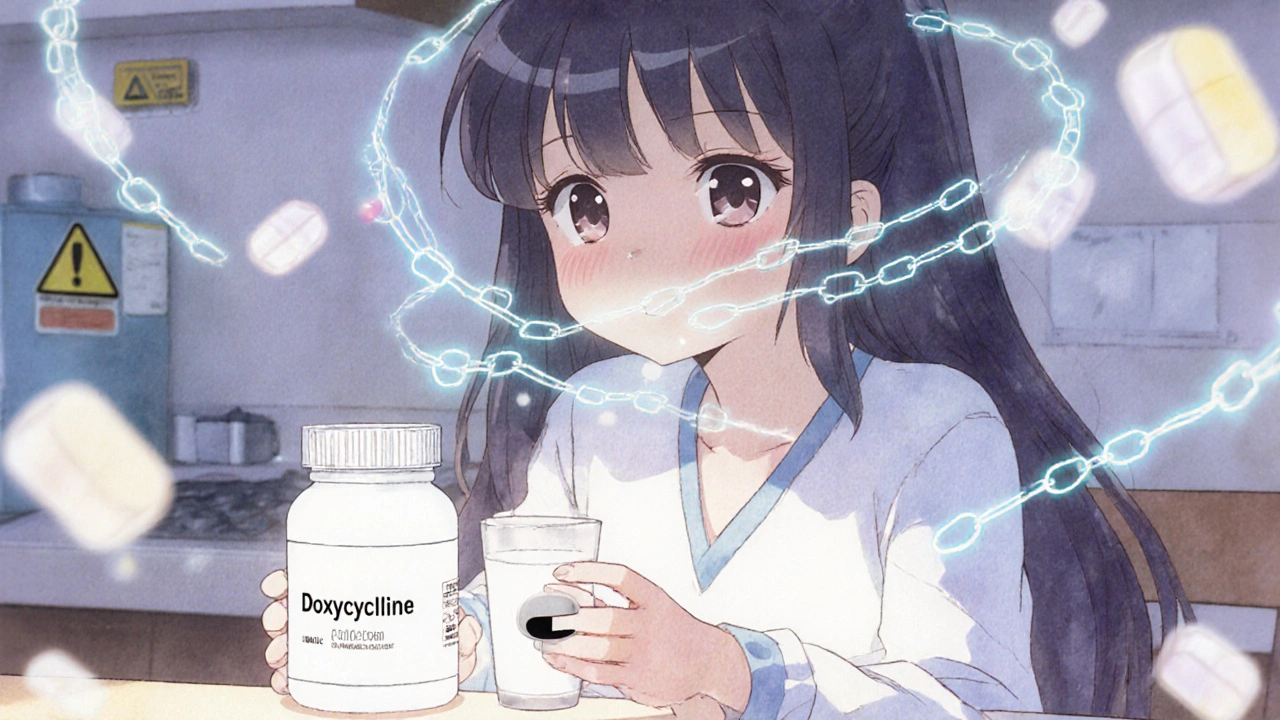
Dairy can block antibiotic absorption, reducing effectiveness by up to 92%. Learn which antibiotics are affected, how long to wait after milk or yogurt, and how to avoid treatment failure.