PPIs and kidney damage: What you need to know about proton pump inhibitors and long-term risks
When you take a proton pump inhibitor, a class of drugs that reduce stomach acid by blocking the enzyme system in stomach cells. Also known as PPIs, they’re among the most prescribed medications in the world — used for heartburn, ulcers, and GERD. But over time, these drugs may quietly affect your kidneys, even if you feel fine. Studies have shown that long-term PPI use is tied to a higher risk of chronic kidney disease, a gradual loss of kidney function that often goes unnoticed until it’s advanced. This isn’t about rare side effects — it’s about subtle, cumulative damage that builds over months or years.
How does this happen? PPIs don’t just turn off acid production in the stomach. They can trigger an inflammatory response in the kidneys called acute interstitial nephritis, a condition where immune cells invade kidney tissue, causing swelling and reduced filtering ability. In some cases, this leads to permanent scarring. The risk goes up if you’re over 60, have diabetes, take multiple medications, or use PPIs for more than a year without medical supervision. You don’t need to feel sick for damage to be happening. Many people only find out during a routine blood test showing elevated creatinine.
Not everyone on PPIs will get kidney problems — but many take them longer than needed. A 2023 study in The BMJ found that people who took PPIs daily for over two years had a 28% higher chance of developing kidney disease compared to those who didn’t. And it’s not just the pills themselves — it’s how they’re used. Doctors often prescribe them for short-term relief, but patients keep taking them because symptoms return when they stop. That’s where the real danger lies: silent, ongoing exposure.
What can you do? If you’ve been on a PPI for more than a year, talk to your doctor about whether you still need it. Some people can switch to H2 blockers like famotidine, adjust their diet, or use lifestyle changes to manage reflux. Others may need to taper off slowly to avoid rebound acid. The goal isn’t to scare you off PPIs — they’re lifesavers for some — but to make sure you’re not taking them longer than necessary.
Below, you’ll find real-world guides on how these drugs interact with other medications, what symptoms to track, and how to spot early signs of kidney stress before it becomes serious. These aren’t theoretical discussions — they’re practical, tested insights from people who’ve been there.
Acute Interstitial Nephritis: How Drugs Trigger Kidney Inflammation and What Recovery Really Looks Like
Posted by Ian SInclair On 22 Nov, 2025 Comments (10)
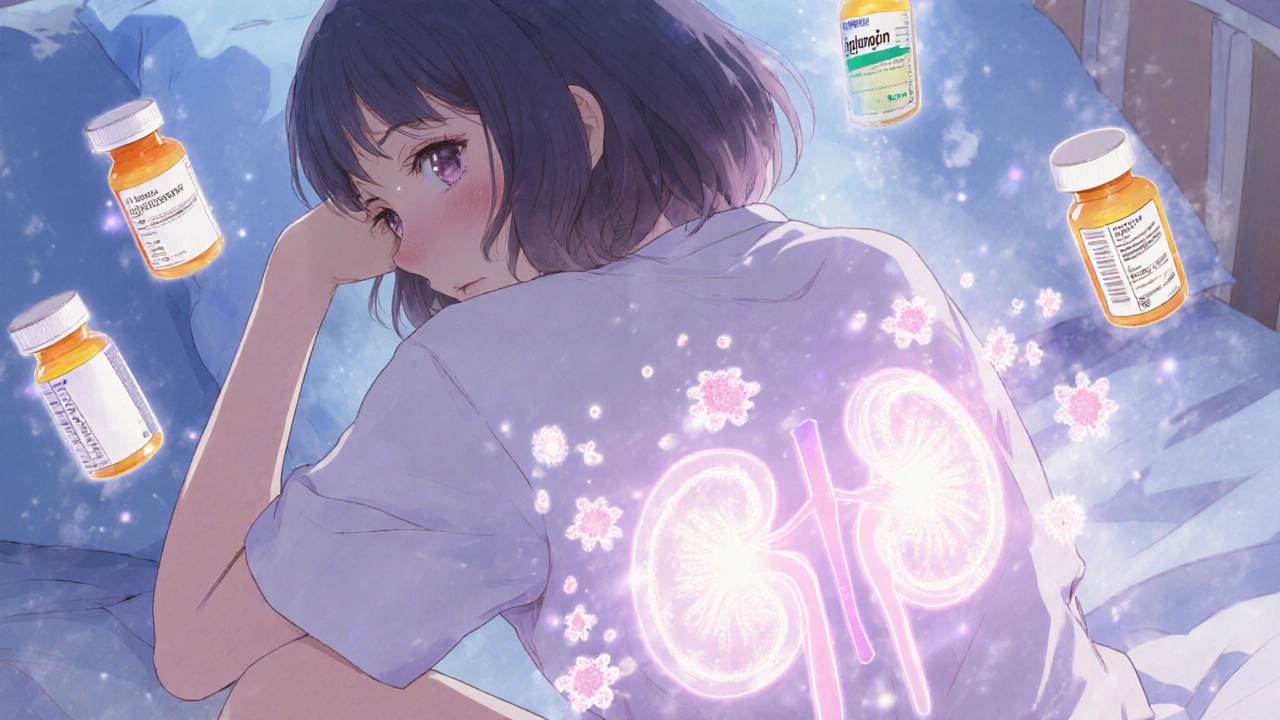
Acute interstitial nephritis is a serious kidney reaction to common drugs like PPIs and NSAIDs. Learn how it develops, which medications cause it, and why early action is critical for recovery.