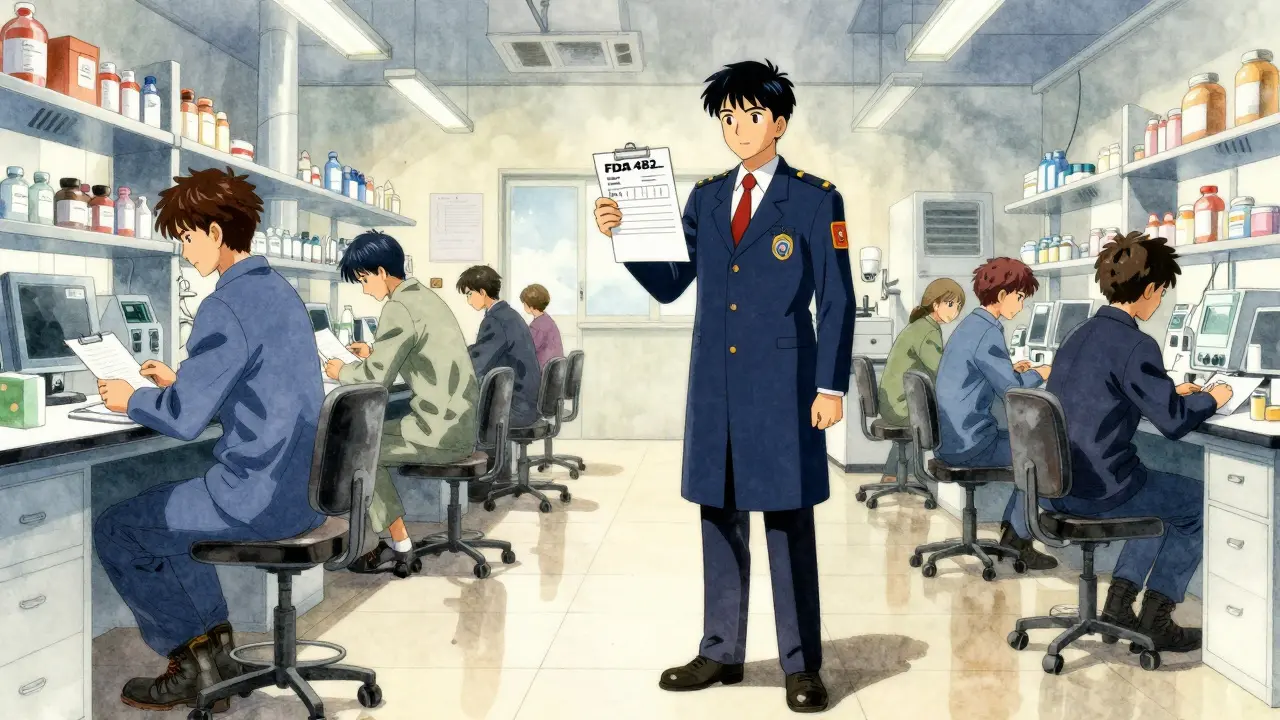
On May 6, 2025, the FDA changed the game. For decades, if you ran a drug or food factory in the U.S., you knew an inspector could show up at any moment-no warning, no notice. But if your factory was in India, China, or anywhere else overseas, you usually got weeks to clean up, polish your records, and prep your staff. That double standard is gone. Now, unannounced FDA inspections apply everywhere. Whether you're making pills in Ohio or active ingredients in Bangalore, the FDA can walk in without knocking first.
Why Surprise Visits Exist
The FDA doesn’t do surprise inspections to catch people off guard. They do it because people try to hide things when they know they’re being watched. When factories got advance notice, inspectors found serious problems more than twice as often as they did during domestic inspections. That’s not because foreign facilities are worse-it’s because they had time to fake compliance. Unannounced visits cut through the show. They see what’s really happening on the floor, in the lab, in the records room-right now. Think of it like a random breathalyzer test. If you knew police were coming every Thursday at 3 p.m., you’d avoid drinking before then. But if they could show up any day, any time? You’d think twice before drinking at all. That’s the point. The FDA wants to know: Are you following the rules every single day? Or only when you think someone’s watching?How an Unannounced Inspection Actually Works
It doesn’t start with a phone call. It starts with a knock. FDA inspectors arrive, show their badge, and hand over Form FDA 482-the official Notice of Inspection. They don’t ask for permission. They don’t wait for the CEO to come down. They ask for the person in charge of quality or manufacturing, whoever’s available. Then they start asking questions, requesting documents, and walking through the facility. They’ll check:- Standard Operating Procedures (SOPs)-are they written, followed, and updated?
- Manufacturing records-do they match what actually happened?
- Equipment logs-was that sterilizer calibrated last week, or is it still sitting at 120°C because no one checked?
- Employee training files-did that new hire really get trained on contamination controls, or did they just watch a 5-minute video?
- Complaint files and recall procedures-do you know how to pull a batch if something goes wrong?
The Big Shift: Foreign Facilities Are Now Equal
Before May 2025, the FDA inspected about 3,000 foreign facilities each year. Most got advance notice. Why? Because logistics were messy. Inspectors needed visas, translators, local contacts. It made sense-at the time. But it created a loophole. Companies overseas could delay, prepare, and hide. Domestic plants? No such luxury. The new policy closes that gap. Now, a factory in Mexico has the same inspection rules as one in Pennsylvania. The FDA says this isn’t just fair-it’s necessary. Over 80% of the active ingredients in U.S. medicines come from abroad. Nearly 40% of finished drugs are made overseas. If you’re not inspecting those places the same way, you’re not protecting American patients. This shift didn’t come out of nowhere. It followed a pilot program in India and China that proved unannounced visits found more violations. It was backed by a presidential executive order signed just one day before the announcement. And it’s being enforced now. The first wave of unannounced inspections in Europe and Southeast Asia already happened in late 2025. Companies are feeling it.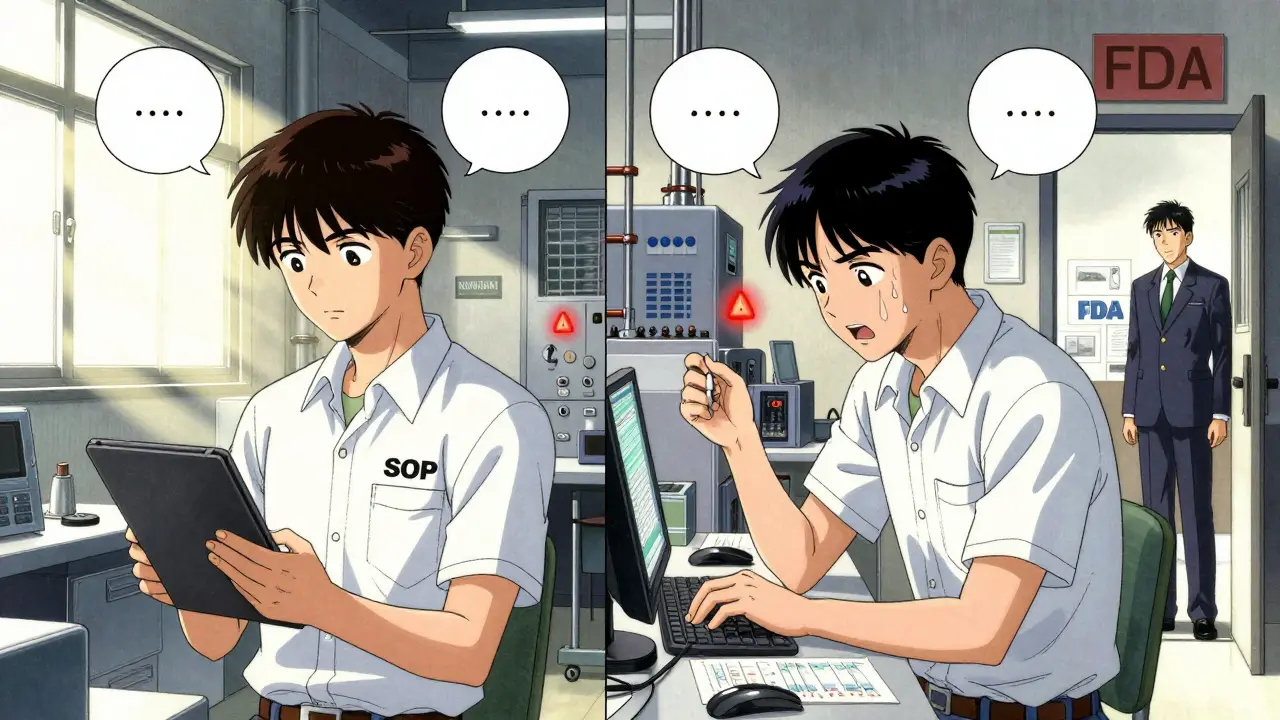
What Happens When You’re Not Ready
You don’t need to be perfect. But you do need to be honest and consistent. If an inspector finds a minor issue-a missing signature on a batch record, a dusty sensor-they’ll note it on a Form 483. That’s not a crisis. It’s a warning. Fix it. Show them you’re improving. But if they find something serious-falsified data, unsterile conditions, ignored complaints-that’s a different story. The FDA can:- Block your product from entering the U.S.
- Issue a warning letter that goes public on their website
- Seize your inventory
- Initiate a criminal investigation
How to Get Ready-No Matter Where You Are
You can’t predict when they’ll come. But you can prepare like they will. Start with these five steps:- Build a real Quality Management System (QMS)-not a folder on a shared drive. Use software that tracks changes, flags errors, and locks records. Don’t rely on Excel sheets or handwritten logs.
- Train everyone-not just managers. The person who cleans the filling machine needs to know what to do if an inspector shows up. Who to call. Where to find the SOP. What not to say.
- Run mock inspections-quarterly. Bring in someone from outside to surprise your team. Watch how they react. Do they panic? Do they hide documents? Do they know where the batch records are?
- Keep records clean and current-every day. If you’re backfilling data after the fact, you’re already in trouble. The FDA can spot that. They’ve seen it a thousand times.
- Know your supply chain-if your raw material comes from a vendor in Turkey, you need to know if they’re compliant too. The FDA doesn’t care who made it. They care if it’s safe when it hits your plant.

What’s Still Unclear
There are still gray areas. For example, the FDA used to coordinate with foreign regulators before inspections. They’d notify India’s drug authority, invite them to observe, sometimes even do joint visits. Now that inspections are unannounced, will they still do that? No one knows. Some experts worry this could strain international relationships. Others say it’s necessary-foreign regulators often lack the resources to enforce standards anyway. Another open question: How many inspectors does the FDA have to cover 90+ countries? They’re ramping up, but global inspections are expensive and complex. Will they focus only on high-risk facilities? Or will every factory, big or small, be fair game? The FDA hasn’t said. But one thing’s clear: They’re not going back.What This Means for You
If you’re a manufacturer-domestic or foreign-this isn’t about fear. It’s about integrity. The FDA isn’t trying to shut down good companies. They’re trying to stop bad ones from slipping through. And if your systems are weak, your culture is sloppy, or your records are a mess-you’re not just risking a fine. You’re risking lives. The message is simple: Don’t prepare for the inspection. Prepare for the inspection every day. Because the next time someone knocks on your door, you won’t have time to fix it.Are FDA inspections always unannounced?
Most are, but not all. The FDA generally conducts unannounced inspections for quality system reviews, follow-ups, and "for cause" visits. However, routine inspections for Class II or III medical devices are sometimes announced to ensure key personnel are available. The new policy applies unannounced inspections to foreign facilities across the board, eliminating the old practice of advance notice for overseas plants.
What happens if a company refuses an FDA inspection?
Refusing an FDA inspection is a serious violation. The agency has legal authority to block products from entering the U.S., seize inventory, issue warning letters, and pursue criminal charges. Companies that delay, deny, or limit access are treated as high-risk and face immediate regulatory action. There is no legal right to refuse an FDA inspector with proper credentials and Form FDA 482.
Do unannounced inspections apply to food manufacturers too?
Yes. The same policy applies to food, dietary supplements, and medical products. Whether you’re making infant formula in Vietnam or peanut butter in Alabama, the FDA can show up without warning. The goal is consistent safety standards across all products entering the U.S. market.
How often do unannounced inspections happen?
There’s no fixed schedule. The FDA uses risk-based targeting-high-risk facilities, past violators, or those with complex supply chains are inspected more often. But even low-risk sites aren’t safe. The agency has said it will increase the frequency of unannounced visits globally. Some companies report being inspected twice in a single year, with no advance notice.
Can a company be inspected more than once in a year?
Absolutely. The FDA doesn’t limit inspections to once per year. If a facility has recurring issues, receives a warning letter, or is flagged for high risk, inspectors can return multiple times-sometimes within weeks. A single inspection doesn’t clear your record. Continuous compliance is required.