
It’s normal to worry. You hear stories-someone had a reaction after getting a shot, and suddenly, vaccines feel risky. But here’s the truth: vaccine allergic reactions are incredibly rare. For every million doses given, fewer than two people experience a serious allergic reaction. That’s less likely than being struck by lightning in a given year. Still, when it does happen, it matters. That’s why we’ve built one of the most detailed safety nets in medicine to catch these rare events before they become dangerous.
How Rare Are Allergic Reactions to Vaccines?
Let’s put numbers to fear. Across all vaccines, anaphylaxis-the most severe type of allergic reaction-happens at a rate of about 1.3 cases per million doses. For the mRNA COVID-19 vaccines, the rate was slightly higher: around 5 to 11 cases per million doses. That sounds scary until you realize: if you got 1,000 doses, you’d need to watch over 100,000 people to see even one reaction. And in nearly all cases, people recover fully with prompt treatment.
These aren’t guesses. They come from the Vaccine Safety Datalink, which tracks over 25 million doses. The CDC and FDA don’t rely on rumors or social media posts. They use real-world data from clinics, hospitals, and pharmacies. Even with billions of doses administered since 2020, the total number of confirmed anaphylaxis cases remains in the low hundreds.
What Does a Real Vaccine Allergy Look Like?
Not every red spot or itchy arm is an allergy. Most reactions are mild-redness, swelling, soreness at the injection site. Those are normal immune responses, not allergies. True allergic reactions are fast, systemic, and involve more than the skin.
Signs of a true allergic reaction include:
- Hives or widespread swelling (angioedema)
- Difficulty breathing or wheezing
- Dizziness or fainting
- Rapid heartbeat or drop in blood pressure
- Nausea, vomiting, or abdominal cramps
These symptoms usually show up within minutes-71% happen in the first 15 minutes. That’s why you’re asked to wait 15 to 30 minutes after getting vaccinated. It’s not just a formality. It’s your safety buffer.
What in the Vaccine Could Cause a Reaction?
People often blame the virus part of the vaccine. But the real triggers are usually the other ingredients: stabilizers, preservatives, or carrier proteins. For example:
- Polyethylene glycol (PEG) is used in mRNA vaccines (Pfizer, Moderna). It’s also in laxatives and some cosmetics. A small number of people with known PEG allergies have reacted.
- Polysorbate 80 is in some vaccines and is chemically similar to PEG. Reactions here are even rarer.
- Yeast proteins are used to grow some vaccines, like hepatitis B and HPV. But studies show fewer than 15 possible cases among 180,000 allergic reports in VAERS-most weren’t even confirmed.
- Egg protein used to be a big concern for flu shots. But today, even people with severe egg allergies can safely get flu vaccines. Over 4,300 egg-allergic individuals have received them without serious reactions, including 656 with past anaphylaxis to eggs.
The bottom line: You don’t need to avoid vaccines because of egg, yeast, or gelatin allergies unless you’ve had a documented reaction to the exact same ingredient in a prior vaccine. Most allergies to food or environmental triggers don’t carry over.
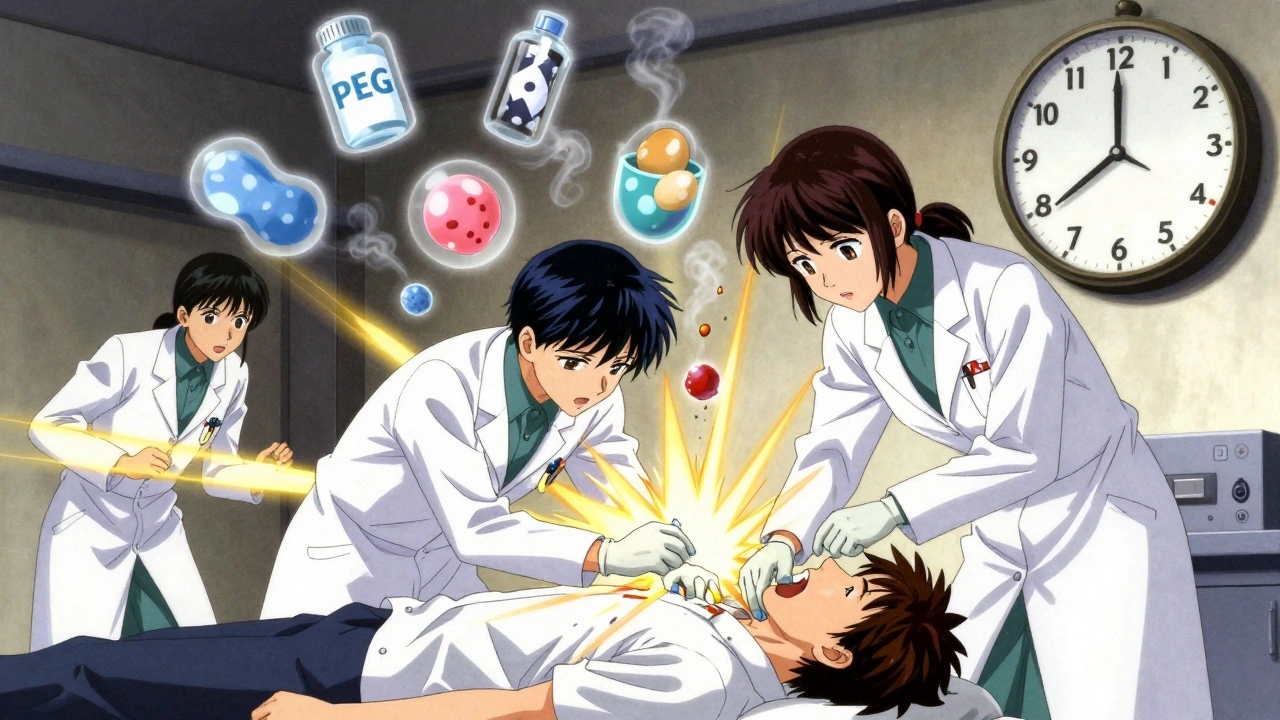
How Do We Know When Something Goes Wrong?
The U.S. has one of the most advanced vaccine safety systems in the world: VAERS-the Vaccine Adverse Event Reporting System. It’s not perfect. Anyone can report anything. But that’s the point. It’s designed to catch signals early.
When 21 cases of anaphylaxis popped up after 1.9 million Pfizer doses in December 2020, VAERS flagged it. The CDC didn’t panic. They dug into the data: 81% of those people had prior allergy histories. No deaths. No patterns pointing to the vaccine itself. Just a rare, predictable reaction in a high-risk group.
VAERS gets 30,000 to 50,000 reports a year. Only a tiny fraction are serious. Most are unrelated events-someone got a headache after the shot, then had a car accident the next day. Correlation isn’t causation. That’s why experts use multiple systems: CDC’s v-safe (a smartphone app that checks in with vaccine recipients), hospital databases, and international networks like EudraVigilance in Europe.
What Happens If You Have a Reaction?
Every clinic that gives vaccines must be ready. Epinephrine auto-injectors (like EpiPens) must be on hand. Staff must be trained. The protocol is simple and fast:
- Recognize symptoms immediately.
- Give epinephrine into the outer thigh-no delays.
- Call 911, even if symptoms improve.
- Monitor for a second wave of symptoms (biphasic reactions can happen hours later).
Epinephrine works within minutes. It’s the only treatment that stops anaphylaxis from becoming fatal. Waiting for antihistamines or steroids? That’s too late. That’s why the CDC requires epinephrine to be available at every vaccination site.
Who Should See an Allergist Before Getting Vaccinated?
If you’ve ever had anaphylaxis to any vaccine, you should talk to an allergist before getting another one. They can do skin tests or blood tests to check for specific triggers like PEG or polysorbate. But here’s the catch: most people don’t need this.
For example:
- Having a peanut allergy? No problem. You can get any vaccine.
- Being allergic to penicillin? Still safe.
- Having hives after a flu shot last year? Maybe. But it’s more likely a non-allergic reaction.
The American Academy of Allergy, Asthma & Immunology says: Don’t avoid vaccines because of fear. Get tested only if you’ve had a confirmed reaction. Most people who think they’re allergic aren’t.
Why This Matters for Public Health
Every time someone skips a vaccine because they’re scared of an allergic reaction, the whole community pays. Measles outbreaks. Whooping cough in babies. Polio coming back. Vaccine hesitancy fueled by misinformation costs lives.
But here’s the good news: the system works. The rare reactions we’ve seen were caught, studied, and understood. We’ve learned that egg-allergic kids can get MMR shots. We’ve learned that yeast doesn’t trigger reactions in almost everyone. We’ve learned that PEG allergies are real but extremely uncommon.
The CDC’s 2023-2027 strategy puts “enhancing detection and response to rare adverse events” as a top goal. They’re investing $28 million in better data tools. Researchers are even looking for blood markers that could predict reactions before they happen-possibly within the next five years.
What You Should Do Now
Don’t let fear stop you from getting vaccinated. But do be smart:
- If you’ve had a severe allergic reaction to any vaccine before, talk to your doctor or allergist before getting another.
- Stay for 15-30 minutes after your shot. Use that time to relax, not scroll.
- Know the signs of anaphylaxis. If you feel sudden swelling, trouble breathing, or dizziness-speak up immediately.
- Report any reaction to VAERS. Even if you’re not sure. It helps everyone.
- Don’t assume you’re allergic because you had a rash, fever, or sore arm. Those are normal.
The goal isn’t to eliminate every risk. That’s impossible. The goal is to make the risk so small that the benefit-protection from deadly diseases-far outweighs it. And the data shows we’ve done that.
Can you have an allergic reaction to a vaccine you’ve had before without problems?
Yes, but it’s rare. Allergic reactions usually happen after repeated exposure to the same trigger. If you got a vaccine safely before, your risk of reacting the second time is still very low. However, if you develop symptoms like hives, swelling, or trouble breathing after a previous dose, you should consult an allergist before getting the same vaccine again.
Are children at higher risk for vaccine allergic reactions?
No. Children and teens have a slightly lower rate of allergic reactions than adults-about 0.22 per 100,000 doses. Most reactions occur in adults over 30, especially women. This may be because adults have more prior exposure to potential triggers like PEG in personal care products or medications.
Is it safe to get a flu shot if you’re allergic to eggs?
Absolutely. Multiple studies involving over 4,300 egg-allergic people-including 656 with prior anaphylaxis to eggs-show no serious reactions after flu shots. Modern flu vaccines contain so little egg protein that it’s not a risk. No special precautions are needed.
Do aluminum adjuvants cause allergic reactions?
No. Aluminum is used in many vaccines to boost immune response, but it doesn’t cause IgE-mediated allergies. Instead, it can cause harmless, long-lasting lumps at the injection site-called nodules. These are not dangerous and fade over time. They’re not allergic reactions.
What if I have a history of anaphylaxis to something else, like peanuts or bee stings?
You can still get vaccinated. Having anaphylaxis to food, insects, or latex doesn’t increase your risk of reacting to vaccines-unless you’re allergic to a specific ingredient like PEG or polysorbate. Most people with these allergies have no issues. Talk to your doctor if you’re unsure, but don’t skip vaccines based on unrelated allergies.
How long should I wait after a vaccine before leaving the clinic?
Everyone should wait at least 15 minutes. If you’ve had a previous allergic reaction to any vaccine or injectable medication, wait 30 minutes. This is because 71% of anaphylaxis cases happen within the first 15 minutes. Waiting gives staff time to respond if something happens.
Final Thought: Trust the System, Not the Noise
The science is clear. Vaccine allergic reactions are rare. The systems to detect and treat them are strong. The benefits of vaccination-preventing death, hospitalization, and long-term illness-far outweigh the risks. You don’t need to be fearless. You just need to be informed. And the data is on your side.

Scott van Haastrecht
The data’s solid, but let’s not pretend this system is flawless. VAERS is a garbage-in-garbage-out system. People report their cat sneezing after a shot as an adverse event. They cherry-pick outliers and turn them into viral horror stories. You can’t fix misinformation with more graphs.
Ollie Newland
From a clinical epidemiology standpoint, the anaphylaxis rate is statistically negligible-1.3 per million is well below the threshold for public health concern. The real signal here isn’t the reaction rate, it’s the cognitive dissonance in public perception. We’ve normalized fear of the statistically improbable while ignoring systemic risks like vaccine hesitancy-driven outbreaks.
Benjamin Sedler
So let me get this straight-you’re telling me PEG, which is in my toothpaste and laxatives, is suddenly a deadly threat only when it’s in a syringe? And you want me to believe that’s not a corporate ploy to sell more EpiPens? I’ve seen the same ingredients in 20 different products. If it were truly dangerous, we’d have a national crisis. We don’t. So why the panic?
zac grant
For anyone still nervous: the stats don’t lie. You’re more likely to die from a bee sting than a vaccine reaction. The fact that every clinic has epinephrine on hand isn’t overkill-it’s brilliant risk mitigation. We don’t prevent all risk. We prevent catastrophic outcomes. That’s medicine at its best.
Pavan Kankala
They say it’s rare-but how many people died quietly and got buried under ‘natural causes’? The CDC doesn’t track deaths, only ‘confirmed reactions.’ What about the guy who got the shot, collapsed at home, and nobody connected the dots? The system is designed to make you feel safe, not to tell you the truth. You’re being groomed to trust the machine.
Martyn Stuart
It’s worth emphasizing: the egg-allergy myth has been debunked repeatedly-over 4,300 cases, zero serious reactions. The same goes for yeast, gelatin, and aluminum. These aren’t ‘maybe’ risks-they’re non-risks. The persistence of these myths is a public health crisis in itself. Please, if you’re unsure, consult an allergist-not Reddit.
Jessica Baydowicz
I got my second booster last week and waited my 15 minutes like a champ. No hives, no dizziness, just a sore arm and the quiet pride of knowing I’m helping protect my niece who can’t get vaccinated yet. We’re not just protecting ourselves-we’re protecting the vulnerable. Keep showing up. The world needs you.
Shofner Lehto
People forget that the 15-minute wait isn’t just for anaphylaxis-it’s for the brain to catch up. You’ve just had a needle stuck in you. Your body’s doing something radical. It’s okay to sit. Breathe. Don’t rush into the world right after. It’s not about fear. It’s about mindfulness.
Yasmine Hajar
As a Black woman in America, I’ve seen how medical systems have failed us. But this? This is different. This isn’t Tuskegee. This is transparency. Real data. Real monitoring. Real care. I’ve had three shots. No issues. And I’m not just getting them for me-I’m doing it so my nephew doesn’t grow up scared of something that saves lives.
Karl Barrett
There’s a philosophical layer here: we live in an age where the improbable becomes the probable in our minds because it’s amplified. The vaccine system doesn’t eliminate risk-it redefines it. It says: ‘Yes, something terrible could happen. But here’s how we’ve engineered the world to make that something so unlikely that choosing safety is the only rational act.’ That’s not just science. It’s wisdom.