
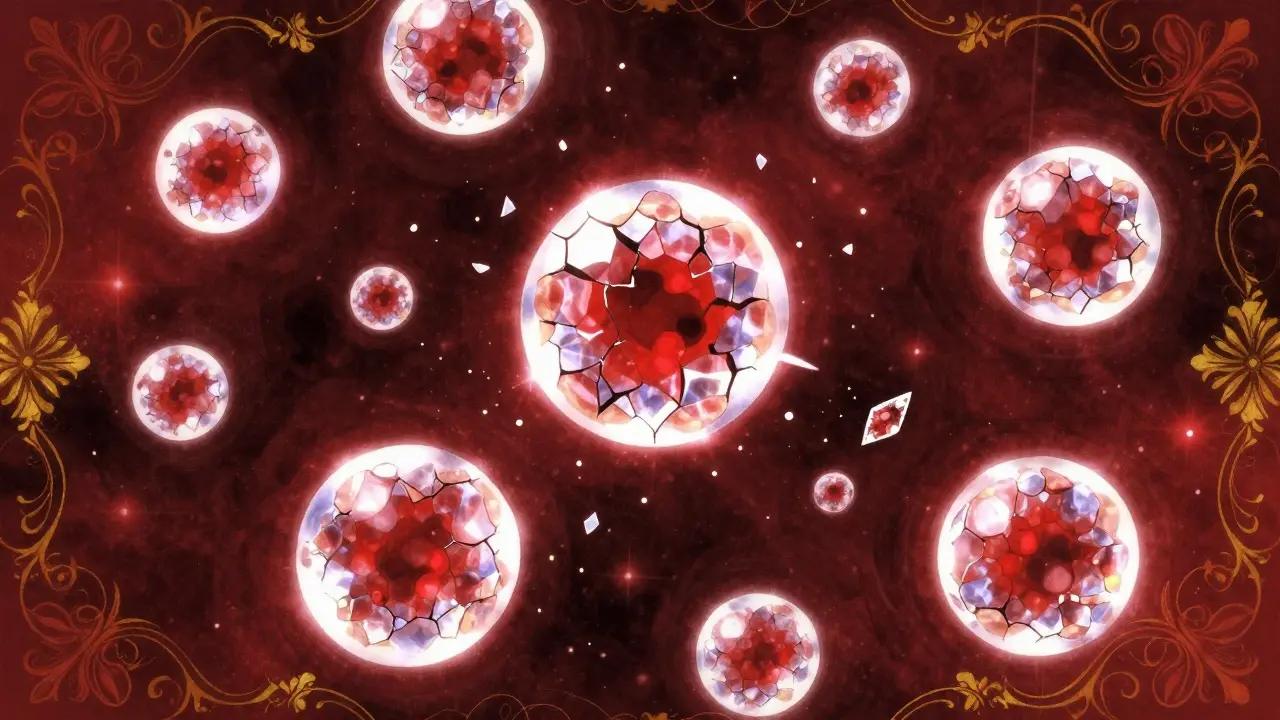
Why Certain Drugs Cause Red Blood Cells to Burst
To understand the risk, you have to look at how your blood works. Normally, your body produces an enzyme called Glucose-6-Phosphate Dehydrogenase. This enzyme is the engine behind the pentose phosphate pathway, which creates a molecule called NADPH. Think of NADPH as a shield; it keeps glutathione in a reduced state, which protects your red blood cells from "oxidative stress"-basically, chemical damage from certain drugs or foods. When you have a deficiency, that shield is missing. When you introduce an oxidative stressor, like certain antimalarials or high-dose antibiotics, the red blood cells can't defend themselves. They suffer oxidative damage and rupture, a process known as hemolysis. This can lead to a rapid drop in hemoglobin-sometimes losing over 50% of your normal levels in just a week-leaving you exhausted, jaundiced, and in need of urgent medical care.High-Risk Medications You Must Discuss With Your Doctor
Not all medications are created equal. While some might cause mild issues, others are absolute "no-go" zones. The World Health Organization has identified 87 specific medications that require caution, but a few stand out as particularly dangerous. One of the most critical is rasburicase, used to treat tumor lysis syndrome. Because of its potent oxidative effect, it carries an FDA Black Box Warning; it can cause 100% hemolysis in deficient patients. Similarly, methylene blue, often used for methemoglobinemia, has been linked to severe crises in 95% of deficient individuals. Then there are the antimalarials. primaquine is a classic trigger. While it's effective against malaria, it can induce full-blown hemolysis in nearly all patients with severe G6PD variants. Dapsone, often used for leprosy or severe acne, is another high-risk drug, especially at doses exceeding 50mg daily.| High-Risk Medication | Risk Level | Safer Alternative | Context/Use |
|---|---|---|---|
| Rasburicase | Critical | Consult Hematologist | Tumor Lysis Syndrome |
| Methylene Blue | High | Avoid if possible | Methemoglobinemia |
| Primaquine | High | Chloroquine / Malarone | Malaria Treatment |
| Dapsone | Moderate/High | Alternative Antibiotics | Skin/Infection |
| Tafenoquine | Variable | Artemisinin-based therapy | Malaria Cure |
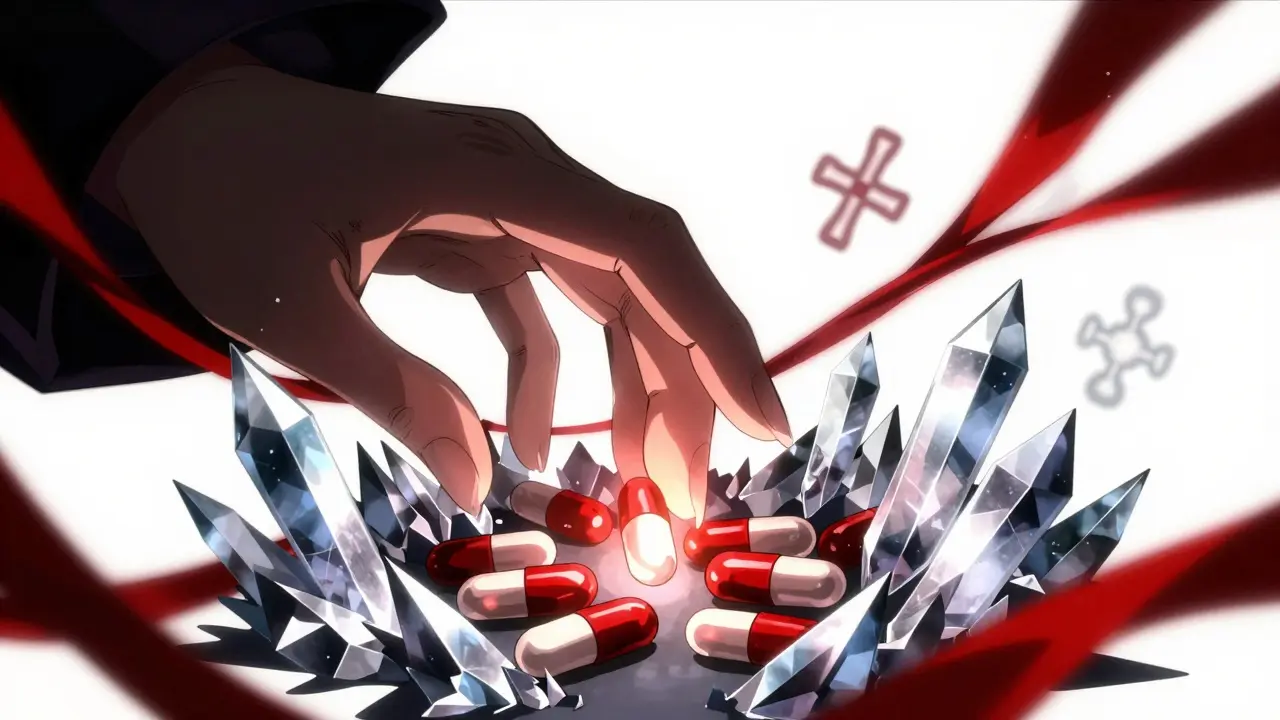
Knowing Your Variant: Why Severity Differs
Not everyone with G6PD deficiency reacts the same way. The World Health Organization categorizes the condition into five classes. Most people (about 80%) fall into Class III, which is a moderate deficiency. These individuals usually only have issues when exposed to high-dose triggers. However, those with the G6PD Mediterranean variant (common in Southern Europe) often have a more severe deficiency (Class II). Research shows they can be ten times more sensitive to oxidative stress than those with the G6PD A- variant common in African populations. This means a dose of medication that might be tolerated by someone with an African variant could be catastrophic for someone with a Mediterranean variant.The Gold Standard for Prevention: Testing and Screening
How do you stop a crisis before it starts? The only way is through definitive testing. If you suspect you have the deficiency, or if you are traveling to a malaria-endemic region, you need a quantitative spectrophotometric assay. This measures exactly how much enzyme activity you have per gram of hemoglobin. For those needing immediate answers, the STANDARD G6PD Test System is a newer point-of-care tool that provides results in about 8 minutes with high accuracy. This is a game-changer in emergency rooms where a doctor needs to know if rasburicase is safe to administer right now. One major pitfall to avoid: do not test for G6PD deficiency while you are actually having a hemolytic crisis. During a crisis, the youngest red blood cells (which have the most enzyme) survive, while the older, deficient ones burst. This can lead to a "false normal" result. Wait at least three months after a crisis before re-testing to get an accurate reading.
Living with G6PD Deficiency: Practical Tips
Managing this condition is less about medicine and more about vigilance. Here are a few concrete rules of thumb for daily life:- Carry a Medical Alert Card: In an emergency, you might not be able to tell a doctor about your G6PD status. A card listing your deficiency and the high-risk drugs (like methylene blue) can save your life.
- Question Every New Prescription: Don't assume the doctor knows. Ask, "Is this medication an oxidative stressor?" and check the WHO Essential Medicines List for G6PD warnings.
- Travel Smart: If you're heading to a region where malaria is common, avoid primaquine. The CDC recommends atovaquone-proguanil (Malarone) as a safer alternative.
- Watch Your Diet: While medications are the primary concern, some people react to fava beans (which is why it's often called "Fava Bean Anemia"). Avoid them if you've noticed any reaction.
The Future of Treatment: Beyond Avoidance
For decades, the only advice was "don't take that drug." But science is moving toward active protection. Recent studies in Blood Advances suggest that N-acetylcysteine (NAC) might help protect red blood cells from oxidative damage, potentially reducing the severity of hemolysis when triggers are unavoidable. Even more exciting is the development of recombinant human G6PD (rhG6PD). Phase I trials are aiming to replace the missing enzyme entirely. While we aren't there yet, the transition from "avoidance only" to "active therapy" is finally happening.Can women have G6PD deficiency?
Yes. While it is an X-linked trait and most common in males, about 15% of G6PD-deficient females can experience hemolysis. This happens because of a process called X-chromosome inactivation, where some of the cells end up with the deficient version of the enzyme.
Is G6PD deficiency a chronic disease?
Not in the traditional sense. Unlike diseases that cause constant damage, G6PD deficiency is a genetic state. You only experience symptoms (hemolysis) when triggered by specific medications, foods, or infections. Without those triggers, most people have no symptoms at all.
What are the warning signs of a hemolytic crisis?
Look for sudden fatigue, shortness of breath, pale skin, and a yellowish tint to the eyes or skin (jaundice). Dark-colored urine (tea or cola-colored) is also a primary sign that red blood cells are breaking down rapidly.
Are all antibiotics safe for people with G6PD deficiency?
Most are, but not all. Some sulfonamides (like dapsone) are high-risk. Always provide your doctor with a full list of your G6PD status before starting a new course of antibiotics to ensure the safest choice is made.
How accurate are home or rapid G6PD tests?
Modern point-of-care tests, such as the STANDARD G6PD Test System, are highly accurate, often exceeding 99% accuracy compared to lab methods. However, they should still be ordered and interpreted by a healthcare provider.



Joseph Rutakangwa
important info here. stay safe everyone
simran kaur
Funny how they only list the pharmaceuticals. I bet these "high-risk" drugs are just a way to keep us dependent on the medical industrial complex while ignoring the actual causes of oxidative stress. It is all about control and profit, obviously. If you actually look at the data they hide, you will see the patterns. They want us terrified of a few beans and a pill so we don't look at the bigger picture of what is actually being put into our water systems.
Joey Petelle
Oh, look at us, bravely navigating the treacherous waters of genetics with a little handy table. Truly a peak civilization moment when we're terrified of a legume. It's just a genetic quirk, not a Shakespearean tragedy, though some people love to treat it like they've been cursed by a Victorian ghost. Just read the label and move on with your mediocre lives, people.
Rob Newton
Avoidance is a weak strategy.
Brian Shiroma
Right, because the "strategy" of not having your blood explode is just so incredibly weak. I'm sure you have a fantastic alternative, like just wishing the enzyme back into existence through sheer willpower.
HARSH GUSANI
India has the best doctors to handle this anyway! 🇮🇳 Why follow WHO lists when our own local experts know the terrain better? This post is too western-centric 🙄🇮🇳
Jenna Carpenter
You guys really need to focus on your spirutual alignment. If your vibration is high enough, your body can heal these genetic gaps naturally. Most of these "crises" are just manifestations of disharmony within the soul. I've seen people clear thier blood issues just by meditating on a quartz crystal for twenty mins a day. The medecine is just a bandaid for a deeper spiritul wound.
Will Baker
I love how the guru over here thinks a rock is better than a hematologist. It's almost cute in a delusional sort of way. I personally think it's hilarious that people believe they can "vibrate" their way out of a genetic enzyme deficiency. Truly a masterpiece of ignorance.
Ace Kalagui
I just wanted to say that for anyone feeling overwhelmed by this information, please know that you are not alone and there is a huge community of people navigating these same challenges every day. It can feel like a lot to manage, especially when you have to be your own advocate in a busy clinic, but taking it one step at a time and keeping that medical alert card in your wallet is a wonderful way to empower yourself and ensure your safety while you travel or seek care. Just keep pushing forward and supporting each other through the learning process because we all get there eventually with a little patience and kindness.
Dee McDonald
GET TESTED NOW! Don't wait until you're yellow to figure this out! If you've ever felt weird after certain meds, stop guessing and get the quantitative assay. It's the only way to actually know your risk level. Stop playing games with your hemoglobin!
Sakshi Mahant
It is very helpful to have the list of alternatives like Malarone. In many of our communities, we rely on these guides to keep our families safe during travel. Thank you for sharing this clearly.