
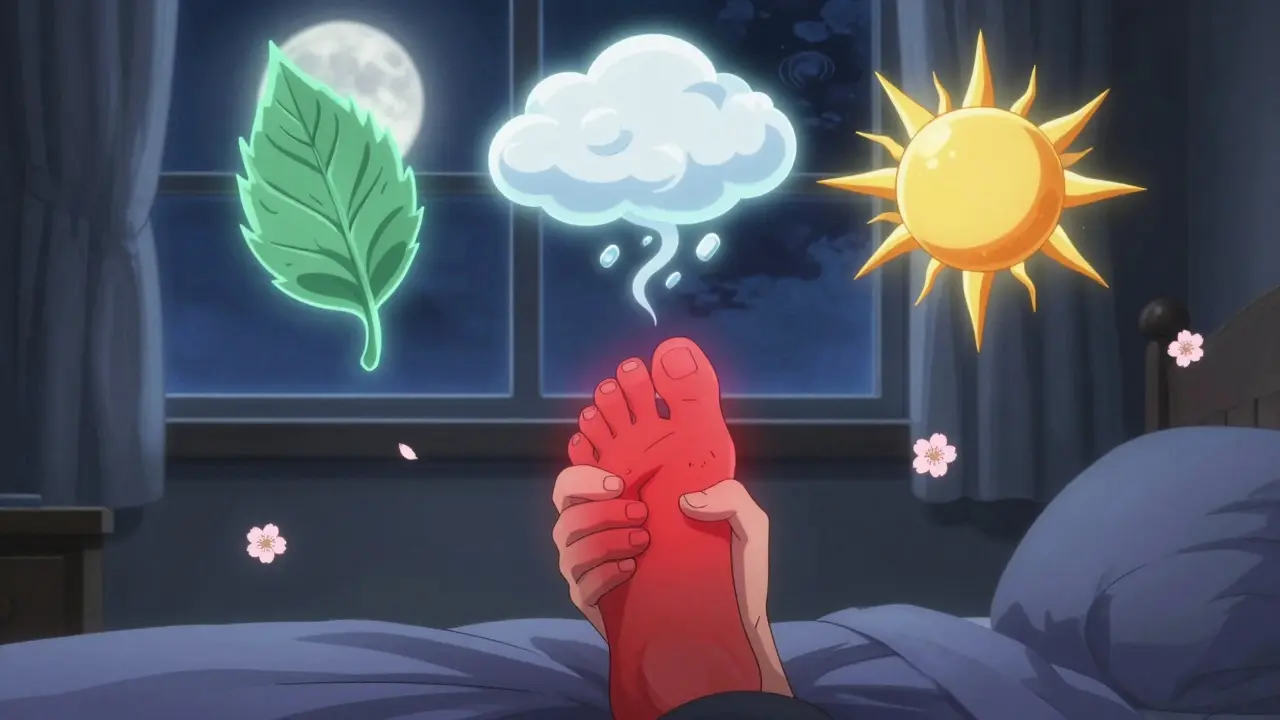
When a gout flare hits, it doesn’t ask for permission. One minute you’re fine, the next your big toe feels like it’s been crushed in a vise. The pain is sharp, swelling rolls in fast, and the skin turns red and hot. If you’ve been through this, you know waiting it out isn’t an option. You need relief - fast. And that’s where three main drugs come in: colchicine, NSAIDs, and steroids. Each works differently. Each has trade-offs. And choosing the right one isn’t about what’s newest or most popular - it’s about what fits you.
How These Drugs Actually Work
Colchicine, NSAIDs, and steroids all reduce inflammation, but they do it in completely different ways. NSAIDs - like naproxen, ibuprofen, and indomethacin - block enzymes that cause swelling and pain. They’re the go-to for most people because they’re widely available and work quickly. Colchicine, on the other hand, stops white blood cells from rushing to the joint. It’s like putting a roadblock in the path of inflammation before it even starts. Steroids - usually prednisone - are powerful anti-inflammatories that calm the entire immune system down. They don’t just target one area; they dial back the body’s overreaction.
Here’s the thing: none of them cure gout. They just turn down the noise so your body can heal. And timing matters more than you think. Studies show if you start treatment within 24 hours of the first sign of pain, you’re far more likely to stop the flare from getting worse. Some doctors even say: start within 24 seconds. It’s not hyperbole - the sooner you act, the less damage the inflammation does.
NSAIDs: The Classic Choice - But Not for Everyone
NSAIDs are the most common first-line treatment for gout flares. Naproxen 500 mg twice a day, ibuprofen 800 mg three times a day, or indomethacin 50 mg three times a day are typical doses for 3 to 5 days. Only three NSAIDs - indomethacin, naproxen, and sulindac - have FDA approval specifically for gout, but in practice, most doctors will use any NSAID at full anti-inflammatory doses.
The problem? They’re rough on the body. Up to 30% of older patients experience stomach upset, ulcers, or bleeding. If you have high blood pressure, heart failure, kidney disease, or are on blood thinners, NSAIDs can make things worse. That’s a big deal because most people with gout are over 50 and have other health issues. One study found that while naproxen worked just as well as low-dose colchicine for pain relief, it caused fewer side effects. But that doesn’t mean it’s safe for everyone.
If you’re young, healthy, and have no stomach or kidney problems, NSAIDs are still a solid pick. But if you’re on multiple medications or have a history of ulcers, you’re better off looking elsewhere.
Colchicine: Less Is More
Colchicine used to be given in huge doses - up to 4.8 mg over six hours. That meant nausea, vomiting, and diarrhea for nearly everyone. Today, that’s outdated. Modern guidelines recommend just 1.8 mg total over one hour, followed by 0.6 mg one hour later. This lower dose works just as well for pain control but cuts side effects by more than half.
Why does this matter? Because colchicine has a very narrow safety window. Too much, and you risk serious problems: muscle damage, low blood cell counts, even organ failure. It’s especially dangerous if you have kidney or liver disease. Many older patients take statins or other drugs that interact badly with colchicine. A single extra pill can be dangerous.
It’s also not great for people who can’t swallow pills easily or who forget to take them on schedule. But if you’re young, have normal kidney function, and can stick to the dosing plan, low-dose colchicine is effective and cheap. It’s often used long-term to prevent future flares, especially when starting uric acid-lowering drugs like allopurinol.
Steroids: The Quiet Winner
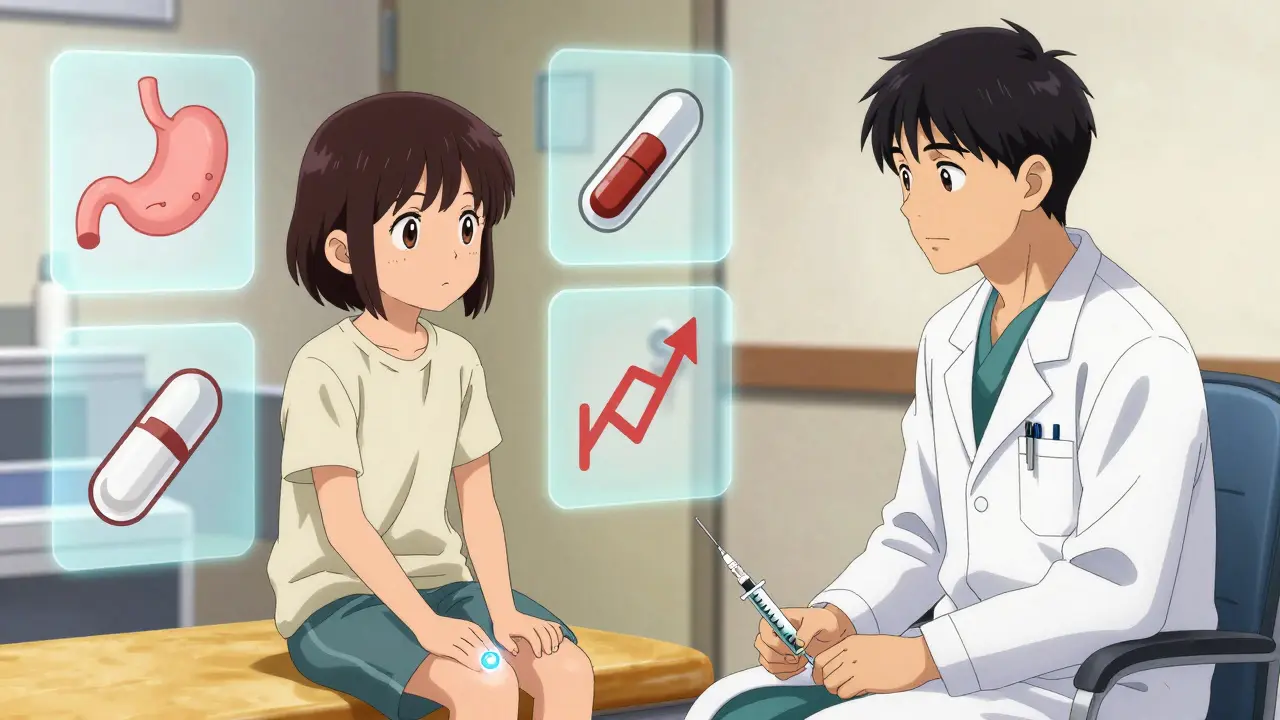
Steroids - oral prednisone - are often overlooked, but they might be the smartest choice for many people. A typical dose is 40-60 mg per day for two to three days, then slowly tapered over 10-14 days. Why taper? Because stopping suddenly can trigger a rebound flare. That’s why doctors don’t just hand out a one-time prescription.
The big advantage? Fewer side effects than NSAIDs or colchicine in people with comorbidities. If you have kidney disease, stomach ulcers, or heart problems, steroids are often safer. They don’t irritate the gut. They don’t build up in the kidneys. And for a single swollen joint - say, just the big toe - an injection right into the joint can give you relief in hours, with almost no systemic side effects.
There’s one catch: steroids can spike blood sugar. If you’re diabetic, you’ll need to monitor your levels closely during treatment. But even then, short-term use is manageable with proper oversight. Studies show steroids reduce pain just as well as NSAIDs - about 73% of patients get at least half their pain gone - and they’re often cheaper than brand-name NSAIDs.
Many primary care doctors prefer steroids because they’re easy to prescribe, familiar, and effective. One review called them “inexpensive and highly effective.” That’s not marketing - that’s clinical reality.
Which One Should You Choose?
There’s no single best drug. It depends on your body, your history, and your other conditions.
- Choose NSAIDs if you’re under 60, have no kidney or stomach issues, and aren’t on blood thinners.
- Choose low-dose colchicine if you’re healthy, have normal kidney function, and can stick to a strict dosing schedule. Good for long-term prevention too.
- Choose steroids if you’re over 60, have high blood pressure, kidney disease, ulcers, or are on multiple meds. Also the top pick for single-joint flares with an injection.
Some people need more than one. If a single drug doesn’t cut it, combining steroids with colchicine or even NSAIDs with colchicine can help. This isn’t risky if done under supervision. In fact, it’s common in stubborn cases.

What to Avoid
Don’t wait. Every hour counts. If you feel that first twinge, don’t wait until morning. Don’t try ice and rest alone. Get the right medication started within 24 hours - ideally sooner.
Don’t reuse old prescriptions without checking with your doctor. Dosing changes. Your kidneys may not handle the same dose as last time. Colchicine especially can be dangerous if you’ve gained weight, lost kidney function, or started a new statin.
Don’t assume one drug works for all flares. Some flares respond better to injections. Others need oral steroids. You might need different approaches at different times. Keep a log: what worked, what didn’t, how long it took. That info helps your doctor tailor your plan.
Long-Term Thinking
Treating a flare is only half the battle. Gout is a chronic disease. If you’re on medication to lower uric acid - like allopurinol or febuxostat - you’re still at risk for flares for months after starting treatment. That’s why guidelines say: keep taking NSAIDs, colchicine, or low-dose steroids for at least three months after your uric acid drops below 6 mg/dL. If you’ve had tophi (those lumpy deposits under the skin), keep it up for six months.
This isn’t optional. Skipping prophylaxis during this phase is like turning off the fire alarm while the house is still burning. Most people don’t realize this, and that’s why flares come back.
And don’t forget lifestyle. Alcohol, sugary drinks, red meat, and shellfish all trigger flares. Losing even 5-10 pounds can cut your risk in half. It’s not about perfection - it’s about reducing the triggers that make your body go haywire.
Final Thoughts
There’s no magic bullet for gout flares. But there is a smart approach. Colchicine, NSAIDs, and steroids each have their place. The key isn’t picking the strongest drug - it’s picking the safest one for you. Your age, your kidneys, your stomach, your other meds - these matter more than any guideline.
If you’re unsure, talk to your doctor. Bring your pill bottles. List your other conditions. Ask: “Which of these three is safest for my body right now?” Don’t settle for a one-size-fits-all answer. Gout treatment isn’t about following a script. It’s about matching the tool to the person.


Carolyn Rose Meszaros
Just had my first gout flare last month and I was terrified 😅 This post literally saved me. I started colchicine at 1.8mg total like it said and boom - pain gone in 12 hours. No vomiting, no drama. Just peace. Thank you for the real talk.
Emily Leigh
Wow. So you're telling me the 'classic' NSAIDs are basically just glorified ibuprofen with a side of stomach bleeding? And steroids are the quiet winner? 🤔 I mean... I get it, but why does it feel like Big Pharma doesn't want us to know this? Like, why aren't steroids the #1 recommendation everywhere? Is it because they're cheap? Or because doctors are scared of the 'steroid stigma'?
Also - 'start within 24 seconds'? That’s not a medical guideline, that’s a TikTok trend. 😂
Greg Robertson
Hey, I’m 62, have hypertension and kidney stuff, and I’ve been on prednisone for two flares now. It’s been a game-changer. No stomach issues, no crashes. Just a little sugar spike - which I manage with water and walking. Honestly? I wish my doc had suggested this sooner. Thanks for laying it out so clearly.
Crystal August
So you’re telling people to take steroids because they’re 'safer'? That’s just lazy medicine. Steroids suppress your entire immune system. You think that’s not going to come back to bite you? What about long-term damage? Osteoporosis? Cataracts? Diabetes? You’re acting like it’s a vitamin. It’s not. It’s a chemical sledgehammer. And now you’re telling people to take it for '10-14 days'? That’s not treatment - that’s a gamble with your future.
pragya mishra
I live in India and here, everyone just takes ibuprofen until their stomach bleeds. No one talks about colchicine or steroids. My uncle had a flare for 3 weeks because he thought 'rest and ice' would fix it. This post should be translated into Hindi. People need to know this.
Edith Brederode
YES to the 'start within 24 hours' point!! I waited two days last time and it turned into a 5-day nightmare. This time? As soon as I felt that pinch - I took my 0.6mg colchicine and went to bed. Woke up with my toe still swollen, but the pain? Gone. I keep the pills in my nightstand now. No excuses.
Also - logging what works? Genius. I started a Notes app called 'Gout Tracker' and it’s changed everything. 📝❤️
Arlene Mathison
Let me tell you - I used to think gout was just 'bad luck.' Then I lost 18 pounds, cut out soda, and started walking daily. Flares dropped from 4 a year to 1. And guess what? I didn’t even need meds for most of them. Yes, the drugs help - but your lifestyle is the real MVP. Don’t just treat the pain - fix the root. Your future self will thank you.
Also - if you’re on statins? Double-check your colchicine dose. My pharmacist almost cried when I told her I was taking 2.4mg. 'Lady,' she said, 'that’s a hospital visit waiting to happen.' So yeah - be smart.
Renee Stringer
Why do people keep saying 'steroids are safe'? They’re not. They’re just less immediately dangerous than NSAIDs. But the damage is silent. You don’t feel your bones weakening. You don’t notice your eyes clouding. And by the time you do - it’s too late. This post feels like a corporate pamphlet disguised as advice.
Manoj Kumar Billigunta
Brothers and sisters - I’m a nurse in Delhi. I see gout patients every week. Many come with broken toes because they waited too long. The truth? Colchicine works. Steroids work. NSAIDs work. But only if you start early. And yes - if you have diabetes or kidney trouble, steroids are often the only safe choice. Don’t fear them. Fear delay. Your body is not broken. It’s just screaming for help. Listen. Act. Don’t wait.
Andy Thompson
So let me get this straight - the government and Big Pharma are hiding the truth about steroids because they want us to keep buying expensive NSAIDs? And colchicine? That’s just a cheap drug they don’t make enough money off. This is why I don’t trust doctors. They’re all in the pocket of the pharmaceutical lobby. Steroids are the real solution - and they’ve been banned in sports for a reason. They’re powerful. Too powerful. Someone’s profiting off your pain.
Also - why does the article say 'start within 24 seconds'? That’s not a real thing. It’s propaganda. I’ve been researching this for 3 years. I know the truth. And you’re being manipulated.