
Feverfew-Anticoagulant Interaction Risk Calculator
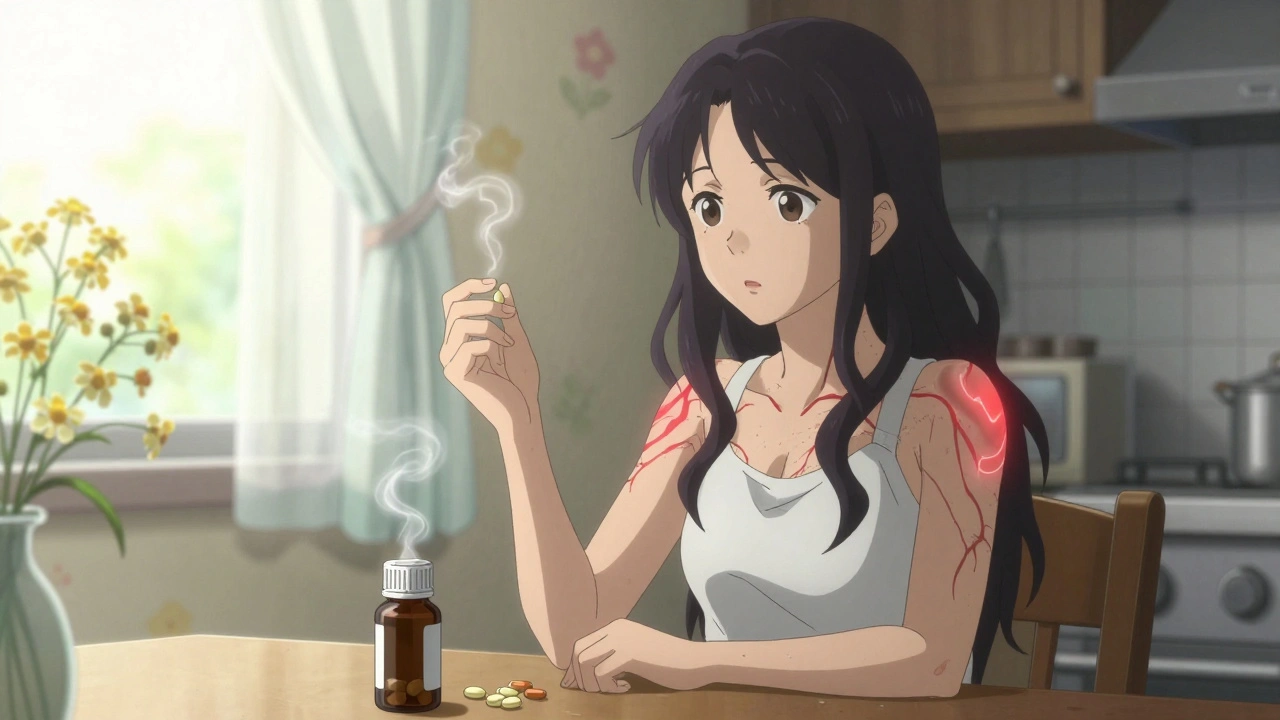
When you're taking blood thinners like warfarin, apixaban, or rivaroxaban, even small changes in your routine can affect how your body handles medication. One of the most overlooked risks? Feverfew, a popular herbal supplement often used for migraine prevention. While many people think of it as a harmless natural remedy, feverfew can interfere with anticoagulants in ways that aren't always obvious - and the consequences can be serious.
What Is Feverfew, Really?
Feverfew (Tanacetum parthenium) is a flowering plant in the same family as daisies and ragweed. It’s been used since ancient times to treat fevers, headaches, and joint pain. Today, it’s mostly taken as a capsule or liquid extract to prevent migraines. The active ingredient, parthenolide, works by blocking serotonin release in platelets - a process that helps reduce inflammation and prevent blood clots from forming too easily.
That sounds good, right? But here’s the catch: if you’re already on a blood thinner, reducing platelet activity further can push your body past a safe threshold. The result? Increased bleeding risk. Not just minor bruising - potentially dangerous internal bleeding.
The Real Bleeding Risk: More Than Just Theory
For years, doctors dismissed feverfew’s interaction with anticoagulants as theoretical. But in 2021, a documented case changed that. A 36-year-old woman taking feverfew supplements developed abnormal blood clotting times: her prothrombin time (PT) was nearly double the normal range, and her partial thromboplastin time (PTT) was also way out of bounds. Her hemoglobin dropped to 10 g/dL - a sign of internal bleeding. After stopping feverfew for four months, all her numbers returned to normal.
This wasn’t an isolated incident. A 2020 survey of 300 feverfew users found that 11.3% developed mouth sores from chewing fresh leaves, and 6.7% had lasting oral inflammation. But the bigger red flag came from Reddit users: 27 people reported easy bruising or nosebleeds lasting 15-45 minutes after combining feverfew with low-dose aspirin. That’s three to four times longer than their usual bleeding time.
Even more telling: a Healthline user review platform showed that 41% of people on anticoagulants who took feverfew reported increased bruising - compared to just 12% of those not on blood thinners.
How Feverfew Interacts With Blood Thinners
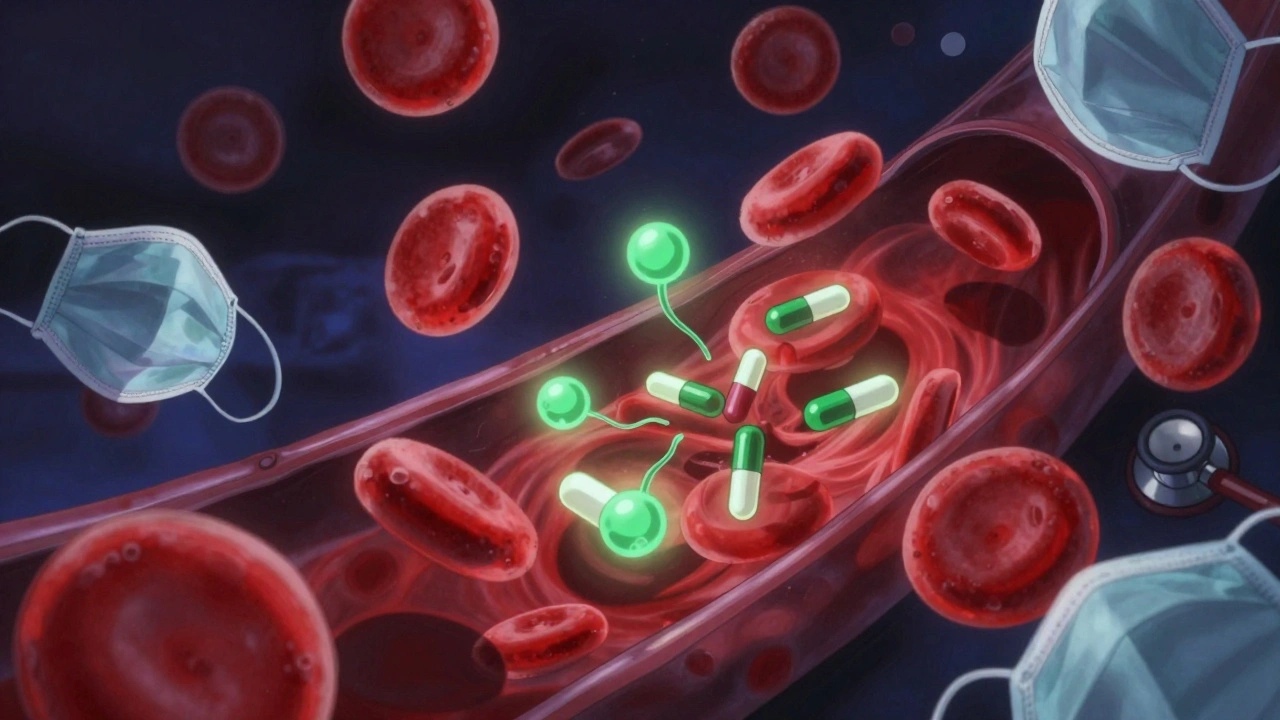
Feverfew doesn’t just affect platelets. It also interferes with liver enzymes that break down anticoagulants - especially warfarin. The liver uses CYP2C9 and CYP3A4 enzymes to process warfarin. Feverfew inhibits both, which means warfarin sticks around longer in your bloodstream. In vitro studies show this can raise warfarin levels by 18-22%.
That’s not just a lab number. Higher warfarin levels mean higher INR values - the measure doctors use to track blood thinning. An INR above 3.0 increases bleeding risk. A single case report showed INR jumping from 2.8 to 5.1 after a patient added feverfew to their regimen. That’s not a small change. That’s a medical emergency waiting to happen.
And it’s not just warfarin. Feverfew may also interact with newer anticoagulants like apixaban and rivaroxaban. A 2023 clinical trial (NCT05567891) is currently testing this exact interaction in 120 healthy volunteers. Preliminary results are expected in mid-2024, but experts are already warning caution.
Feverfew vs. Other Herbs: Where It Stands
You’ve probably heard about ginkgo, garlic, or ginger being risky with blood thinners. Feverfew sits somewhere in the middle. Ginkgo has more documented cases - 12 since 2000 - and stronger evidence. Garlic clears from your system in 72 hours. Ginger, too. Feverfew? It lingers.
Here’s the breakdown:
- Ginkgo biloba: High risk. Strong evidence of INR spikes. FDA has issued multiple warnings.
- Garlic: Moderate risk. Clears quickly. Less concern for short-term use.
- Ginger: Low to moderate risk. Minimal interaction unless taken in very high doses.
- Feverfew: Moderate risk. Fewer documented cases, but longer-lasting effects and withdrawal symptoms.
- Dong quai: High risk. Contains natural coumarin - similar to warfarin.
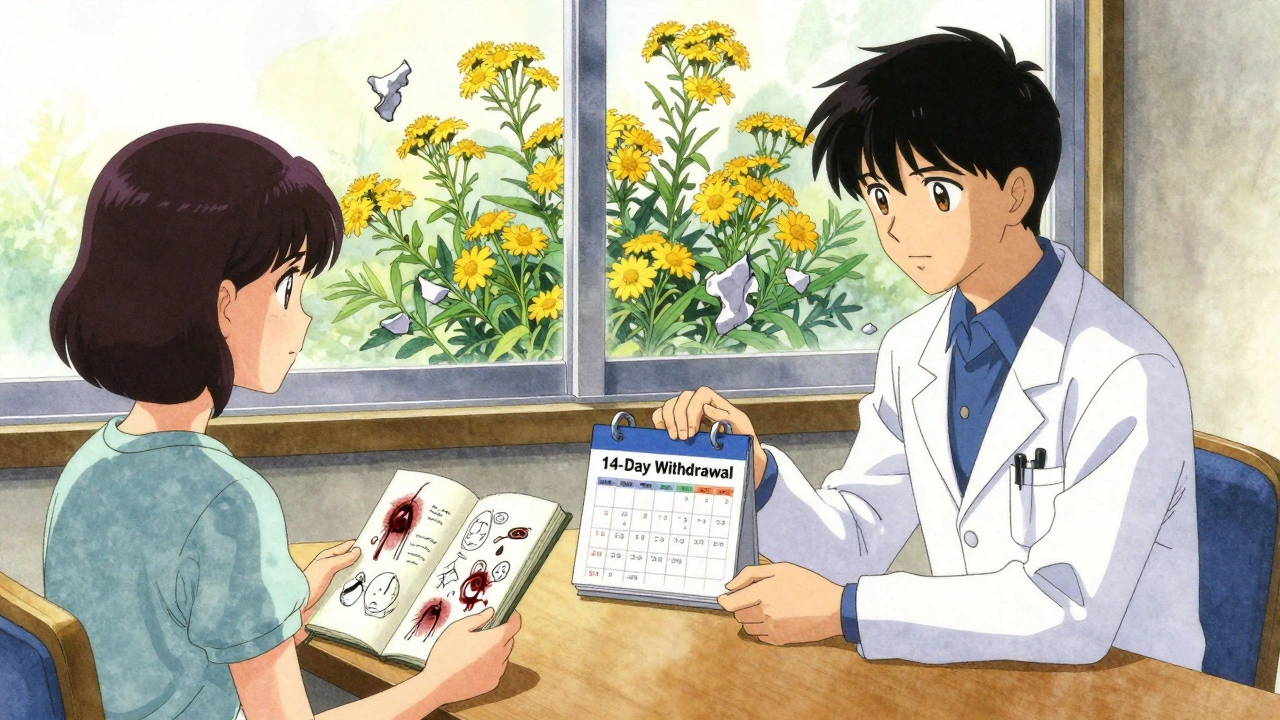
The American Society of Health-System Pharmacists says ginseng needs 7 days off before surgery. Feverfew? 14 days. Why? Because stopping feverfew suddenly can trigger a withdrawal syndrome - muscle stiffness, anxiety, headaches, even insomnia. One study found 32% of long-term users had insomnia after quitting. That’s why tapering over 2-3 weeks is recommended, not just stopping cold turkey.
What Doctors Recommend
Major medical groups agree: if you’re on anticoagulants, don’t take feverfew without talking to your doctor.
The American College of Chest Physicians and the American Society of Anesthesiologists both say: stop feverfew at least 14 days before any surgery. For high-risk procedures - like spinal taps or major abdominal surgery - they recommend 21 days.
Dr. Jun Mao from Memorial Sloan Kettering says: "The active constituent in feverfew inhibits platelet activity and may have additive effects with anticoagulants." But he also adds: "The actual clinical significance remains uncertain." That uncertainty is the problem. We don’t know who’s at risk - until it’s too late.
That’s why the Restorative Medicine protocol recommends checking your PT and PTT before starting feverfew - and again every two weeks for the first month. If you’re already on anticoagulants, baseline labs are essential. If your numbers start climbing, stop the supplement immediately.
Who Should Avoid Feverfew Altogether?
It’s not just people on blood thinners. Feverfew isn’t safe for everyone:
- Pregnant or breastfeeding women: No safety data. Avoid.
- Children under 18: Not studied. Don’t use.
- People with liver or kidney disease: Feverfew is metabolized by the liver. Impaired function = higher risk of buildup.
- Anyone scheduled for surgery: Even if you’re not on anticoagulants, feverfew increases bleeding risk during procedures.
And if you’ve been taking feverfew for months or years, don’t just quit. Withdrawal symptoms are real. Start cutting back slowly - reduce your dose by 25% every 3-4 days over two weeks. That gives your body time to adjust.
What to Do If You’re Already Taking Both
If you’re currently taking feverfew and an anticoagulant, here’s what to do right now:
- Check your most recent INR or PT/PTT results. Are they trending up?
- Look for signs of bleeding: easy bruising, nosebleeds, blood in urine or stool, unusually heavy periods.
- Don’t stop feverfew suddenly. Start tapering: reduce your daily dose by half for one week, then stop.
- Call your doctor. Ask for a repeat blood test in 1-2 weeks.
- Keep a journal: note any bruising, bleeding episodes, or new symptoms.
And if you’re thinking about starting feverfew? Don’t. Not without a conversation with your prescriber. Even if your INR is stable now, that can change fast.
The Bigger Picture
Feverfew is a $280 million market in the U.S. alone. People buy it because they believe "natural" means safe. But natural doesn’t mean harmless. Ginkgo, dong quai, garlic - they all carry risks too. The difference is, we know more about them. Feverfew is still flying under the radar.
That’s changing. The NIH just funded $1.2 million in new research on feverfew and anticoagulants - triple the amount from 2020. A point-of-care test to measure parthenolide levels in blood is in development. Within five years, we may have standardized feverfew supplements with lower parthenolide content specifically for people on blood thinners.
Until then, the safest choice is simple: if you’re on anticoagulants, leave feverfew off your shelf. There are other migraine preventatives - riboflavin, magnesium, coenzyme Q10 - that don’t carry this risk. Why gamble with your health when safer options exist?


Courtney Black
Feverfew isn't some harmless herb. It's a silent saboteur for people on blood thinners. I've seen friends bleed out from minor cuts after taking it 'for migraines.' Natural doesn't mean safe. It means unregulated, untested, and dangerously misleading.
Doctors don't warn you because they're busy. Pharmacies don't warn you because they make money off it. So who does? You. Your body. Your next INR test.
Raja Herbal
Oh wow, so now even plants are trying to kill us? Next thing you know, oxygen will be classified as a Class 1 anticoagulant risk.
Meanwhile, I’m over here chewing garlic like it’s candy and my INR’s still at 2.1. Maybe the real problem is that we treat herbs like they’re FDA-approved drugs instead of… you know… leaves.
Rich Paul
bro feverfew is just nature’s warfarin lmao
parthenolide inhibits CYP2C9 and CYP3A4? yeah that’s like telling your liver to take a nap while warfarin partays. no wonder INR spikes. i had a buddy go from 2.6 to 5.8 after adding feverfew caps - he was bleeding from his gums while brushing his teeth. doc said ‘stop the green shit’ and boom, 3 days later he was back to normal.
also lol at ‘natural remedy’ - if your grandma used it, that doesn’t mean it’s not a drug. plants are chem factories. you think aspirin came from a lab? nah. it came from willow bark. same damn thing.
and yeah, 14 days before surgery? hell yeah. i got my wisdom teeth out last year and they made me quit ginger, garlic, AND feverfew. no cap. my mouth didn’t turn into a horror movie.
also why is everyone so chill about this? this isn’t ‘maybe don’t drink grapefruit juice’ - this is ‘you might bleed into your skull while sleeping’.
Delaine Kiara
OMG I JUST REALIZED I’VE BEEN TAKING FEVERFEW FOR 3 YEARS. I’M ON XARELTO. I’VE HAD BRUISES THAT LASTED WEEKS. I THOUGHT I WAS JUST CLUMSY. I’M CRYING. I’M SO SCARED. I’M GOING TO CALL MY DOCTOR RIGHT NOW. I’M DELETING THE BOTTLE. I’M NOT SLEEPING TONIGHT. WHAT IF I’M BLEEDING INSIDE? WHAT IF I’M DYING? I JUST WANT TO LIVE. HELP. I’M SO ANXIOUS. I NEED A HUG.
also why is no one talking about how this is a capitalist conspiracy? Big Herbal is hiding this. They’re making billions off our ignorance. I’m going viral with this. #FeverfewIsKillingUs #BloodThinnerAwareness #IAlmostDiedFromAPlant
Ruth Witte
YESSSSS this is so important!! 💪✨
Stop the herbal chaos!! 🌿🚫
My cousin had a stroke last year because she thought ‘natural’ meant ‘no side effects’ 😭
Switch to magnesium + riboflavin - it’s safer, science-backed, and won’t turn you into a walking bruise 🧂💙
YOU GOT THIS. YOUR HEALTH IS WORTH IT. 💖
Katherine Rodgers
so the ‘natural remedy’ crowd is just a bunch of gullible idiots who think if it’s in a plant, it can’t hurt them?
lol. i love how people will swallow a pill with 37 chemicals but get hysterical if you say ‘pharmaceutical-grade magnesium.’
and yet feverfew? oh no, that’s ‘holistic.’
congrats. you’re a walking clinical trial. and your liver is the lab rat.
also, 41% bruising? that’s not ‘side effect,’ that’s ‘warning sign you’re one sneeze away from a hematoma.’
and yes, i know you’re gonna say ‘but my auntie in Nepal uses it!’ - so did my grandma. she also smoked cigarettes and lived to 92. doesn’t make it safe. just lucky.
Lauren Dare
Let’s be clear: the pharmacokinetic interaction between parthenolide and CYP2C9 is well-documented. The inhibition constant (Ki) is in the low micromolar range, meaning even low-dose supplements can saturate hepatic metabolism pathways.
That said - the clinical relevance is still debated. Case reports ≠ population-level risk.
But here’s the boundary: if you’re on anticoagulants, the burden of proof isn’t on the doctor to prove danger - it’s on you to prove safety. And there is no safety data. Not for long-term use. Not for polypharmacy. Not for comorbid liver disease.
So no. You don’t get to ‘try it.’ Not without monitoring. Not without informed consent. Not without respecting the science.
And if you’re gonna ignore this? Don’t blame the ER when you show up with a 7.2 INR.
Gilbert Lacasandile
I just wanted to say thanks for writing this. I’ve been on apixaban for AFib and started feverfew last year for headaches - didn’t think twice. I’ve had a few nosebleeds, but I thought it was just dry air.
After reading this, I stopped it yesterday. No withdrawal yet, but I feel calmer. Like I just removed a ticking clock from my medicine cabinet.
Appreciate the clarity. I’m sharing this with my mom too - she’s on warfarin and takes it for ‘stress.’
Just… be careful out there. We all think we’re invincible until we’re not.
Lola Bchoudi
Okay, real talk: if you’re on anticoagulants, your supplement routine needs to be as monitored as your meds.
Start with a baseline PT/INR before adding anything - even ‘safe’ stuff. Then retest at 2 weeks. If it moves more than 0.5 INR units, STOP. No debate.
And please - don’t just quit feverfew cold turkey. Withdrawal headaches are brutal. Taper: 25% every 4 days. Your nervous system will thank you.
You’re not weak for needing help. You’re smart for asking questions. Keep going. You’ve got this.
And if you need a non-herbal migraine plan? Riboflavin (B2) 400mg/day. Magnesium citrate 400mg. CoQ10 150mg. All backed by RCTs. Zero bleeding risk. Zero drama. Just science.
Morgan Tait
you know what they’re not telling you? feverfew is part of the glyphosate agenda. the FDA and Big Pharma planted it in herbal stores to make people bleed so they’d need more warfarin - which is patented and made by the same companies that sell Roundup.
parthenolide? it’s not natural - it’s engineered to mimic warfarin’s effect so your body gets addicted to chemical blood thinners.
they don’t want you to know that feverfew is a trap. it’s a gateway herb. next thing you know, you’re on DOACs and they’re selling you ‘natural’ supplements to ‘balance’ your meds - which are just more toxins.
the real cure? get off all pharmaceuticals. eat raw garlic. drink lemon water. sleep in a copper bed. detox your chakras. and never trust a doctor who works for a hospital.
they’re all in on it. the blood thinners? the feverfew? the ‘clinical trials’? all controlled by the same shadowy cabal that wants you dependent.
wake up. the truth is in the soil. not in the lab.
Nikhil Pattni
Bro I take feverfew daily and my INR is 2.4 - stable for 1 year. You think this is new? In India, we’ve used it for centuries. My grandfather took it with aspirin and lived to 90.
Maybe your doctor doesn’t know what he’s talking about. Maybe you’re overreacting.
Also, why do you think we need a 120-person clinical trial? We already know. People just want to sell more tests.
My mom takes it with rivaroxaban. No problem. Maybe it’s your body? Not the herb?
And yes, I’ve chewed fresh leaves. Mouth sores? Yeah. But I rinse with salt water. Problem solved. 😎
Arun Kumar Raut
Everyone’s got a story. Some of you are scared. Some are angry. Some are convinced it’s a conspiracy.
But here’s the quiet truth: if you’re on blood thinners, don’t guess. Don’t assume. Don’t rely on Reddit.
Go to your doctor. Get a blood test. Ask: ‘Is this safe with my meds?’
If they say ‘maybe’ or ‘I don’t know’ - find another doctor.
And if you’re taking feverfew? Stop. Not because everyone says so. But because your life matters more than ‘natural’ labels.
We’re all trying to heal. Let’s do it together - with facts, not fear.
Peace.