
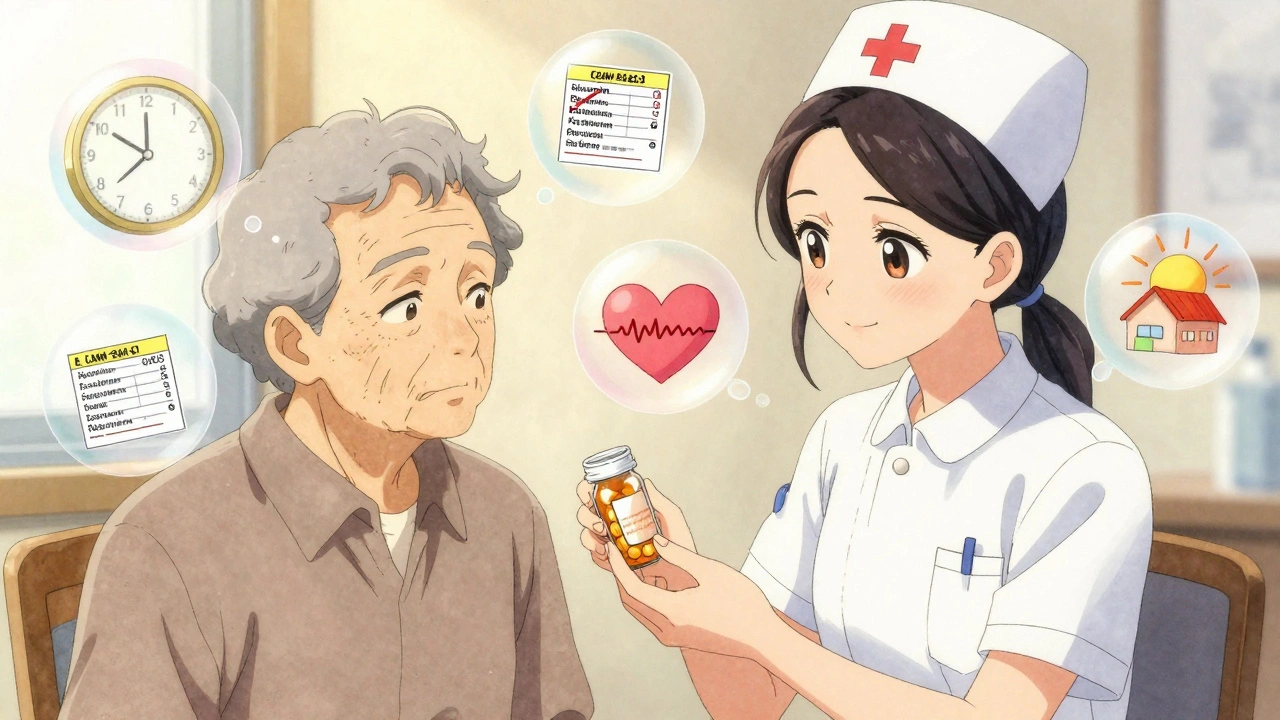
When patients leave the clinic with a prescription, do they really understand what to do with it? Too often, the answer is no. A 2023 study in the Journal of Patient Education found that nearly 60% of patients couldn’t correctly explain how to take their new medication-even after a 15-minute consultation. This isn’t about poor communication. It’s about measuring understanding-and most healthcare systems still don’t know how to do it well.
Why Generic Understanding Matters More Than Memorization
Patient education isn’t about getting someone to repeat back a list of side effects. It’s about whether they can apply that knowledge in real life. Can they recognize when their symptoms are worsening? Do they know when to call the doctor instead of waiting for the next appointment? Can they adjust their routine when they’re sick or traveling? These are the skills we call generic understanding.Generic understanding means the patient has internalized the core principles-not just the details. For example, someone with diabetes doesn’t need to memorize every blood sugar target. They need to understand that high readings after meals mean they should move more or eat less carbs. That’s transferable knowledge. It works whether they’re at home, at work, or on vacation.
Traditional education tools-printed handouts, YouTube videos, even interactive apps-only go so far. They deliver information. But they don’t tell you if the patient actually got it. That’s where assessment comes in.
Direct vs. Indirect Methods: What Actually Shows Understanding
There are two ways to measure learning: direct and indirect. Direct methods look at what the patient actually does. Indirect methods ask them what they think they did.Indirect methods are easy. Think of post-visit surveys: "Did you feel informed?" "Was the explanation clear?" These feel good. They’re quick. But they’re misleading. A patient might say "yes" because they didn’t want to upset the doctor-even if they have no idea what the pill is for.
Direct methods are harder, but they’re honest. Here’s what works:
- Teach-back method: Ask the patient to explain the instructions in their own words. If they say, "I take this when I feel dizzy," but the medication is for blood pressure, you’ve found a gap.
- Role-playing scenarios: "What would you do if you missed a dose?" Their answer reveals their decision-making process.
- Observation: Watch them open their pill bottle, read the label, or use an inhaler. Errors are obvious when you see them.
- Exit tickets: A simple 2-question form at the end of the visit: "What’s one thing you’ll do differently this week?" and "What’s still confusing?"
These aren’t fancy tools. They’re low-tech, low-cost, and proven. A 2022 trial in Australian community clinics showed that using teach-back reduced hospital readmissions for heart failure patients by 34% in six months.
Formative Assessment: Catching Misunderstandings Early
Most healthcare education treats learning like a final exam: give info, hope they get it, then check later. That’s too late.Formative assessment means checking understanding while you’re teaching. It’s like having a GPS that reroutes you when you take a wrong turn-not just telling you you’re lost after you’ve driven 50 miles.
Here’s how to build it into appointments:
- After explaining a new medication, pause. Say: "Can you tell me how you’ll use this at home?"
- Listen. Don’t correct right away. Let them finish.
- If they’re wrong, say: "That’s a common mistake. Let’s try again."
- Repeat until they can explain it accurately.
This isn’t about being harsh. It’s about being helpful. Patients don’t feel judged-they feel supported. And you, as the provider, get real-time feedback. No waiting for a survey response six months later.
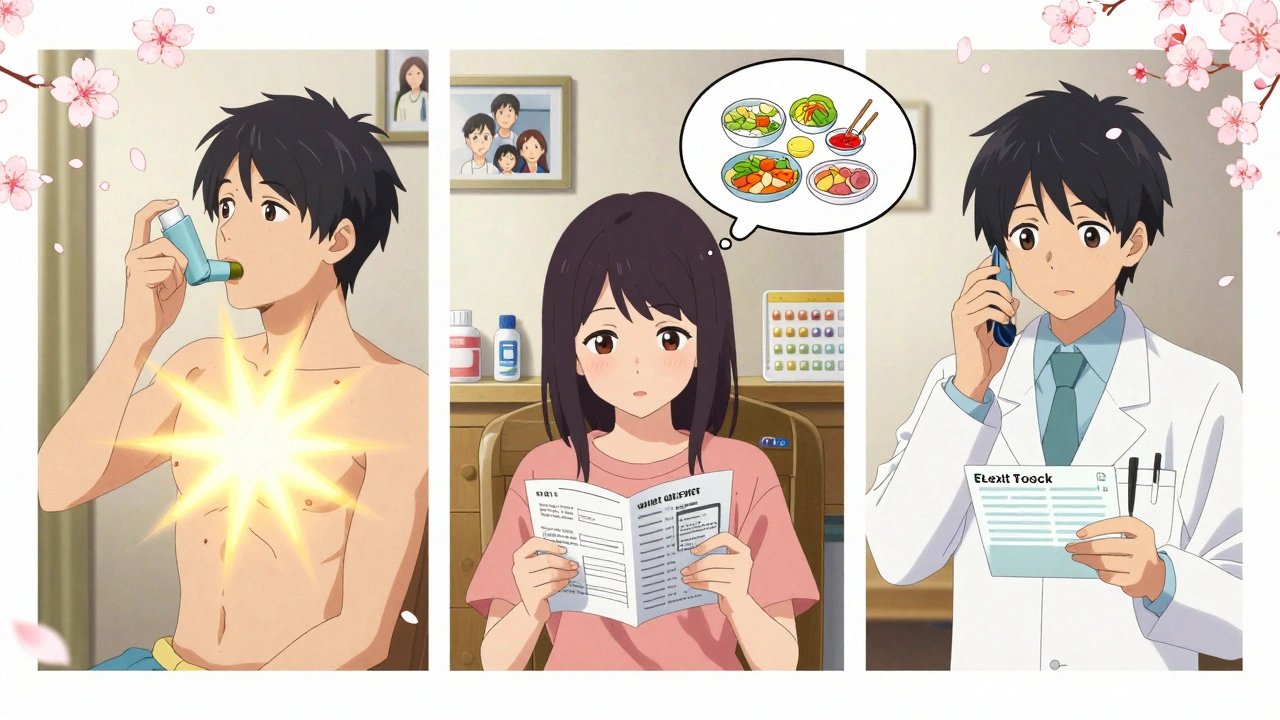
One nurse in Sydney started using this method after her patient with COPD ended up in the ER because they didn’t know their inhaler needed shaking before use. Now she asks: "Show me how you use it." Three out of four patients make a mistake the first time. That’s not patient error. That’s system error.
Why Rubrics Are the Secret Weapon
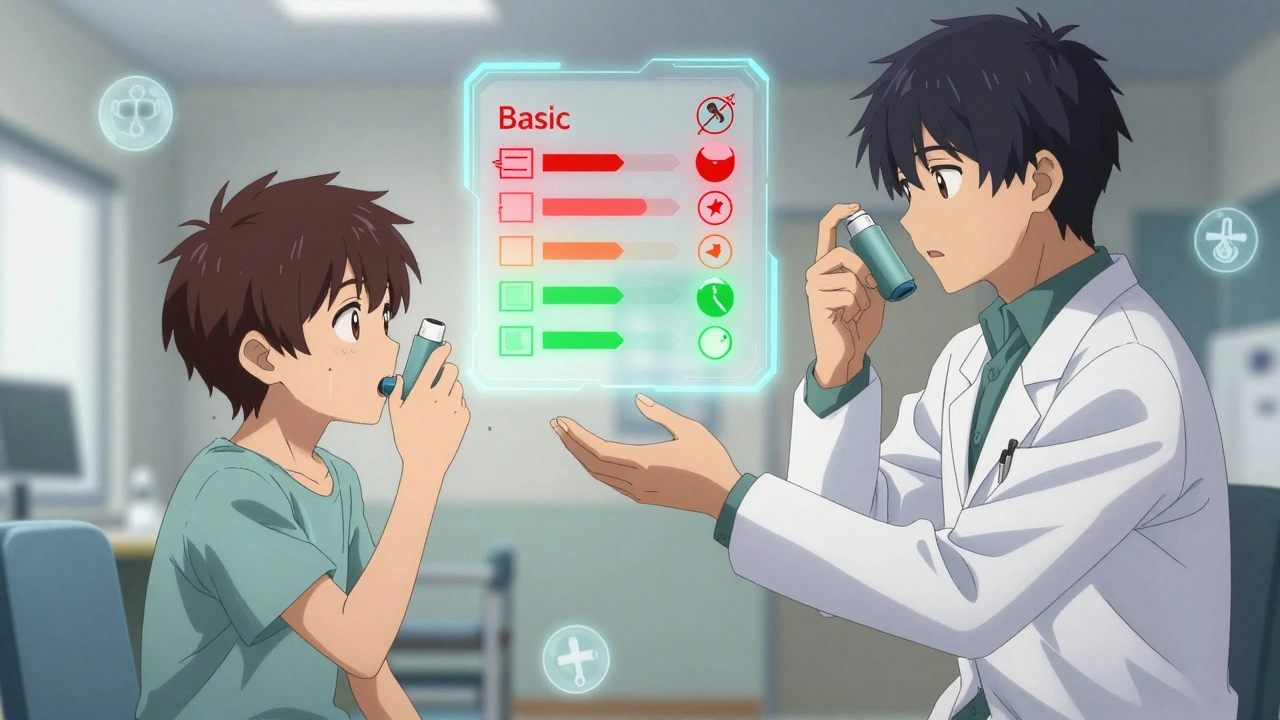
Rubrics sound academic. But in patient education, they’re practical. A rubric breaks down what good understanding looks like.For example, a simple rubric for diabetes education might look like this:
| Level | Understanding of Blood Sugar Monitoring | Understanding of Diet Impact | Ability to Adjust Routine |
|---|---|---|---|
| Basic | Knows to check sugar daily | Knows sugar rises after carbs | Can’t explain what to do if sugar is high |
| Proficient | Knows when to check and why | Can name 2 high-carb foods to limit | Can adjust meal size or activity if sugar is high |
| Mastery | Can explain how food, stress, and sleep affect readings | Can plan meals around sugar targets | Knows when to call provider and why |
Using this, a provider doesn’t just say, "You’re doing great." They say, "You’re at proficient level for diet. Let’s work on adjusting your routine when your sugar’s high." It’s specific. It’s actionable. And it’s measurable.
A 2023 survey of 142 Australian healthcare providers found that 78% said rubrics improved both patient outcomes and their own efficiency. No more guessing. No more repeating the same info.
The Big Mistake: Relying on Surveys Alone
Many clinics still rely on patient satisfaction surveys. They ask: "Did you feel heard?" "Was the staff friendly?" These matter-but they don’t measure learning.Here’s the problem: A patient can love their doctor and still not understand their treatment. A 2021 study in the British Journal of General Practice showed that patients who rated their visit as "excellent" were just as likely to misinterpret instructions as those who rated it "poor."
Surveys tell you about experience. They don’t tell you about understanding. And understanding is what prevents complications, hospitalizations, and death.
Don’t throw out surveys. But don’t use them as your main tool. Use them as a side note. The real data comes from watching, listening, and asking patients to show you what they know.
What’s Changing in Patient Education
The field is shifting. The World Health Organization now recommends that all chronic disease education include formative assessment. The Australian Department of Health updated its 2025 guidelines to require that clinics demonstrate how they measure patient understanding-not just deliver information.Technology is helping. Some apps now use voice analysis to detect confusion in patient responses. Others use AI to flag when a patient’s answers suggest misunderstanding. But the core method hasn’t changed: you still need to ask, listen, and observe.
The most successful clinics aren’t the ones with the fanciest apps. They’re the ones that built simple, repeatable habits:
- Teach-back after every new instruction
- Use a 2-question exit ticket
- Apply a rubric to track progress over time
- Train staff to treat understanding as a skill-not a yes/no question
It’s not about perfection. It’s about progress. One patient at a time.
Getting Started: 3 Simple Steps
If you’re not measuring understanding yet, don’t feel overwhelmed. Start small.- Pick one condition-like hypertension or asthma-and focus on it for a month.
- Train your team on teach-back. Practice with role-playing. Don’t skip this.
- Use a simple rubric to track improvement. Even a 3-point scale works.
Track your results. How many patients misunderstood their meds before? After? Did fewer call with questions? Fewer show up in the ER? That’s your proof.
Measuring understanding isn’t about adding more work. It’s about doing the right work better.
What’s the difference between knowing something and understanding it in patient education?
Knowing means a patient can repeat facts-like "take this pill twice a day." Understanding means they know why, when to skip it, what to do if they feel side effects, and how it fits into their daily life. Understanding is about application, not memorization.
Is the teach-back method really effective?
Yes. Multiple studies show teach-back reduces hospital readmissions by 25-40% for conditions like heart failure, COPD, and diabetes. It’s not just about catching mistakes-it builds trust. Patients feel heard, not tested.
Can I use digital tools to measure understanding?
Digital tools can help-like apps that ask patients to record themselves explaining their treatment. But they’re not a replacement for human interaction. The most effective systems combine tech with face-to-face checks. AI can flag potential misunderstandings, but a provider still needs to follow up.
Why do patients say they understand but then make mistakes?
They often say "yes" to avoid embarrassment, to please the provider, or because they think they understand when they don’t. This is called the "illusion of competence." Direct methods like teach-back and observation cut through that illusion.
How do I convince my clinic to start measuring understanding?
Start with data. Show how many patients call with questions after visits, or how many end up back in the ER. Then pilot teach-back with one condition. Track the results for 30 days. If readmissions drop or call volume decreases, you’ve got proof. Most clinics adopt it once they see the numbers.
What Comes Next
The future of patient education isn’t more brochures or louder videos. It’s deeper conversations. Better questions. And a system that doesn’t assume understanding-it checks for it.If your goal is better health outcomes, not just better satisfaction scores, then measuring generic understanding isn’t optional. It’s essential. And the tools to do it? They’re already in your hands.



Vivian Amadi
The teach-back method isn't just a best practice-it's the bare minimum. I've seen nurses skip it because they're rushed, but then wonder why patients show up in the ER with their inhalers upside down. It's not patient negligence. It's system failure. If you're not checking for understanding, you're just talking at people. And that's not care-it's performance.
One study in Ohio showed that when clinics used teach-back consistently, medication errors dropped by 52% in 90 days. That's not magic. That's accountability. We need to stop treating patient education like a checkbox and start treating it like a clinical skill-because it is.
And yes, rubrics help. But they only work if staff are trained to use them without judgment. It's not about grading patients. It's about diagnosing gaps. Like a blood test. You don't blame the patient for having high cholesterol-you adjust the plan.
Stop asking if they "understood." Ask them to show you. Then watch. Then listen. Then fix.
This isn't about adding work. It's about doing the work that actually matters.
matthew dendle
lol so now we gotta turn every 10 min visit into a pop quiz? next theyll make us film patients taking their pills and submit it to HR. why dont we just give em a textbook and call it a day. i mean if they cant read the label they probably cant read this post either 🤷♂️
Courtney Blake
Of course this works in Australia. They have universal healthcare and nurses who actually have time to talk. Here? We're seeing 30 patients a day. You want me to do teach-back on every diabetic, hypertensive, and COPD patient? That’s not healthcare-that’s volunteer work. And don’t get me started on the paperwork. I’m not a teacher. I’m a doctor. With 12 hours of EHR. You want outcomes? Fix the system first.
Meanwhile, I’ll keep writing scripts and hoping they don’t die.
Also, why is everyone so obsessed with rubrics? It’s not a college class. It’s a clinic. People aren’t students. They’re scared, tired, and overwhelmed. You think they care about "proficient vs mastery"? No. They care if they feel less like a burden.
Stop pretending this is about education. It’s about resource allocation. And we’re losing.
Sylvia Frenzel
Another feel-good article from people who’ve never had to explain insulin to someone who works two jobs and doesn’t have a fridge at home. You think they care about "generic understanding" when they’re choosing between meds and rent? This isn’t pedagogy. It’s privilege wrapped in jargon.
Teach-back? Great. Now tell me how that helps when the pharmacy won’t fill the script because their insurance won’t cover it. Or when they’re on a bus with no phone signal and no one to ask.
Stop blaming the patient for a broken system. Fix the system.
Also, who wrote this? A hospital admin who gets a bonus for "patient satisfaction metrics"? 😒
Paul Dixon
Man, I love this. I work in a rural clinic and we started using the 2-question exit ticket last month. We just ask: "What’s one thing you’ll do differently?" and "What’s still confusing?"
Turns out, half the people thought their blood pressure med was for anxiety. Half didn’t know they had to take it with food. One guy thought "once daily" meant once every 24 hours… but only if he felt bad.
We fixed it. No drama. Just asked. Now we’re rolling it out to asthma patients next. Simple. Free. Works.
Also-no one’s mad. They’re like, "Oh wow, I didn’t realize I got it wrong." Like, they’re relieved. Not embarrassed. We just say, "Hey, that’s super common. Let’s clear it up."
Stop overcomplicating it. Just ask. Then listen.
Also, the nurse who had the COPD patient in the ER? I cried reading that. We’ve all been there.
Jimmy Kärnfeldt
There’s something deeply human here. We treat health like a math problem: take pill = fix body. But it’s not. It’s a conversation with your own life.
Understanding isn’t about facts. It’s about connection. When a patient can explain how their meds fit into their morning routine-with their coffee, their kid’s school bus, their shift at the warehouse-that’s when healing begins.
Teach-back isn’t a technique. It’s an act of respect. You’re saying: "I believe you can do this. And I’m here to help you figure it out. Not just tell you."
And that’s rare.
Most of us are trained to fix, not to listen. But healing doesn’t happen in the fix. It happens in the listening.
So let’s stop pretending this is about tools.
It’s about presence.
Kristi Pope
I used to roll my eyes at rubrics. Thought they were for professors and bureaucrats. Then I started using one for diabetes education-just three levels. Basic, Proficient, Mastery.
Biggest shock? My patients started asking for feedback. "Am I at proficient yet?" "Can we work on mastery?"
They weren’t just following instructions. They were *invested*. Because they could see progress. Not just "good job," but "you nailed the diet part, now let’s tackle the nighttime lows."
It turned education into a team sport. And suddenly, people weren’t just patients-they were learners. And learners are powerful.
Also-no one ever said "this is too much." They said, "I wish you’d done this sooner."
Tools don’t overwhelm people. Silence does.
Ariel Nichole
Just wanted to say thank you for writing this. I’m a new nurse and I’ve been trying to push teach-back in my unit. Everyone says "we don’t have time." But I started doing it with one patient a day. Just one.
Now I’m doing it with three. And last week, a patient came back and said, "I didn’t call the ER because I knew what to do."
That’s the moment you remember why you became a nurse.
It’s not about perfect systems. It’s about showing up and asking.
Keep going. We’re listening.
Taylor Dressler
Let’s be clear: the problem isn’t that patients don’t understand. It’s that we’ve designed a system that assumes they should. We give them a 12-page handout in 8-point font. We rush through instructions. We don’t pause. We don’t check. Then we blame them for not remembering.
Teach-back isn’t extra work. It’s *corrective* work. It fixes what we broke.
And yes, digital tools can help-voice analysis, AI flags, apps-but they’re useless without human judgment. An algorithm can’t sense when a patient is too scared to admit they’re confused. Only a person can.
The most effective clinics aren’t the ones with the most tech. They’re the ones where staff are trained to listen like detectives, not just deliver like broadcasters.
And if your clinic still relies on satisfaction surveys? You’re flying blind.
Start small. Start today. Ask one patient to show you how they take their pills.
You’ll be shocked what you see.
Jim Irish
As someone who works with immigrant communities, I’ve seen this firsthand. Language barriers aren’t the main issue. It’s cultural assumptions.
Many patients nod because saying "I don’t understand" feels disrespectful. Or they think the doctor knows best, so they won’t question.
Teach-back breaks that. It says: "Your voice matters. Your experience matters. Even if you’re wrong, I’m here to help you get it right."
It’s not just clinical. It’s ethical.
And yes, it takes time. But the alternative? More ER visits. More hospitalizations. More families shattered by preventable mistakes.
This isn’t optional. It’s a moral imperative.
Vivian Amadi
And here’s the kicker: when you start using teach-back, you stop hearing "I forgot" and start hearing "I didn’t know I was supposed to shake it."
That’s not patient error. That’s provider blind spot.
One nurse told me she used to think patients were dumb. Now she says, "I was lazy. I didn’t ask. I assumed."
That’s the real shift.
It’s not about changing patients.
It’s about changing us.