
Every year, Americans spend over $400 billion on prescription drugs. A big chunk of that? Brand-name medications that cost three, five, even ten times more than their generic versions. But here’s the thing: generic drugs aren’t cheaper because they’re worse. They’re the same medicine, same active ingredient, same FDA approval. So why do we keep paying more? The answer isn’t just about patient choice or doctor habits. It’s about the rules states have put in place to make the smart choice the easy one.
Why States Step In
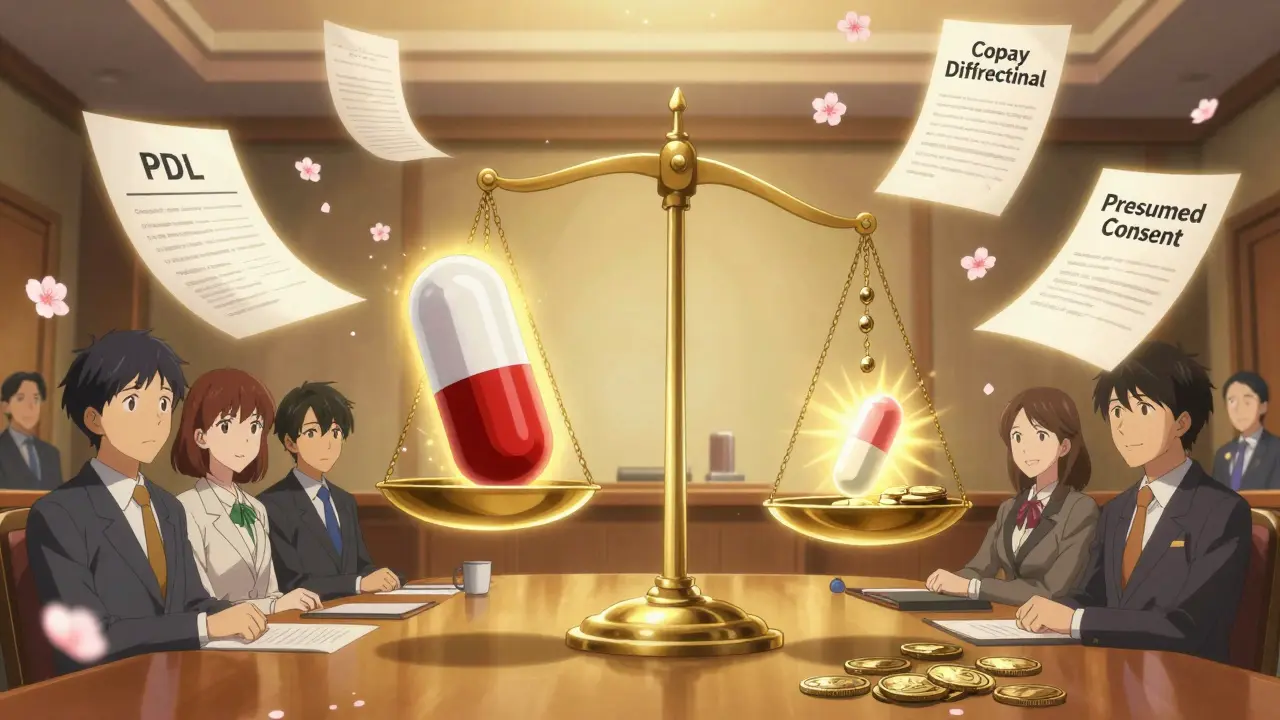
States didn’t start meddling in prescriptions because they were bored. They did it because the bills were piling up. Medicaid, state employee health plans, and public hospitals were getting crushed by rising drug prices. The Hatch-Waxman Act of 1984 opened the door for generic drugs by creating a faster, cheaper approval path. But that didn’t automatically mean doctors or patients would pick them. So states built systems to nudge behavior - not by banning brands, but by making generics more attractive.The biggest tool? Preferred Drug Lists (PDLs). As of 2019, 46 out of 50 states used them in their Medicaid programs. These are lists of drugs that the state says are the best value - usually generics. If a doctor prescribes something not on the list, the patient pays more. Or the pharmacy has to jump through hoops to get approval. Simple. Effective. And it works. States with strong PDLs see 10-20% higher generic dispensing rates than those without.
How Copayments Change Behavior
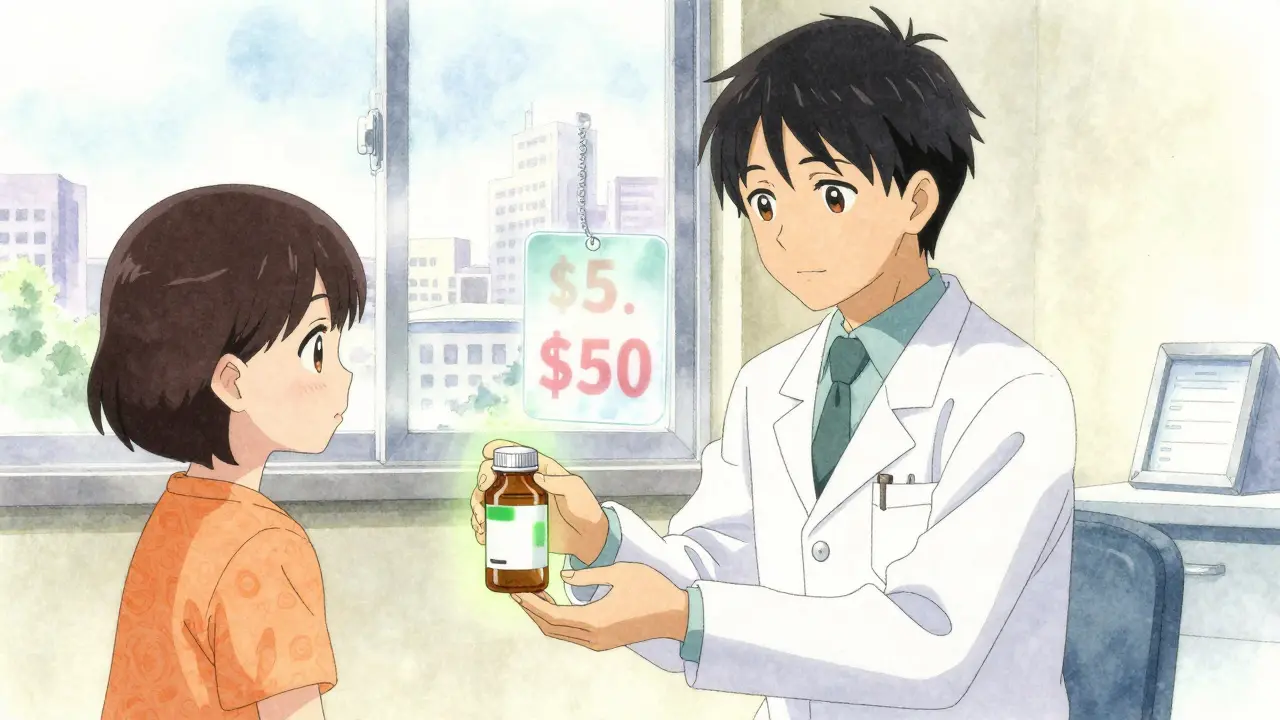
Let’s say you need a blood pressure pill. The brand costs $50. The generic? $5. Sounds like an easy pick, right? But in some states, you pay $15 for both. Why? Because the system wasn’t designed to reward savings - it just passed along the cost. That’s where state policy changes the game.States with copayment differentials make the generic option cheaper at the counter. In states like Minnesota and New York, patients pay $5 for a generic and $30 for the brand. That’s not a small difference - it’s a clear signal. Research shows that when the out-of-pocket gap hits $10 or more, patients switch in droves. It’s not about being cheap. It’s about making the financially smart choice the obvious one.
And it’s not just patients. Pharmacies get paid more to dispense generics in some states. In others, they’re penalized if they fill a brand when a generic is available. These Maximum Allowable Cost (MAC) lists set a ceiling on what pharmacies can be reimbursed. If a brand costs $20 but the MAC for the generic is $4, the pharmacy doesn’t get paid the difference. So they push the generic - not because they’re being told to, but because it’s how they get paid.
The Secret Weapon: Presumed Consent
Here’s where things get really interesting. In most states, when a pharmacist sees a brand-name prescription, they can’t just swap it for a generic without asking the patient first. That’s called explicit consent. But in 11 states, the law assumes you’re okay with the switch unless you say no. That’s presumed consent.A 2018 NIH study found that presumed consent laws increased generic dispensing by 3.2 percentage points - a huge jump in the world of public health. That’s the same effect as raising the price of brand-name drugs by $3. And here’s the kicker: mandatory substitution laws (where pharmacists have to switch) didn’t move the needle. Why? Because pharmacists were already swapping generics anyway - they make more money on them. Presumed consent just removes the friction. No extra paperwork. No extra questions. Just a faster, cheaper fill.
Think about it: if you’re picking up a prescription for your child’s asthma inhaler and the pharmacist says, “I’m giving you the generic version - it’s the same, cheaper, and covered,” you’re not going to argue. You’re going to say yes. And that’s exactly what the law counts on.
Medicaid Rebates and the Hidden Math
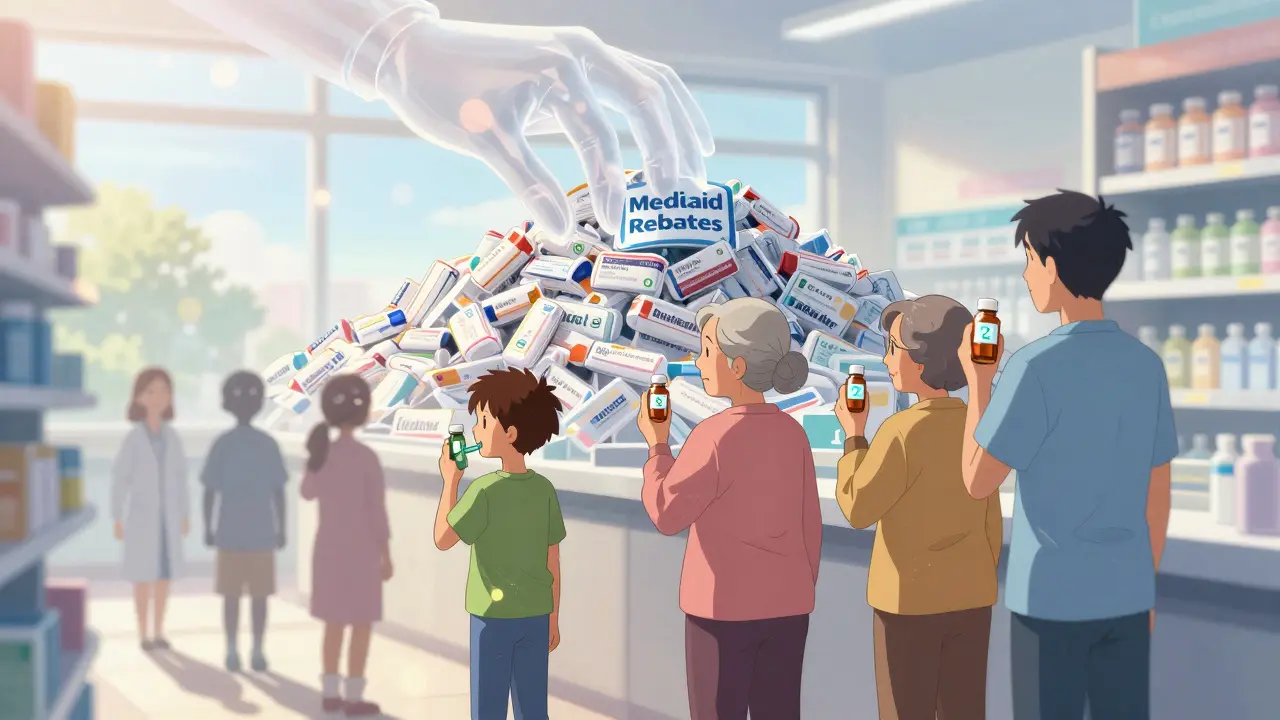
States don’t just rely on patient and pharmacy incentives. They also use the Medicaid Drug Rebate Program, which forces drugmakers to pay back a portion of the price. For generics, the base rebate is 13% of the average manufacturer price. But here’s where states get clever: they negotiate supplemental rebates. In 2019, 46 states did this. That means if a generic drug costs $2, the state might get an extra $0.50 back. That money helps cover the cost of other drugs - or even reduces premiums for state employees.But there’s a dark side. Generic manufacturers can get caught in a trap. If the cost of ingredients goes up, or there’s a shortage, or the market gets crowded, the rebate formula can make it unprofitable to sell the drug in Medicaid at all. A 2022 Avalere Health report found five scenarios where a generic drug becomes a financial loss for the maker - even if the price doesn’t change. And when that happens? The drug disappears from shelves. Suddenly, the state’s favorite generic isn’t available anymore. And the patient gets stuck with a brand-name alternative. It’s a system that saves money - until it doesn’t.
The 340B Program: A Parallel System
Then there’s the 340B Drug Pricing Program, created in 1992 to help safety-net hospitals and clinics buy drugs at steep discounts - often 20% to 50% off. These places serve low-income patients. They’re supposed to pass the savings on. But here’s the twist: states have to figure out how to reimburse pharmacies that fill 340B drugs for Medicaid patients. In 2016, the federal government said: “Reimburse based on what the pharmacy actually paid - not some inflated list price.”That forced states to change how they paid pharmacies. Suddenly, if a pharmacy bought a generic for $1.20 under 340B, the state couldn’t pay them $5. It had to match the real cost. That pushed pharmacies to prefer 340B drugs - which are often generics - because they didn’t lose money on the fill. So even though 340B isn’t a state policy per se, it’s another layer of incentive that pushes generics into the system.
What Doesn’t Work
Not all state efforts move the needle. Mandatory substitution laws - where pharmacists must switch - barely changed behavior. Why? Because pharmacists were already doing it. They make more profit on generics. They’re not resisting. They’re just waiting for the patient to say no.And then there’s the myth that “more regulation = more savings.” Some states tried to ban brand-name drugs entirely unless there was no generic. It didn’t work. Why? Because doctors would just write “do not substitute” on the prescription. And patients, especially those with chronic conditions, would fight back. Trust matters. If you’ve been on the same brand for 10 years and your doctor says, “This is fine,” you’re not going to switch just because the state says so.
The real winners? Policies that make the patient’s wallet lighter when they pick the generic. That’s why copay differentials and presumed consent are the most effective tools. They work with human behavior, not against it.
The Future: A $2 Drug List?
The federal government is watching. The Centers for Medicare & Medicaid Services (CMS) is testing a $2 Drug List model for Medicare Part D. The idea? Make a short list of the cheapest, most common generics - insulin, metformin, lisinopril - and cap the patient’s copay at $2. No formulary restrictions. No prior auth. Just $2. It’s simple. It’s transparent. And it’s designed to work at scale.States are already borrowing ideas from this model. If a Medicare patient can get a $2 generic, why shouldn’t a Medicaid patient? Some states are starting to create their own “$5 or less” lists for the most commonly prescribed generics. The goal isn’t just to save money - it’s to remove confusion. People don’t need a 50-page formulary. They need to know: “This pill costs $2. That one costs $45. Pick the $2 one.”
What This Means for You
If you’re on a state health plan - Medicaid, CHIP, or a public employee plan - you’re already living under these rules. Your copay might be lower than you think. Your pharmacist might have swapped your brand for a generic without asking. And that’s not a mistake. It’s policy.But if you’re paying out of pocket, or on a private plan, you might not see these benefits. That’s where advocacy comes in. Ask your doctor: “Is there a generic?” Ask your pharmacy: “What’s the cash price?” And if you’re on Medicaid or a state plan, check your formulary. You might be paying more than you need to.
Generic drugs aren’t just cheaper. They’re just as safe. Just as effective. And in many cases, they’re the only reason people can afford to take their medicine at all. States didn’t invent these incentives to be heroes. They did it because they had to. But in doing so, they made a quiet revolution in how we pay for health care.
What is a Preferred Drug List (PDL)?
A Preferred Drug List is a state-maintained list of medications that are considered the most cost-effective for Medicaid and other public health programs. Drugs on the list - usually generics - have lower patient copays and don’t require prior authorization. Prescriptions for drugs not on the list may be denied or require extra paperwork, pushing providers and patients toward cheaper, equally effective alternatives.
Do generic drugs work the same as brand-name drugs?
Yes. The FDA requires generic drugs to have the same active ingredient, strength, dosage form, and route of administration as the brand-name version. They must also meet the same strict standards for quality, safety, and effectiveness. The only differences are in inactive ingredients (like fillers or dyes) and packaging - which have no impact on how the drug works in your body.
Why do some pharmacists ask if I want a generic, and others don’t?
It depends on your state’s law. In states with explicit consent, pharmacists must ask you before switching. In states with presumed consent, they can swap automatically unless you say no. If you’ve never been asked, you’re likely in a presumed consent state - and you’re probably already saving money without realizing it.
Can a state ban brand-name drugs entirely?
No. Federal law requires Medicaid to cover all drugs from manufacturers who pay the required rebates. States can’t block access to brand-name drugs outright. But they can make them harder to get by requiring prior authorization, higher copays, or limiting coverage to cases where no generic exists. That’s how they steer use without outright banning.
Why do some generic drugs disappear from pharmacies?
Sometimes, the math doesn’t add up. Generic manufacturers have to pay Medicaid inflation rebates based on complex formulas. If ingredient costs rise, or the market gets too crowded, the rebate can make selling the drug at a loss. When that happens, companies stop making it - even if it’s widely used. That’s why some once-common generics suddenly vanish, forcing patients back to more expensive brand-name options.

Alexandra Enns
Let me stop you right there - this whole ‘generic drugs are just as good’ thing is a scam cooked up by Big Pharma and state bureaucrats to push down costs while you die on a $5 pill. FDA approval? LOL. Ever heard of bioequivalence loopholes? The inactive ingredients in generics can mess with your gut, your liver, even your mood. I’ve seen people crash after switching. This isn’t healthcare - it’s chemical roulette.
Marie-Pier D.
Hi! I just wanted to say thank you for writing this 🙏 I’m a nurse in Ontario and I see this every day - patients crying because they can’t afford their meds, then lighting up when they find out the generic works just fine. I’ve had grandmas hug me because their insulin dropped from $80 to $5. This isn’t politics - it’s compassion in action. Keep spreading the word 💖
Shanta Blank
Oh sweet jesus. Another ‘generic = safe’ fairy tale. You know what’s really happening? The same companies that make the brand-name drugs also own the generic versions. They just repackage the same shit under a cheaper label and call it a win. The FDA? They’re on the payroll. And don’t even get me started on the 340B program - it’s a slush fund for hospitals that pocket the savings while patients still pay $30 for a $2 pill. This isn’t reform. It’s corporate theater with a side of virtue signaling.
Tiffany Wagner
i just wanted to say i switched my blood pressure med to generic last year and havent had any issues at all. my doc was skeptical but i insisted. now i save like 40 bucks a month and feel the same. maybe its not perfect but its better than nothing right
Vatsal Patel
Oh so now we’re moralizing pharmaceutical economics like it’s a TED Talk? Let me guess - you think people are just ‘choosing’ generics because they’re wise. No. They’re choosing them because they can’t afford the brand. This isn’t efficiency. It’s economic coercion wrapped in a lab coat. And let’s not pretend presumed consent is about convenience - it’s about stripping autonomy under the guise of ‘saving money.’ The real problem? We treat medicine like a grocery list. We’re not saving lives. We’re optimizing spreadsheets.
Sharon Biggins
you know what made me cry? when my son’s asthma inhaler switched to generic and the pharmacist just handed it over without asking. i thought i was gonna have to fight for it. but he said ‘it’s the same, ma’am, and we’re saving you $40.’ i didn’t even know we could do that. thank you for explaining how it works. i feel less scared now
John McGuirk
They’re lying. All of it. The ‘same active ingredient’? Sure. But the fillers? They’re testing them on poor people first. And the rebate system? That’s how the government controls the population. You think they want you healthy? No. They want you dependent on the system. That’s why they push generics - cheaper pills, more control. And don’t tell me about ‘FDA approval’ - the FDA approves cancer drugs that kill people. You’re being played.
Michael Camilleri
People don't get it. This isn't about saving money. It's about control. You think the state cares if you live or die? No. They care if you're quiet. If you're compliant. If you take your $2 pill without asking why. And when the generic disappears? That's not a shortage. That's a message. You're not supposed to question it. You're supposed to be grateful for the crumbs. Wake up. This isn't healthcare. It's social engineering with a prescription pad.
lorraine england
I love how this breaks it all down so clearly. My mom’s on Medicaid and she had no idea her copay dropped from $25 to $5 just because they switched to generic. She thought the pharmacy made a mistake. I showed her this article and she cried. It’s wild how something so simple can be so life-changing. Thank you for making the invisible policy visible 💕
Kat Peterson
OMG I just realized my entire life I’ve been paying extra for brand names because I thought they were ‘better’?? Like I’m a total sucker?? 😭 I switched my antidepressant last month and now I’m saving $200/month. I feel like I’ve been living in a Matrix of pharmaceutical lies. Who even am I?? 🤯
Himanshu Singh
There’s a deeper truth here - we treat medicine like a commodity, but healing is not transactional. The real win isn’t the $2 pill. It’s that someone, somewhere, can now take their medicine without choosing between rent and refills. That’s not policy. That’s dignity. And maybe, just maybe, that’s the only thing worth saving.