
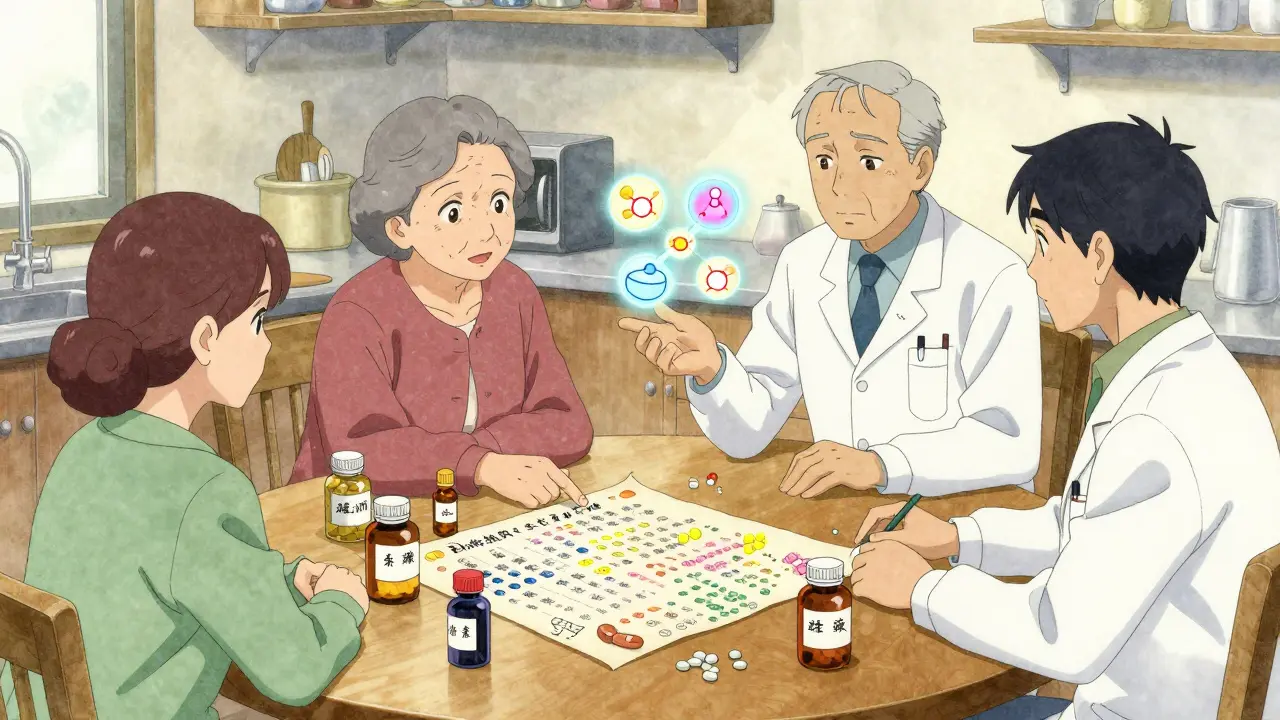
Getting your medications right isn’t just about taking pills on time. It’s about staying safe - avoiding dangerous mix-ups, side effects, or worse, a preventable hospital visit. The truth is, medication safety plan isn’t a one-time task. It’s an ongoing conversation with your care team, and it starts with you.
Start with a Complete Medication List
Before you even walk into a doctor’s office, get every single thing you take written down. Not just prescriptions. Include over-the-counter painkillers, vitamins, herbal supplements, and even cough syrups. People forget these all the time. But here’s the thing: a common cold medicine with diphenhydramine can mess with your blood pressure pills. A daily fish oil supplement might thin your blood too much if you’re also on warfarin. One patient in Sydney told me her mother took melatonin for sleep and didn’t think it counted - until it caused dizziness and a fall. That’s why your list needs to be complete. Write down:- The exact name of each medication (brand and generic if you know it)
- The dose (like 10 mg, 500 mg)
- How often you take it (once daily, twice a day, as needed)
- Why you’re taking it (e.g., “for high blood pressure,” “for arthritis pain”)
- Who prescribed it (doctor’s name or clinic)
Ask Your Doctor and Pharmacist to Review It
Don’t just hand them the list. Ask them to go through it with you. Say: “Can we check if any of these might interact or cause side effects together?” Pharmacists are trained to spot these issues. A 2023 study from the American College of Clinical Pharmacy found that nearly 20% of medication-related emergencies happen because of poor communication between patients and providers. That’s not a failure of the drug - it’s a failure of the conversation. Ask these questions:- Is this medication still necessary? Sometimes, we keep taking things long after they’re needed.
- What are the most common side effects I should watch for?
- Could this interact with anything else I’m taking - even supplements?
- Is there a simpler way to take this? Maybe one pill instead of three?
Use Clear Labels and Secure Storage
A lot of medication errors happen because bottles look alike or get mixed up. One woman in Melbourne kept her heart medication in a small unlabeled jar next to her bed. She confused it with her blood pressure pill and took a double dose. She ended up in the ER with dangerously low blood pressure. Here’s how to avoid that:- Keep all medications in their original containers. The label has important info like expiration dates and warnings.
- If you use a pill organizer, make sure each compartment is clearly labeled with the day and time.
- Store medications in a locked cabinet - especially if you have kids, teens, or someone with memory issues in the house.
- Don’t keep pills in the bathroom. Humidity and heat can make them less effective.
Build a Daily Routine
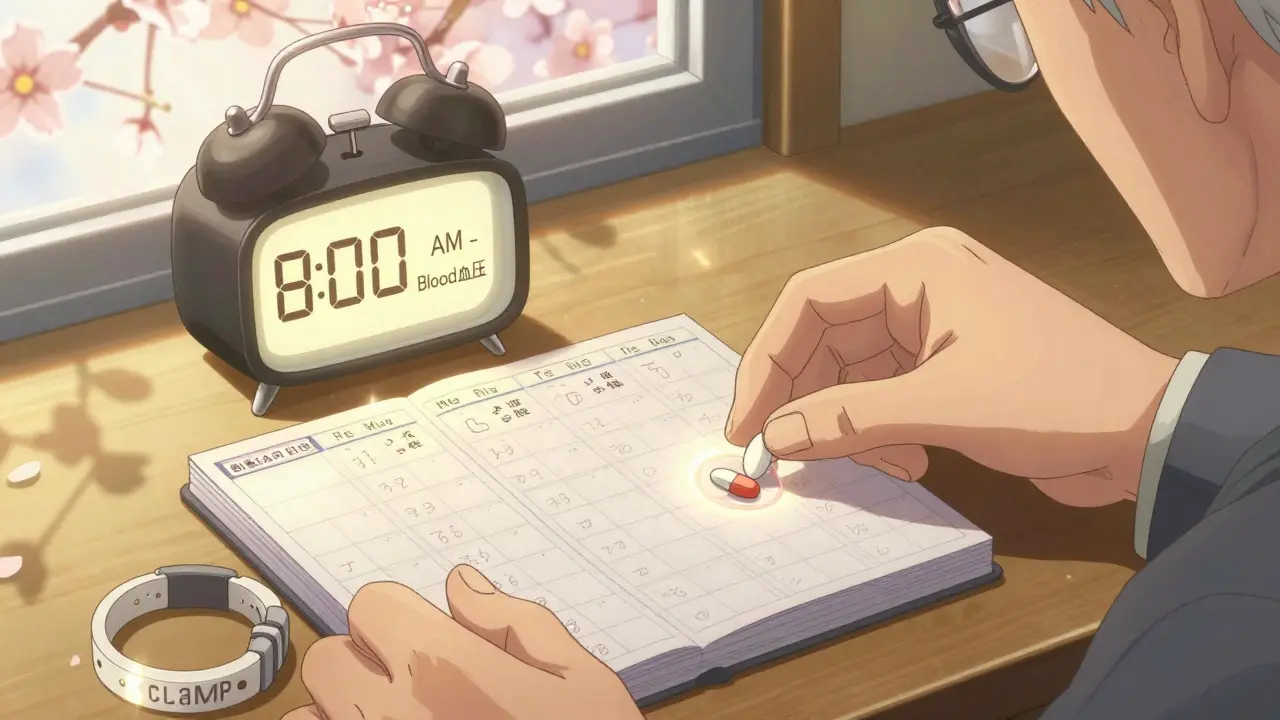
Taking meds at the same time every day makes it easier to remember - and easier for others to help if needed. Link your pills to habits you already have: after brushing your teeth, with your morning coffee, before bed. Use tools to help:- A pill organizer with separate compartments for morning, afternoon, evening, and night.
- A phone alarm labeled “Take blood pressure pill” - set for the exact time.
- A printed weekly chart you can tick off.
Monitor for Changes and Report Them
Medications don’t always work the same way over time. Your body changes. Other conditions develop. A drug that was fine last year might now make you dizzy or confused. Watch for:- New fatigue, dizziness, or confusion
- Changes in appetite, sleep, or mood
- Unexplained bruising, rashes, or swelling
- Difficulty walking or balance problems
Plan for Emergencies
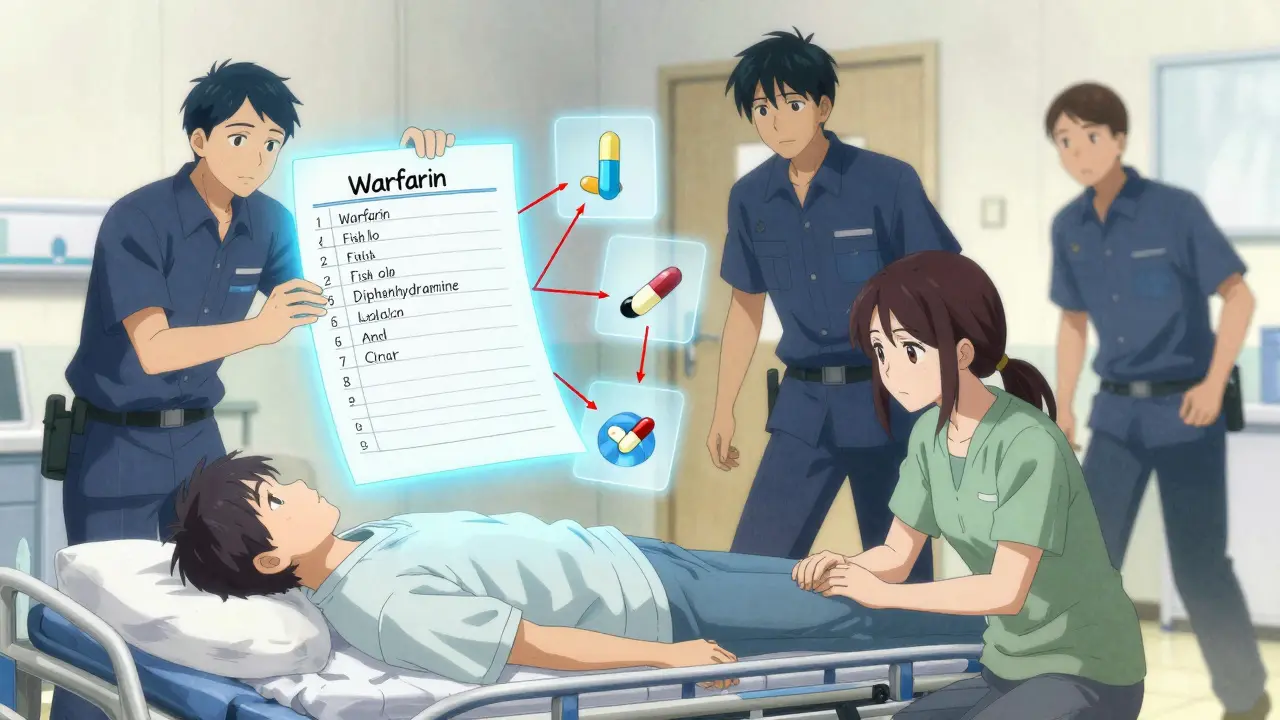
What if you collapse? What if you’re taken to the hospital and can’t speak? Your medication list becomes your voice. Make sure:- Your list is in your wallet, purse, or phone - easily accessible.
- A trusted family member or friend knows where your list is and what each medication does.
- You’ve told your doctor if you want a medical alert bracelet - especially if you’re on blood thinners or have severe allergies.
Know When to Ask for Help
Managing meds isn’t always something you can do alone. If you’re struggling with memory, vision, or mobility, don’t feel guilty about asking for help. That’s not weakness - it’s smart planning. Options:- Ask a family member to manage your pill box and set reminders.
- Use a home care nurse for weekly med checks.
- Sign up for a pharmacy delivery service that pre-sorts your pills into daily packs.
Keep Improving Your Plan
Your medication safety plan isn’t a document you file and forget. It’s a living tool. Every time you see a new doctor, start a new medication, or notice a change in how you feel, update it. The goal isn’t perfection. It’s awareness. It’s knowing what you’re taking, why, and what to watch for. It’s trusting your care team enough to ask questions - even the ones that feel silly. Because in the end, the biggest risk isn’t the medication itself. It’s silence. Not asking. Not speaking up. Not updating your list. You’re not just a patient. You’re the most important person on your care team.What should I do if I miss a dose of my medication?
Don’t double up unless your doctor says to. Check the information sheet that came with your medication, or call your pharmacist. Some pills are safe to take late, others aren’t. For example, missing a blood pressure pill once might not hurt, but missing an insulin dose can be dangerous. Always ask - never guess.
Can I use a smartphone app to manage my medications?
Apps can help with reminders and tracking, but they’re not a replacement for a physical list or clear labels. Many older adults find them confusing. If you use one, make sure it syncs with your care team - not everyone uses the same app. Always keep a printed copy as backup. Technology fails. Paper doesn’t.
Why do I need to tell my doctor about vitamins and supplements?
Because they’re not harmless. St. John’s Wort can make antidepressants stop working. Vitamin K can cancel out blood thinners like warfarin. Even common supplements like calcium or magnesium can interfere with antibiotics or thyroid meds. Your doctor needs the full picture - not just the prescriptions.
How often should I update my medication list?
At least once a year - but better yet, every time you start, stop, or change a medication. Even if you’re feeling fine. Changes happen fast. A new painkiller after surgery, a new cholesterol drug, or even a seasonal allergy med can throw off your whole plan. Update it right away.
What if my care team doesn’t take my concerns seriously?
You have the right to be heard. If you feel dismissed, ask for a second opinion or request to speak with a pharmacist or medication safety nurse. Many hospitals and clinics now have medication therapy management services specifically for this. Bring your list, your notes, and a family member. You’re not being difficult - you’re protecting your health.



Celia McTighe
OMG YES this is SO important!! 🙌 I just helped my grandma update her med list last week-she was taking 3 different painkillers she didn’t even remember getting prescribed. We sat down with her pharmacist and she cried because she finally felt heard. 🥹 Medication safety isn’t ‘old person stuff’-it’s human stuff.
Ryan Touhill
Let’s be honest-this is just another wellness-industrial complex ploy to make patients feel responsible for systemic failures. If your doctor can’t keep track of your medications, that’s their incompetence, not your failure. I’ve seen 17 different specialists in the last 5 years, and not one of them ever asked me about my supplements. The system is broken. Don’t blame the patient.
Teresa Marzo Lostalé
I used to think meds were just little pills you swallowed and forgot about. Then my aunt got hospitalized from mixing turmeric with her blood thinner. That’s when I realized: our bodies aren’t machines. They’re ecosystems. And we’re the gardeners. If you don’t know what you’re planting, you’ll get weeds that choke everything else. This post? It’s a seed. Plant it.
ANA MARIE VALENZUELA
Ugh. Another ‘just write it down’ lecture. Like that’s the solution to people being overmedicated by greedy doctors who push prescriptions like candy. You think a sticky note solves the fact that 80% of elderly patients are on 5+ drugs they don’t need? Wake up. This isn’t about organization-it’s about pharmaceutical greed and a healthcare system that profits from dependency.
Julius Hader
I’ve been doing this for years. My wife and I have a shared Google Doc with every med, dose, and doctor. We even color-code them: red = dangerous, yellow = monitor, green = safe. If you’re not using tech to manage your meds, you’re basically gambling with your life. And no, I don’t use apps-I use spreadsheets. Because real people don’t trust algorithms.
Vu L
Wait so you’re telling me I’m supposed to remember that I took my blood pressure pill at 7am if I’m drunk at 11pm? Nah. I’ll just wing it. My body’s got a built-in GPS for meds. It knows.
James Hilton
Medication safety? More like ‘Medication Theater.’ You write the list, you ask the questions, you label the bottles… and then the doctor changes your prescription without telling you. Congrats. You just won the ‘I Did Everything Right’ award. The prize? A new side effect you didn’t sign up for.
Mimi Bos
i just realized i’ve been taking my thyroid med at night for 3 years bc i thought it was ‘night pill’ on the bottle… its not. its ‘take in morning’. oops. 🙈 thanks for the reminder to actually read the labels lol
Payton Daily
Look, I get it. You want us to be perfect little health robots. But here’s the truth: we’re not machines. We forget. We get tired. We mix up pills. And guess what? That’s okay. The real problem isn’t that we don’t write things down-it’s that we live in a world that treats illness like a moral failing. If you’re sick, you’re broken. If you take meds, you’re weak. That’s the real danger. Not the missing label.
Kelsey Youmans
While I appreciate the pragmatic approach outlined herein, I would respectfully suggest that a more robust framework might include standardized electronic health record interoperability protocols to reduce the cognitive burden on patients. Furthermore, the reliance on paper-based lists may inadvertently exacerbate disparities among populations with limited digital literacy or access to secure storage. A holistic solution must be both patient-centered and systemically scalable.
Sydney Lee
It’s not enough to just ‘update your list.’ You need to understand pharmacokinetics. You need to know CYP450 enzyme interactions. You need to be aware of polypharmacy risks in geriatric populations. Most people don’t even know what a half-life is. This post is like giving a toddler a chainsaw and telling them to ‘be careful.’ The responsibility shouldn’t fall on the patient-it should fall on the system that created this chaos.
oluwarotimi w alaka
in nigeria we dont even have real doctors to give us meds. we buy from street vendors and pray. your ‘medication plan’ is a luxury. if you can afford to write it down, you already won the game. we just try not to die.
Debra Cagwin
You’re not alone. If you’re reading this and feeling overwhelmed-breathe. You’re doing better than you think. Start with one thing: write down just one med today. Call your pharmacist tomorrow. You don’t have to fix everything at once. Progress, not perfection. I believe in you.