
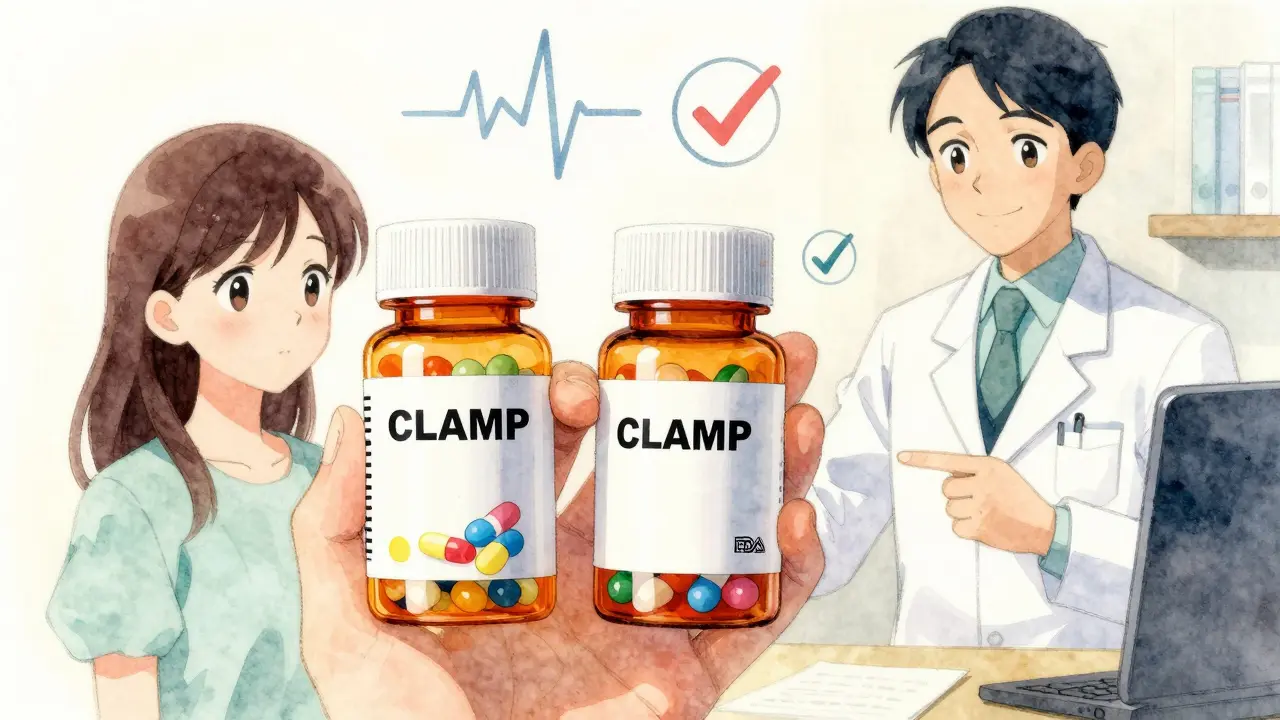
When you pick up a prescription, you might notice your pill looks different. The bottle says something unfamiliar, and the price is lower. You wonder: is this the same drug? The answer is often yes - especially if it's an authorized generic.
Authorized generics aren’t just "similar" to brand-name drugs. They are the exact same medication, made in the same factory, with the same ingredients, and the same quality controls. The only difference? No brand name on the label. That’s it.
What exactly is an authorized generic?
An authorized generic is a brand-name drug sold without the brand name on the packaging. It’s not a copy. It’s not a knockoff. It’s the real thing - produced by the original manufacturer, under the same FDA-approved New Drug Application (NDA), and using the exact same formula.
Think of it like buying a Coca-Cola from the same factory, but in a plain bottle with no logo. The taste, the ingredients, the production line - everything is identical. The only thing missing is the branding.
The FDA defines authorized generics clearly: "an approved brand name drug that is marketed without the brand name on its label." And according to their 2023 guidance, these products are therapeutically equivalent because they are physically and chemically identical to the brand.
Unlike traditional generics - which must prove they’re "bioequivalent" through separate testing - authorized generics skip that step entirely. They’re made under the original brand’s approval. No extra studies. No new paperwork. Just the same drug, in a cheaper package.
How are they different from traditional generics?
This is where things get confusing - and why so many patients worry unnecessarily.
Traditional generics are approved through the Abbreviated New Drug Application (ANDA) process. They must contain the same active ingredient, strength, dosage form, and route of administration as the brand. But they can - and often do - use different inactive ingredients. That means fillers, dyes, preservatives, and coatings can vary.
For most people, this doesn’t matter. But for some? It does. People with allergies to dyes, sensitivities to lactose, or reactions to certain coatings have reported issues switching to traditional generics. A 2018 study of over 5,000 patients found that while most didn’t notice a difference, a small group did - and many of those cases were linked to inactive ingredients.
Authorized generics solve that problem. They use the exact same inactive ingredients as the brand. No substitutions. No surprises. If your brand drug has a red dye, the authorized generic has the same red dye. If the brand uses a special coating to control release, the authorized version does too.
That’s why patients who’ve had bad experiences with traditional generics often ask their pharmacist: "Can I get the authorized version?"
Are they really the same? The science says yes.
The FDA doesn’t just say they’re the same - they’ve proven it.
According to their 2023 Q&A document: "An authorized generic is therapeutically equivalent to the brand name drug because it is exactly the same drug."
Studies back this up. A 2018 analysis published in the National Center for Biotechnology Information compared outcomes for patients on brand drugs versus authorized generics. The results? Identical rates of hospital visits, emergency room trips, and medication adherence. The only minor difference? A slightly higher rate of emergency visits with authorized generics - but researchers believe this was due to patient confusion, not drug performance.
Dr. Choudhry from Harvard Health put it simply: "Traditional generics can vary by up to 20% in active ingredient concentration - though in reality, they usually vary less than 4%. Authorized generics? Zero variation. They’re the same pill, same batch, same everything."
Even the American Academy of Allergy, Asthma & Immunology confirms: "Authorized generics will have the same active and inactive ingredients as the brand name drug."
Why aren’t they always cheaper?
If they’re identical, why aren’t authorized generics always the cheapest option?
Because they’re not always priced like generics.
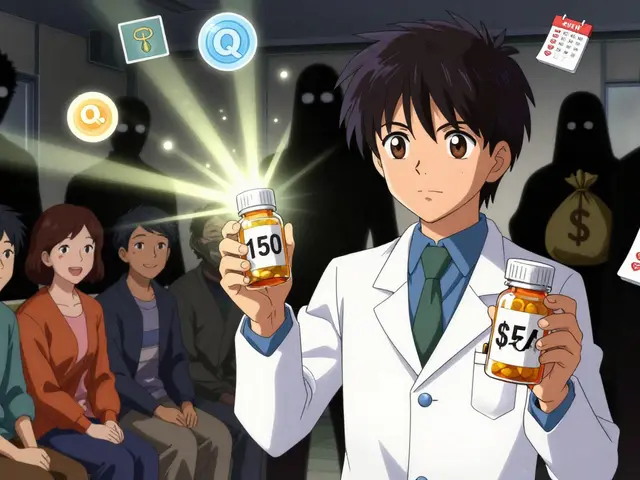
Traditional generics often cost 80-85% less than brand drugs. But authorized generics? They’re usually priced somewhere between the brand and the traditional generic - sometimes only 15-20% cheaper than the original.
Why? Because the brand manufacturer often produces the authorized generic themselves. They’re not trying to compete on price - they’re trying to compete on market share. By offering an authorized version, they keep customers from switching to a competitor’s generic. It’s a business move, not a public health one.
GoodRx data from 2023 shows that in some cases, authorized generics cost nearly as much as the brand. For example, a 30-day supply of a popular blood pressure med might cost $45 for the brand, $35 for the authorized generic, and $12 for the traditional generic.
So while authorized generics are always identical to the brand, they’re not always the best deal.
How do you know if you’re getting one?
Pharmacists are required to tell you if you’re getting a generic - but they don’t always explain the difference between traditional and authorized.
Here’s how to tell:
- Check the label. If it says "Generic for [Brand Name]" and lists the manufacturer as the same company that makes the brand (e.g., "Manufactured by Pfizer" for a Pfizer brand drug), it’s likely an authorized generic.
- Ask your pharmacist: "Is this an authorized generic?" They’ll know.
- Look up the drug on the FDA’s website. While authorized generics don’t appear in the Orange Book (where traditional generics are listed), the FDA maintains a separate list of authorized generics as of 2023.
Some common drugs with authorized versions include Lipitor, Plavix, Nexium, and Xyzal. If you’re on one of these, it’s worth asking.

What about insurance and prescriptions?
Insurance companies treat authorized generics differently than traditional generics. Some put them on the same tier as brand drugs. Others treat them like regular generics.
Fidelis Care’s 2019 report found that many insurers cover authorized generics under the same tier as traditional generics - meaning you pay less than you would for the brand. But not all do.
Here’s what to do:
- Check your plan’s formulary. Look for the drug name with "(authorized generic)" noted.
- Ask your insurer: "Is the authorized generic covered at the generic tier?"
- If your doctor wrote "Dispense As Written" (DAW) on the prescription, you might not be able to switch - even to an authorized version.
Pharmacists report that about 30% of patients question switching to an authorized generic - even though it’s the same drug. Education helps. The FDA has free materials available to explain the difference.
When should you choose an authorized generic?
You should consider an authorized generic if:
- You’ve had side effects from traditional generics (rashes, stomach upset, headaches) that you suspect were caused by inactive ingredients.
- You’re on a medication with a narrow therapeutic window - like warfarin, thyroid meds, or seizure drugs - where even small changes matter.
- You’ve had trouble with adherence and want to minimize confusion.
- Your insurance covers it at the same cost as a traditional generic.
But if you’re not sensitive to inactive ingredients and the traditional generic is significantly cheaper, there’s no medical reason to pay more for the authorized version.
What’s the future of authorized generics?
The FDA is watching closely. In 2022, they held stakeholder meetings about whether authorized generics should be listed in the Orange Book with pricing data. That could change how insurers and patients choose.
Industry analysts at Evaluate Pharma predict authorized generics will hold 5-7% of the generic market through 2028. They’re not going away - but they’re not exploding either.
Some lawmakers are pushing to limit how brand manufacturers use authorized generics to delay competition. The Affordable Prescriptions for Patients Act of 2023 included provisions to address this.
For now, they remain a quiet but powerful tool - especially for patients who need certainty.
Are authorized generics as safe as brand-name drugs?
Yes. Authorized generics are manufactured under the same FDA-approved New Drug Application (NDA) as the brand-name drug. They use the exact same active and inactive ingredients, are produced in the same facility, and follow the same quality controls. The FDA confirms they are therapeutically equivalent and carry the same benefits and risks.
Why do authorized generics sometimes cost more than traditional generics?
Because they’re often made by the same company that produces the brand-name drug. Instead of slashing prices to compete, they price authorized generics just low enough to keep customers from switching to a competitor’s generic. This keeps profits higher than with traditional generics, which are made by separate companies and compete aggressively on price.
Can I ask my pharmacist for an authorized generic?
Absolutely. You have the right to request any FDA-approved version of your medication. If your prescription doesn’t say "Dispense As Written," your pharmacist can substitute a generic - including an authorized one. Just ask: "Is there an authorized generic available for this?" They’ll check and let you know.
Do insurance plans cover authorized generics?
Yes, but coverage varies. Some insurers treat them like traditional generics and put them on the lowest cost tier. Others treat them like brand-name drugs because they’re made by the same company. Always check your plan’s formulary or call your insurer to confirm how they’re covered.
How do I know if my drug has an authorized generic version?
Check the manufacturer name on the pill bottle. If it matches the brand-name manufacturer (e.g., "Made by AstraZeneca" for a drug originally branded by AstraZeneca), it’s likely authorized. You can also search the FDA’s list of authorized generics, or ask your pharmacist directly. Popular drugs with authorized versions include Lipitor, Plavix, Nexium, and Xyzal.



Lorna Brown
So let me get this straight - if the FDA says they’re identical, why do we even have this whole category? It feels like a marketing loophole disguised as transparency. I get that it’s not a knockoff, but if it’s literally the same pill, why does the brand company get to keep control of the supply chain? It’s like selling the same cake but calling one ‘artisanal’ and the other ‘plain’ - same ingredients, same baker, different price tag.
I’ve been on Lipitor for years. My pharmacist switched me to the authorized generic last year. No change in how I felt. No side effects. Just $15 less per month. But I didn’t even know what it was until I Googled it. That’s the problem - this info isn’t pushed to patients. It’s buried in fine print.
And yet, when I asked my doctor if I could switch, he said, ‘If it ain’t broke, don’t fix it.’ But what if it’s *already* broken? The cost burden is real. People skip doses because they can’t afford the brand. An authorized generic could be the bridge - if we just made it visible.
Also, the fact that insurers sometimes treat it like a brand drug? That’s pure profit-driven nonsense. The drug doesn’t care who made the bottle. The body doesn’t read labels. This system is built on perception, not science. And that’s scary.
Rex Regum
Oh here we go again - another ‘trust the system’ pep talk from Big Pharma’s PR team. Authorized generics? Please. The same company that made you pay $500 for a pill last year now says ‘oh don’t worry, it’s the SAME thing!’
They don’t want you to switch to a cheaper generic. They want you to stay loyal. They’re not trying to help you - they’re trying to stop you from leaving. It’s not transparency. It’s a trap. A velvet-lined trap with a price tag that’s ‘only’ 20% lower.
And let’s not pretend the FDA is some saint. They approved OxyContin. They let Purdue get away with murder. Now they’re handing out gold stars to the same companies? No thanks. I’ll take my $12 generic from a company I’ve never heard of over this corporate theater any day.
Kelsey Vonk
Okay I just read this whole thing and I’m crying a little?? 🥹
I’ve been on a thyroid med for 7 years and switched to a traditional generic once - ended up with heart palpitations for two weeks. My doctor was like ‘probably coincidence’ but I KNEW. Then I asked for the authorized version and BOOM - no issues. Ever since.
I didn’t even know this was a thing until now. Thank you for explaining it so clearly. I’m gonna tell my mom. She’s on Plavix and hates how her pills look different every time. This could literally change her life. 😊
Emma Nicolls
i had no idea authorized generics were a thing until now and like wow this makes so much sense why do we even have traditional generics if the authorized one is literally the same pill?? i switched to a generic last year and had a weird rash and i thought it was just me but now i think it was the dye or whatever. im gonna ask my pharmacist next time. thanks for this 😊
Jimmy V
Stop overcomplicating this. Authorized generic = same pill. Traditional generic = same active ingredient, different fillers. End of story.
If you’re allergic to lactose, dyes, or coatings - go authorized. If you’re not? Save money. Go traditional.
The FDA doesn’t lie. The system works. Stop believing conspiracy theories about Big Pharma. They’re not out to get you - they’re out to make a buck. And yes, they profit from authorized generics too. But that doesn’t make them unsafe.
Pharmacists know this. Ask them. They’ll tell you the truth. Don’t let fear drive your health decisions.
Sabrina Sanches
I just got my prescription today and I asked for the authorized generic and they said yes! I didn't even know to ask. I'm so glad I did. My insurance covered it at the generic rate. I feel so much better knowing I'm not risking anything. Thank you for this post. I'm sharing it with my sister. She's been having issues too.
Shruti Chaturvedi
this is so important especially in countries where people dont have access to good healthcare. if you can get the same medicine for cheaper and its made by the same company then why not. we need more awareness about this. i live in india and people here are scared of generics because they think they are fake. but authorized generics are real. this should be taught in schools. thank you for writing this
Devin Ersoy
Oh wow, you’re telling me the same drug, made in the same factory, with the same ingredients, just… labeled differently… is now a ‘solution’? How delightfully capitalist.
Let me guess - the brand manufacturer is the one producing the authorized generic, right? So they’re not lowering prices to compete. They’re lowering them just enough to keep you from going to the *real* generic - the one that actually disrupts their monopoly.
This isn’t patient empowerment. This is a velvet glove over a steel fist. You think you’re saving money? You’re just being gently herded into a slightly less expensive version of the same trap.
And don’t get me started on how insurers treat them like brand drugs. That’s not oversight. That’s collusion. I’m not buying this. I’m buying the $12 generic. The one that’s actually cheaper. The one that breaks the system.
Scott Smith
As someone who’s worked in pharmacy for 18 years, I see this every day.
Patients panic when their pill changes color. They think it’s a different drug. It’s not. It’s the same. Authorized generics are the gold standard for consistency.
I’ve had patients on warfarin who had INR spikes with traditional generics. Switched to authorized - stable within a week. No drama. No hospital visits.
Yes, they’re not always the cheapest. But they’re the safest bet for high-risk meds. And yes - ask for them. Always. Pharmacists are trained to help you find them. We’re not hiding anything.
Stop trusting the hype. Trust the science. And trust your pharmacist.
Emma Deasy
It is, indeed, a matter of profound societal import - and one which demands the utmost in clinical precision, regulatory fidelity, and pharmaceutical transparency - that we, as a collective, not be misled by the superficially benign nomenclature of 'authorized generics,' for though they may, in theory, be chemically indistinguishable from their branded progenitors, the psychological, economic, and systemic ramifications of their introduction into the marketplace are neither trivial nor benign.
One must interrogate not merely the molecular composition of the tablet - but the corporate calculus which underpins its existence. Is it truly an act of benevolence? Or is it a strategic maneuver - a velvet rope, if you will - designed to preserve market share under the guise of patient-centric innovation?
Furthermore, the assertion that 'the body does not read labels' is, while poetically compelling, empirically naïve. The placebo effect is not a myth - it is a measurable, reproducible phenomenon. And when a patient believes they are receiving a 'lesser' drug - even if it is identical - adherence plummets. Efficacy follows.
Thus, we are not merely debating pharmacology - we are debating perception. Identity. Trust. And in this, the authorized generic is not a solution - it is a symptom.