
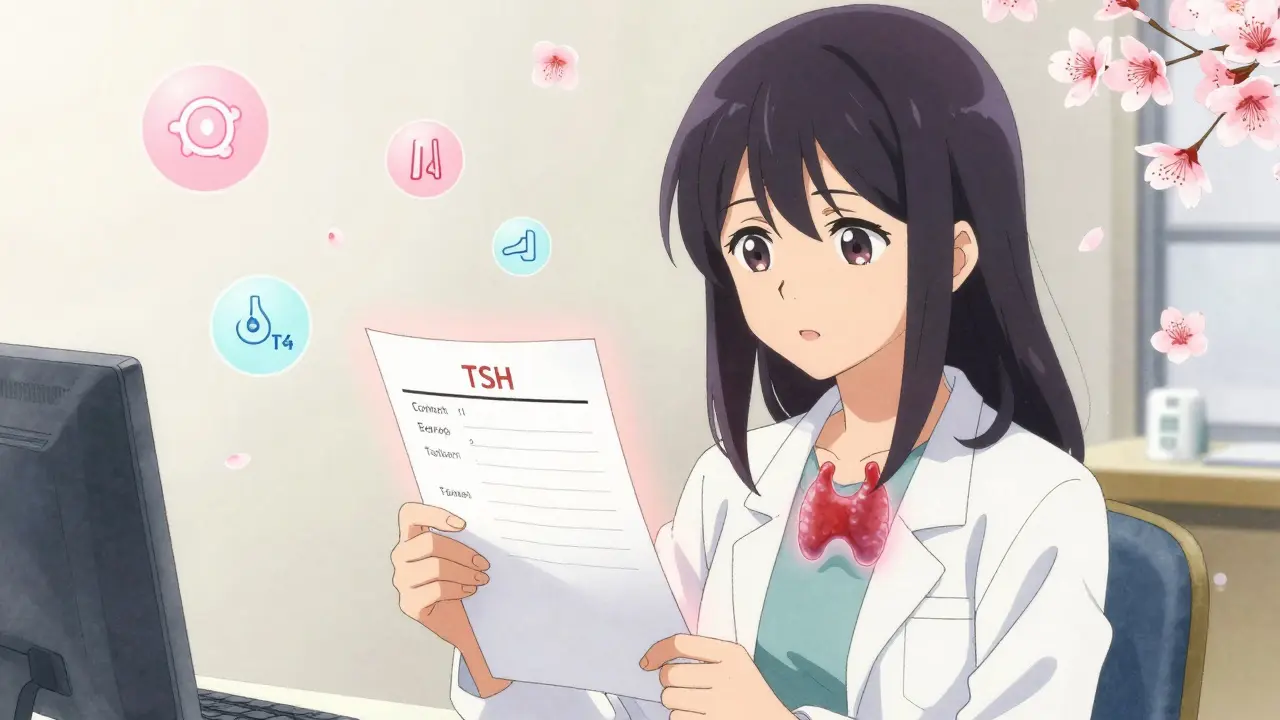
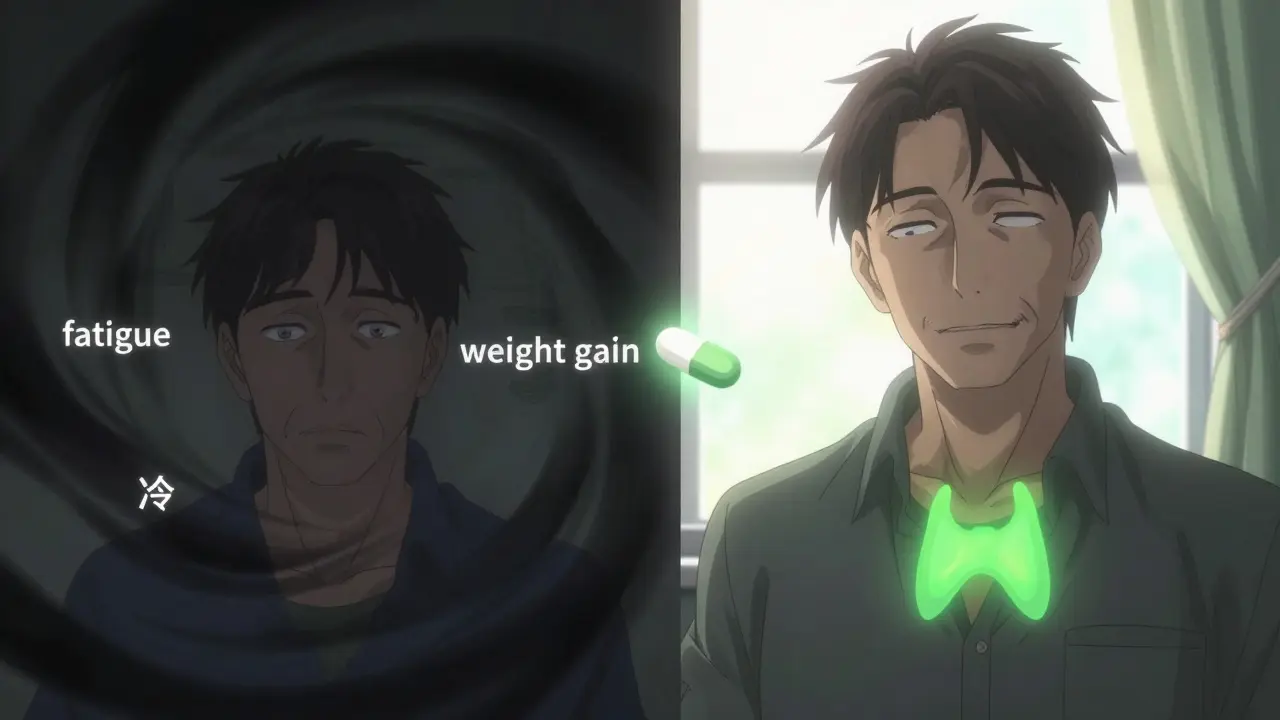
When your TSH is high but your thyroid hormone levels are normal, you have subclinical hypothyroidism. It’s not the same as full-blown hypothyroidism, but it’s not nothing either. You might feel tired, gain weight, or get cold easily. Or you might feel perfectly fine. The big question doctors face is: should you start taking levothyroxine?
What Exactly Is Subclinical Hypothyroidism?
Subclinical hypothyroidism means your thyroid-stimulating hormone (TSH) is above the normal range, but your free T4 (the main thyroid hormone) is still inside the lab’s reference range. This is often called the "gray zone" of thyroid function. Your thyroid isn’t failing yet, but it’s working harder than it should. The pituitary gland is pumping out more TSH to try to get the thyroid to produce more hormone.
This isn’t a new discovery. It became visible in the 1970s when labs started using sensitive tests that could measure tiny changes in TSH. Today, about 4% to 20% of adults have it, depending on age and how the lab defines "normal." The upper limit of normal TSH is usually around 4.12 mIU/L, but some labs use higher cutoffs. The problem? Many people with TSH between 4 and 10 mIU/L never develop full hypothyroidism. So why treat them?
When Is Treatment Clear-Cut?
If your TSH is over 10 mIU/L and your free T4 is normal, most guidelines agree: treat it. The risk of progressing to overt hypothyroidism is high-up to 70% within four years if your TSH is above 8 mIU/L. At this level, even if you feel fine, your body is under stress. Your cholesterol might be rising. Your heart might be working harder. Studies show a higher risk of heart disease and stroke in people with TSH >10.
Doctors also treat anyone with TSH >10 who has thyroid peroxidase antibodies (TPOAb). These antibodies mean your immune system is attacking your thyroid. Positive antibodies turn subclinical hypothyroidism into a ticking clock. People with positive TPOAb and TSH >7 mIU/L are 2.3 times more likely to develop full hypothyroidism than those without antibodies.
The Gray Zone: TSH Between 5 and 10
This is where things get messy. About 15% to 18% of people with subclinical hypothyroidism fall into this range. And here’s the truth: no one agrees on what to do.
The American Thyroid Association says: don’t treat unless TSH >10. The American Association of Clinical Endocrinologists says: consider treatment at TSH >7. The Endocrine Society says: treat if you have symptoms or heart disease risk. The Royal Australian College of General Practitioners says: don’t treat at all in this range.
Why the confusion? Because the evidence is mixed. A 2017 JAMA study of 737 older adults found no improvement in energy, mood, or quality of life after a year of levothyroxine. Another study showed no benefit for cholesterol or heart function. But a 2020 study in younger people under 50 with TSH 7-10 and positive antibodies found 32% fewer symptoms like fatigue and brain fog after starting treatment.
Here’s the catch: many people with "hypothyroid symptoms"-fatigue, weight gain, dry skin-have them even when their thyroid is perfectly normal. One study found 30-40% of people with normal TSH report the same symptoms as those with elevated TSH. So is the symptom from your thyroid, or from stress, sleep, or aging?
Who Should Think About Treatment?
Even if your TSH is between 5 and 10, here are five situations where treatment might make sense:
- You have positive TPO antibodies
- You’re under 50 years old
- You have high LDL cholesterol or other heart disease risk factors
- Your symptoms are severe and persistent (fatigue, depression, cold intolerance)
- You’re trying to get pregnant or are already pregnant
Pregnancy changes everything. Even mild thyroid dysfunction can affect fetal brain development. Most guidelines recommend treating pregnant women with TSH above 2.5-4.0 mIU/L, depending on trimester. If you’re planning pregnancy and your TSH is above 4, talk to your doctor about starting treatment before conception.
Who Should Avoid Treatment?
Not everyone benefits. In fact, treatment can hurt some people.
If you’re over 65 and your TSH is below 10, treatment increases your risk of atrial fibrillation and even death. A 2021 meta-analysis found a 12.3% higher all-cause mortality rate in older adults treated for TSH <10. Why? Because levothyroxine can overstimulate the heart, especially in older people with existing heart conditions.
Also, if you have no symptoms, no antibodies, and no risk factors, watchful waiting is safer. Many people with TSH 5-8 never progress. They live healthy lives without medication. Treating them means lifelong pills, regular blood tests, and potential side effects for no clear benefit.
How Is Treatment Done?
If you and your doctor decide to treat, you’ll start with a low dose of levothyroxine-usually 25 to 50 micrograms daily. Older adults or those with heart disease start even lower, at 12.5 to 25 mcg.
You’ll get your TSH checked again in 6 to 8 weeks. Most people need a small adjustment. The goal isn’t to make TSH zero. It’s to bring it into the normal range-usually between 0.5 and 4.0 mIU/L. Too much thyroid hormone can cause bone loss, heart rhythm problems, and anxiety.
Take your pill on an empty stomach, at least 30-60 minutes before breakfast. Don’t take it with iron, calcium, or soy supplements-they block absorption by up to 39%. Wait at least four hours after taking your thyroid pill before taking antacids or multivitamins.

What About Monitoring?
Once your TSH is stable, you’ll need a blood test every 6 to 12 months. If you’re stable for two years, you might stretch it to once a year. But if you’re over 65, pregnant, or have heart disease, you’ll need closer monitoring.
Don’t rely on symptoms alone. Many people feel better after starting levothyroxine, but that could be placebo. Blood tests are the only reliable way to know if you’re dosed right.
What’s Next in Research?
Scientists are still trying to figure this out. The SHINE trial, a five-year study tracking 1,000 people with TSH 4-10, is expected to release results in late 2024. It’s looking at whether treatment reduces heart attacks and strokes.
Meanwhile, new tools are emerging. Roche Diagnostics launched a TSH velocity calculator in 2023 that tracks how fast your TSH is rising. If your TSH goes up by more than 1 mIU/L per month, your risk of progression jumps by 80%. This helps doctors decide who needs treatment sooner.
Some researchers now think the normal TSH range is too high. A 2022 study of 27,000 people suggested the upper limit should be 2.5 mIU/L for people under 50. If that becomes standard, millions more would be labeled with subclinical hypothyroidism-and possibly treated unnecessarily.
Bottom Line: What Should You Do?
Don’t panic if your TSH is a little high. Don’t rush into pills either.
Ask your doctor for these three things:
- Your TPO antibody test result
- Your full lipid panel (especially LDL cholesterol)
- A symptom checklist using a tool like ThyPRO or the 10-item Thyroid Symptom Rating Scale
If you’re under 50, have antibodies, and feel awful-treatment is reasonable. If you’re over 65, feel fine, and your TSH is 6.5-watch and wait. If you’re pregnant or trying to conceive-treat it. If you have heart disease or high cholesterol-discuss it.
There’s no one-size-fits-all answer. Subclinical hypothyroidism isn’t a disease you cure. It’s a signal. And how you respond depends on your age, your body, and your risk.
Is subclinical hypothyroidism the same as Hashimoto’s?
No. Subclinical hypothyroidism is a lab finding: high TSH, normal T4. Hashimoto’s is an autoimmune disease where your immune system attacks your thyroid. Many people with Hashimoto’s develop subclinical hypothyroidism first, then overt hypothyroidism. But you can have subclinical hypothyroidism without Hashimoto’s, and you can have Hashimoto’s without elevated TSH yet.
Can I stop taking levothyroxine if my TSH normalizes?
Almost never. If you have subclinical hypothyroidism due to autoimmune disease (like Hashimoto’s), your thyroid likely won’t recover. Stopping the pill will cause TSH to rise again. In rare cases-like after postpartum thyroiditis or a temporary illness-TSH might normalize on its own. But that’s uncommon. Most people need lifelong treatment.
Do I need to avoid soy, gluten, or cruciferous vegetables?
No, not unless you have a diagnosed allergy or intolerance. Soy and cruciferous vegetables like broccoli or kale can mildly interfere with thyroid function in large amounts, but you’d need to eat them raw and in massive quantities daily. Cooking reduces this effect. Gluten only matters if you have celiac disease. For most people, diet changes won’t fix subclinical hypothyroidism.
Can stress or sleep deprivation raise TSH?
Yes, but only temporarily. Severe physical stress-like major surgery, infection, or extreme illness-can cause TSH to rise slightly for a few weeks. This is called "non-thyroidal illness syndrome." It’s not true hypothyroidism. Once you recover, TSH usually returns to normal. Chronic sleep deprivation or emotional stress doesn’t cause sustained TSH elevation.
Why do some doctors treat TSH >4 and others wait until >10?
It’s a mix of guidelines, experience, and patient preference. Some doctors follow the American Thyroid Association’s conservative approach. Others follow the American Association of Clinical Endocrinologists, which recommends earlier intervention. Some are influenced by patient reports of feeling better on medication. And some are responding to pressure from patients who read about thyroid issues online. There’s no single right answer-just different risk-benefit calculations.



vishnu priyanka
Man, this post hits different in India where half the population thinks thyroid is just a fancy word for "being tired." I’ve seen grandmas on turmeric tea and yoga cure their TSH like it’s a ghost. Meanwhile, labs here use cutoffs that’d make an American endocrinologist cry. No one checks antibodies. No one cares. Just give the pill and move on.
Kimberly Mitchell
Let’s be real - if your TSH is above 4.5 and you’re not on levothyroxine, you’re just delaying the inevitable. Doctors who don’t treat this are playing Russian roulette with their patients’ hearts. This isn’t "gray zone," it’s a warning flare. And no, fatigue isn’t just "aging."
Angel Molano
Stop overtreating. If you feel fine, leave it alone. Levothyroxine isn’t a vitamin. It’s a hormone with side effects. Your TSH isn’t a moral scorecard.
Randall Little
So… the American Thyroid Association says "wait," the AACE says "treat," and the Endocrine Society says "maybe if you’re crying in the shower?" I’m starting to think the real diagnosis here is medical indecision.
Vinaypriy Wane
As someone who’s lived with TSH at 8.2 for three years, and felt like a zombie… I started levothyroxine at 5.8 because my TPOAb was through the roof. Within weeks, I stopped forgetting my own phone number. If you’re not treating people like me, you’re not listening - you’re just following guidelines like a robot.
Gregory Parschauer
Oh, here we go again - the "thyroid cult" rears its head. People think their fatigue is "hypothyroid" because they read a blog. Meanwhile, their cortisol’s through the roof from stress, they’re sleeping 4 hours a night, and drinking 4 espressos before noon. You don’t need a pill - you need a therapist, a bed, and to stop Googling "I think I’m hypothyroid" at 2 a.m. Levothyroxine isn’t a lifestyle hack. It’s medicine. Use it wisely - or don’t, but stop pretending your laziness is a medical condition.
Diana Campos Ortiz
My mom had TSH 7.8, zero symptoms, and refused meds. She’s 72. Now she’s got AFib. I’m not saying treat everyone - but if you’re gonna ignore it, at least track it. And if you’re pregnant? Don’t gamble with a brain that can’t speak yet.
sam abas
So the JAMA study showed no benefit for older adults… but then a 2020 study said younger people with antibodies felt better? So… it works if you’re young and have antibodies? But not if you’re old? But if you’re old and have antibodies? Wait… is this even science or just a spreadsheet that got drunk? Also, I think I misread the TSH cutoff. Was it 4.12 or 4.5? I think I’m tired now. Maybe I need levothyroxine.
Pankaj Singh
Anyone who takes levothyroxine for TSH 5-7 is a medical tourist. You’re not sick. You’re just a person who doesn’t like being tired. Stop pathologizing normal human variation. This is what happens when you give people Google and a pill.
Nelly Oruko
It’s not about the number. It’s about the person. If your body’s screaming for help, listen. Even if the lab says "it’s fine."
Alan Lin
As a physician who’s managed thyroid patients for over two decades, I can tell you this: the data is messy because human biology is messy. We have population-level guidelines, but individual responses vary wildly. I’ve seen patients with TSH 8.5 feel fine and refuse treatment - and others with TSH 5.2 who wept with relief after a single dose. The answer isn’t in the guideline. It’s in the conversation. And if you’re not having that conversation - you’re not practicing medicine. You’re just checking boxes.
Angel Tiestos lopez
Thyroid is the ultimate mood ring for your metabolism 😅
One day you’re a zombie, next day you’re running marathons on 25mcg. I’ve been on levothyroxine since 28. My TSH was 8. I didn’t know I was depressed until I wasn’t. Also, if you’re trying to get pregnant and your TSH is above 2.5 - yes, treat it. Your future kid’s IQ isn’t a gamble.
Jesse Ibarra
Let me guess - the people who say "don’t treat" are the ones who’ve never had to explain to their boss why they can’t get out of bed at 9 a.m. because their body thinks it’s in hibernation. You don’t get to tell someone their exhaustion isn’t real because your TSH is "normal." This isn’t a debate. It’s a crisis of empathy in medicine.
Angel Molano
And yet, treating everyone just because they feel tired leads to iatrogenic hyperthyroidism. I’ve seen it. Old people with atrial fibrillation because someone pushed a pill too early. The cure isn’t always better than the disease.