Cultural Acceptance of Medications: How Society Shapes Drug Use and Trust
When we talk about cultural acceptance, how a society views, trusts, or rejects medical treatments based on shared beliefs, history, and social norms. Also known as health belief systems, it’s not just about whether a drug works—it’s about whether people believe it should be used. A vaccine that saves lives can be refused. A generic pill that costs 90% less might be distrusted. A traditional herb might be preferred over a FDA-approved drug—not because it’s better, but because it feels right.
This isn’t just about ignorance. Cultural acceptance is shaped by real experiences: a family member who had a bad reaction, a religious leader’s warning, a news story about a recalled drug, or even how a doctor speaks to you. In some places, people avoid insulin because they think it’s addictive. In others, they refuse antidepressants because emotional pain is seen as a moral failing, not a medical one. Meanwhile, in countries with strong public health systems, people trust generics without question. In the U.S., brand-name drugs are often preferred—even when the generic is identical—because of decades of marketing that equated price with quality.
Medication trust, the level of confidence people have in the safety and intent of pharmaceuticals, is deeply tied to global health beliefs, how different cultures define illness, healing, and the role of science. In India, where generic drugs dominate, people are used to low-cost options and often judge them by results, not branding. In parts of Europe, strict regulation has built trust in the system. But in the U.S., where drug pricing is opaque and lawsuits are common, skepticism runs high. Even pharmaceutical adoption, how quickly new treatments are accepted by populations varies wildly. A new Alzheimer’s drug might be embraced in Japan but met with silence in rural America because of language barriers, fear of side effects, or lack of access to specialists.
What’s missing in most health discussions is this: science doesn’t operate in a vacuum. A drug’s effectiveness means nothing if people won’t take it. That’s why vaccine safety systems like VAERS matter—not just for tracking reactions, but for rebuilding trust. Why tall-man lettering is used—not just to prevent errors, but because people need to feel the system is designed to protect them. Why some patients switch from SSRIs not because they don’t work, but because they feel emotionally numb—and that’s seen as a personal failure, not a known side effect.
These aren’t abstract ideas. They’re the hidden reasons why a mother refuses ginger for morning sickness, why an elderly man won’t take his blood thinner because he heard it causes bleeding, why people in some countries stockpile antibiotics without prescriptions. The posts below dive into real cases: how insulin allergies are handled in communities with low medical access, why herbal supplements in pregnancy are used despite no evidence, how international pricing affects what people can afford, and how patent battles delay affordable drugs—fueling distrust. You’ll see how cultural acceptance isn’t just background noise. It’s the engine behind every pill someone swallows—or refuses to take.
How Culture Shapes What We Accept - Even When It’s Generic
Posted by Ian SInclair On 5 Dec, 2025 Comments (15)
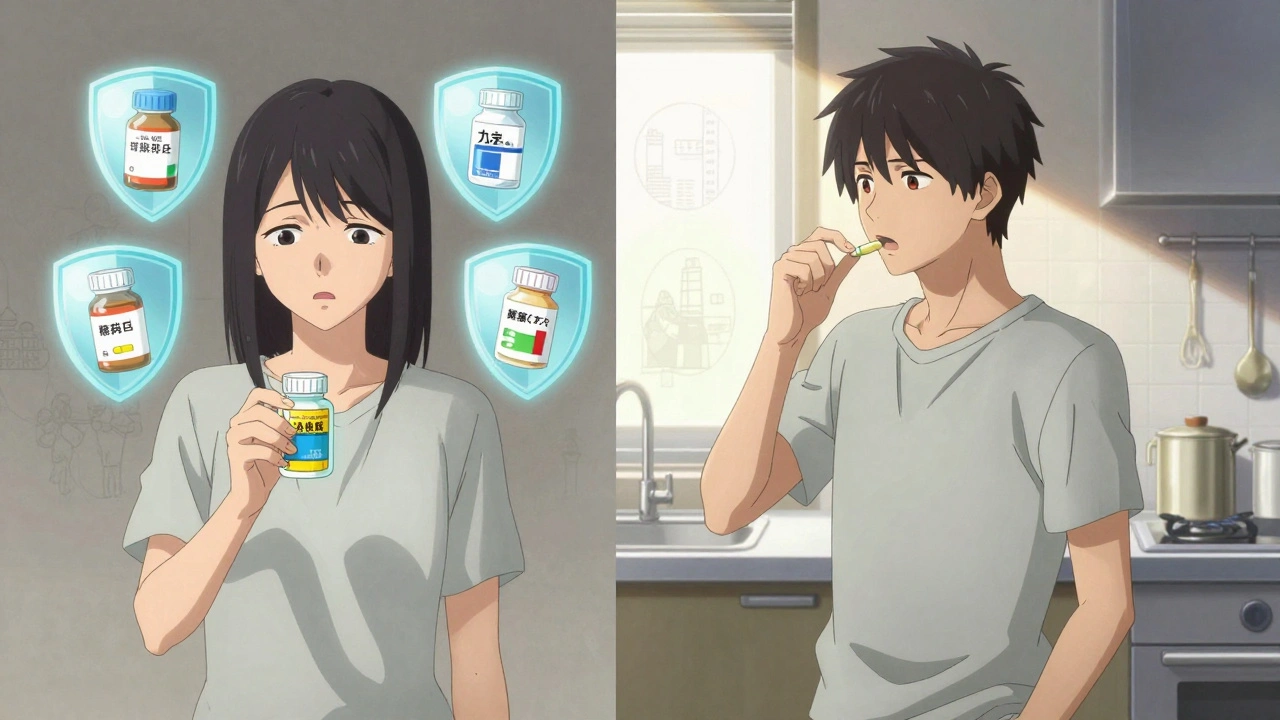
Culture shapes what we accept - even when it’s generic. From medications to apps, understanding cultural values like individualism, uncertainty avoidance, and collectivism can make the difference between adoption and rejection.