Drug-Induced Kidney Injury: Causes, Risks, and How to Stay Safe
When your kidneys start to struggle because of a medication, that’s called drug-induced kidney injury, a type of kidney damage caused by prescription or over-the-counter drugs. Also known as nephrotoxicity, it’s not rare—it shows up in hospitals and at home, often without warning signs until it’s too late. This isn’t about illegal drugs or overdoses. It’s about everyday pills—antibiotics, painkillers, blood pressure meds, even some supplements—that quietly stress your kidneys over time.
Your kidneys filter everything you take. That’s why they’re so vulnerable. NSAIDs, like ibuprofen and naproxen, reduce blood flow to the kidneys, especially in older adults or people with existing kidney issues. Antibiotics, including aminoglycosides and vancomycin, can poison kidney cells directly. Even contrast dyes used in CT scans can trigger sudden damage. And it’s not just one drug—it’s combinations. Mixing a diuretic with an ACE inhibitor? That’s a common recipe for trouble. The FDA’s post-approval surveillance system catches some of these patterns, but many cases slip through because doctors don’t always connect the dots between a new medication and rising creatinine levels.
What makes this worse is that most people don’t feel anything until their kidneys are already damaged. No pain. No fever. Just a blood test that says, "Something’s off." That’s why knowing your risk matters. If you’re over 65, have diabetes, heart failure, or already have reduced kidney function, you’re at higher risk. Even if you’re healthy, taking multiple meds long-term increases your chance. The good news? You can reduce your risk. Drink enough water. Avoid unnecessary NSAIDs. Ask your doctor to check your kidney function before starting a new drug. And if you’re on a long-term medication—like steroids or certain antibiotics—know the warning signs: swelling in your legs, fatigue, less urine, or nausea.
This collection of articles doesn’t just list side effects. It shows you how real people and real doctors handle medication risks every day. You’ll find guides on how antibiotics affect your kidneys, how to safely switch blood thinners without harming your renal function, and why some painkillers are riskier than others. You’ll see how telehealth helps monitor kidney health remotely, how pharmacokinetic interactions can quietly wreck your kidneys, and why even "safe" supplements can cause trouble. These aren’t theoretical warnings. They’re based on real cases, real data, and real decisions made by patients who learned the hard way.
Acute Interstitial Nephritis: How Drugs Trigger Kidney Inflammation and What Recovery Really Looks Like
Posted by Ian SInclair On 22 Nov, 2025 Comments (10)
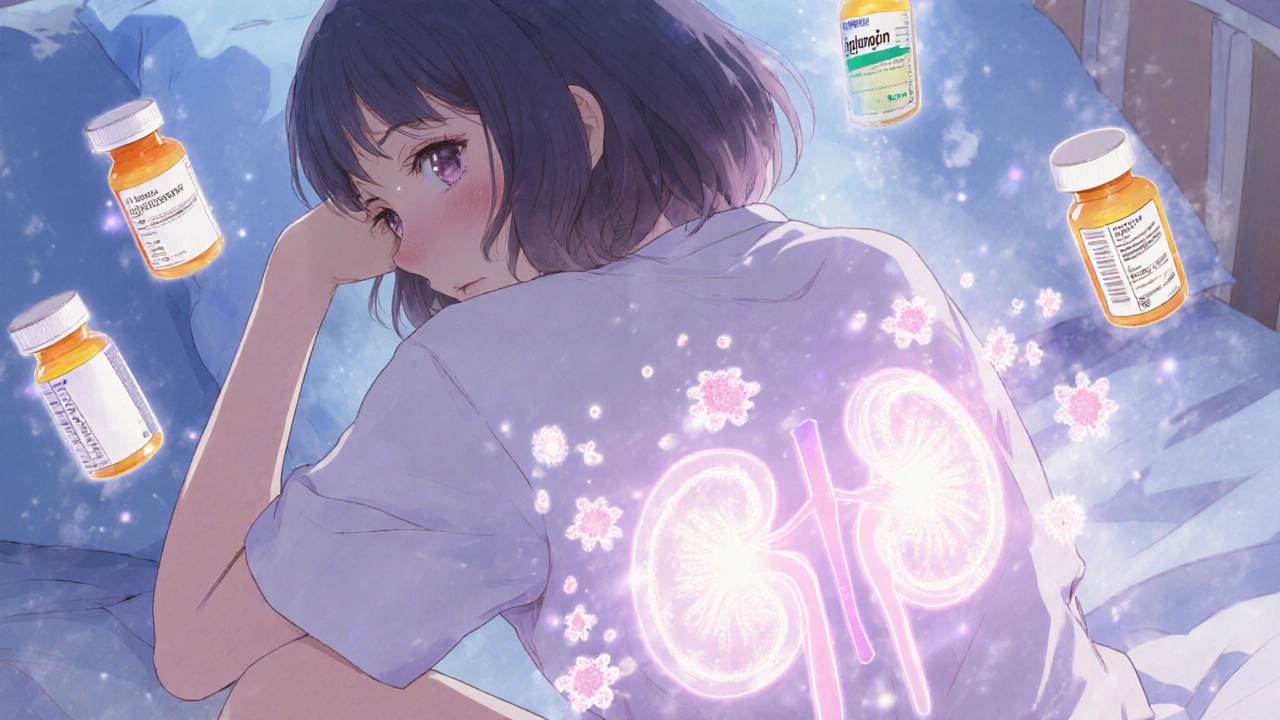
Acute interstitial nephritis is a serious kidney reaction to common drugs like PPIs and NSAIDs. Learn how it develops, which medications cause it, and why early action is critical for recovery.