
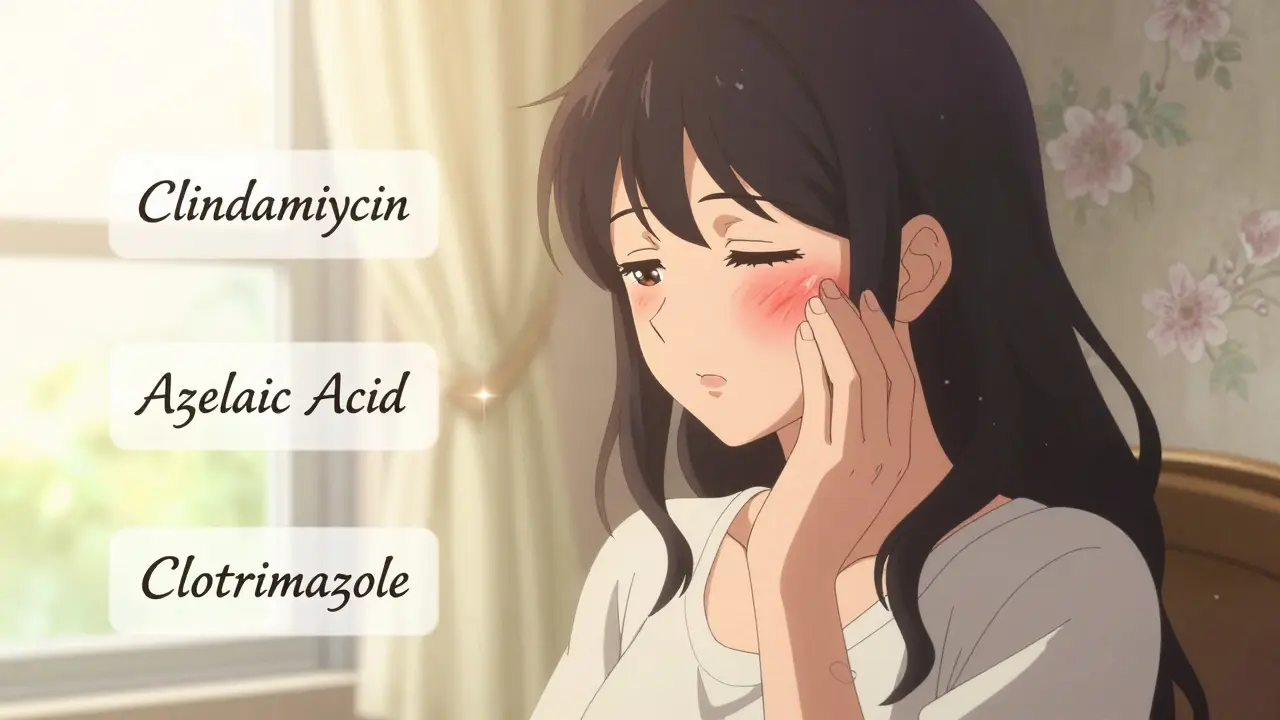
When you're pregnant, your skin changes. Maybe you break out. Maybe you get itchy rashes. Maybe dark patches show up on your face - that’s melasma, often called the "pregnancy mask." You want relief, but you’re terrified of harming your baby. The good news? Most topical creams and medications are safe during pregnancy because very little gets into your bloodstream. The bad news? Not all of them are. Some ingredients, even in creams you rub on your skin, can still pose risks. Knowing what’s safe - and what to avoid - can save you stress and keep your baby protected.
Why Topical Medications Are Usually Safer
When you take a pill, your body absorbs the whole dose. It goes through your liver, enters your blood, and travels everywhere - including the placenta. Topical treatments are different. They’re meant to work on the surface. A cream, lotion, or gel applied to your skin usually only lets in 1% to 10% of the active ingredient. That’s why doctors often recommend topical options over pills for conditions like acne, eczema, or fungal infections during pregnancy.
But don’t assume "topical" means "completely safe." The amount absorbed depends on where you apply it. Skin on your face, neck, armpits, and groin absorbs more than skin on your forearm or leg. Also, using a large amount, applying it daily for weeks, or using it on broken skin can increase absorption. So even safe products need to be used wisely.
What’s Safe: Topical Treatments for Common Pregnancy Skin Issues
Here’s what most experts agree is safe to use during pregnancy, backed by guidelines from the American College of Obstetricians and Gynecologists (ACOG), the American Academy of Dermatology, and the European Academy of Dermatology and Venereology.
- Hydrocortisone cream (1%) - This mild steroid is the go-to for eczema, insect bites, and rashes. It’s absorbed minimally, even on sensitive areas. Use it for short periods, and avoid applying it over large areas daily.
- Clindamycin and erythromycin gels - These topical antibiotics are first-line treatments for acne. Studies show less than 5% of clindamycin gets absorbed, and serum levels stay far below dangerous ranges. They’re safe in all trimesters.
- Benzoyl peroxide (5% or lower) - It kills acne-causing bacteria and reduces oil. Though classified as Category C (meaning animal studies showed some risk), human data hasn’t linked it to birth defects. Use it sparingly, and avoid high concentrations.
- Azelaic acid (15-20%) - This is a favorite for melasma. It’s Category B, meaning animal studies showed no harm, and it’s been used safely by thousands of pregnant women. It also helps fade dark spots without bleaching the skin.
- Clotrimazole, miconazole, nystatin - These antifungal creams treat yeast infections (common in pregnancy due to hormonal shifts). They’re applied locally and don’t absorb much. Experts say these are the safest first-choice options.
- Acyclovir cream - For cold sores or genital herpes. It’s safe in all trimesters. The amount absorbed is tiny, and studies show no increased risk of birth defects.
What to Avoid: Topical Products with Known or Potential Risks
Some ingredients, even in creams, should be avoided entirely during pregnancy. These aren’t just "better safe than sorry" - they’re backed by real case reports and clinical warnings.
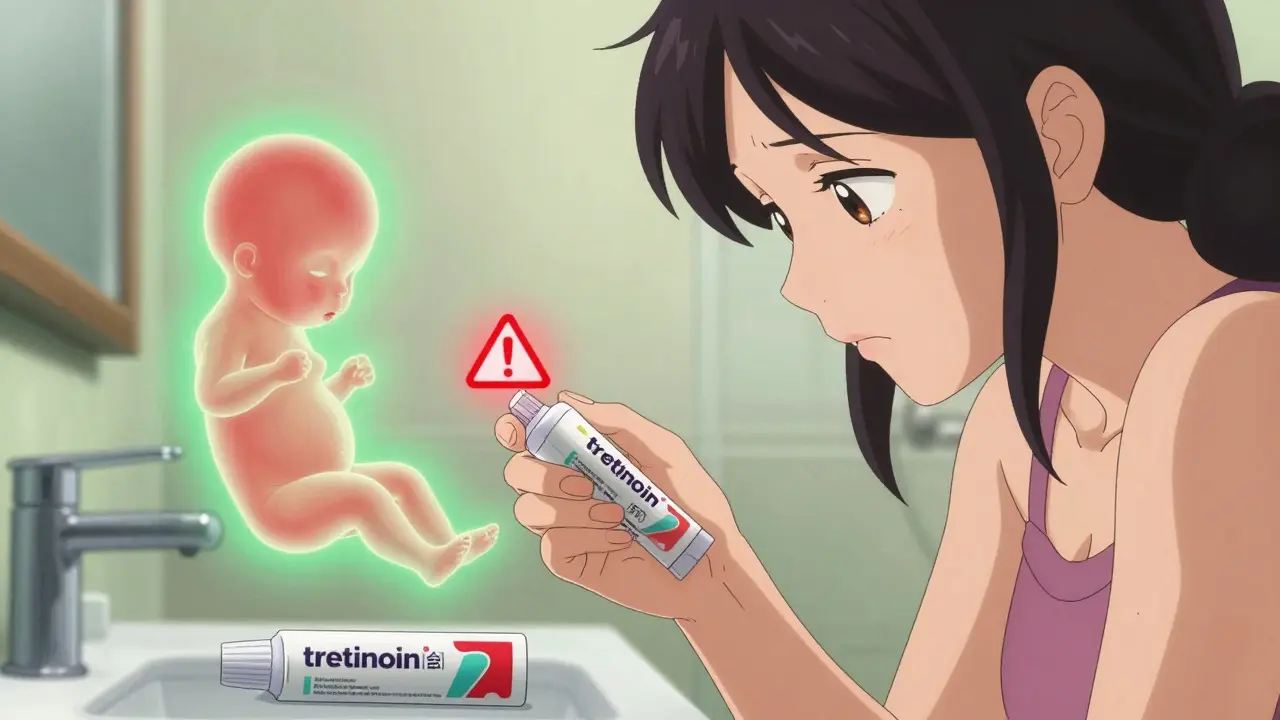
- Topical retinoids (tretinoin, adapalene, tazarotene) - Even though they’re applied to the skin, there are documented cases of birth defects when used during early pregnancy. The FDA used to classify tretinoin as Category C, but case reports of facial malformations and heart defects in babies have led experts to recommend complete avoidance. If you used it before knowing you were pregnant, don’t panic - the actual risk is low, but it’s not worth taking chances.
- Salicylic acid (over 2%) - This is common in acne spot treatments and chemical peels. Oral aspirin (a relative of salicylic acid) is linked to complications in late pregnancy. While topical use is low-risk, products with more than 2% concentration should be avoided, especially in the third trimester.
- Topical NSAIDs (diclofenac, ibuprofen gels) - These may seem harmless because they’re not pills. But studies show they can cross the placenta in small amounts. After 30 weeks, they can cause the baby’s ductus arteriosus (a blood vessel) to close too early, leading to serious heart problems. Avoid them after 30 weeks. Before that, use only if absolutely necessary and for the shortest time possible.
- Podofilox and podophyllin - Used for genital warts. These are toxic and can cause serious fetal harm. Never use them during pregnancy.
- Econazole - While clotrimazole and miconazole are safe, econazole should be avoided, especially in the first trimester. It’s been linked to developmental delays in animal studies.
What About Over-the-Counter Products?
You might be surprised how many common skincare products contain risky ingredients. A moisturizer labeled "for sensitive skin" might still have retinol or salicylic acid. A spot treatment for acne might have 10% benzoyl peroxide - too high for pregnancy. Always check the ingredient list.
Here’s what to look for:
- Retinol, retin-A, retinaldehyde, tretinoin - Avoid all forms.
- Salicylic acid - Avoid if listed as 2% or higher. Low concentrations (under 2%) in cleansers are generally okay, but skip peels and masks.
- Hydroquinone - Used for dark spots. It’s not proven dangerous, but it’s not well studied in pregnancy. Better to use azelaic acid instead.
- Essential oils - Many are marketed as "natural" but can be absorbed through the skin. Tea tree oil, lavender, and others aren’t well studied. Avoid using them in large amounts or on broken skin.
When in doubt, stick to simple, fragrance-free moisturizers. Look for products labeled "pregnancy-safe" - but don’t trust marketing alone. Check the ingredients.
How to Use Topical Products Safely
Even safe products can be misused. Here’s how to use them wisely:
- Use the smallest amount needed. A pea-sized dab is enough for your whole face.
- Apply only where needed. Don’t spread it over your chest or arms unless necessary.
- Wash your hands after applying.
- Avoid applying to cracked or bleeding skin - that increases absorption.
- Don’t use more than once a day unless your doctor says so.
- Stop using any product if you notice redness, burning, or swelling.
- Keep a list of all products you’re using - including OTC creams - and review them with your OB or dermatologist every trimester.

When to Call Your Doctor
You don’t need to panic over every little rash. But call your provider if:
- You’ve been using a cream and just found out you’re pregnant.
- Your skin condition is getting worse despite treatment.
- You’re using a product with an ingredient you’re unsure about.
- You notice swelling, fever, or signs of infection with your rash.
- You’ve used a product that’s on the "avoid" list - even once.
Most of the time, the risk is very low. But knowing what to do next gives you peace of mind.
What’s Changing in 2026?
The FDA stopped using the old A, B, C, D, X categories in 2015. Now, labels must include narrative descriptions of risks - but many manufacturers still use the old system on packaging. That’s why you’ll see conflicting info. In 2023, 92% of topical products had updated labeling, but doctors still rely on older studies. The latest guidelines (2022-2023) from ACOG and the European Academy confirm: avoid retinoids, limit NSAIDs after 30 weeks, and stick to clindamycin, azelaic acid, and mild steroids.
Research is ongoing. Large studies are still needed, especially for newer treatments. But based on current data, the safest path is simple: use the least amount of the least potent product for the shortest time.
Can I use hydrocortisone cream while pregnant?
Yes, 1% hydrocortisone cream is considered safe during pregnancy for short-term use. It’s absorbed minimally and is commonly recommended for eczema, rashes, and itching. Avoid using it on large areas daily or for more than a week without checking with your doctor.
Is benzoyl peroxide safe in pregnancy?
Yes, benzoyl peroxide (5% or lower) is generally safe. It’s not absorbed much through the skin, and no clear link to birth defects has been found in human studies. Avoid higher concentrations (like 10%) and use it only on acne-prone areas.
What acne treatments are safe during pregnancy?
Topical clindamycin, erythromycin, and benzoyl peroxide (5%) are the safest options. Azelaic acid also helps with acne and dark spots. Avoid retinoids like tretinoin, adapalene, and tazarotene entirely - even in low concentrations.
Can I use anti-fungal cream for yeast infections while pregnant?
Yes. Clotrimazole, miconazole, and nystatin are first-line treatments for vaginal yeast infections during pregnancy. They’re applied locally and don’t absorb into the bloodstream in significant amounts. Avoid econazole, especially in the first trimester.
Is it safe to use topical NSAIDs like diclofenac gel during pregnancy?
Use them only before 30 weeks and only if absolutely necessary. After 30 weeks, topical NSAIDs can cause the baby’s heart to develop a serious blood flow problem. Even though absorption is low, the risk is real. Talk to your doctor before using any NSAID cream.
I used retinol cream before I knew I was pregnant. Will my baby be okay?
The risk is very low. Topical retinoids absorb minimally, and most cases of birth defects involve oral retinoids like Accutane. Still, stop using it immediately and talk to your OB. They may recommend an early ultrasound to check development. Most women in this situation go on to have healthy babies.





phyllis bourassa
I used hydrocortisone for my eczema during both pregnancies and honestly? Life saver. But I also used a retinol cream for like 3 weeks before I knew I was pregnant. I panicked so hard I cried for two days. Turned out my baby is perfectly fine. Don't let fear rule you. Just stop the bad stuff and move on. You're not a monster for making mistakes.
Also, please stop calling everything 'natural' like it's magic. Tea tree oil isn't a unicorn. It's a plant. And plants can be toxic. Just say no.
Pranay Roy
I read somewhere that benzoyl peroxide breaks down into benzoic acid-which is naturally found in breast milk. So if it’s in breast milk, why are we scared it’s in the fetus? Also, why is hydroquinone considered 'not well studied' but azelaic acid is fine? Isn’t azelaic acid derived from grains? What if I have celiac? Are we just swapping one risk for another? I think the whole system is built on fear, not data.
And don’t get me started on 'pregnancy-safe' labels. That’s just marketing. I once bought a 'safe' moisturizer that had phenoxyethanol. It’s a preservative banned in Japan for babies under 3. So… yeah. Trust no one.
amber carrillo
Thank you for this clear, evidence-based guide. It’s rare to find such thoughtful, calm information in a space full of fear and misinformation. I’m a nurse and I’ve seen so many pregnant patients terrified of using anything-even safe, low-dose hydrocortisone-because of bad advice online. This helps. Truly.
Tim Hnatko
I’m a dad. My wife used clindamycin for acne and clotrimazole for yeast. I read every study I could find. I didn’t know what I was looking at, but I trusted the ACOG guidelines. We didn’t panic. We didn’t overthink. We just followed the list. And our daughter is now 2.5 years old and climbing walls like a ninja.
Don’t let the noise drown out the facts. You’re doing better than you think.
Aaron Pace
I used 10% benzoyl peroxide for 3 months before I knew I was pregnant 😬😭
My OB said 'it's fine' but I still cried. Now my baby is 8 months old and has perfect skin.
Also, I used tea tree oil on my toenail fungus. It's still there. But baby's fine.
PS: I love you all. You're all doing great. 💖
Roland Silber
Let’s be real: the biggest risk isn’t the cream-it’s the anxiety. I’ve seen patients refuse to treat eczema because they’re scared of hydrocortisone. Then they scratch until they bleed. Then they get infected. Then they need oral antibiotics. Which are *way* more likely to cross the placenta than a pea-sized dab of steroid.
Topical = local. Local = minimal systemic exposure. This isn’t rocket science. But it feels like it because we’ve been trained to fear everything.
Use the least amount, for the shortest time, on the smallest area. That’s the rule. Not fear. Not perfection. Just smart, simple action.
Patrick Jackson
I used retinol for 4 weeks before I knew I was pregnant. I felt like I’d committed a crime. I cried. I Googled. I prayed. I called my OB at 2 a.m. She said, 'It’s like finding out you drank a glass of wine at 4 weeks-you didn’t know. You didn’t mean to. You’re not a bad person.'
And you know what? My son is 3 now. He’s a tiny tornado of joy. No birth defects. No issues. Just a kid who loves dinosaurs and peanut butter.
To anyone reading this: You’re not broken. You’re not cursed. You’re just human. And you’re doing the best you can. That’s enough. 💪❤️