
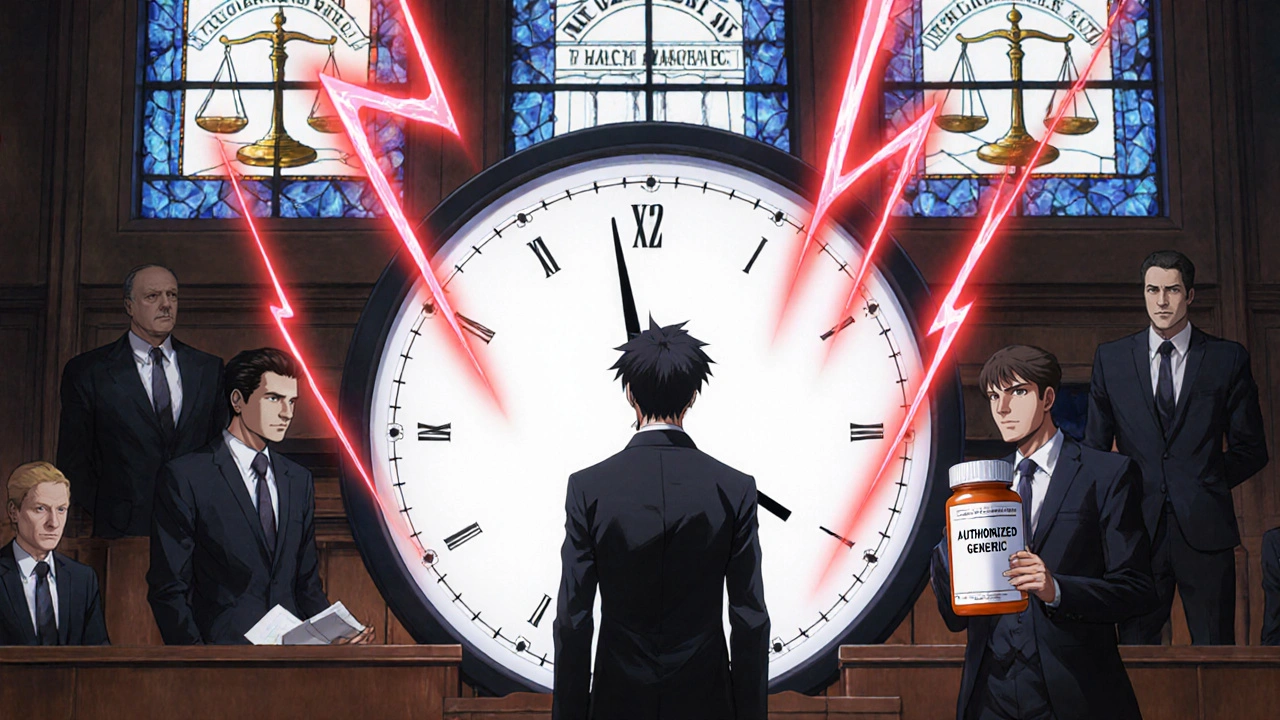
When a brand-name drug’s patent runs out, the law says the first generic company to challenge that patent gets a 180-day head start on the market. That’s the 180-day exclusivity rule - a cornerstone of the 1984 Hatch-Waxman Act. But here’s the twist: while that generic company is waiting to cash in, the original drug maker can legally launch its own version - same pills, same factory, no brand name. It’s called an authorized generic. And it doesn’t just compete with the first generic. It often kills its profits before they even start.
How the 180-Day Exclusivity Rule Was Supposed to Work
The Hatch-Waxman Act was designed to fix a broken system. Before 1984, brand-name drugs had years of monopoly control. Generic versions couldn’t even start the approval process until the patent expired. That meant patients waited years longer for cheaper drugs. The law changed that. It let generic companies file for approval before the patent expired - as long as they said the patent was invalid or didn’t apply. That’s called a Paragraph IV certification. If the generic company won the legal fight, they got 180 days of exclusive rights to sell their version. No other generic could enter during that time. The idea was simple: reward the company that took the risk. Patent lawsuits cost $2 million to $5 million. The 180-day window was meant to cover that cost and then some. In theory, the first generic would capture 80% of the market. Prices would drop fast. Patients would save billions. Between 1984 and 2023, this system saved the U.S. healthcare system over $2.2 trillion. It cut the time to generic entry by more than three years on average. That’s real money. Real relief.What Is an Authorized Generic - and Why It’s a Problem
An authorized generic isn’t a copy. It’s the exact same drug made by the brand-name company, just sold under a different label. No reformulation. No new approval. No delay. The brand-name maker can slap on a plain box and start selling it the same day the first generic hits shelves. It’s legal. It’s allowed under FDA rules. And it’s used in about 60% of cases where 180-day exclusivity is granted. That’s not a coincidence. It’s a strategy. When an authorized generic enters the market, the first generic’s market share drops from 80% to around 50%. Revenue plummets by 30% to 50%. In one case, Teva Pharmaceuticals estimated it lost $287 million because Eli Lilly launched an authorized generic of Humalog during Teva’s exclusivity window. That’s not a typo. That’s $287 million gone. The brand-name companies argue this helps consumers. They say having two versions of the same drug - one branded, one generic - drives prices down even further. And yes, prices do drop faster. But the real winner isn’t the patient. It’s the brand-name company. They get to keep their slice of the market. The generic company? They’re left with a fraction of what they were promised.The Legal Gray Zone
There’s no law saying brand-name companies can’t launch authorized generics during the 180-day window. That’s the problem. The Hatch-Waxman Act never imagined this loophole. It was written to encourage generic competition - not to let the original maker undercut the very company that challenged their patent. The Federal Trade Commission (FTC) has called it a “strategic abuse.” Between 2010 and 2022, the FTC filed 15 antitrust lawsuits against brand-name companies for using authorized generics to delay real competition. Courts haven’t blocked the practice yet, but regulators are pushing hard. In 2023, FDA Commissioner Robert Califf told Congress he supports changing the law to block authorized generics during the exclusivity period. The same year, the Senate introduced the Preserve Access to Affordable Generics Act - again - which would make it illegal for brand-name firms to launch their own generics during that 180-day window. But the pharmaceutical lobby fights back. PhRMA says banning authorized generics would hurt patients. They point to a RAND Corporation study showing prices are 15-25% lower when both versions are sold side-by-side. But that study doesn’t account for the chilling effect on generic competition. If companies know they’ll be undercut before they even start, why bother suing?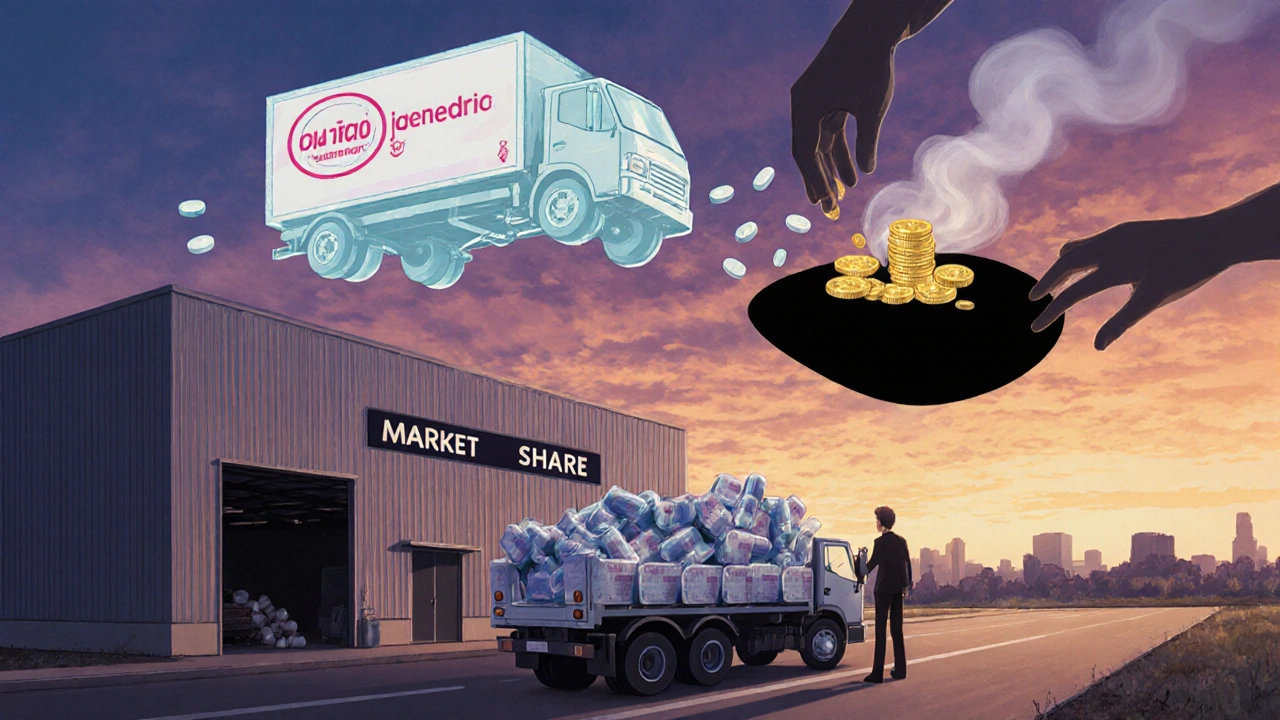
How Generic Companies Are Adapting
The smart ones don’t just wait for the court to rule. They negotiate. Drug Patent Watch found that 78% of first generic applicants now include clauses in their patent settlement deals that delay or block the brand’s authorized generic launch. These are called “reverse payment” agreements - where the brand pays the generic to delay entry. But here’s the twist: now, the brand pays the generic to *not* launch an authorized generic. It’s a workaround. It’s not perfect. It’s expensive. And it only works if both sides agree. Smaller generic companies can’t afford the legal firepower to negotiate these deals. That’s why the number of Paragraph IV challenges from small firms has dropped 40% since 2015. For big players like Teva, Mylan, or Sandoz, it’s part of the game. For smaller companies? It’s a dead end. The 180-day exclusivity rule was meant to level the playing field. Instead, it’s become a tool for the biggest players to control the market.What Happens If You Mess Up the Clock
Getting the 180-day clock right isn’t just about winning a lawsuit. It’s about timing. The exclusivity period doesn’t start when the FDA approves the drug. It starts when the generic company first ships the product to customers. That’s called “first commercial marketing.” If you ship too early - before all legal hurdles are cleared - you risk losing your exclusivity. If you wait too long, you waste precious days. The FDA says 28% of first applicants between 2018 and 2022 lost part or all of their exclusivity because of timing errors. Some companies didn’t realize they needed to notify the FDA in writing. Others shipped product but forgot to file the right paperwork. One company delayed launch for two weeks waiting for a new label design - and lost 14 days of exclusivity. Big companies hire teams of lawyers, regulatory experts, and logistics specialists just to manage this window. Smaller firms? They often don’t have the resources. That’s another reason why the system favors the giants.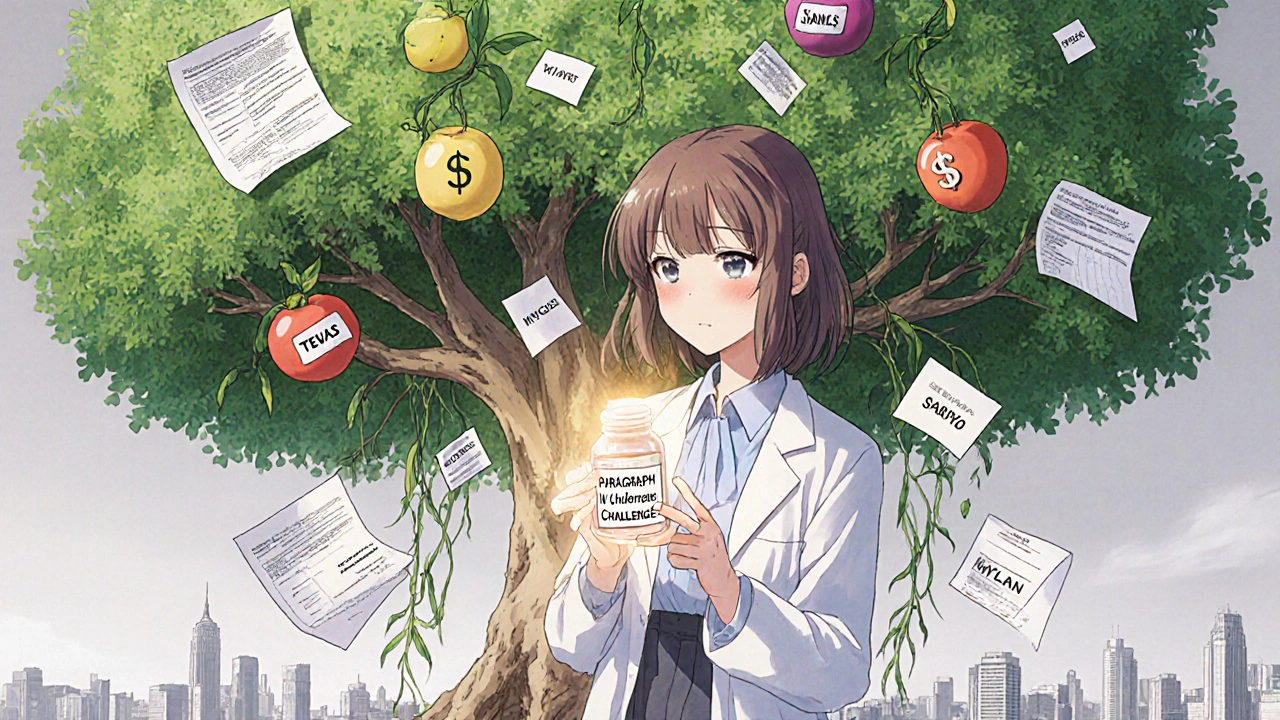
Joy Aniekwe
So let me get this straight - the law rewards the company that fights the patent, then lets the patent holder slap on a new label and steal half the profits? And we call this ‘competition’? 🤡
Someone please tell me how this isn’t just legalized theft with a PowerPoint presentation.
Latika Gupta
I read this and just... sat there. Quiet. Thinking about how my uncle’s insulin cost $600 before generics. Now it’s $35. But if this loophole kills the first generic, will prices go back up? I don’t know what to feel anymore.
Mary Kate Powers
Hey everyone - I work in pharma compliance and wanted to add some context. The FDA doesn’t regulate authorized generics as ‘generic’ because they’re made by the originator - so legally, they’re not violating anything. But you’re absolutely right that it undermines the spirit of Hatch-Waxman.
It’s a loophole, not a violation. And yeah - it’s brutal for small generics. But change is coming. The Senate bill has bipartisan support now. Hopeful.
Sara Shumaker
What’s fascinating is how this exposes the illusion of free markets in healthcare. We pretend innovation is rewarded, but what we’re really rewarding is legal maneuvering.
The 180-day exclusivity was meant to be a sprint - a chance for the underdog to catch up. Now it’s a marathon where the favorite gets to run with a head start, a parachute, and a drone dropping candy on the other runners.
Is this capitalism? Or just corporate theater with FDA stamps?
jamie sigler
Why are we even surprised? Big Pharma’s been playing chess while everyone else thought it was checkers.
They win either way. If they lose the patent, they still profit. If they win, they profit more.
It’s not broken. It’s designed this way.
Bernie Terrien
This isn’t a loophole. It’s a goddamn heist with a law degree.
Brand-name companies are the vampires who invented garlic-scented blood bags and then sold them to the victims.
And we’re supposed to applaud the ‘lower prices’? Bro. The price drop is a distraction. The real theft is the stolen incentive.
They didn’t just cheat the system - they rewrote the rules while pretending to be the referees.
Peter Lubem Ause
As someone from Nigeria, I’ve seen how expensive insulin and HIV meds are here. When generics come in, lives change. But if the first generic gets crushed by an authorized version, it’s not just about profits - it’s about access.
Small companies can’t afford to sue or negotiate. So they don’t even try. That means fewer challengers. Fewer generics. Higher prices. Longer waits.
This isn’t just an American problem. It’s a global one. And the people paying are the ones who can’t afford to speak up.
linda wood
Okay but… imagine you’re a small generic company. You spend $4M on a lawsuit. You win. You’re ready to launch. Then the brand drops their version - same pills, same factory, same price - and suddenly you’re competing against your own enemy.
That’s not business. That’s emotional abuse with a corporate byline.
I’m not mad. I’m just… heartbroken for the people trying to do the right thing.
LINDA PUSPITASARI
Also!! The FDA’s timing rules are wild 😱
One company lost 14 days because they waited for a new label?? Like… you spent millions on a patent fight and then got tripped up by a printer??
Also also - why are small companies even trying?? The system is rigged to make them fail 🤦♀️
Someone please fix this before more people die because they can’t afford meds 💔
Sullivan Lauer
Let me tell you something - this isn’t just about drugs. It’s about trust.
People used to believe in the American promise: work hard, take risks, win. Now? You risk millions, you win the legal battle… and the guy who cheated you all along just puts on a new shirt and walks off with your prize.
That’s not capitalism. That’s a nightmare dressed in a suit.
And if we don’t fix this - what’s next? Will the patent holder also get to sell the generic version of the generic version? Is there no bottom to this barrel?
Sohini Majumder
OMG like I just read this whole thing and I’m so done with pharma bros 😭
authorized generics?? like… what even is that?? why does the brand get to do a ‘copy’ but the real generic gets punished??
also why do all these companies have names that sound like villain lairs?? Teva? Mylan? Eli Lilly?? are they secret societies??
also i cried at the $287 million part. that’s like… 1000000000000 insulin pens. someone please stop this.
tushar makwana
My dad took a generic for his blood pressure. Saved him $200 a month. I know how much that means. I don’t know much about law. But I know when something feels wrong.
This feels wrong.
Maybe we don’t need more laws. Maybe we just need to stop pretending this is fair.
Thanks for writing this. It helped me understand.
Richard Thomas
It is incumbent upon the reader to recognize that the structural incentives embedded within the Hatch-Waxman Act have been subverted by a confluence of regulatory ambiguity and strategic market behavior that operates within the letter of the law but contravenes its foundational ethos.
The authorized generic mechanism, while legally permissible under 21 CFR § 314.3 and FDA guidance documents, constitutes a de facto anti-competitive practice that undermines the statutory purpose of accelerating generic market entry through incentivized patent challenges.
Until legislative intervention occurs - specifically through the enactment of S. 1047, the Preserve Access to Affordable Generics Act - the current equilibrium will persist as a form of institutionalized rent extraction by vertically integrated pharmaceutical entities.
Further empirical analysis is required to quantify the chilling effect on Paragraph IV litigation among non-vertically integrated generic manufacturers, though preliminary data from Drug Patent Watch suggests a statistically significant decline in such filings since 2015 (p < 0.01).
Regulatory reform must be pursued with urgency, not merely as a matter of economic efficiency, but as a moral imperative for equitable healthcare access.