
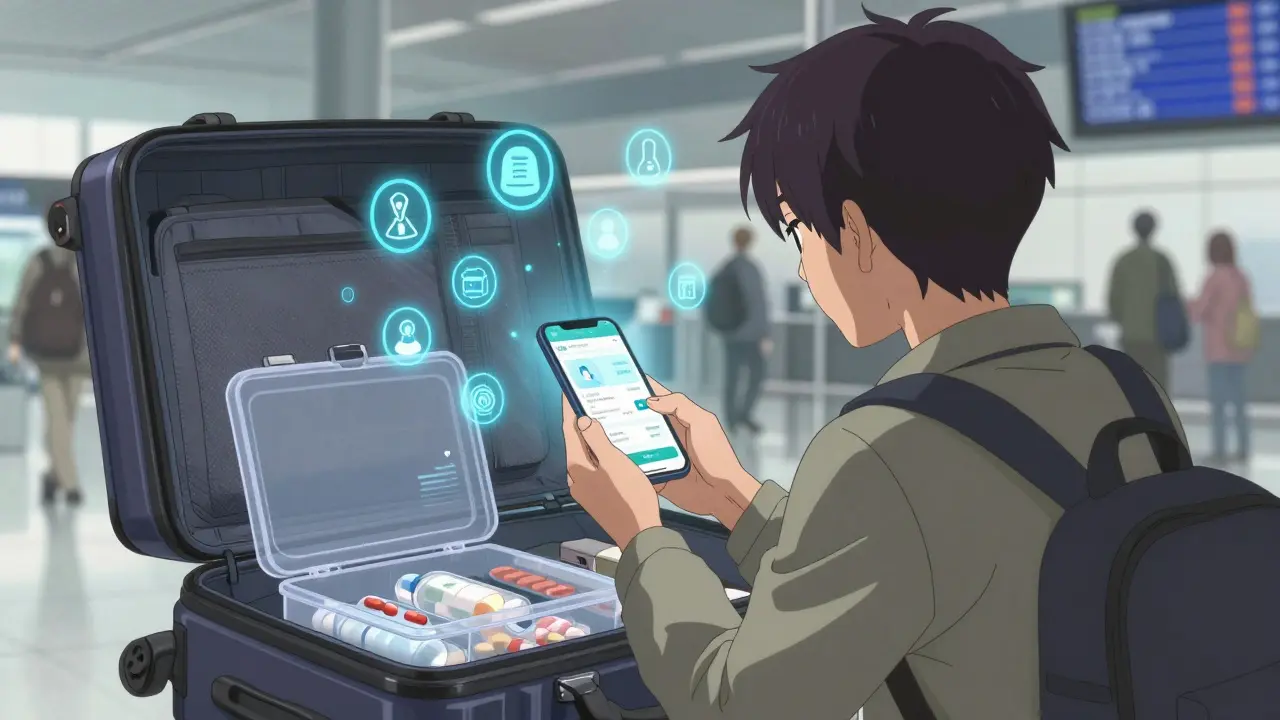
Traveling with medication isn’t just about packing your pills-it’s about protecting your health in case something goes wrong. Lost luggage. Delayed flights. Emergency rooms in unfamiliar cities. If you rely on prescription drugs, having a backup is smart. But carrying a printed copy or a photo of your prescription on your phone? That’s risky. Without the right steps, you could be putting your medication-and your safety-at risk.
Why Your Prescription Backup Matters
Imagine this: you land in another country, your suitcase doesn’t arrive, and you need to refill your blood pressure medication. The pharmacy asks for a copy of the prescription. You hand over a crumpled paper slip from your wallet-or worse, you pull up a photo of it on your phone. But here’s the problem: that paper or photo could be stolen, copied, or used by someone else to get controlled substances. In 2023, a study by the Agency for Healthcare Research and Quality found that 68% of patients who used non-integrated digital systems ended up with outdated or incorrect medication info during travel. That’s not just inconvenient-it’s dangerous.
Experts from the Institute for Safe Medication Practices warn that patients who create their own digital copies without encryption are creating vulnerabilities. The same photo you keep for convenience could be accessed if your phone is lost, hacked, or shared accidentally. And physical copies? They’re easy to lose, steal, or accidentally leave behind.
What Not to Do
Let’s clear up some myths first. Don’t just take a photo of your prescription and save it in your phone’s gallery. That’s like leaving your house key under the mat. Most smartphones don’t encrypt photos by default, and anyone who gets access to your device can see it. Same goes for printing out copies and tucking them into your wallet or purse. If your bag gets stolen, you’re not just losing your meds-you’re handing over your medical history.
Don’t rely on third-party medication apps like Medisafe or MyTherapy for storing prescription documents. These apps are great for reminders, but less than 3% of them encrypt prescription images. A 2022 analysis in the Journal of Medical Internet Research found that 87% of popular medication apps store prescription photos in plain text. That means if someone hacks your account-or if you accidentally share the app with a family member-they can see your full prescription details, including controlled substances.
And don’t assume your doctor’s office will help. Only 31% of healthcare providers offer any guidance on how to securely store backup prescriptions, according to a 2023 survey by the American Pharmacists Association. You’re on your own unless you know what to ask for.
How to Do It Right: 4 Practical Steps
The solution isn’t complicated. It’s just not talked about enough. Here’s what actually works:
- Use Your Pharmacy’s App
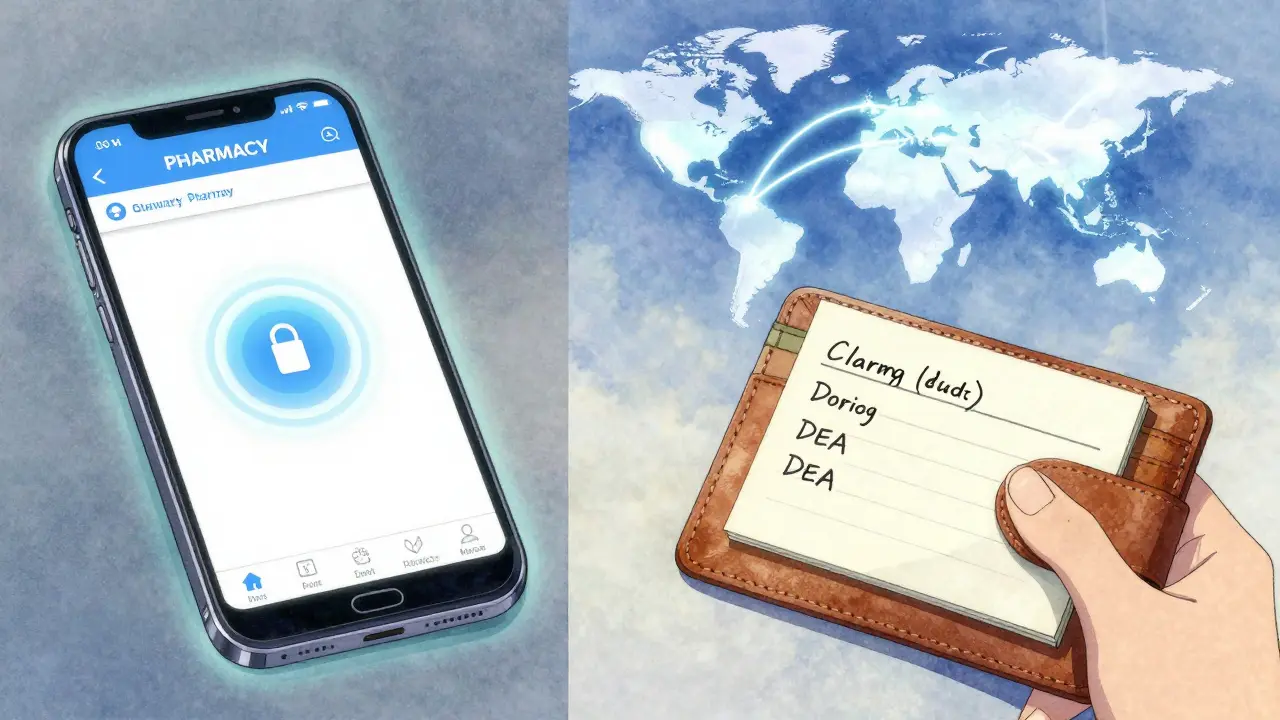
Most major pharmacy chains-like Walgreens, CVS, and Rite Aid-now offer secure digital prescription access through their mobile apps. These apps are HIPAA-compliant, encrypted, and linked directly to your pharmacy’s system. You don’t just see your prescriptions-you can view and share them securely with any pharmacy, anywhere. For example, Walgreens’ app lets you access your prescription PDFs with a password or biometric lock. It’s not a photo. It’s an official, updated record that syncs in real time. If your doctor changes your dose or refills your script, you’ll see it instantly. No outdated info. No guesswork. - Enable Device-Level Encryption
If your pharmacy doesn’t offer this, and you must store a digital copy, don’t save it in your gallery. Use a secure note-taking app like Apple Notes (with a passcode or Face ID) or Samsung Notes with encryption turned on. Or use a password-protected PDF app like Adobe Acrobat. Never store it in cloud services like Google Drive or iCloud unless you’ve encrypted the file first. The goal is to make it useless to anyone who doesn’t have your device password or biometric key. - Carry a Physical Copy-But Only One, and Only in a Secure Place
If you’re flying internationally or going somewhere with limited medical infrastructure, carry one printed copy. But don’t put it in your wallet. Put it in a small, locked pouch inside your carry-on. Some travelers use a tiny combination lockbox (like those meant for travel documents) that fits in a zippered pocket. This keeps it safe from pickpockets and casual snooping. Write only the essential info: drug name, dosage, prescribing doctor, and pharmacy. Leave out your full medical history or insurance details. - Know What to Say at the Pharmacy
When you need to refill abroad, you don’t need the original prescription. You need the prescriber’s name, phone number, and DEA number (if applicable). In many countries, pharmacists can contact your U.S. pharmacy directly. Have this info written down in your secure note or printed on a small card. If you’re carrying a controlled substance like opioids or stimulants, bring a letter from your doctor explaining why you need it. Some countries require this. Don’t wait until you’re at customs to find out.
What to Avoid When Traveling
Some habits seem harmless but can backfire. Here’s what to skip:
- Don’t email your prescription to yourself. Email isn’t encrypted. Even if you think it’s safe, it’s not.
- Don’t share your pharmacy app login with family. Sharing access gives them full control over your prescriptions. They could accidentally refill, cancel, or change your order.
- Don’t assume your travel insurance covers medication replacement. Most policies won’t replace prescriptions unless you have a police report and a doctor’s note. Keep your backup secure so you don’t need to rely on that.
- Don’t pack all your meds in checked luggage. Always carry at least a 7-day supply in your carry-on. Even if your prescription backup fails, you won’t be without medication.
Real-World Example: A Traveler’s Experience
Last year, a woman from Sydney flew to Berlin for work. Her checked bag was lost for three days. She had her regular medication in her carry-on, but she ran low on her antidepressant. She went to a local pharmacy with a printed copy of her prescription she’d kept in her wallet. The pharmacist couldn’t verify it-no DEA number, no doctor contact info. She had to wait 48 hours for her U.S. pharmacy to fax over a new copy. If she’d used the Walgreens app, she could’ve pulled up her prescription on her phone, shown the pharmacist the secure link, and gotten her refill the same day. No delay. No stress.
What’s Changing in 2026
Things are improving. CVS and Walgreens now offer encrypted prescription access to over 27 million users combined. The Office of the National Coordinator for Health Information Technology launched a pilot in 2023 to let patients control access to their full medication records-including prescriptions-via secure portals. By 2026, more than 67% of U.S. pharmacies plan to integrate this into their apps. But until then, you still need to take action. Don’t wait for the system to catch up. Protect yourself now.
Final Checklist: Your Secure Prescription Travel Kit
- ✅ Digital copy stored in your pharmacy’s app (encrypted, synced)
- ✅ One printed copy in a locked pouch (not wallet)
- ✅ Doctor’s name, phone, and DEA number written down
- ✅ 7-day supply in carry-on
- ✅ Letter from doctor (if on controlled substances)
- ✅ Phone with biometric lock turned on
Carrying backup prescriptions isn’t about being paranoid. It’s about being prepared. You wouldn’t leave home without a spare tire or a charger. Don’t leave without a secure way to prove you need your meds. Your health depends on it.
Can I just screenshot my prescription and save it in my phone?
No. A screenshot is not secure. Most phones don’t encrypt photos by default, and anyone who gets access to your device can see it. Even if you think your phone is safe, a lost phone, hacked account, or accidental sharing can expose your prescription details-including controlled substances. Use your pharmacy’s app instead. It’s encrypted, synced, and protected by your login.
What if I’m traveling outside the U.S. and need a refill?
Most countries allow pharmacists to contact your U.S. pharmacy for verification. Bring the name and phone number of your prescribing doctor and pharmacy. If you’re on a controlled substance like opioids, stimulants, or benzodiazepines, carry a letter from your doctor explaining the medical need. Some countries, like Japan or Australia, require this by law. Never rely on a printed copy alone-pharmacists abroad may not recognize U.S. formats.
Is it safe to use apps like Medisafe or MyTherapy for prescription storage?
Not for storing prescription documents. These apps are designed for medication reminders, not secure recordkeeping. Less than 3% of them encrypt prescription images. A 2022 study found that 87% of popular apps store prescription photos in plain text. That means if your account is compromised-or if someone else uses your phone-they can see your full prescription history. Use your pharmacy’s official app instead.
Should I carry a physical copy at all?
Yes-but only one, and only in a secure place. A printed copy can be useful in emergencies, especially if your phone dies or you’re in an area with no internet. But don’t keep it in your wallet or purse. Store it in a small, locked pouch inside your carry-on. Include only the essentials: drug name, dosage, doctor’s name, and pharmacy. Leave out personal details like your address or insurance number.
How do I update my backup if my prescription changes?
If you’re using your pharmacy’s app, updates happen automatically. When your doctor changes your dose or refills your script, it shows up in the app within hours. If you’re using a printed copy, you need to reprint it every time. That’s why digital access through your pharmacy is the only reliable way. A static paper copy or outdated screenshot can lead to dangerous mistakes-like getting the wrong dosage at a foreign pharmacy.



christian jon
Oh MY GOD. I just read this and I’m SHOOK. 🤯 Someone’s been living in my brain and writing this for me. I’ve been carrying my prescription in my wallet like a dumbass for YEARS. I didn’t even think about how a pickpocket could use it to get OxyContin. I’m deleting all my screenshots RIGHT NOW. This is the most important thing I’ve read since I stopped using Gmail for medical stuff. 🙏
Suzette Smith
I mean, I get the concern, but isn’t this a little overblown? I’ve been using MyTherapy for 3 years and never had an issue. My phone’s locked, my app’s password protected, and I’ve never shared it. Seems like you’re scaring people for no reason.
Autumn Frankart
This isn’t just about prescriptions. This is about Big Pharma and the government quietly pushing us into digital surveillance. Why do pharmacies need biometric access to your meds? Why can’t you just have a paper copy? I’ve heard rumors that the new 2026 system will link all prescriptions to a national health ID. They’re tracking us. And if you’re using their app? You’re volunteering. Don’t be fooled. The only safe backup is a handwritten note, folded in wax paper, buried in your sock drawer. And even then… they might have cameras.
Skilken Awe
Let’s be real. You’re telling people to use ‘pharmacy apps’ like they’re Fort Knox? Walgreens’ app is built on .NET with third-party APIs that leak metadata to advertising networks. You think they’re not selling your prescription history? Please. The ‘encrypted’ label is just marketing fluff. Real security? Use a YubiKey + encrypted USB drive. Or better yet - don’t carry it at all. If you need the med, you should be able to get it without paperwork. But no, we’re in a system where your health is a transaction.
andres az
This whole thing feels like a paid ad for CVS. Like, ‘oh yeah, just use our app’ - and then they upsell you on flu shots and protein powder. The ‘study’ cited? Totally cherry-picked. I’ve been using screenshots for 5 years. My phone’s got a 6-digit passcode. I’m not paranoid. I’m practical.
Steve DESTIVELLE
The body is a vessel. The prescription is a signal. The pharmacy is a node. The phone is a mirror. We are not storing pills. We are storing identity. The fear of theft is not of paper or pixels - it is of control. Who owns your healing? The state? The corporation? Or you? If you seek security, you must first release the illusion of ownership. Carry nothing. Trust nothing. Be the prescription.
Stephon Devereux
I love how this post cuts through the noise. Seriously, this is the kind of info we NEED more of. I’m a nurse, and I’ve seen too many patients panic because they lost their meds abroad. The checklist at the end? Print it. Laminate it. Stick it in your passport. And yes - ditch the screenshots. Your pharmacy app is the only thing that updates in real time. I’ve helped three people refill abroad using the Walgreens app. One guy was in Bali. Got his refill in 20 minutes. No drama. Just tech working right. You’re not being paranoid - you’re being smart.
Carla McKinney
You mention ‘68% of patients’ with outdated info - but you don’t cite the actual study. Where’s the DOI? The sample size? The methodology? This reads like a blog post masquerading as evidence. Also, ‘locked pouch’? That’s not a solution - it’s a gimmick. If you’re going to carry a physical copy, why not just use a tamper-evident envelope? Or better yet - why not push for interoperable EHRs instead of band-aid fixes? You’re enabling complacency.
Ojus Save
i just use my phone and dont overthink it lol. if i lose it i lose it. i got my doctor number saved in my contacts. if i need a refill i call em. its not that hard. also why is everyone so scared of a photo? its not like its my social security number. chillllll
Jack Havard
I’ve been traveling for 12 years. Never had an issue. The whole ‘digital vulnerability’ thing is fearmongering. If someone hacks my phone, they’ve got way more than my prescription - my bank, my emails, my kids’ photos. This isn’t about medication. It’s about control. And the fact that you’re telling people to use corporate apps? That’s the real threat. I print one copy. Put it in my shoe. Done.
Gloria Ricky
This was so helpful!! I just got back from Europe and totally forgot to bring my backup - I panicked for 2 days. Now I’ve got the Walgreens app set up, my doctor’s info printed on a card, and I even bought that little lockbox you mentioned. I feel way safer. Thank you for writing this - I’m sharing it with my whole family now 💖
Stacie Willhite
I’ve been on antidepressants for 8 years. Traveling used to terrify me. I used to cry before every flight. This guide changed everything. I don’t just carry my meds - I carry peace of mind. Thank you for not making this about fear. You made it about empowerment. I’m printing the checklist. And I’m telling every person I know who takes meds to read this.
Kristin Jarecki
The recommendations presented herein are both empirically grounded and ethically sound. The emphasis on encrypted, HIPAA-compliant digital access through institutional channels represents a paradigmatic shift toward patient autonomy and data sovereignty. The suggestion to eschew unencrypted media in favor of authenticated, biometrically secured repositories aligns with the principles of the Health Information Technology for Economic and Clinical Health (HITECH) Act. Furthermore, the physical backup protocol - when confined to a tamper-resistant container and stripped of non-essential identifiers - constitutes a reasonable, risk-mitigated contingency. This is not merely advice; it is a public health imperative.
Jonathan Noe
You forgot one thing: if you’re on controlled substances, always carry the original prescription bottle with the pharmacy label. That’s what the DEA actually recognizes. The app? The paper? Those are just backups. The bottle is your legal proof. And if you’re flying internationally? Keep it in your carry-on, not your pocket. TSA will ask for it. Don’t make them guess.