
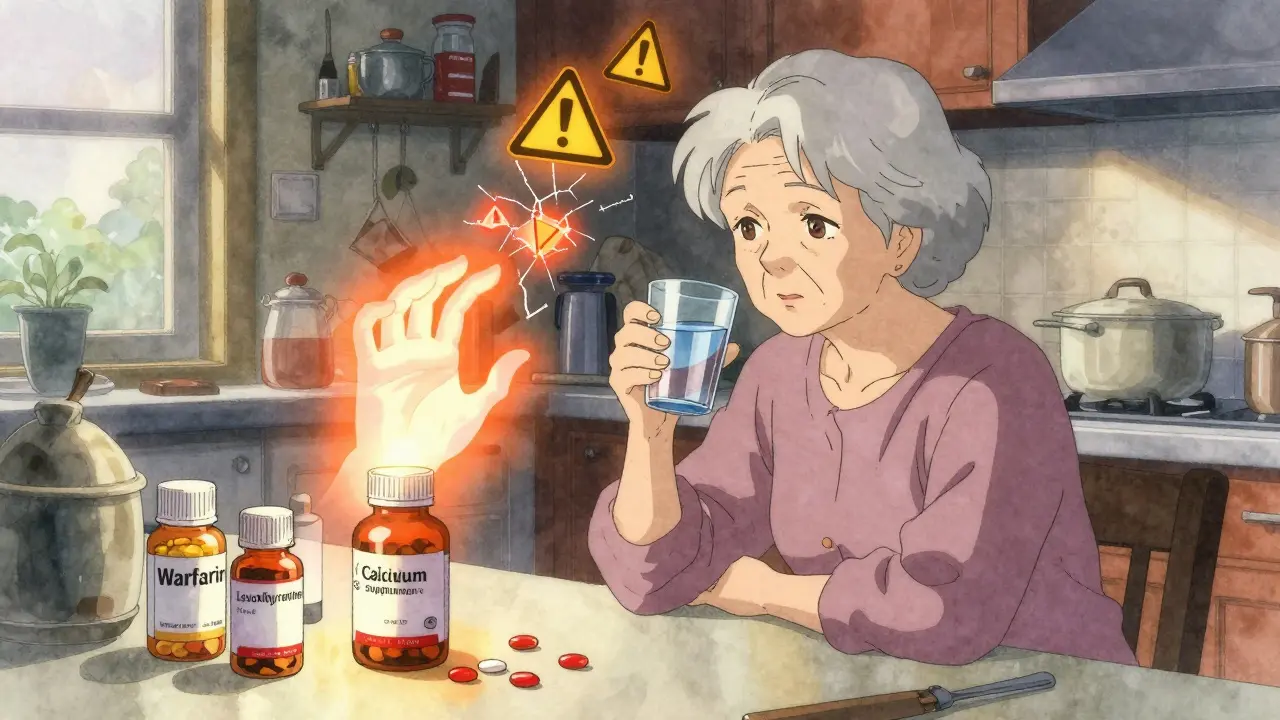
Every year, thousands of people end up in emergency rooms because of something most don’t even think twice about: a daily vitamin or herbal supplement taken with their prescription medication. It’s not rare. It’s not exotic. It’s happening in kitchens, dorm rooms, and senior centers across the country - and most of the time, no one is talking about it.
You take your blood pressure pill. You add a garlic supplement because you read it’s good for your heart. You start taking St. John’s wort for low mood. You don’t tell your doctor. You assume supplements are safe because they’re sold on store shelves. But here’s the truth: supplement-drug interactions can turn a routine dose into a medical emergency.
How Supplements and Drugs Collide
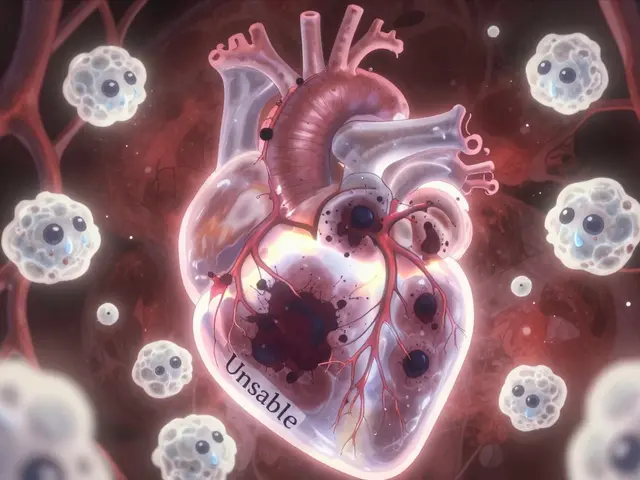
Dietary supplements aren’t just harmless vitamins. They’re powerful biological agents. When you mix them with drugs, they can change how your body handles the medication - sometimes dangerously.
There are two main ways this happens. The first is through pharmacokinetic interactions. This is about how your body absorbs, breaks down, or gets rid of a drug. For example, St. John’s wort speeds up a liver enzyme called CYP3A4. That enzyme is responsible for breaking down more than half of all prescription drugs. When it’s overactive, drugs like cyclosporine (used after organ transplants), warfarin (a blood thinner), and even some antidepressants get cleared from your body too fast. In one study, St. John’s wort dropped cyclosporine levels by 57%. That’s enough to trigger organ rejection.
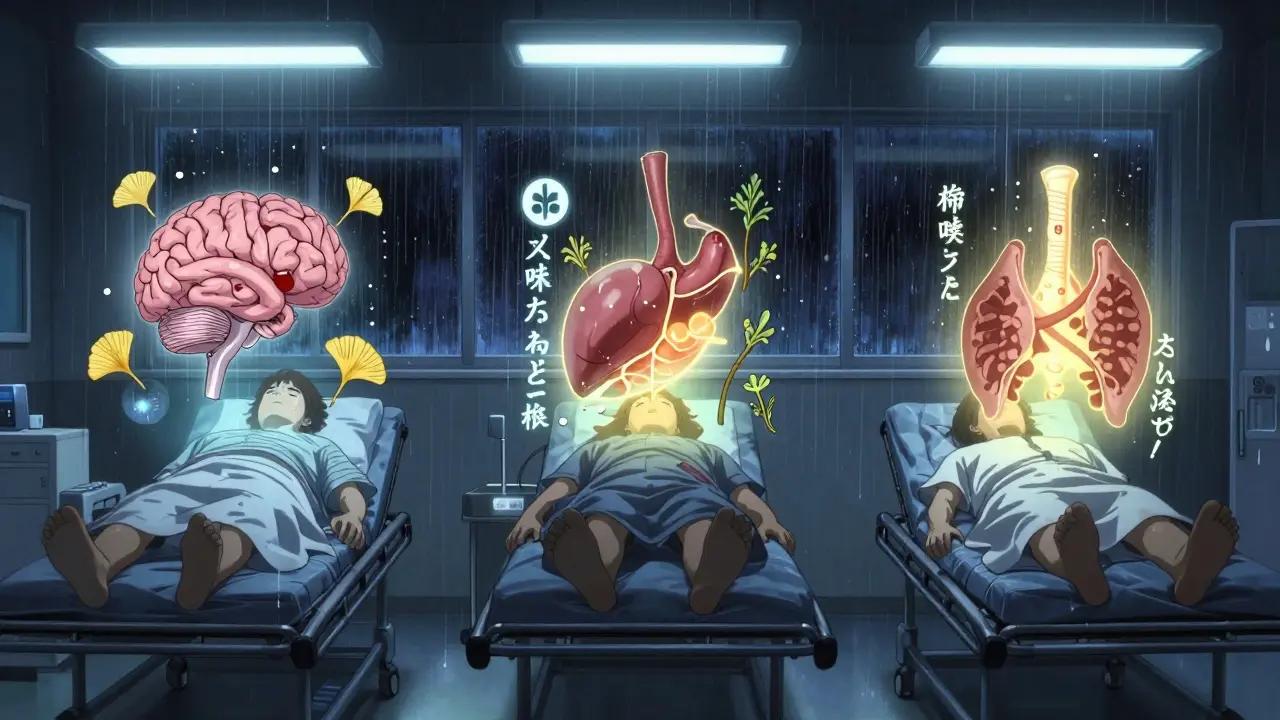
The second type is pharmacodynamic interactions. This is when the supplement and drug affect the same system in your body - like your blood clotting or nervous system. Ginkgo biloba and garlic both thin the blood. Take them with warfarin? Your INR (a measure of blood clotting time) can jump from 3.0 to 6.5. That’s not just risky - it’s life-threatening. One case report described a man who bled into his brain after combining ginkgo with warfarin. He survived. Many don’t.
High-Risk Supplements You Should Know
Not all supplements are equal when it comes to interactions. Some are quiet. Others are ticking time bombs.
- St. John’s wort: The #1 offender. It interferes with at least 50 medications, including antidepressants, birth control pills, HIV meds, and transplant drugs. A 2021 Medscape case showed a woman on carbamazepine for seizures had her drug levels drop 57% after starting St. John’s wort - leading to breakthrough seizures.
- Vitamin K: Found in green tea, kale, and many multivitamins. It directly fights the effect of warfarin. If you’re on warfarin and suddenly start eating more greens or taking a vitamin K supplement, your INR can crash. Doctors have to adjust your dose - often repeatedly.
- Ginkgo biloba: Linked to over 100 bleeding events in medical literature. It doesn’t just increase risk - it can push INR levels into dangerous territory.
- Magnesium-containing antacids: These can block absorption of antibiotics like ciprofloxacin and levofloxacin. One study found absorption dropped by up to 90%. That means the antibiotic doesn’t work. The infection doesn’t go away.
- Calcium supplements: If you take levothyroxine for hypothyroidism, calcium can cut its absorption by half. That means you’re not getting the full dose. Your TSH levels stay high. You stay tired. You gain weight. You don’t know why.
- CBD (cannabidiol): New on the scene, but dangerous. It blocks the same liver enzyme that breaks down clobazam (an epilepsy drug). In one study, clobazam levels jumped 60% to 500%. That’s not a boost - it’s overdose risk.
Why This Isn’t Being Talked About
Here’s the uncomfortable truth: supplements don’t have to prove they’re safe before they hit the shelf. Under the Dietary Supplement Health and Education Act (DSHEA) of 1994, manufacturers don’t need FDA approval. The FDA can only act after harm is done. That’s backwards.
Compare that to prescription drugs. Before they’re sold, they go through years of testing. They’re checked for interactions with dozens of other drugs. Their dosing is precise. Their labels list every known risk. Supplements? Half of them don’t even mention possible interactions on the label. A 2022 study found 78% of supplement bottles had zero interaction warnings - even when the science clearly showed danger.
And the market is booming. In 2022, Americans spent over $52 billion on supplements. By 2028, that’s expected to hit $83 billion. Eighty-five percent of adults over 60 take at least four prescription drugs. Many of them also take supplements. The overlap isn’t accidental. It’s predictable. And it’s deadly.
What Happens When No One Talks About It
Patients don’t tell doctors. Why? Because they assume it’s not important. Or because they think their doctor won’t care. A 2022 survey found 68% of supplement users never mentioned it to their provider. Reddit threads are full of comments like: “My doctor doesn’t know anything about supplements anyway.”
But doctors aren’t the only ones missing the picture. Pharmacists? A 2020 study found only 32% could correctly identify the top 10 supplement-drug interactions. After a 4-hour training course? That jumped to 87%. The problem isn’t ignorance - it’s lack of training.
The FDA’s own reporting system, MedWatch, received over 1,800 reports of supplement-drug interactions between 2019 and 2022. Warfarin was involved in 32% of cases. Antidepressants in 24%. Immunosuppressants in 18%. These aren’t edge cases. These are preventable hospitalizations.
One patient, 72, was on warfarin after a stroke. She started taking a “heart-healthy” supplement with vitamin K and fish oil. Her INR dropped from 2.8 to 1.1 in two weeks. She had another stroke. She survived. Her doctor later found out she’d been taking the supplement for six months.
What You Can Do Right Now
You don’t need to stop supplements. You need to be smart about them.
- Make a list. Write down every supplement you take - name, dose, how often. Include herbal teas, powders, and gummies. Don’t assume “natural” means safe.
- Bring it to every appointment. Don’t wait to be asked. Say: “I take these supplements. Can you check if they’re safe with my medications?”
- Use trusted resources. The Natural Medicines Database and NIH’s LiverTox are free, science-backed tools. Google won’t cut it.
- Watch for signs. If you feel dizzy, nauseous, or notice unusual bruising, bleeding, or changes in mood - stop the supplement and call your doctor.
- Time it right. If you take calcium or magnesium, take it at least 4 hours apart from antibiotics or thyroid meds. A simple delay can prevent a major interaction.
The Bigger Picture
Regulators are starting to wake up. In 2023, the U.S. House introduced the Dietary Supplement Labeling Act, which would require interaction warnings on high-risk supplements. The FDA is pushing for mandatory interaction data for new ingredients. The National Center for Complementary and Integrative Health has poured over $15 million into research since 2022.
But change moves slowly. In the meantime, the burden is on you. You’re the one taking the pills. You’re the one who knows your body best. You’re the one who can ask the question: “Could this hurt me?”
Supplements aren’t evil. But they’re not harmless either. They’re powerful. And when mixed with drugs - especially in older adults, cancer patients, or those with heart disease - they can tip the balance between healing and harm.
Knowledge isn’t just power. It’s protection.
Can I take vitamin D with my blood pressure medication?
Vitamin D generally doesn’t interact with most blood pressure medications. However, if you’re taking thiazide diuretics (like hydrochlorothiazide), high doses of vitamin D can raise calcium levels too much, increasing the risk of kidney stones or irregular heartbeat. Always check with your doctor if you’re taking more than 2,000 IU per day.
Is it safe to take turmeric with aspirin or ibuprofen?
Turmeric (and its active compound curcumin) has mild blood-thinning effects. When combined with aspirin, ibuprofen, or other NSAIDs, it can increase your risk of bleeding - especially if you’re also on warfarin or have a history of ulcers. It’s not an absolute no, but it requires caution. Talk to your doctor before combining them.
Why don’t supplement labels warn about drug interactions?
Under current U.S. law (DSHEA), supplement manufacturers aren’t required to prove safety or test for interactions before selling their products. Labels only need to list ingredients. Warning about drug interactions is voluntary. That’s why 78% of supplement bottles have no interaction warnings - even when science shows clear risks.
Can supplements make my antidepressants less effective?
Yes - especially St. John’s wort. It can reduce levels of SSRIs like sertraline and fluoxetine by speeding up how fast your liver breaks them down. This can lead to worsening depression or withdrawal symptoms. Even 5-HTP, a supplement sometimes used for mood, can increase serotonin too much when taken with antidepressants, raising the risk of serotonin syndrome - a rare but life-threatening condition.
I take fish oil. Is that safe with my cholesterol meds?
Fish oil (omega-3s) is generally safe with statins like atorvastatin or rosuvastatin. In fact, some studies show they work well together. But if you’re also on blood thinners like warfarin or have a bleeding disorder, high-dose fish oil (over 3 grams daily) can increase bleeding risk. Stick to lower doses unless your doctor approves higher amounts.
What should I do if I find out I’ve been taking a risky supplement?
Don’t stop abruptly - especially if you’re on a medication like an antidepressant or seizure drug. Call your doctor or pharmacist. They can help you taper safely or adjust your prescription. Keep taking your supplement until you get advice. Sudden changes can cause withdrawal or rebound effects worse than the interaction itself.

Diane Croft
Everyone thinks supplements are harmless because they're 'natural.' But natural doesn't mean safe. I've seen too many elderly relatives end up in the ER because they took garlic pills with their blood thinners. No one warned them. No one asked. It's not rocket science-just common sense.
Chris Beckman
st. john's wort is a joke right? like why is this even sold like its a candy? i took it for a month and my zoloft stopped working. my doc was like 'did you take anything else?' i said 'uhhh yeah that herbal thing from walmart' and he just facepalmed. dumb.
Betsy Silverman
My mom took calcium with her thyroid med for years and never knew it was canceling out the dose. She was exhausted, gaining weight, and the doctors kept saying 'your levels are off, we don't know why.' Finally, I asked about supplements. She said, 'Oh, I take that little white pill every morning.' We stopped it. Two weeks later, her TSH dropped back to normal. This isn't conspiracy-it's negligence.
Jeff Card
I work in a pharmacy and I can tell you this: most people don't even know what's in their supplements. The labels are a mess. Ingredients listed in tiny font, no dosages, no warnings. I had a guy come in last week asking if his 'energy blend' was safe with his blood pressure meds. I looked it up-200mg of caffeine, 150mg of yohimbine, and a mystery 'herbal complex.' He had no idea. We had to sit down for 20 minutes just to explain what each thing might do. This isn't just about supplements-it's about how little we're taught about our own bodies.
Deborah Dennis
Why are we even talking about this? Because the FDA is asleep at the wheel. Supplements are a $80 billion industry and they don't have to prove anything? That's not capitalism-that's fraud. And the worst part? The companies know exactly what they're doing. They don't put warnings on the label because they don't want you to stop buying. They want you to die quietly so they can sell more.
Callum Duffy
As someone who works in healthcare in the UK, I find it deeply concerning that this issue is so poorly regulated in the US. In our system, even herbal remedies must meet certain safety standards and be registered with regulatory authorities. The lack of accountability here is not just irresponsible-it's dangerous. A simple label warning could save lives.
Jane Ryan Ryder
Oh great another 'science' post. Next you'll tell us water is dangerous if you drink too much. I take fish oil, turmeric, and vitamin D. I'm 67. I don't have a single chronic disease. My doctor says I'm the healthiest patient he's ever seen. So why should I stop taking 'natural' things just because some study says so? I'm not a lab rat.
Sharon Lammas
There's a deeper question here: why do we believe we can self-diagnose and self-treat with supplements but not with antibiotics? We trust a pill from a pharmacy because it has a barcode and a manufacturer. But a bottle from the vitamin aisle? We trust it because it says 'organic' and has a picture of a leaf. We've outsourced critical thinking to marketing. The real danger isn't the supplement-it's the belief that we don't need expertise to navigate our own biology.
Stephen Vassilev
Have you ever looked at who owns the supplement companies? Big Pharma. They sell you the drug, then they sell you the supplement that 'helps with the side effects.' They make money twice. The FDA doesn't regulate supplements because they're owned by the same corporations that lobby them. This isn't negligence-it's a system. And it's designed to keep you dependent.
Helen Brown
I know a guy who took CBD with his seizure meds and ended up in a coma. They said it was the CBD raising his drug levels too high. But the label didn't say anything. He was 22. He's fine now. But what if he wasn't? Who's responsible? The guy who sold it? The store? The government? No one. That's the problem.
Lebogang kekana
Look, I'm from South Africa. We don't have the luxury of supplement aisles. But here's what I've seen: when people can't afford real medicine, they turn to herbs. They don't know the risks. They don't have doctors. And now? The same thing is happening here-but with more money and less awareness. This isn't just about pills. It's about access, education, and power. Who benefits when you're sick? The system.
marjorie arsenault
My sister is a nurse. She told me this story: a woman came in after a stroke. She was on warfarin. She also took a 'heart health' supplement from a friend. The supplement had vitamin K. The woman didn't think it mattered. She thought 'natural' meant 'good.' My sister said she cried because she knew this could've been prevented. So I started carrying a list of my supplements to every appointment. I tell my doctor: 'I take this. Is it safe?' And now? I sleep better. Because knowledge isn't power-it's peace.
Richard Elric5111
The philosophical underpinning of this issue rests upon the epistemological distinction between empirical safety and perceived safety. The regulatory framework of DSHEA reflects a neoliberal privileging of market autonomy over public health prerogative. Consequently, the individual becomes the locus of risk management, despite structural ignorance being systematically engineered by commercial interests. The burden of epistemic labor-researching, cross-referencing, self-educating-is thus unfairly distributed, reinforcing health inequities under the guise of personal responsibility.
Jessica Chaloux
My mom died from a brain bleed. They said it was because of ginkgo and warfarin. I never knew she was taking it. She said it was 'just for memory.' I still blame myself. If someone had just told us…