
When a popular brand-name drug loses its patent protection, you might expect a flood of cheap generics from competing companies. But here’s something you might not know: the same company that made the original brand-name drug often produces the first generic version too. This isn’t a loophole or a mistake-it’s a deliberate strategy called authorized generics.
What Exactly Is an Authorized Generic?
An authorized generic is the exact same drug as the brand-name version, made in the same factory, with the same ingredients, same shape, same color, and same packaging-except for the label. It’s not a copy. It’s the real thing, just sold under a different name and at a lower price. The FDA confirms that authorized generics are identical to their brand-name counterparts in every way except for branding. They don’t need new clinical trials because they’re produced using the same data and processes the original drug was approved with.For example, when Pfizer’s drug Lipitor lost patent protection in 2011, Pfizer didn’t just sit back and watch competitors take market share. They launched their own authorized generic version-identical to the brand-just with a different label. Within months, they captured nearly a third of the generic market. This wasn’t charity. It was business.
Why Do Brand Companies Make Their Own Generics?
It’s simple: if you don’t, someone else will-and they’ll undercut you hard.When a patent expires, generic manufacturers can legally produce the same drug. Because they don’t spend millions on research or marketing, they can sell it for 80-85% less than the brand. That’s a massive price drop. If the original company does nothing, they lose almost all their revenue overnight.
By launching their own authorized generic, brand manufacturers do three things:
- They keep a slice of the market instead of losing it all.
- They control the quality and supply-no risk of inconsistent generics from unknown makers.
- They slow down the price crash. Instead of dropping to $10 a pill, the price might only fall to $25, because the authorized generic sits in the middle: cheaper than the brand, but not as cheap as the competition.
According to Drug Patent Watch, 68% of the top 50 brand-name drugs that lost patents between 2018 and 2022 had authorized generic versions introduced by the original company. That’s not a coincidence. It’s a playbook.
How Is It Made? Same Factory, Same Process
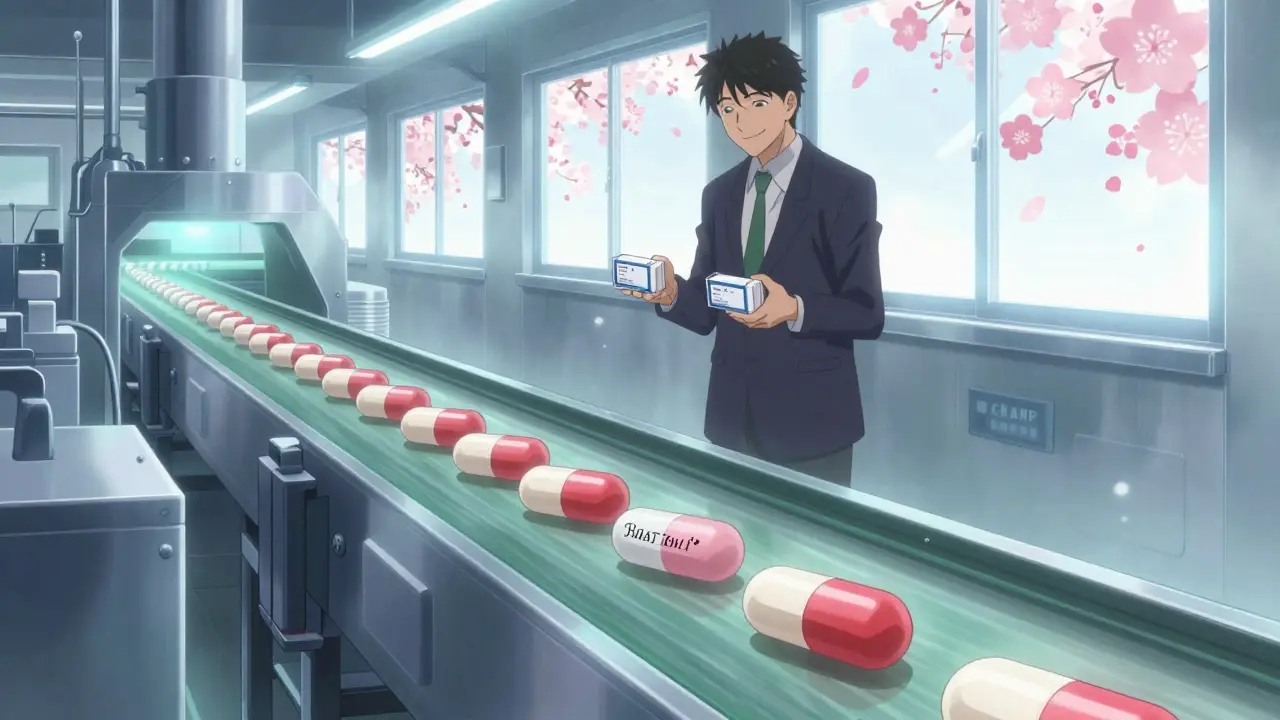
You might think making a generic requires a whole new setup. It doesn’t. Authorized generics are made on the exact same production lines, with the same equipment, same workers, same quality checks. The only changes are administrative: new labels, new packaging, and a new FDA application called an Abbreviated New Drug Application (ANDA). But because the manufacturer already has all the data on safety and effectiveness, the approval process takes only 6-9 months-not the 17 months it usually takes for a new generic company to get approved.That’s a huge advantage. Traditional generic manufacturers have to build new facilities, hire staff, train teams, and pass FDA inspections from scratch. The brand manufacturer? They’re already there. They just switch the box.
Take Teva’s Copaxone, a multiple sclerosis drug. When its patent expired in 2019, Teva launched its own authorized generic on day one. They didn’t wait. They didn’t hesitate. They captured 22% of the generic market in just three months. Meanwhile, other generic makers struggled to ramp up production. Teva didn’t just compete-they controlled the timing.
The Price Game: Who Wins and Who Loses?
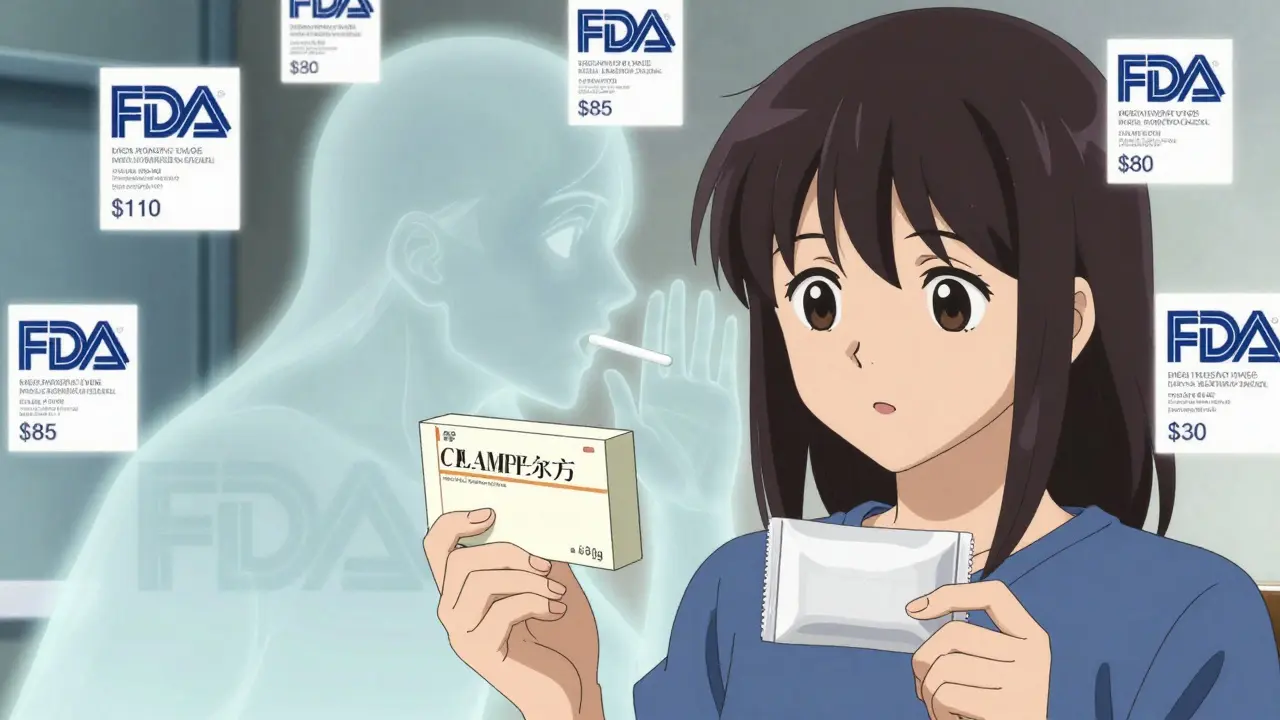
Here’s where it gets tricky for consumers.Authorized generics are cheaper than the brand, yes. But they’re often more expensive than the real generics made by other companies. For instance, Eli Lilly’s authorized generic for Cialis cost $85 for a 30-day supply, while other generics were selling for $30. The brand version? $110.
So you’re paying $55 more than the cheapest option, but $25 less than the brand. Is that a deal? Depends on who you ask.
Patients who’ve been on the same pill for years often prefer the authorized generic. They recognize the shape, the color, the taste. On Drugs.com, authorized generics average 4.2 out of 5 stars-higher than traditional generics at 3.8. Many reviews say: “It’s the same pill I’ve been taking for 10 years.” That matters. Familiarity reduces anxiety.
But pharmacists and patients who shop for the lowest price see it differently. A 2023 Reddit thread with 147 comments showed 58% of users felt tricked. “Why is the ‘generic’ from the same company so expensive?” one user wrote. “It’s just a rebrand.”
And here’s the kicker: 64% of patients don’t even know the authorized generic is made by the same company as the brand. The FDA doesn’t require that to be disclosed on the label. So you might think you’re getting a cheap alternative from a different maker, when you’re actually buying the same drug your doctor prescribed-just with a cheaper label.
Regulatory Scrutiny and Legal Battles
This strategy isn’t without controversy. The Federal Trade Commission (FTC) has accused some companies of using authorized generics to block real competition. In 2017, Actavis settled a $448 million lawsuit for using an authorized generic to delay cheaper competitors from entering the market for Namenda, a dementia drug.The FTC argues that if a brand company launches its own generic right when the patent expires, it can scare off other generic makers who don’t want to compete against a company with deep pockets and full control of the supply chain. In some cases, the brand company even signs exclusive deals with distributors to make sure their authorized generic is the only one stocked in major pharmacies.
But the pharmaceutical industry defends it. PhRMA, the main drug industry group, says authorized generics increase access and choice. They point to FDA data showing 99.7% bioequivalence between brand and authorized generic drugs. That’s nearly perfect.
Dr. Aaron Kesselheim from Harvard Medical School isn’t convinced. In a 2022 JAMA study, he found that markets with authorized generics saw only a 32% price drop, while markets with only traditional generics saw a 68% drop. That means patients paid more overall because the brand company kept prices higher than they could have been.
What’s Next? Biologics and the Future
Authorized generics started with simple pills. Now they’re moving into more complex drugs.In 2023, Amgen launched the first authorized biosimilar-its own version of the biologic drug Enbrel. Biosimilars are harder to make than pills. They’re made from living cells, not chemicals. Only a few companies have the tech to produce them. By launching its own biosimilar, Amgen isn’t just protecting revenue-it’s setting the standard for how these expensive drugs will enter the market.
By 2027, analysts predict authorized generics will make up 25-30% of the entire generic drug market, up from 18% in 2022. That’s because more drugs are becoming biologics, and fewer companies can make them. The original brand makers are the only ones who can.
Companies like Johnson & Johnson and Novartis are now planning their authorized generic launches years in advance. They’re not waiting for the patent to expire-they’re preparing for it while the drug is still on the market. It’s called a “dual launch.” The brand keeps selling, but the authorized generic is already sitting in warehouses, ready to go the moment the patent ends.
Should You Choose an Authorized Generic?
If you’re looking for the lowest price, skip it. Go for the cheapest generic you can find. But if you’ve had side effects with other generics, or you just want the same pill you’ve always taken, an authorized generic is a safe bet. It’s not a different drug. It’s the same one, just cheaper.Ask your pharmacist: “Is this an authorized generic?” If they say yes, you can ask if it’s made by the same company as the brand. Most won’t know-but now you will.
And if you’re on a tight budget? Push for the real generic. Don’t settle for the “generic” that’s just the brand in disguise.
Are authorized generics the same as the brand-name drug?
Yes. Authorized generics contain the exact same active and inactive ingredients as the brand-name drug, are made in the same facility, and follow the same manufacturing process. The only differences are the label and packaging, which are changed to comply with trademark laws. The FDA confirms they are bioequivalent and interchangeable.
Why are authorized generics more expensive than other generics?
Brand manufacturers price authorized generics slightly above traditional generics to preserve some profit. While traditional generics can drop to 80-85% below brand price, authorized generics are usually 10-15% cheaper than the brand but 5-10% more expensive than competing generics. This pricing strategy lets the brand company keep revenue while appearing to offer savings.
Can I tell if a generic is an authorized generic by looking at the pill?
No. Authorized generics look identical to the brand-name drug in size, shape, color, and imprint. The only way to know is by checking the label or asking your pharmacist. The manufacturer’s name on the packaging may differ from the brand, but the pill itself is unchanged.
Do authorized generics delay cheaper generic competition?
Yes, in some cases. The FTC has found that when a brand manufacturer launches its own generic immediately after patent expiry, it can discourage other generic companies from entering the market. This is because the brand company controls the supply chain and can undercut competitors on price or distribution. Legal cases, like the one against Actavis, have resulted in settlements for anti-competitive behavior.
Are authorized generics safer than other generics?
They’re not inherently safer, but they’re often perceived as more reliable because they come from the same manufacturer as the brand. Traditional generics must meet FDA standards, but some patients report inconsistencies with fillers or coatings from different makers. Authorized generics eliminate that variability since they’re produced using the same formula and process as the original.

Sophia Daniels
Oh my god, I just realized I’ve been paying $85 for a pill that’s literally the same one I’ve been taking for a decade. 😭 I thought I was being smart by choosing the ‘generic’-turns out I was just handing cash to Pfizer like a sucker. This isn’t capitalism, it’s a magic trick with a prescription pad.
And don’t even get me started on how they hide it on the label. No wonder 64% of people don’t know. That’s not transparency, that’s deception dressed in white coats.
I’m canceling my CVS loyalty card. I’m switching to mail-order generics from India. At least they don’t pretend to be my therapist while stealing my rent money.
Also-why is the FDA okay with this? Are they on Pfizer’s payroll? 🤡
Brittany Fuhs
It is, in fact, a rather troubling development in pharmaceutical economics. The strategic deployment of authorized generics by incumbent manufacturers constitutes a form of market foreclosure, effectively preempting competitive entry by leveraging regulatory familiarity and infrastructural superiority. One must question whether such practices align with the public interest, particularly when bioequivalence is conflated with equitable access.
Furthermore, the absence of mandatory disclosure on packaging represents a significant informational asymmetry-a violation of consumer autonomy under the guise of compliance.
Nikki Brown
Ugh. I knew it. 🤦♀️ I’ve been paying extra for ‘my’ pill because I thought it was ‘better.’ Spoiler: it’s not. It’s the same damn thing with a new label. And now I feel stupid. And mad. And grossed out. 😡💊
roger dalomba
So the pharma bros just… rebranded? Genius. Like Coca-Cola selling ‘Coke Zero’ but calling it ‘Diet Coke’ and charging $1 more. The only thing cheaper than this strategy is their ethics.
Sandeep Jain
i never knew this… like… how did i not know this?? i mean i’ve been on lipitor for 8 years and always thought the generic was some other company. wow. this is wild. my head hurts now.
Sumler Luu
This is such a nuanced issue. On one hand, authorized generics ensure consistent quality and prevent supply shortages. On the other, the pricing structure feels exploitative, especially when patients are unaware. I think the real problem isn’t the existence of authorized generics-it’s the lack of transparency. If the label said ‘Made by Pfizer, same as brand,’ maybe people would make more informed choices.
Pharmacists need better training on this too. Most don’t even know the difference.
Fabio Raphael
Wait-so if I buy the authorized generic, am I technically still buying the brand? Like… is this just a legal loophole to keep profits while pretending to lower prices? I’m not mad, I’m just… confused. And slightly betrayed. Why does this feel like a scam that’s perfectly legal?
sakshi nagpal
Interesting perspective from the U.S., but in India, we don’t have this problem because generics are regulated differently. Most manufacturers here don’t own the original brand-they just make the molecule. So the price drops fast, and patients benefit. Maybe the U.S. system is broken because profit is prioritized over access.
Also, why is the FDA not forcing disclosure? That’s not healthcare-that’s corporate theater.
Steven Destiny
STOP LETTING BIG PHARMA WIN. This is why healthcare is unaffordable. They don’t just protect patents-they OWN the market. And now they’re playing both sides. We need price caps. We need mandatory labeling. We need public outrage. This isn’t innovation-it’s theft with a pill bottle.
Sign the petition. Call your rep. Don’t buy the ‘generic’ unless you know who made it.
Amy Lesleighter (Wales)
same pill. different box. same side effects. different price tag. we’re being played. why do we trust labels when the company that made the brand also made the ‘cheap’ version? it’s like buying the same bread but paying more for the one with the fancy wrapper.
ask for the cheapest one. dont be fooled by the word ‘generic.’
Becky Baker
AMERICA: where you pay $100 for a pill and then pay $75 for the ‘discount’ version that’s literally the same thing. we are so dumb. i just bought the authorized generic for my anxiety med and now i feel like a sucker. why does this even exist??
Rajni Jain
hey i just want to say-this is really scary but also kind of understandable? like, if you’re a company that spent billions developing a drug, you wanna protect your investment. but you don’t have to trick people into paying more. maybe just be honest? say ‘this is the same pill, we made it, but it’s cheaper now.’ people would still buy it. we’re not stupid. we just want to be treated like humans.
Natasha Sandra
OMG I JUST REALIZED I’VE BEEN BUYING THE AUTHORIZED GENERIC FOR MY CHOLESTEROL MED 😱 I THOUGHT I WAS DOING SOMETHING SMART. NOW I FEEL SO USED. 😭💔
Peter sullen
It is imperative to recognize that the authorized generic paradigm, while economically rational for manufacturers, introduces a systemic distortion in the competitive dynamics of pharmaceutical markets. The strategic deployment of authorized generics suppresses price elasticity, thereby impeding the natural market forces that would otherwise drive down costs to consumers. Furthermore, the absence of mandatory origin disclosure constitutes a material omission under the doctrine of informed consent. Regulatory reform is not merely advisable-it is ethically obligatory.