
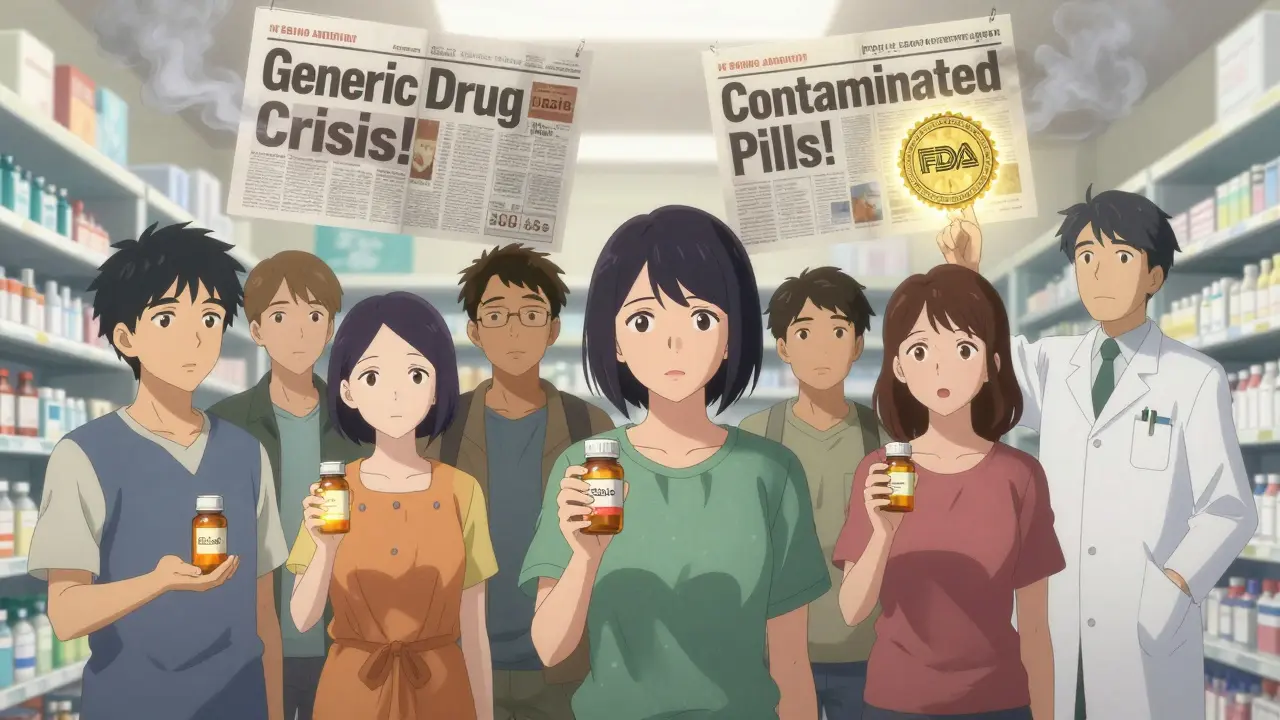
When you pick up a prescription, you probably don’t think twice about whether it’s a brand-name drug or a generic. But here’s the truth: generic drugs make up 84% of all prescriptions filled in the U.S. - and yet, nearly half of patients still can’t tell the difference between a generic and a brand-name pill just by looking at it. Why? Because the news has been telling them to be afraid.
What the News Isn’t Telling You About Generic Drugs
You’ve seen the headlines: "Contaminated Generic Drugs Reveal an Urgent Public Health Crisis," or "How Some Generic Drugs Could Do More Harm Than Good." These stories grab attention. They make you pause. They make you wonder if the cheaper option is a gamble with your health. But here’s what most of those articles leave out: every generic drug approved by the FDA must contain the exact same active ingredient, in the same strength, and work the same way as the brand-name version. The FDA requires them to meet the same strict standards for quality, safety, and effectiveness. There’s no hidden compromise. The problem isn’t the drugs. It’s the way they’re talked about. A 2014 study in JAMA Network found that only 2% of U.S. newspapers had written policies requiring reporters to use generic drug names. Instead, most stories say "Lipitor" instead of "atorvastatin," "Prozac" instead of "fluoxetine." Why does that matter? Because when you hear a brand name over and over, your brain starts to associate it with trust - and the generic version with suspicion. It’s not logic. It’s psychology.The Money Behind the Headlines
Another blind spot in media coverage? Funding. Nearly all drug studies are paid for by pharmaceutical companies. But very few news reports mention who paid for the research. That’s a problem because when a study says a generic drug has higher side effects, you don’t know if it was funded by the brand-name maker trying to protect market share. Even worse, some stories exaggerate price spikes. A single generic drug might jump from $10 to $15 - and the headline screams "Generic Drug Prices Soar!" But what those stories ignore is the bigger picture: when three or more generic versions of a drug enter the market, the average price drops by 20%. That’s not a crisis. That’s competition working the way it should. The media’s focus on isolated price hikes or rare contamination cases creates a distorted picture. It makes people think generics are unreliable, when in reality, the system is designed to catch problems before they reach patients. The FDA inspects over 3,500 manufacturing sites globally each year - including those making generics - and has the authority to block shipments if standards aren’t met.Why You’re More Likely to Choose Brand After Bad News
It’s not just about what the news says. It’s about how you feel when you hear it. A 2023 study from the University of Texas at Dallas found something surprising: when patients received bad health news - like a cancer diagnosis or a high cholesterol reading - they were far more likely to demand brand-name drugs, even if their insurance wouldn’t cover them. And this shift happened fastest within the first 90 days after the diagnosis. That’s not rational. It’s emotional. When you’re scared, you cling to what feels familiar. A brand name feels safer, even if it costs three times as much. And that’s exactly what the media plays into. A story about a contaminated generic pill hits harder when you’re already anxious about your health. The result? People skip doses because they can’t afford the brand. Or they don’t fill the prescription at all. Meanwhile, research from US Pharmacist shows that people who take generics are actually more likely to stick with their treatment - because they can afford to.
The Real Difference Between Generic and Brand
Let’s clear up one big myth: generics aren’t "inferior." They’re not cheaper because they’re made with lower-quality ingredients. They’re cheaper because the company didn’t spend $1 billion on research and marketing. The only real differences between a generic and a brand-name drug are things that don’t affect how well it works: the color, shape, size, or inactive ingredients like fillers and coatings. These don’t change how the medicine is absorbed or how it treats your condition. For complex drugs - like inhalers or injectables - the differences can be more noticeable. But even then, the FDA requires generics to prove they work the same way. If you’re switching from a brand-name inhaler to a generic one and feel like it doesn’t work as well, that’s not because the medicine is weaker. It’s because the delivery device feels different in your hand. Your brain notices the difference - and assumes the drug must be different too.Who Can Actually Help You Trust Generics?
The person who can change your mind about generics isn’t a journalist. It’s your pharmacist. Studies show that when pharmacists take the time to explain why a generic is safe and effective, patients are far more likely to accept it. One 2023 study found that pharmacist counseling was the single biggest factor in improving patient confidence in generics - more than ads, more than websites, more than news stories. Your doctor matters too. If your doctor says, "This generic is just as good as the brand," you’re far more likely to believe it. That’s because trust in your provider overrides fear of the unknown. But here’s the catch: many doctors and pharmacists still have their own doubts. A 2015 review found that some healthcare professionals are skeptical of generics too - not because they’re misinformed, but because they’ve never been trained to talk about them confidently.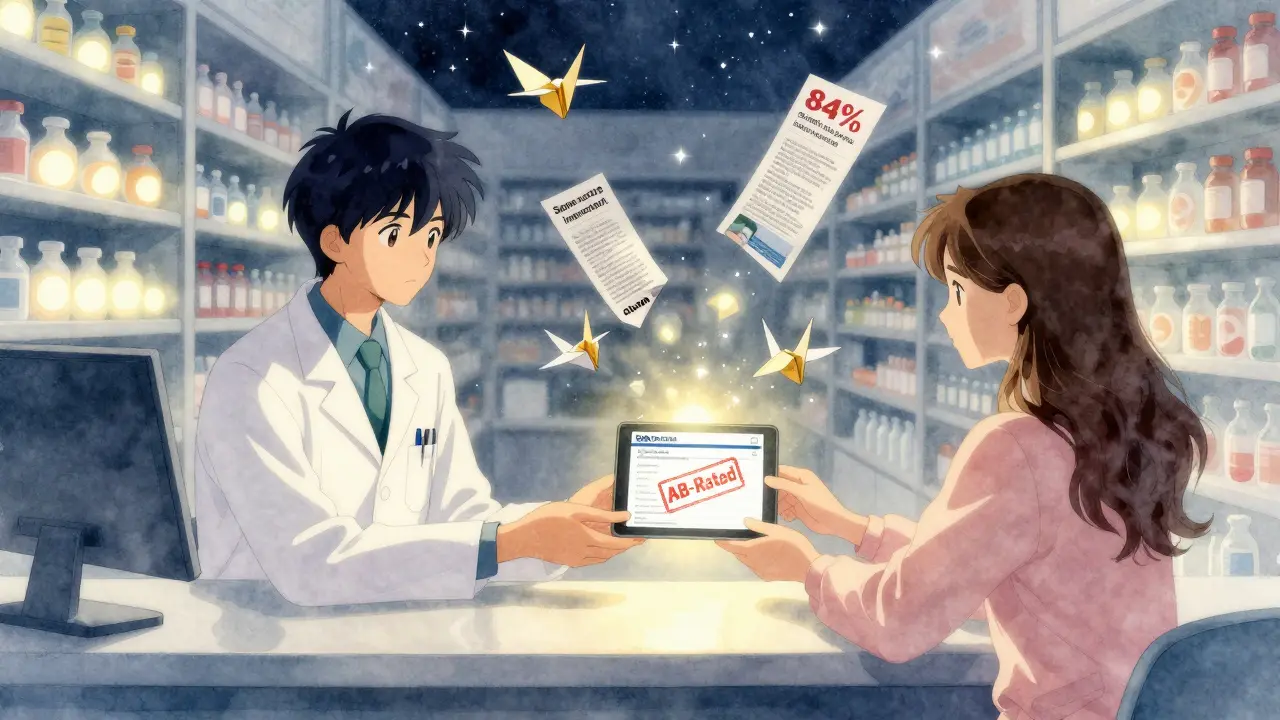
What You Can Do Right Now
You don’t need to wait for the media to fix its reporting. You can take control of your own understanding.- When you get a generic prescription, ask your pharmacist: "Is this the same as the brand?" They’ll show you the FDA’s approval letter - and explain the tiny differences that don’t matter.
- Check the FDA’s website for the drug’s approval status. You don’t need to be an expert. Just search the generic name and see if it’s listed as "AB-rated" - that means it’s therapeutically equivalent.
- If you’re worried about side effects after switching, give it time. Your body may need a few days to adjust to a different filler or coating - but the active ingredient hasn’t changed.
- Don’t let a scary headline make your decision. Ask yourself: "Did this article mention the FDA’s approval? Did it say how many other generics are on the market? Did it explain the funding behind the study?" If the answer is no, the story is incomplete.
The Bigger Picture: Why This Matters
This isn’t just about saving money on pills. It’s about access to care. When people avoid generics because of fear, they skip doses, delay treatment, or drop out of care entirely. That leads to worse health outcomes - and higher costs for everyone. The FDA, healthcare groups, and patient advocates are now launching campaigns to improve generic drug literacy. But real change starts with you. When you understand that a generic isn’t a compromise - it’s a smart choice - you help break the cycle of fear. The science is clear. The regulations are strong. The savings are real. The only thing left to fix is the story we’ve been told.Are generic drugs really as effective as brand-name drugs?
Yes. Every generic drug approved by the FDA must contain the exact same active ingredient, in the same strength and dosage form, as the brand-name version. It must also be absorbed into the body at the same rate and to the same extent. The FDA requires generic manufacturers to prove this through rigorous testing. The only differences are in color, shape, or inactive ingredients - none of which affect how well the drug works.
Why do some people feel generics don’t work as well?
It’s often psychological. If you’ve taken a brand-name drug for years and then switch to a generic that looks different, your brain may notice the change and assume something’s wrong - even if the medicine is identical. Some people also experience minor side effects from different fillers or coatings in generics, but these don’t mean the drug is less effective. Giving your body a few days to adjust usually helps.
Can generic drugs be contaminated or unsafe?
Like brand-name drugs, generics are subject to strict FDA inspections. The FDA checks over 3,500 manufacturing sites worldwide each year - including those producing generics. While rare contamination incidents have happened, they’re not more common in generics than in brand-name drugs. When problems occur, the FDA recalls the product and takes action. The media tends to highlight these rare cases, making them seem more frequent than they are.
Why do news stories focus on generic drug problems?
Negative stories get more attention. A headline like "Generic Drug Contamination Crisis" draws clicks and viewers, even if the issue affects a tiny fraction of products. Media often omits context - like how many generics are safe, or how prices drop when competition increases. This creates a distorted view. Journalists rarely mention that 84% of prescriptions are generics and that most are safe and effective.
How can I tell if a generic drug is approved by the FDA?
You can search the FDA’s online database, Drugs@FDA, using the generic name of the drug. Look for the "Therapeutic Equivalence" code - if it says "AB," the generic is approved as equivalent to the brand. Your pharmacist can also confirm this. Most generic packages will list the manufacturer and FDA approval status on the label.
Should I avoid generics if I have a serious illness?
No. For nearly all conditions - from high blood pressure to depression to diabetes - generics are just as safe and effective as brand-name drugs. The FDA requires the same level of proof for both. In fact, patients on generics are more likely to stick with their treatment because they can afford it. If you’re unsure, talk to your doctor or pharmacist. Don’t let fear of the unknown lead you to skip doses or choose a more expensive option that puts your health at risk.

Ashley S
Ugh I just saw another headline about generic drugs being 'dangerous' and I literally threw my phone across the room. Like, no one’s stopping you from paying $200 for a pill when you could pay $5. But you’re not saving anyone by doing that. You’re just funding corporate greed.
Jeane Hendrix
ok but like… i’ve had two different generics for my anxiety and one made me feel like a zombie and the other was fine. is that just my body adjusting or is the filler actually doing something? i’m not mad, just confused. also i think pharmacists should be paid more to explain this stuff. they’re the real heroes.
Mukesh Pareek
The cognitive dissonance in this discourse is staggering. The media’s framing effect is a textbook case of heuristic bias amplified by pharmaceutical lobbying. When patients conflate bioequivalence with perceptual familiarity, they’re exhibiting a well-documented phenomenon in behavioral pharmacoeconomics: the placebo effect of branding. The FDA’s AB-rating system is robust-but public literacy remains abysmal because narrative trumps data every time.
Rachel Wermager
Everyone’s missing the real issue: the FDA’s bioequivalence threshold is 80-125% AUC. That’s a 45% swing. For some drugs, especially narrow therapeutic index ones like warfarin or levothyroxine, that’s not nothing. You can’t just say 'it’s the same' like it’s a bag of sugar. There’s nuance here.
Katelyn Slack
i just want to say thank you to the pharmacist who sat with me for 15 minutes when i switched to generic metformin. she showed me the fda page and told me the color change was just dye. i cried. i didn’t know i needed that.
Venkataramanan Viswanathan
In India, we’ve been using generics for decades. We don’t have the luxury of brand names. But here’s the thing: the quality control is often better than in the West because the manufacturers have to compete globally. If your generic fails, you lose the whole market. No one’s fooling around.
Saylor Frye
So let me get this straight. The media’s bad, but your pharmacist is the savior? Cute. I’m sure they’re all just saints in white coats. Meanwhile, my insurance only covers generics because the pharma giants wrote the rules. This isn’t a trust issue. It’s a power issue.
Katie Schoen
My grandma takes 7 meds. 6 are generics. She’s 82, hikes every week, and still remembers my birthday. The brand-name guy? Dead at 58. Just saying.
Beth Templeton
Generic drugs are fine. But stop pretending the system isn’t rigged. The FDA’s inspections? Mostly scheduled. The manufacturers? Often overseas. The real answer? You’re just lucky if your pill works.
Indra Triawan
It’s not about the drug. It’s about control. When you’re sick, you want to feel like you’re doing something powerful. A branded pill feels like a trophy. A generic feels like surrender. We’re not rational. We’re scared. And the media knows it.
Tiffany Adjei - Opong
Wait, so the real villain here is… the FDA? Because they approve generics? Or is it the pharmacists who don’t explain enough? Or is it the patients who won’t read? Or the journalists who don’t fact-check? Or the pharma companies who fund studies? Oh wait-everyone’s guilty. This post is just a very long sigh.
Molly McLane
Hey everyone-I’m a nurse. I’ve seen patients skip doses because they think generics are 'fake.' I’ve seen people go into debt for brand names. I’ve also seen people thrive on generics because they could finally afford to take them every day. This isn’t a debate. It’s a public health crisis wrapped in a marketing campaign. Talk to your pharmacist. Ask for the FDA AB rating. Don’t let fear make your choices for you. You’ve got this.