
Every year, millions of people around the world take medicines that don’t work-or worse, make them sick. Counterfeit drugs are a real and growing threat. They might contain the wrong active ingredient, too little of the right one, or even toxic substances like rat poison or cement. The World Health Organization estimates that 1 in 10 medical products in low- and middle-income countries is fake. Even in high-income nations, fake pills are slipping through cracks in the system. The good news? There are official, reliable tools to check if your medicine is real.
Why Drug Authentication Matters
A fake pill isn’t just a scam-it’s a health emergency. The U.S. Food and Drug Administration (FDA) warns that counterfeit medications can cause organ failure, antibiotic resistance, or death. In 2022, the FDA reported cases of fake diabetes medication containing no insulin, and fake erectile dysfunction pills laced with street drugs. These aren’t rare outliers. They’re symptoms of a broken supply chain. The problem isn’t just about fraud. It’s about trust. If you can’t be sure your medicine is safe, you might stop taking it. That’s when chronic conditions spiral out of control. That’s why governments and health agencies have built systems to track drugs from factory to pharmacy.How the EU Falsified Medicines Directive (FMD) Works
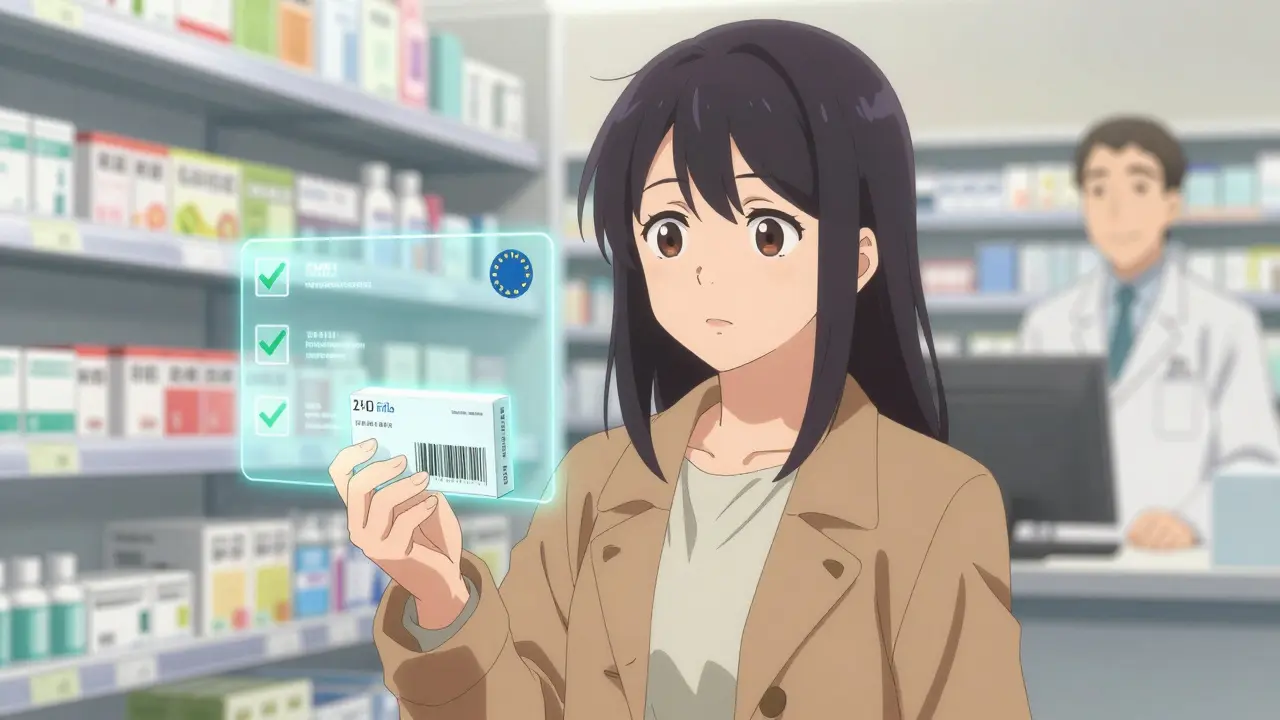
If you live in Europe, you’ve probably seen a 2D barcode on your medicine box. That’s the FMD system in action. Implemented in February 2019, the Falsified Medicines Directive requires every prescription medicine package to have a unique serial number, a batch number, and an expiry date encoded in a data matrix code. When you pick up your prescription, the pharmacist scans it. The system checks that code against the European Medicines Verification System (EMVS), a central database. If the code is valid, the medicine is real. If it’s been tampered with, duplicated, or never made, the system flags it instantly. In NHS pharmacies, 70% of pharmacists say the system is quick and easy to use. The verification takes about 3.2 seconds per package. What makes FMD powerful is that it requires verification at the point of sale. Every single package must be checked before it’s handed to the patient. That’s not true everywhere.The U.S. DSCSA System: A Different Approach
In the United States, the Drug Supply Chain Security Act (DSCSA) took effect in 2023. It’s designed to trace drugs as they move between manufacturers, distributors, and pharmacies. But here’s the catch: it doesn’t require verification at the pharmacy counter. The law only demands that each time ownership changes, the product is tracked digitally. Once it reaches your local pharmacy, there’s no mandatory scan. That creates a dangerous gap. A fake drug could slip through if it was introduced after the last verified transfer point. The FDA admitted this weakness in its 2022 Supply Chain Security Report. But they’re fixing it. A proposed rule published in September 2023 will require patient-level verification by 2027. Until then, U.S. consumers have no official way to check their pills at home.What You Can Do Right Now: Official Tools for Consumers
If you’re in the EU, you’re protected. But what if you’re elsewhere? Or if you bought medicine online? Here’s what you can do with tools that actually work:- Scan the barcode on your medicine box using your smartphone. Many countries have national verification apps. In the UK, the NHS has a portal where you can enter the serial number manually if you can’t scan it.
- Check the packaging. Real medicine has crisp printing, consistent colors, and no spelling errors. Fake drugs often have blurry text, mismatched fonts, or odd packaging shapes.
- Use the FDA’s BeSafeRx tool. The FDA runs a website that helps you identify legitimate online pharmacies. If you’re buying online, never buy from a site that doesn’t require a prescription or can’t show a physical address.
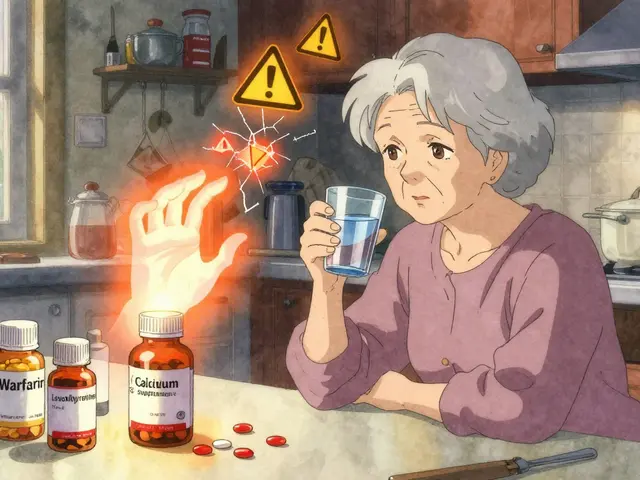
- Verify with your pharmacist. Even if your country doesn’t require scanning, ask your pharmacist to confirm the batch number and expiration date match the label. Pharmacists have access to manufacturer databases and can spot inconsistencies.
Advanced Technologies: Beyond Barcodes
For healthcare workers and inspectors, verification goes deeper than scanning. Spectral analysis tools use near-infrared (NIR) or Raman light to measure how a drug reflects energy. Every medicine has a unique spectral fingerprint-like a chemical DNA. Devices from Thermo Fisher Scientific and Agilent can compare that fingerprint against a database of over 1,200 verified medicines, with accuracy rates above 90% in field tests. Another method is molecular taggants. These are microscopic chemical markers added during manufacturing. They’re invisible to the eye but detectable with special readers. Pfizer and other companies are testing DNA-based taggants that can prove a batch was made in a specific factory. These are nearly impossible to copy. But these tools aren’t for consumers. They cost thousands of dollars and need training. That’s why the simplest tools-barcodes and pharmacist checks-are still your best defense.What Doesn’t Work: Myths and False Solutions
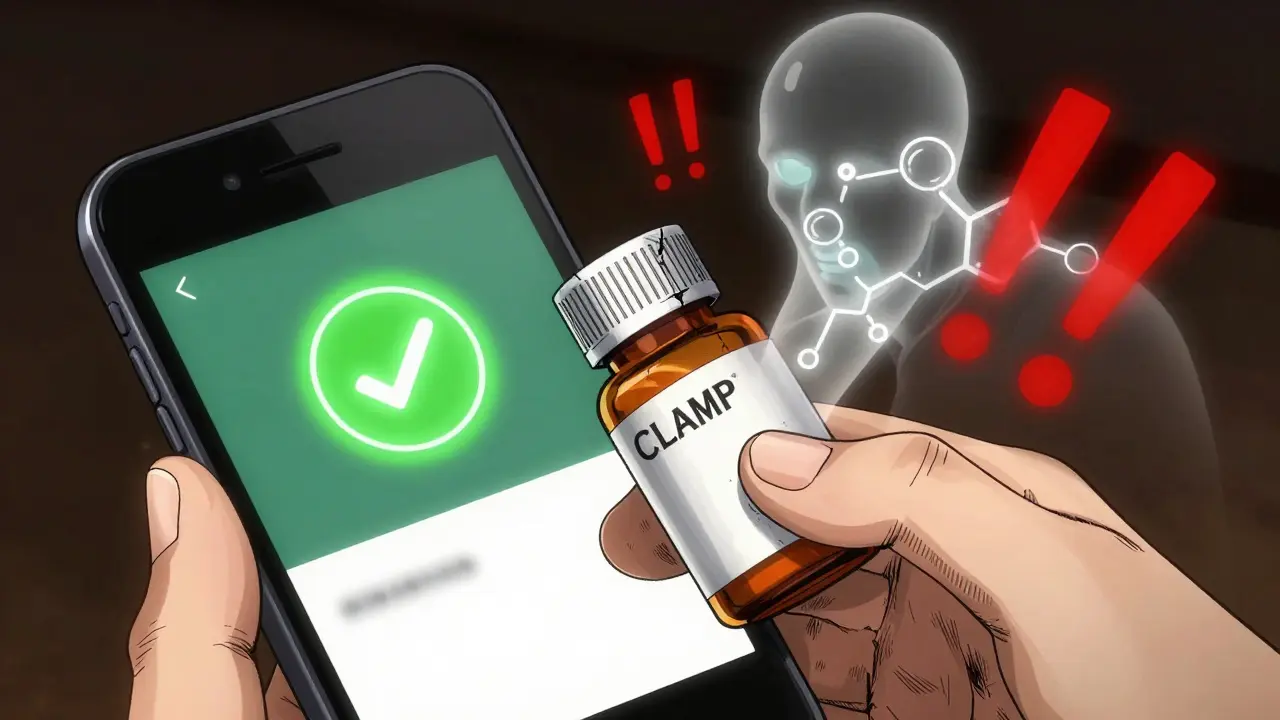
Don’t waste time on gimmicks. Apps that claim to “scan pills with your camera” using AI are unreliable. They might recognize a pill shape, but they can’t detect whether it contains the right chemical. SMS-based verification systems used in parts of Africa and Southeast Asia have only 68% accuracy because of poor network coverage. Blockchain systems sound high-tech, but they’re only as good as the data fed into them. If a fake drug enters the system at the manufacturer, blockchain won’t catch it. Even the color of the pill doesn’t guarantee authenticity. Counterfeiters now copy pill colors perfectly. The only reliable way to verify a drug is through its unique code, its chemical signature, or a trusted professional.What’s Changing in 2025 and Beyond
The global pharmaceutical authentication market is growing fast. It was worth $2.87 billion in 2022 and is expected to hit $5.43 billion by 2027. More countries are adopting EU-style systems. The WHO is pushing for global standards through the Pharmaceutical Inspection Co-operation Scheme (PIC/S). By 2030, McKinsey predicts 95% of countries will have some form of track-and-trace system. The biggest shift? AI. Pilot programs in 23 NHS hospitals are using machine learning to spot anomalies in verification data-like repeated failed scans from the same location, or serial numbers appearing in multiple countries. These systems are catching fake drugs before they even reach shelves.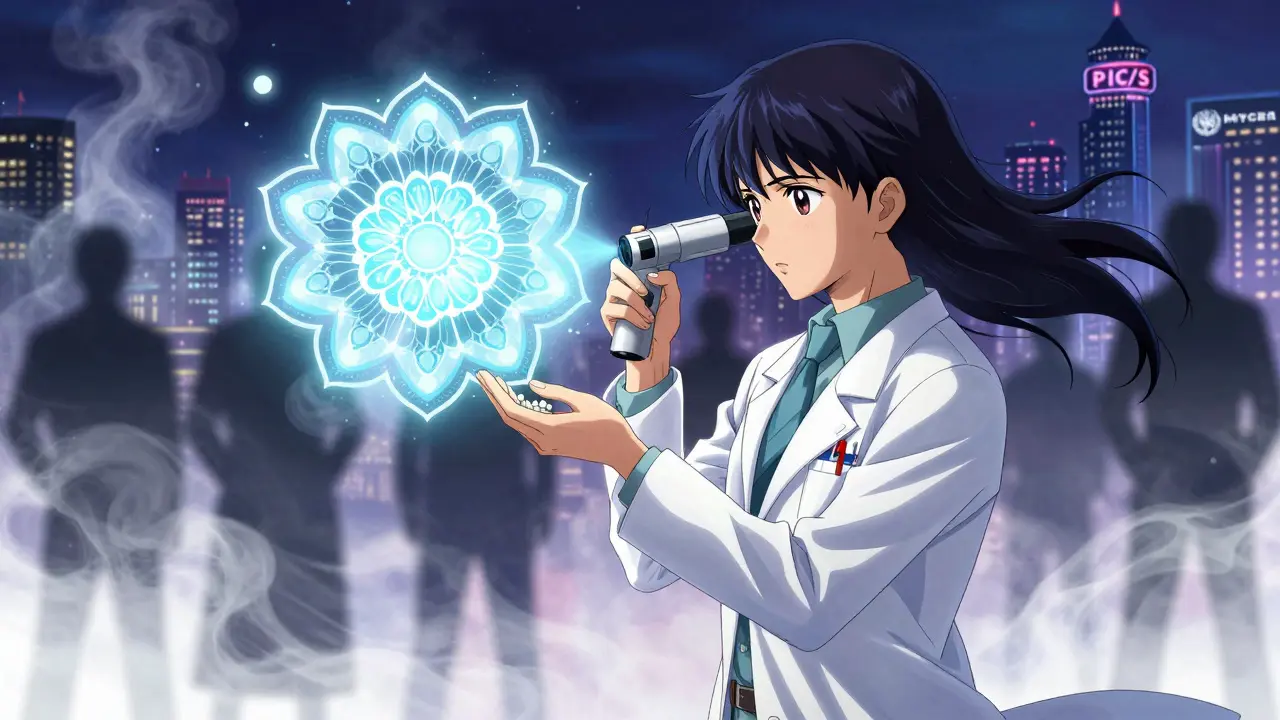
How to Stay Safe: A Simple Checklist
You don’t need to be an expert to protect yourself. Here’s what to do every time you get a new prescription:- Check the packaging for a 2D barcode or serial number.
- Look for signs of tampering-broken seals, mismatched labels, odd smells.
- Use your country’s official verification portal or app (if available).
- Ask your pharmacist to confirm the batch and expiry date match the label.
- If you bought online, verify the pharmacy through the FDA’s BeSafeRx or your national health authority’s list.
- If something feels off-dizziness after taking it, pills that look different-stop taking them and return them to the pharmacy.
What to Do If You Suspect a Fake
If you think a medicine is fake, don’t throw it away. Don’t try to test it yourself. Take it back to the pharmacy or hospital where you got it. They’re legally required to report suspicious products to health authorities. In the EU, pharmacies must report to the national medicines agency. In the U.S., report to the FDA’s MedWatch program. You can also contact your national drug regulatory body directly. In Australia, that’s the TGA. In Canada, it’s Health Canada. In the UK, it’s the MHRA. These agencies track counterfeit trends and issue public alerts.Final Thoughts: Trust, But Verify
The systems in place today aren’t perfect, but they’re far better than they were a decade ago. The EU’s FMD has cut counterfeit prescriptions by over 80% in participating countries. The U.S. is catching up. New technologies are making it harder than ever to fake medicine. But technology alone won’t save you. Your eyes, your questions, and your willingness to double-check are still the most powerful tools you have. If you’re unsure, ask. If you’re worried, report it. Millions of lives depend on it.How can I tell if my medicine is fake just by looking at it?
You can spot some red flags-blurry printing, misspelled names, odd packaging, or pills that look different from previous batches. But counterfeiters are getting better. Many fake drugs now look identical to the real ones. The only reliable way to confirm authenticity is through official verification systems like the EU’s FMD barcode scan or by checking with your pharmacist using manufacturer databases.
Can I use my phone to scan a pill and check if it’s real?
No. Phone cameras can’t detect chemical composition. Apps that claim to identify pills by image only recognize shape and color, which counterfeiters copy perfectly. Real verification requires scanning the unique 2D barcode on the packaging, not the pill itself. That barcode links to a government or manufacturer database. If your medicine doesn’t have a barcode, ask your pharmacist to verify it manually.
Is the DSCSA system in the U.S. reliable for consumers?
Not yet. The DSCSA tracks drugs between companies, but it doesn’t require pharmacies to scan your medicine before giving it to you. That means a fake drug could enter the system after the last verified transfer. The FDA plans to fix this by 2027, but until then, you can’t rely on the system to protect you at the point of use. Always check packaging and ask your pharmacist for verification.
Why don’t all countries have the same drug verification system?
Cost and infrastructure. The EU’s FMD system requires high-tech scanners, internet-connected databases, and staff training-costing up to €285,000 per hospital pharmacy. Low-income countries often lack the funding or technical capacity. Many rely on simpler methods like SMS alerts or visual inspections, which are far less reliable. Global efforts through the WHO and PIC/S are pushing for standardized systems, but progress is slow.
What should I do if I bought medicine online?
Only buy from online pharmacies that require a prescription and display a verified pharmacy logo (like VIPPS in the U.S. or the EU’s common logo). Check your country’s official list of licensed online pharmacies. If the site doesn’t list a physical address or phone number, avoid it. If you’ve already bought medicine, don’t take it. Return it and report the site to your national health authority.
Are generic drugs more likely to be counterfeit?
Not inherently. Generic drugs are subject to the same regulatory standards as brand-name drugs in countries with strong oversight. But because they’re cheaper, they’re more attractive targets for counterfeiters. Always verify the packaging and source, whether it’s brand or generic. If the price seems too good to be true, it probably is.
How do I report a suspected counterfeit drug?
Take the medicine back to the pharmacy where you got it-they’re required to report it. You can also report directly to your national drug regulator: the FDA in the U.S., TGA in Australia, MHRA in the UK, Health Canada, or your country’s equivalent. Include the product name, batch number, expiry date, and where you bought it. Your report helps track outbreaks and protect others.
Raushan Richardson
Just got my blood pressure meds last week and scanned the barcode with the NHS app-turned out legit. So relieved. I used to stress every time I picked up a prescription, but now I just check. It takes 5 seconds and saves your life.
Paula Alencar
It is absolutely imperative, from both a public health and ethical standpoint, that every individual who ingests pharmaceuticals-whether prescribed or procured via non-traditional channels-engages in the rigorous, non-negotiable practice of verifying authenticity through officially sanctioned mechanisms. The consequences of negligence are not merely statistical; they are mortal. The EU’s FMD framework represents not merely a regulatory innovation, but a moral imperative in pharmacovigilance. We must demand, as a society, that such protocols be universally adopted-not because they are convenient, but because human life is non-fungible.
Babe Addict
LOL you guys are acting like the barcode is magic. DSCSA is a glorified supply chain audit tool-doesn’t even verify at point of sale. And those ‘official apps’? Half of them are just wrappers for WHO databases that haven’t been updated since 2020. Real talk: if you’re not a pharmacist with access to manufacturer APIs, you’re just playing whack-a-mole with counterfeiters who reverse-engineer packaging faster than regulators can patch the system.
Robyn Hays
I love how this post breaks down the real solutions without the hype. I work in community health and we’ve seen people skip meds because they’re scared of fakes. The simple stuff-checking the seal, asking the pharmacist, using the FDA’s BeSafeRx-those are the lifelines. I showed my grandma how to use the NHS portal on her phone. She cried because she finally felt safe. Tech doesn’t have to be fancy to save lives. Sometimes it’s just a barcode and a little patience.
Satyakki Bhattacharjee
People are dying because they trust machines instead of God. Fake medicine is punishment for forgetting the old ways. In my village, we used to know the herbalist by face, not by QR code. Now everyone runs to phones and thinks that is wisdom. This is not progress. This is weakness.
Anna Weitz
Why are we still talking about barcodes when we have AI that can detect molecular signatures in real time Why are we letting corporations control the verification system Why is the FDA waiting until 2027 to fix what they knew was broken in 2020
Jane Lucas
my aunt took some fake blood thinner last year and ended up in the er. we never thought to check the packaging. now i scan everything. even if its just a vitamin. its so easy. just open the app and point. no big deal. dont be like us.
dean du plessis
Interesting how the EU made it mandatory but the US left it as a suggestion until now. Guess when your healthcare is profit driven you dont prioritize patient safety as much. Still glad the tools exist. I always ask my pharmacist to double check the batch. They dont mind. In fact they appreciate it.
Kylie Robson
Technically speaking, the EMVS is a federated model leveraging ISO 15459-1 unique serialization standards with GS1-compliant data carriers. The DSCSA, by contrast, operates under a decentralized interoperability framework governed by 21 CFR Part 203. The critical gap isn’t technological-it’s architectural. Without real-time, bidirectional API integration between dispensers and the national repository, you’re just creating audit trails, not safety nets.
Caitlin Foster
So let me get this straight… you’re telling me I have to SCANNING MY MEDS like I’m at the airport security line??? 😭 And I thought my ADHD was bad… now I need to be a pharmaceutical detective just to take my antidepressants?? I’m not a pharmacist, I’m a human who just wants to feel better without dying from a pill that looks like a Skittle.
Todd Scott
I’ve worked in pharma logistics across 12 countries. The truth is, the systems work-but only if they’re implemented with integrity. In Nigeria, I saw a pharmacy using FMD tech but just scanning the same barcode over and over to fake compliance. In Germany, every package was verified, logged, and flagged. It’s not about the tech-it’s about culture. The EU invested in training, accountability, and transparency. The U.S. invested in paperwork. That’s the real difference. And until we fix that, no barcode will save you.
Andrew Gurung
Wow. Just… wow. 🤦♂️ I can’t believe people are still using QR codes in 2025. I mean, really? We have blockchain-enabled, AI-augmented, quantum-encrypted molecular fingerprinting systems that can detect counterfeit APIs at the single-molecule level-and you’re still telling people to ‘ask their pharmacist’? 😂 The fact that this article even mentions the FDA’s BeSafeRx as a ‘tool’ is almost laughable. If you’re not using a Thermo Fisher Raman spectrometer with real-time cloud database cross-referencing, you’re not verifying-you’re guessing. And guessing is how people die. 🧪💀