
Medication errors kill more people than car accidents. Here’s how pharmacies are trying to stop them.
Every year, around 250,000 people in the U.S. die because of medication errors. That’s more than from strokes, Alzheimer’s, or breast cancer. And most of these deaths aren’t caused by reckless doctors or careless nurses. They happen because of broken systems - unlabeled syringes, misread prescriptions, automated cabinets that let staff bypass safety checks, and weight-based dosing mistakes in kids. The good news? We know exactly how to fix most of these problems. The bad news? Many hospitals and pharmacies still aren’t doing it.
The National Patient Safety Goals (NPSGs), set by The Joint Commission, are the closest thing we have to a national playbook for stopping these errors. First introduced in 2003, these goals aren’t suggestions. They’re mandatory for nearly every hospital in America. And the biggest focus? Medication safety.
What the Joint Commission actually requires
The 2025 NPSGs don’t just say “be careful.” They lay out specific, measurable rules. For example:
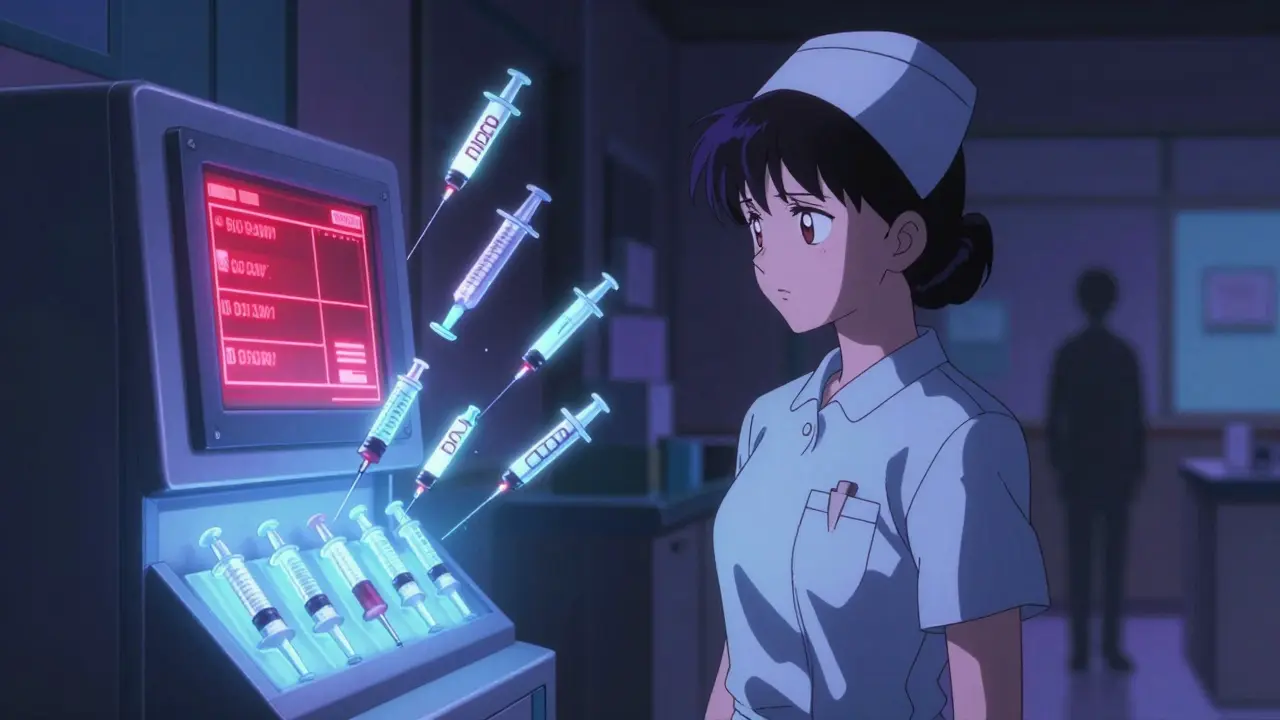
- NPSG.03.04.01 says every medication container - even a tiny syringe on an operating table - must be labeled with the drug name, strength, and concentration. The font? At least 10-point. No exceptions. A 2023 audit found 27% of operating rooms still used unlabeled syringes. That’s not negligence. It’s a system failure.
- NPSG.03.05.01 targets blood thinners like warfarin. These drugs kill if dosed wrong. The rule? Every patient on them must get clear education, regular INR blood tests, and documented target ranges. Facilities must hit 95% compliance, measured every quarter.
- Bedside specimen labeling is new in 2025. Nurses must now label blood tubes in front of the patient, using two identifiers (name and date of birth). Why? Mislabeled samples cause about 160,000 harmful events each year - wrong diagnoses, unnecessary surgeries, even deaths.
These aren’t abstract policies. They’re direct responses to real deaths. In one case, a patient got a muscle relaxant instead of insulin because the syringe wasn’t labeled. He went into a coma. He survived. But only because a pharmacist caught it at the last second.
The Five Rights? They’re not enough
You’ve probably heard the “Five Rights” of medication safety: right patient, right drug, right dose, right route, right time. It’s taught in every nursing school. But here’s the truth: 83% of medication errors happen even when all five rights are checked.
Why? Because the Five Rights put the burden on people, not systems. A nurse working a 12-hour shift with eight patients can’t pause for 10 minutes to double-check every pill. She’s tired. The lights are dim. The barcode scanner is broken. The automated cabinet is out of stock, so she grabs the next closest bottle. That’s not human error. That’s a flawed design.
Studies show that when hospitals rely only on the Five Rights, error rates stay flat. But when they add technology - like barcode scanning and automated dispensing cabinets with audit trails - wrong-drug errors drop by up to 86%.
Automated dispensing cabinets: lifesaver or liability?
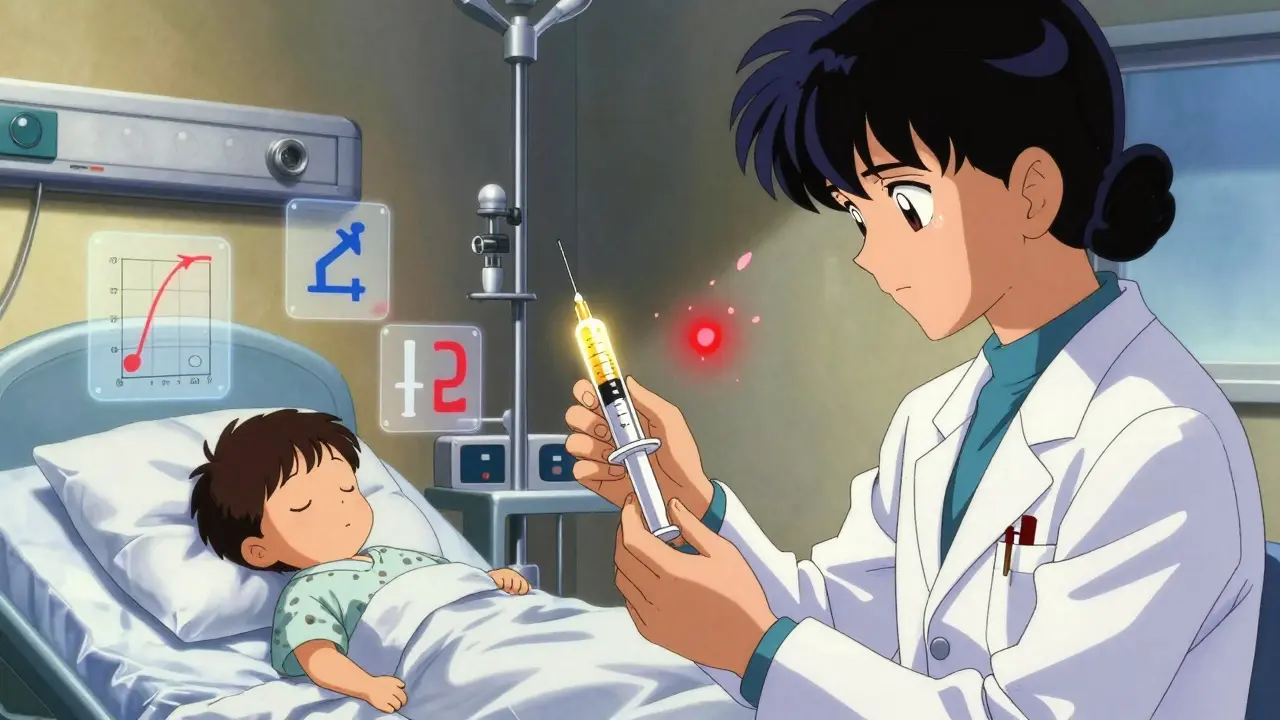
Automated dispensing cabinets (ADCs) are everywhere now. They’re supposed to reduce errors by locking up high-risk drugs and requiring staff to scan IDs before pulling medication. But they’ve created a new problem: overrides.
An override happens when a nurse punches in a code to bypass the system - usually because they need a drug “stat” during an emergency. The Joint Commission says override rates should stay below 5%. But in 34% of hospitals, they’re hitting 10%, 15%, even 20%.
Here’s the scary part: hospitals with override rates over 5% have 3.7 times more medication errors. Why? Because every override is a chance for a mistake. A nurse grabs morphine instead of midazolam. A pharmacist doesn’t catch it. The patient codes.
The fix? Don’t ban overrides. Fix the reasons they happen. Train staff to anticipate emergencies. Stock high-demand drugs in faster-access locations. Use real-time inventory alerts. And track override patterns - not just to punish, but to predict.
High-alert medications: the silent killers
Some drugs are more dangerous than others. The Institute for Safe Medication Practices (ISMP) calls them “high-alert medications.” These include insulin, heparin, opioids, and injectable potassium. One wrong dose can kill in minutes.
ISMP’s Targeted Medication Safety Best Practices list 19 specific risks. One? Injecting promethazine (an anti-nausea drug) into an artery. Between 2006 and 2018, that mistake caused 37 amputations. Why? Because it looks like any other IV fluid. The fix? Color-coded labels, separate storage, and mandatory double-checks.
Another? Giving opioids to patients who’ve already overdosed. Hospitals now require staff to check a patient’s opioid history before giving any new dose. Simple. Life-saving.
And then there’s pediatric dosing. Kids aren’t small adults. A 5kg baby needs a completely different dose than a 70kg teen. Yet, 3 out of every 10 medication errors in children involve weight-based miscalculations. Children’s Hospital of Philadelphia fixed this by requiring:
- Electronic order entry with built-in weight-based dosing alerts
- Double-checks by two pharmacists for all high-risk drugs
- Standardized syringes with pre-calculated doses
Result? A 91% drop in dosing errors.
Why some hospitals succeed - and others don’t
It’s not about money. It’s about leadership.
Hospitals that make real progress have three things:
- Pharmacy leadership at the table - not just as order-takers, but as safety architects.
- Executive sponsorship - if the CEO doesn’t care, the staff won’t either.
- A culture that reports errors without fear - if nurses are scared to admit a mistake, you’ll never fix the system.
KLAS Research found that programs with strong leadership had an 89% sustainability rate after five years. Without it? Just 42%.
One pharmacy director in Ohio told me: “We used to blame the nurse who gave the wrong pill. Then we started asking: ‘Why did she have to grab it from the wrong drawer? Why wasn’t the barcode scanner working? Why did we run out of the right syringe again?’ That shift saved lives.”
What’s coming next
The future of medication safety isn’t just better labels or more scanners. It’s AI.
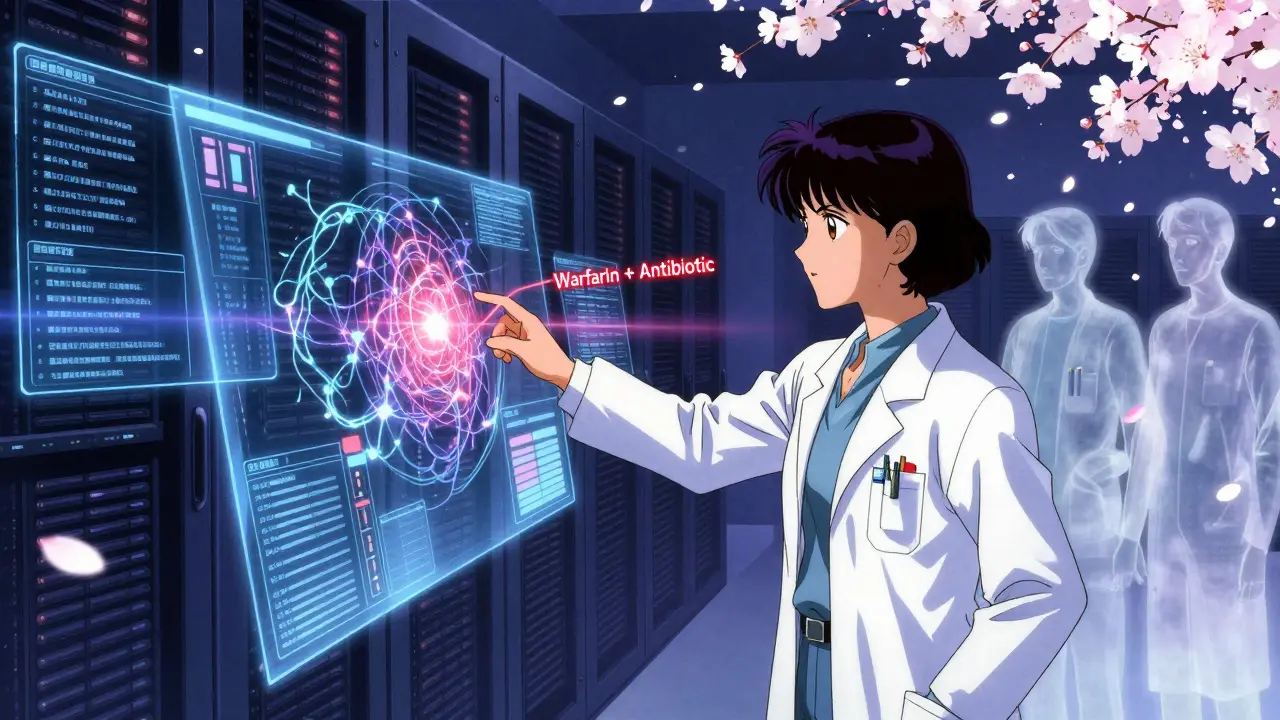
At Mayo Clinic, a pilot program uses artificial intelligence to scan electronic records and flag potential drug interactions before they happen. For example, if a patient is on warfarin and gets prescribed a new antibiotic that boosts its effect, the system warns the pharmacist. In six months, they saw a 47% drop in potential adverse events.
By 2026, ISMP will add 6 new safety practices, including vaccine administration checks and better handoffs between hospitals and home care. The World Health Organization wants every country to adopt these standards by 2030. But right now, only 22% of low-income countries have even basic medication safety systems.
Meanwhile, the global market for patient safety software is set to hit $4 billion by 2028. That’s not because it’s trendy. It’s because hospitals are finally realizing: preventing one death is cheaper than paying for one lawsuit.
What you can do - even if you’re not a pharmacist
You don’t need to work in a hospital to help. Here’s how:
- Ask questions - “Is this the right drug for me?” “Why am I taking this?” “What side effects should I watch for?”
- Bring a list - every time you see a doctor, bring a written list of all your meds, including vitamins and over-the-counter pills.
- Check the label - when you pick up a prescription, compare the bottle to the doctor’s instructions. If it doesn’t match, say something.
- Speak up - if you see a nurse grab a drug without scanning, or a pharmacist look confused, ask. You’re not being rude. You’re saving a life.
Medication safety isn’t about perfection. It’s about layers. One layer fails? The next one catches it. But if every layer is weak, someone dies. The tools exist. The rules are clear. The question is: are we ready to use them?



Chris & Kara Cutler
This is why I always ask my pharmacist to read the label out loud. 🙏 I don’t care if it’s 2am or they’re swamped-my life isn’t a guess. #MedSafety
Rachel Liew
i just had my grandma almost get the wrong pill last month and i didnt even know till i saw the bottle. we all think its fine till its not. please check the labels. its easy but it matters.
Naresh L
It's interesting how we frame safety as a technical problem when it's fundamentally a human one. The Five Rights assume perfect conditions, but humans operate in chaos. Maybe the real failure isn't the nurse grabbing the wrong bottle-it's that we built a system that expects perfection from tired, overworked people. We don't need more rules. We need more grace-and better design.
Jaden Green
Let’s be real-most of these so-called ‘safety protocols’ are just bureaucratic theater. Hospitals don’t care about patients; they care about avoiding lawsuits. They’ll slap on color-coded labels and call it a day while ignoring the root causes: understaffing, burnout, and executives who think ‘efficiency’ means cutting pharmacists. And don’t even get me started on AI. If you think an algorithm can replace clinical judgment, you’ve never seen a hospital run on 20% staff and 80% caffeine.
Deep Rank
I work in a pharmacy and let me tell you, the ‘override’ culture is out of control. Nurses think they’re heroes for bypassing the system, but they’re just gambling with lives. And the worst part? The admins don’t even track WHY they override-just that they did. So we punish the nurse, not the broken supply chain. And then we wonder why errors keep happening. It’s not negligence-it’s neglect. And it’s systemic. Someone needs to hold the C-suite accountable, not just the floor staff.
Nancy Nino
Oh wow. So we’re supposed to believe that 250,000 deaths annually are ‘system failures’ and not just… the result of people being lazy? Because let’s be honest-if you’re too tired to scan a barcode, maybe you shouldn’t be handling medication. I mean, I get it. But this isn’t a ‘culture of fear’ problem. It’s a ‘people need to stop being careless’ problem.
Nidhi Rajpara
The NPSGs are a step forward, but they are not sufficient. What is missing is a standardized national database of medication error reports, anonymized and aggregated, to identify patterns across institutions. Without this, we are merely reacting to incidents rather than preventing them. Furthermore, the emphasis on technology without concurrent training in pharmacology literacy among non-pharmacist staff remains a critical gap.
Jamie Allan Brown
I’ve seen this play out in the UK too. We had a similar crisis with insulin errors. The fix wasn’t more rules-it was redesigning the vials so you couldn’t mistake them. Sometimes the best safety feature is something you can’t accidentally bypass. I’m glad someone’s finally talking about the human side-not just the tech. But let’s not pretend this is just an American problem. It’s everywhere.
Lisa Rodriguez
I'm a nurse and I'll be honest-most of us want to do right. But when you're doing 12 meds in 8 minutes and the scanner is broken and the cabinet is out of your drug and the kid's weight is listed as '50 lbs' instead of '22.7 kg'... you panic. We need better tools, not better guilt. And yes, AI can help. I've seen it catch a dangerous interaction I missed because I was checking 3 charts at once. It's not magic. It's just... less exhausting.
Nicki Aries
I'm so tired of hearing 'it's not human error-it's a system failure.' Yes, systems are flawed-but people still have to make choices. If you bypass a safety check because you're 'in a hurry,' you're making a choice. And if you're the one who gets away with it, you're part of the problem. We need accountability-not just ‘understanding.’ No one dies because the scanner was broken. They die because someone chose not to wait.
Ed Di Cristofaro
Nah. The real problem? Pharma companies don’t make drugs that are easy to tell apart. Look at morphine and midazolam. They look identical. Why? Because they’re cheap to produce. If they spent $0.02 more per vial to color-code them, we wouldn’t need all this ‘override’ nonsense. Stop blaming nurses. Blame the corporations who profit from confusion.
Lilliana Lowe
The notion that ‘the Five Rights aren’t enough’ is a red herring. They are the baseline. What’s missing is competency. Nurses today are trained to operate machines, not to think. If you can’t verify a dose without a scanner, you shouldn’t be licensed. This isn’t a system failure-it’s an educational failure. And the fact that we’re outsourcing judgment to AI is a terrifying sign of our collective intellectual surrender.
vivian papadatu
As someone who grew up in a country where pharmacies are run by clerks with no training, I can tell you-this is what safety looks like when you invest in people. Not just tech. Not just rules. Real training. Real respect. Real time. When the pharmacist takes 3 minutes to explain your meds instead of rushing you out the door? That’s the difference between life and death. And it costs nothing but care.