
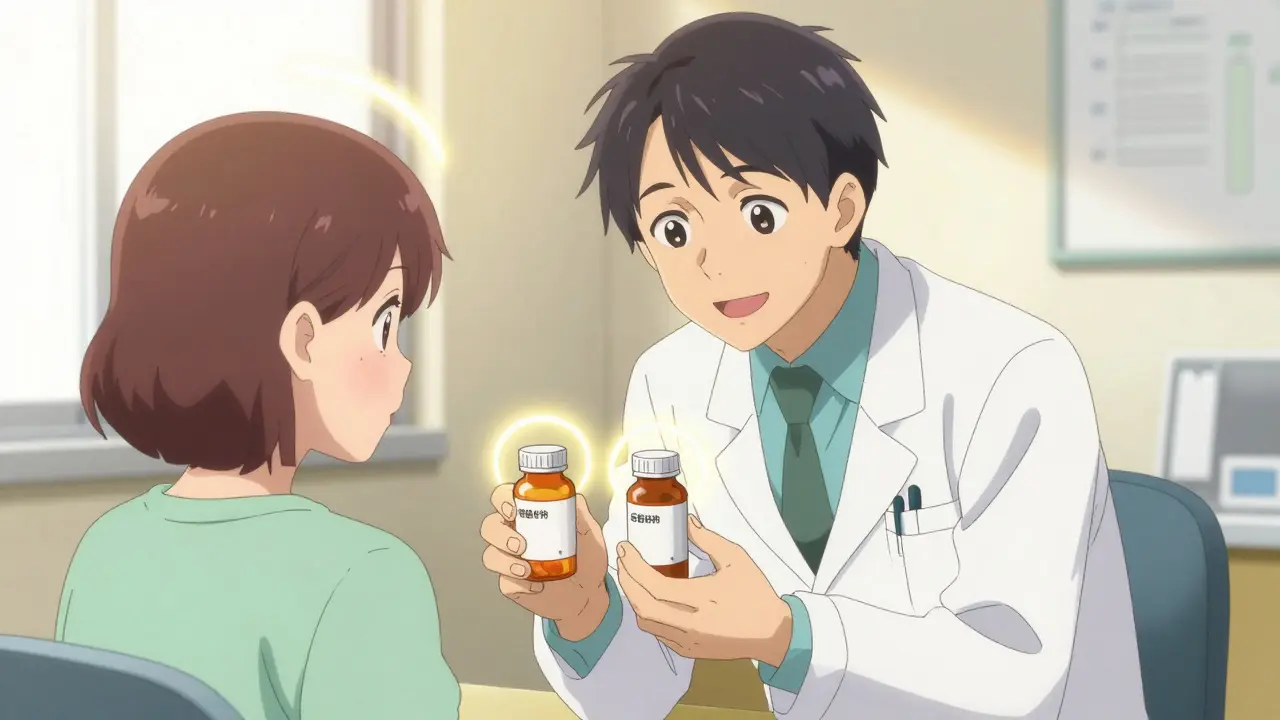
When a patient walks into your office with a prescription for a brand-name drug, and you know the generic version costs a quarter of the price, do you automatically switch? Or do you hesitate-wondering if the patient will have a seizure, their blood thinning will go off track, or they’ll just stop taking it altogether because they don’t trust it? For providers, the decision to prescribe or allow substitution of generic medications isn’t just about cost. It’s layered with clinical judgment, patient trust, state laws, and real-world outcomes that don’t always match textbook assumptions.
Generic Drugs Work-But Not Always the Same Way
The FDA says generics are bioequivalent to brand-name drugs. That means they deliver the same active ingredient at the same rate and amount into the bloodstream. The numbers are clear: generics make up 90% of all prescriptions filled in the U.S., but only 23% of total drug spending. That’s billions saved every year. For most medications-like statins, blood pressure pills, or antidepressants-the switch is seamless. Patients take them, feel better, and keep taking them.
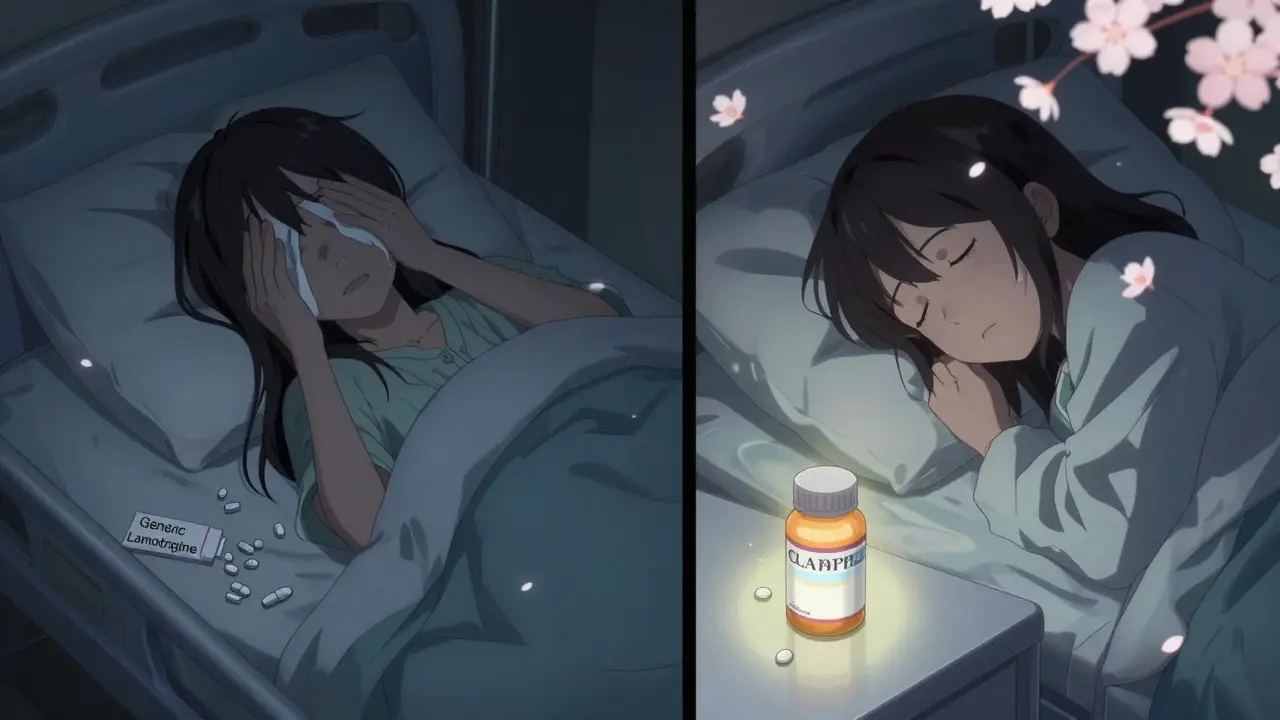
But then there are the exceptions. Drugs with a narrow therapeutic index-where even a small change in blood levels can cause harm-are where things get tricky. Warfarin, levothyroxine, cyclosporine, and some antiepileptic drugs like lamotrigine don’t play nice with substitutions. Providers report cases where patients stabilized on brand lamotrigine for years had breakthrough seizures after switching to a generic. When switched back? The seizures stopped. That’s not theory. That’s real patient data from case series published in neurology journals.
The FDA itself caught on to this. In 2016, after hundreds of complaints about certain generic versions of Concerta (a brand-name ADHD medication), the agency reviewed lab results, adverse event reports, and manufacturing data. They found two generics weren’t performing like the brand or the authorized generic. Result? Those two were downgraded from AB (therapeutically equivalent) to BX (not equivalent) in the Orange Book. That’s rare. And it tells you something: the system works, but it’s not perfect.
What Providers Actually See in Practice
Most clinicians don’t have time to memorize every generic’s bioequivalence rating. But they learn fast. A cardiologist in Ohio told me he stopped switching patients on warfarin to generics after two patients had INR spikes that landed them in the ER. Now he writes “dispense as written” on every prescription. A psychiatrist in Chicago said she only switches antidepressants if the patient brings it up first. “They’ll say, ‘My cousin took the generic and felt weird,’ and I’ll say, ‘Let’s not risk it.’”
On the flip side, primary care doctors managing hypertension or diabetes see the opposite. One provider in Texas shared that switching 200 patients from brand-name lisinopril to generic cut monthly costs from $120 to $4 per script. No drop in adherence. No rise in ER visits. Just savings. “I don’t even mention it anymore,” he said. “I just fill it.”
The difference? It’s not the drug. It’s the context. For chronic, stable conditions with wide safety margins, generics are a win. For conditions where tiny changes in blood levels matter-like epilepsy, transplant rejection, or mood disorders-providers tread carefully. And they’re not being paranoid. They’re responding to real clinical variability.
State Laws Make It Complicated
Here’s the kicker: the rules change depending on where you live. In 19 states, pharmacists can switch a brand to a generic without telling the patient. In 7 states and D.C., they must get the patient’s consent first. In 24 states, pharmacists could be held legally liable if something goes wrong after a substitution-but only if the prescriber didn’t block it.
This creates a mess. A patient gets a prescription in California, fills it in Arizona, and gets a different generic than they’re used to. They feel “off.” They blame the doctor. The doctor blames the pharmacist. The pharmacist blames the manufacturer. No one wins.
And it’s not just about consent. Some states require pharmacists to notify patients every time the generic manufacturer changes-even if it’s the same drug, same dose, same bioequivalence rating. One nurse practitioner in Pennsylvania said her patients get confused when the pill color changes every month. “They think they’re getting something new. Or worse-they think they’re getting counterfeit.”
Authorized Generics: The Hidden Middle Ground
There’s a version of generics most people don’t know about: authorized generics. These are the exact same drug as the brand, made by the same company, just sold without the brand name. They’re often cheaper than regular generics and have fewer complaints.
A 2019 JAMA study looked at 10 drugs with both authorized generics and regular generics. Results? No difference in hospitalizations or medication stops between the two. But authorized generic users had slightly more ER visits. Why? Maybe because they were more likely to notice side effects-because they knew they were getting the “same” drug, so they paid closer attention.
Still, for providers, authorized generics are a sweet spot. They offer the cost savings of generics with the consistency of brand-name products. But they’re not always available. And patients rarely ask for them. So unless you know to ask, or your pharmacy stock has them, you’re stuck with the regular generics.
Patients Trust Their Doctors-If You Talk to Them
Here’s the good news: patients are willing to switch-if you explain why.
A 2020 study found 66% of patients were more likely to accept a generic if their doctor recommended it. Only 13% did so because the pharmacist said so. And 13% because it was cheaper. That’s telling. Cost matters, but trust matters more.
One provider in Atlanta started using a simple script: “This generic is the same medicine, made to the same FDA standards. It’s just cheaper. If you feel any different, even a little, let me know. We can switch back.” Within six months, her generic substitution rate jumped from 45% to 82%. No drop in adherence. No increase in complaints.
Patients don’t hate generics. They hate uncertainty. And they hate being treated like a cost-saving checkbox.
Electronic Health Records Can Help-If They’re Set Up Right
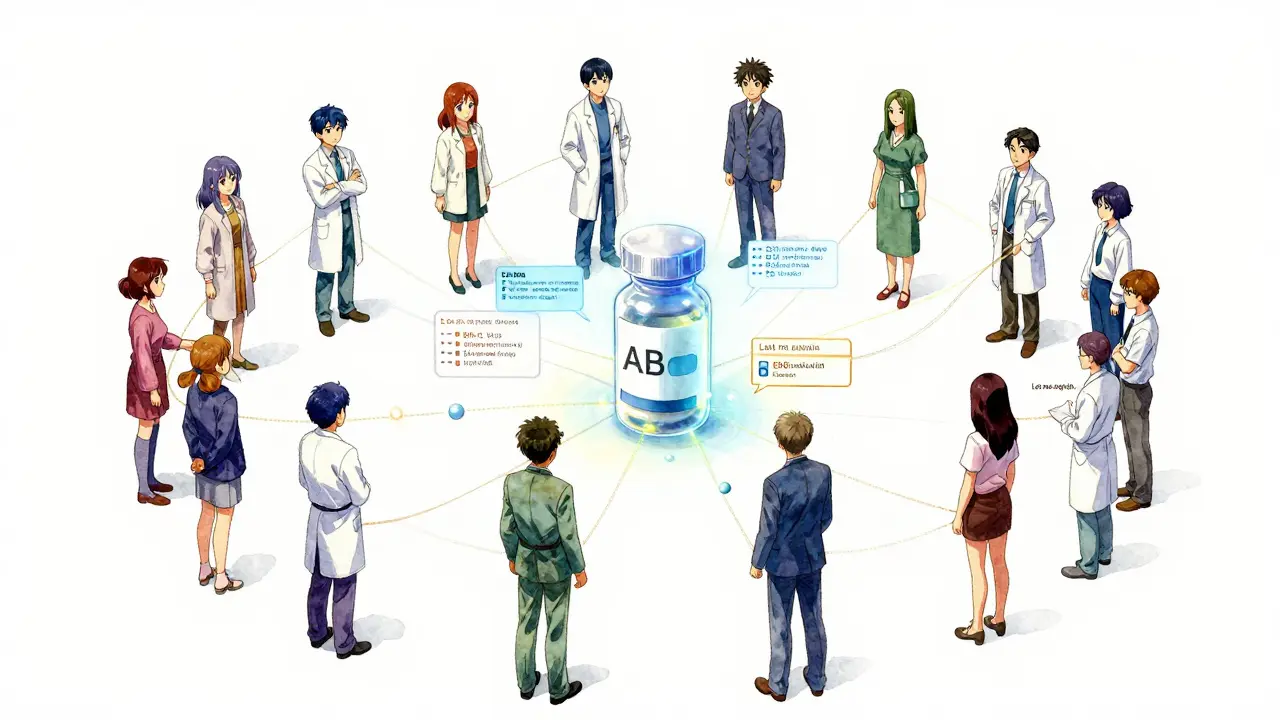
Most EHR systems now flag therapeutic equivalence ratings. If you’re prescribing a drug with an AB rating, the system might say, “This generic is equivalent.” If it’s BX? It might warn you: “Not recommended for substitution.”
But not all systems are created equal. Some don’t update in real time. Some don’t include authorized generics. Some only show the generic name, not the manufacturer. One endocrinologist in Minnesota said she had to manually check the Orange Book every time she switched a patient on levothyroxine. “I don’t trust the EHR to get it right.”
When systems work well, they reduce guesswork. When they don’t, they add to the burden. The fix? Better integration. Better data. And training for everyone-from pharmacists to nurses to physicians.
What’s Changing Now-and What’s Next
The Inflation Reduction Act of 2022 is pushing Medicare Part D to favor generics even more. By 2025, generic use among seniors could jump another 5-7%. That’s good for the system. But it’s also a pressure test. Will the supply chain hold up? Right now, 80% of active ingredients in U.S. generics come from outside the country-mostly India and China. The pandemic showed how fragile that is.
Meanwhile, the FDA is getting smarter. They’re using real-world data from the Sentinel Initiative to track outcomes after substitution. They’re developing new tools to evaluate complex generics-like inhalers, patches, and topical creams-that are harder to copy than pills.
And researchers are starting to use machine learning to predict which patients are most likely to have trouble with a switch. In a 2024 Greek study, a model looked at age, education, previous medication changes, and even how often patients refill prescriptions. It could predict with 85% accuracy who would struggle with a generic switch. Imagine that in your EHR one day: “Patient X has high risk of non-adherence with generic substitution. Recommend counseling.”
The Bottom Line for Providers
Generics aren’t the enemy. They’re a tool. And like any tool, they work best when you know how to use them.
For most drugs-statins, metformin, sertraline, omeprazole-switching is safe, effective, and smart. Save money. Reduce patient burden. No downside.
For narrow therapeutic index drugs-warfarin, levothyroxine, cyclosporine, lamotrigine-be cautious. Know the ratings. Write “dispense as written” when needed. Don’t assume all generics are equal.
And always talk to your patients. Not just about cost. About safety. About trust. A three-minute conversation can turn a skeptical patient into a loyal one. And that’s worth more than any savings on a pill bottle.
The data doesn’t lie. Generics work. But the human part? That’s where the real work happens.




Linda Caldwell
Generics saved my life and my wallet. I’ve been on the same cheap antidepressant for 5 years and I’m still functional. Stop acting like every pill is a lottery ticket.
Jonathan Morris
Let’s be real-the FDA’s ‘bioequivalent’ label is a marketing scam. I’ve seen patients crash after switching generics. The same active ingredient doesn’t mean the same excipients, dissolution rates, or batch variability. And no, the Orange Book doesn’t capture real-world chaos. The system isn’t broken-it was designed to fail quietly.
Concerta’s BX downgrade? That was a PR move. The real offenders are still on shelves. I’ve pulled 3 different generic lamotrigine batches from the same pharmacy in 6 months. Same name. Different pill. Different outcomes. The FDA doesn’t test for psychological impact. They test for AUC and Cmax. That’s not medicine. That’s math with a stethoscope.
And don’t get me started on authorized generics. They’re the only ones that don’t make patients feel like lab rats. But pharmacies won’t stock them because they’re 10 cents cheaper than the regular generic. Profit over safety. Again.
Meanwhile, patients are told to ‘just try it.’ What if they’re the one who has a seizure? Who pays for the ER visit? The patient? The provider? The insurance company? No one. That’s the beauty of the system.
It’s not about trust. It’s about control. The pharmaceutical industry wants you to believe generics are interchangeable. They’re not. They’re variations on a theme composed by Chinese chemists and packaged by machines with no conscience.
And yet we act shocked when someone’s INR spikes after switching warfarin? We’ve known this for decades. The data is there. The complaints are there. The FDA just doesn’t have the bandwidth to care until someone dies.
So yes, I write ‘dispense as written’ on everything. Not because I’m paranoid. Because I’ve seen the autopsy reports.
The real tragedy? Patients who can’t afford brand names are forced to gamble with their lives. And we call this healthcare.
Next time you see a generic on your prescription, look up the manufacturer. If it’s based in India or China, you’re not just taking medicine. You’re taking a risk. And you didn’t even sign a waiver.
Anna Giakoumakatou
How quaint. We’ve reduced human physiology to a spreadsheet. ‘Bioequivalent.’ As if the soul of a molecule can be quantified by a single AUC curve. How postmodern. How tragic. We’ve outsourced our trust to the FDA, to algorithms, to pharmacists who couldn’t tell you the difference between a phenyl ring and a benzodiazepine if their life depended on it.
And yet, we still expect patients to be ‘compliant.’ As if compliance is a moral virtue rather than a desperate act of faith in a broken system. How noble. How utterly, profoundly bourgeois.
The fact that you think a three-minute conversation ‘turns skeptics into loyalists’ reveals your profound ignorance. Patients don’t need reassurance. They need transparency. And transparency means admitting that we don’t know. That the science is incomplete. That the pill they’ve been taking for a decade might as well be a placebo if the manufacturer changes their binder.
It’s not about cost. It’s about control. And we’ve surrendered it all to the corporate pharmacy-industrial complex.
Erik J
Interesting that the study showed patients were more likely to accept generics when their doctor recommended them. Makes me wonder how many providers actually explain the difference between AB and BX ratings. Or if they just assume patients won’t understand.
I’ve seen patients panic when the pill color changes. Not because they’re irrational-but because they’ve been burned before. Maybe the system should track which manufacturer a patient responds to. Like a blood type.
BETH VON KAUFFMANN
Let’s not pretend this is a clinical issue. It’s a supply chain failure disguised as pharmacoeconomics. The FDA’s AB rating is a legal fiction. Real-world bioequivalence is a myth when your API is sourced from a factory in Hyderabad with no GMP oversight. The real problem isn’t patient trust-it’s regulatory capture. The FDA lacks the resources to audit foreign facilities. So they outsource safety to a label.
And authorized generics? They’re the only honest product in this entire ecosystem. But they’re rarely stocked because they don’t generate the same margin as the off-brand. Profit over safety. Always.
Machine learning predicting non-adherence? That’s not innovation. That’s damage control. We’re building AI to manage the consequences of a system we refuse to fix.
Raven C
It is, indeed, a profoundly disquieting phenomenon, this commodification of human physiology-reducing the intricate, delicate ballet of neurochemical homeostasis to a mere arithmetic equation of cost-efficiency. One cannot help but feel a visceral unease when one contemplates the notion that a patient’s mental stability, or even their very life, may hinge upon the capricious whims of a tablet’s excipient composition-or worse, the geopolitical stability of a distant manufacturing hub.
And to suggest that a three-minute consultation can assuage the existential dread induced by a pill whose provenance is unknown? This is not medicine. This is performative benevolence.
The FDA’s Orange Book is not a bible. It is a ledger. And we are all its unwitting debtors.
Donna Packard
I’ve had patients cry when I switched them to generics because they thought they were getting ‘fake’ medicine. I sit with them. I show them the FDA page. I tell them I’ve been prescribing these for years. Most of them come back and thank me. It’s not about the pill. It’s about feeling heard.
Patrick A. Ck. Trip
Generics are a gift to the public health system, and we should be promoting them with care, not fear. Yes, there are exceptions-warfarin, levothyroxine-but those are well-documented. The key is communication, education, and consistency. I’ve been using generics for 15 years in primary care, and my adherence rates are higher than the national average. Patients trust us when we’re honest. And we need to stop treating them like children.
Also, I think the EHR systems need better alerts. I’ve had a few errors myself. But the fix isn’t to stop using generics-it’s to fix the tech.
Sam Clark
Thank you for this comprehensive and clinically nuanced analysis. The distinction between AB and BX ratings is critical, and yet it remains underutilized in clinical practice. I would propose a standardized educational module for pharmacists, nurses, and providers that includes real-world case vignettes and a visual reference guide for high-risk medications. Additionally, I recommend that health systems implement mandatory patient counseling protocols for substitutions involving narrow therapeutic index drugs. The data supports safety, but the human element remains paramount. We must align systems with ethics.
Jessica Salgado
My mom switched from brand Lamictal to generic and had a seizure two weeks later. She was fine when we switched back. I screamed at the pharmacist. The pharmacy said, ‘It’s the same drug.’ No. It’s not. It’s the same name. The same number. But not the same medicine.
Now I only accept authorized generics. Even if it costs $10 more. Because I’d rather pay extra than bury someone.
And yes-I’m still mad.
Chris Van Horn
THIS IS WHY AMERICA IS BROKEN. The FDA is a joke. The pharmacists are clueless. The doctors are lazy. And patients? They’re just guinea pigs for Big Pharma’s profit margins. You think a ‘three-minute conversation’ fixes this? HA. The system is rigged. The generics are made in China. The FDA doesn’t inspect factories. The Orange Book is a lie. And you’re all just nodding along like sheep. Wake up. This isn’t healthcare. It’s a death sentence wrapped in a coupon.