

Parents often assume applying cream is harmless because it doesn't involve swallowing pills. But a child's skin is not just a smaller version of adult skin; it is a different biological barrier entirely. Recent data shows that infants absorb chemicals through their skin up to five times faster than adults do. This means that a tube of cream sitting on your bedside table could become a dangerous dose of medicine in minutes if handled incorrectly. Understanding these risks is crucial before you pop open the cap.
The Biological Difference in Pediatric Skin
To understand why safety matters, you first have to look at the anatomy. A baby’s skin surface area relative to their body weight is significantly larger than an adult’s. Think of it like coating a marshmallow versus coating a brick with chocolate. The marshmallow gets covered much thicker relative to its size. On top of that, the outermost layer of skin, known as the stratum corneum, is thinner in children. In newborns, this barrier is still developing, meaning the skin lets things pass through much more easily.
This permeability changes rapidly with age. Infants under one year old face the highest risk because their skin hasn’t fully matured. As they grow, the barrier strengthens, but even toddlers retain higher absorption rates compared to grown-ups. This is why a steroid cream meant for adult eczema can cause serious hormonal issues in a toddler if used for too long or over too much of the body.
High-Risk Medications to Watch
Corticosteroids are the most commonly prescribed topical treatments for skin inflammation, yet they carry the highest risk of systemic side effects. While low-potency options like hydrocortisone (Class VII) are generally safe for short bursts, high-potency versions (Class I-II) can suppress the hypothalamic-pituitary-adrenal (HPA) axis. This suppression stops the body from producing natural stress hormones, which is critical for growth and immunity. Studies show that using a Class I steroid on a large percentage of a child’s skin can mimic the effects of taking oral prednisone, leading to growth stunting.Another major concern is benzocaine, often found in teething gels. The U.S. Food and Drug Administration (FDA) specifically prohibits these for children under two. The reason is methemoglobinemia, a rare blood disorder where hemoglobin cannot carry oxygen. There have been hundreds of cases since 2006 where a simple teething gel caused oxygen levels to drop dangerously low. The warning signs include blue lips or fingernails, breathing trouble, and extreme fatigue.
Lidocaine, another local anesthetic used in creams like EMLA, requires strict monitoring. For a 4% concentration cream, the limit is usually three applications within 24 hours with a maximum total dose of 1.2 grams. Going beyond this threshold on damaged skin can lead to seizures. While useful for procedures like needle sticks, using it casually on diaper rash without guidance is risky due to potential systemic toxicity.| Medication Type | Risk Level | Key Danger | Adequate Age Limit |
|---|---|---|---|
| Benzocaine Gels | Very High | Methemoglobinemia | Not recommended under 2 years |
| High-Potency Steroids | High | HPA Axis Suppression | Caution under 2 years |
| Lidocaine (4%) | Moderate | Sepsizures/Toxicity | Approved for newborns (dose limited) |
| Hydrocortisone (1%) | Low | Skin Thinning | Generally safe short-term |
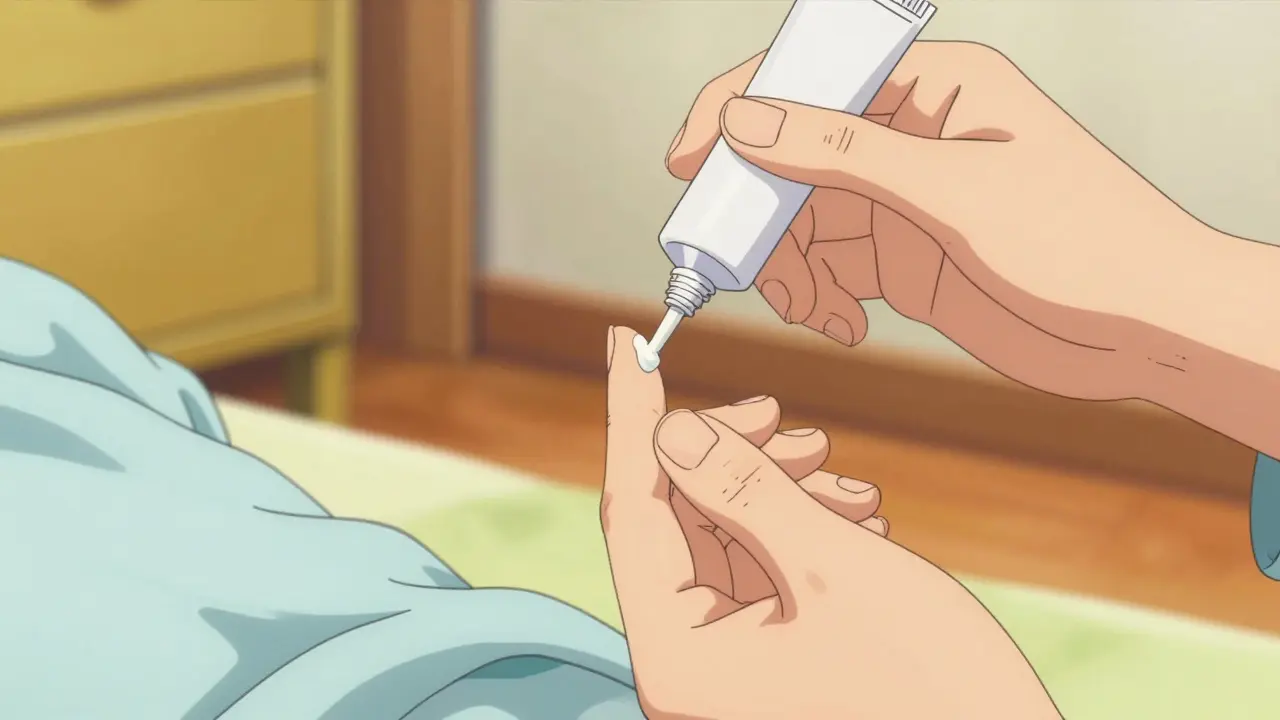
Mastering the Fingertip Unit Technique
Dosing errors happen because parents don’t measure the amount of cream accurately. You wouldn’t give a spoonful of syrup without measuring, yet we often squeeze tubes blindly. The standard measurement used by experts is called the Fingertip Unit, or FTU. To get exactly one FTU, squeeze a line of cream from the tube onto the index finger, extending from the tip of the finger to the first joint. That specific amount weighs approximately 0.5 grams and covers an area equivalent to two flat adult palms.
For a 10-kilogram child, the rule of thumb is not to exceed 2 grams of topical steroid per day. That equals roughly four to six fingertip units depending on the formulation density. Treating more than 10% of the body surface area at once requires a doctor’s close supervision. Applying a thick layer does not heal faster; it just increases absorption and the chance of side effects. A thin, even layer spread until barely visible is often sufficient.
The Danger of Occlusion
Many parents are told to cover eczema patches with cling wrap or plastic dressings to help the cream work better. This technique, called occlusion, increases absorption rates by up to 500%. If a child already has inflamed skin, which absorbs drugs 10 to 15 times faster than healthy skin, adding plastic creates a perfect storm for overdose. Unless explicitly instructed by a specialist, do not seal medicated areas with plastic wraps, especially on the face or genitals.
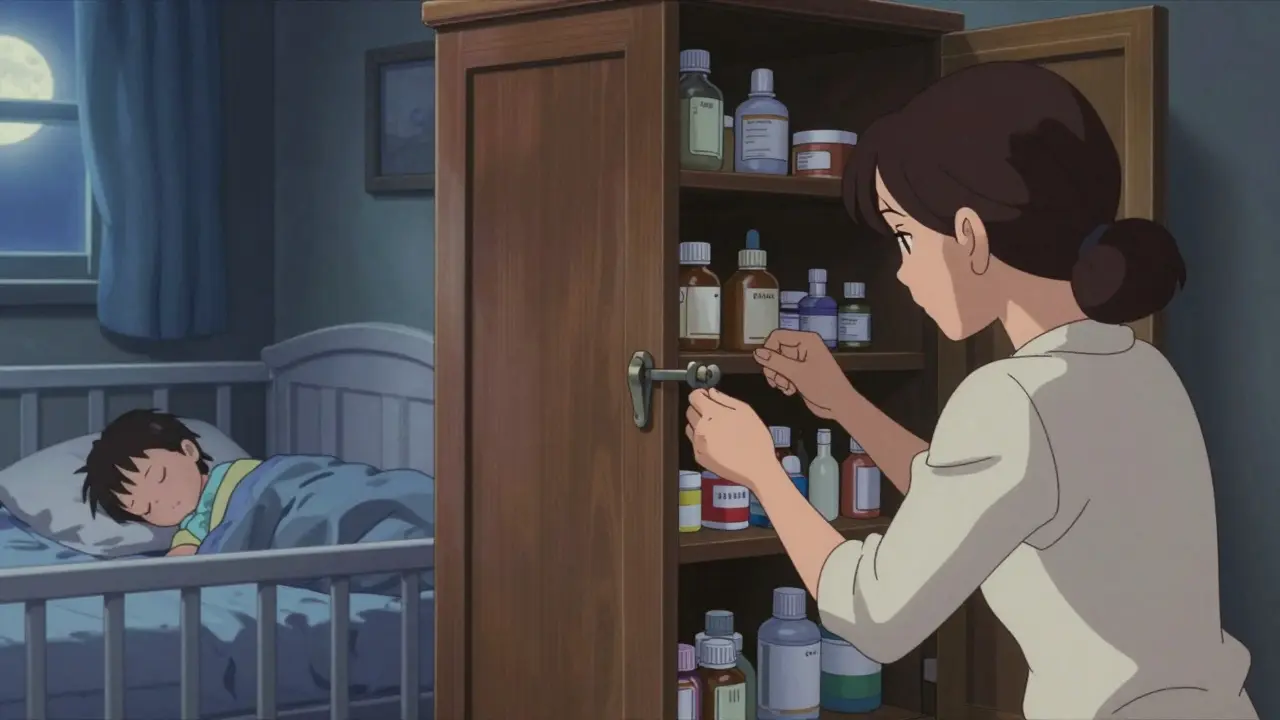
Storage and Handling Protocols
Even the safest cream becomes a hazard when left lying around. Statistics from poison control centers indicate that nearly 80% of accidental pediatric exposures occur when products are left accessible right after parental use. Just squeezing a little bit out and capping it back down isn’t enough; you must return the container to a locked cabinet immediately. Most containers come with child-resistant packaging mandated by safety laws, but those caps lose their effectiveness over time. Check the mechanism periodically-if it opens too easily, replace the bottle.
In 2026, regulatory bodies are pushing for QR codes on packages that link to real-time safety sheets. Utilize these resources to verify age appropriateness. Never share prescription creams between children, even if symptoms look identical. What works for an older sibling might be toxic to a younger one.
When to Seek Emergency Help
If you notice your child exhibiting unusual drowsiness, difficulty breathing, or turning blue around the mouth after applying a medication, treat it as an emergency. Symptoms of methemoglobinemia can appear within 15 minutes of application. Have the product label ready for paramedics so they know exactly what was applied. Doctors can administer methylene blue intravenously to reverse severe poisoning, but immediate action saves lives.
Can I use adult steroid cream on my child?
Generally, no. Adult formulations often contain stronger active ingredients than those required for pediatric skin. Always look for labels specifying "child-friendly" or ask a pharmacist to confirm the strength is appropriate for your child's age.
How much cream is safe for a baby?
Use the Fingertip Unit method. One unit covers two hand-sized areas. Do not apply to more than 10% of the body surface area without medical approval, and always wash your hands immediately after application.
Is it okay to wrap a wound after putting ointment on?
What are the signs of a bad reaction to cream?
Watch for blue discoloration of lips/nails (cyanosis), sudden extreme sleepiness, seizures, or rapid breathing. These signal systemic absorption issues requiring immediate hospital care.
Why are teething gels banned for babies?
Most teething gels contain benzocaine, which blocks oxygen transport in the blood. Safe alternatives include chilled rubber teethers that numb gums mechanically without chemical risks.



Sharon Munger
Topical absorption is scary stuff. Parents think creams are harmless but skin barriers differ greatly. This guide helps avoid mistakes with dosage measurement. I appreciate the detail on fingertip units specifically. It makes measuring much easier for busy families. We need more resources like this available online freely. Safety comes first always for the little ones. Sharing this with my parenting group immediately.
Thanks for posting.
Christopher Beeson
The biological disparity is absolute horror stories waiting to happen.
Russel Sarong
Horror stories!?! That is absolutely terrifying!!! You must read this!!! Please share with others!!! Safety matters so much!!!
Cara Duncan
😲😱💉👶💊 This is so important info!! Thanks for posting 👏❤️ #SafetyFirst
Eleanor Black
It is truly disturbing how easily we overlook pediatric dermal risks. Most parents do not understand the physiology involved in infant stratum corneum development. The permeability difference creates significant systemic exposure risks that go unnoticed until damage occurs. High potency steroids often get misused because strength seems mild on the label. Benzocaine restrictions are rarely followed despite clear FDA warnings regarding methemoglobinemia. Occlusion techniques trap medication leading to dangerous spikes in blood concentration levels unexpectedly. Storage protocols are equally critical since accidental ingestion follows poor handling practices. Child resistant caps lose efficacy which means locks become mandatory after initial dispensing. Emergency signs like cyanosis indicate immediate toxicity requiring hospital intervention without delay. Methylene blue administration saves lives when applied rapidly by trained medical professionals. We must prioritize preventative education over reactive treatment strategies in community health circles. Pharmacists play a vital role in counseling caregivers about proper application methods daily. Regulatory updates for QR codes will streamline access to real-time safety data soon. Every parent should review their home medication inventory for hidden hazards regularly. Ignoring these guidelines puts vulnerable children at unnecessary risk of preventable harm today.
Rod Farren
The pharmacokinetics of percutaneous absorption in pediatrics requires strict adherence to surface area calculations. Bioavailability increases exponentially under occlusive dressing conditions regardless of molecular weight. Systemic bioaccumulation thresholds for glucocorticoids necessitate rigorous monitoring protocols during chronic therapy. Clinical endpoints for HPA suppression show delayed growth retardation markers in longitudinal studies. Dermal integrity compromise accelerates transdermal flux rates beyond standard predictive models significantly.
Molly O'Donnell
Never use benzocaine on toddlers under two years old period.
Cullen Zelenka
Good point about the age limit specifically being crucial for safety reasons. Staying informed keeps everyone healthy and happy. We should all learn from these shared experiences together. Knowledge protects families from preventable medical emergencies effectively.
Rocky Pabillore
Obviously anyone paying attention knows these basics already. Basic hygiene standards require such understanding fundamentally. Yet people still neglect essential protocols consistently unfortunately. It shows a lack of dedication to parental responsibility clearly.
Julian Soro
Everyone starts somewhere and learning new things is always great. Being supportive helps rather than being judgmental about gaps in knowledge. We all want our kids to stay safe and healthy above else. Community sharing builds trust for future generations really well.
Owen Barnes
Thiss is verry impoortant info for us all. I hope peopple read teh links provided carefully. Mistakes can lead to big trouble if ignored totally. Storage rules are easy to miss when rushing daily tasks.
Jenny Gardner
Accurate information dissemination ensures correct compliance with medical safety guidelines universally. Orthography and clarity facilitate better understanding among general audiences effectively. Thank you for highlighting the specific metrics regarding fingertip unit measurements precisely. Proper documentation supports improved healthcare outcomes for pediatric patients globally.
Callie Bartley
It is tragic how many accidents occur annually due to negligence. Parents need stricter enforcement on medication storage laws immediately. Schools could include this material during basic health classes. The consequences of negligence are severe and permanent unfortunately. Someone must take accountability for lax regulations soon.
James DeZego
Cultural differences in healthcare practices often influence adherence to these specific medical recommendations. Open dialogue bridges gaps between regional availability and universal safety standards. International cooperation helps update guidelines based on global incidence data efficiently. Respectful communication fosters better community health initiatives everywhere. 🌍🤝