
Mood Stabilizer Interaction Checker
Check potential dangerous interactions between your mood stabilizer and other medications.
When it comes to managing bipolar disorder, three medications have been the backbone of treatment for decades: lithium, valproate, and carbamazepine. They work differently, stay in the body differently, and - most importantly - interact with other drugs in very different ways. Getting these interactions wrong can lead to serious side effects, hospital visits, or even toxicity. But understanding them doesn’t have to be overwhelming.
Why These Three Matter
Lithium was the first mood stabilizer ever used. Back in 1949, Australian psychiatrist John Cade noticed that lithium could calm manic guinea pigs - and later, manic patients. It’s still used today because it’s one of the few medications that reliably prevents both mania and depression over the long term. Valproate, originally developed as an epilepsy drug, was found to work just as well for acute mania. Carbamazepine, also an antiseizure medication, became a go-to for people who didn’t respond to lithium. But here’s the catch: none of these drugs are interchangeable. Their chemistry is different. Their risks are different. And their interactions? They’re not just different - they’re dangerous if you don’t know what you’re looking for.Lithium: The Kidney-Sensitive Drug
Lithium is simple in one way: your body doesn’t break it down. It passes through your kidneys and out in your urine. That means anything that affects your kidneys - or how much sodium you have - can change lithium levels in your blood. Take NSAIDs. That’s ibuprofen, naproxen, or even aspirin. If you start taking one while on lithium, your lithium level can jump by 25-30% in just a few days. That might sound small, but lithium’s safe range is tiny: 0.6 to 1.2 mmol/L. Go above 1.5, and you risk confusion, tremors, vomiting, or even seizures. One patient on the NAMI forum described how ibuprofen for a headache sent their lithium level from 0.8 to 1.3 - a shift that caused severe tremors and dizziness. Diuretics - water pills - are another major risk. Thiazide diuretics reduce sodium in your body, which makes your kidneys hold onto more lithium. Studies show this can raise lithium levels by 25-40%. ACE inhibitors, used for high blood pressure, do the same thing. The 2020 International Society for Bipolar Disorders guidelines now recommend lowering lithium targets to 0.6-0.8 mmol/L if you’re on any of these drugs. And here’s something many don’t realize: dehydration increases lithium toxicity risk. A fever, vomiting, or even a long hike in hot weather can drop your sodium and spike your lithium. That’s why patients are told to drink water consistently - not just when thirsty.Valproate: The Double-Edged Sword
Valproate (or valproic acid) works differently. It’s mostly broken down by the liver through three pathways: glucuronidation, beta-oxidation, and a small amount by CYP enzymes. This gives it more flexibility - but also more complexity. The biggest interaction problem? It messes with other drugs. Valproate can double or even triple the level of lamotrigine - another mood stabilizer - by blocking how the liver clears it. That’s why, when switching from carbamazepine to valproate, lamotrigine doses often need to be cut in half. A Reddit user described exactly this: their dose dropped from 400mg to 200mg after the switch, and their mood stabilized without side effects. But valproate isn’t just a blocker - it can be blocked too. Carbamazepine speeds up how fast your liver clears valproate. When taken together, valproate levels can drop by 30-50%. That means someone might feel their mood worsening, not because their illness is getting worse - but because their drug level fell below therapeutic range. Another hidden danger: protein binding. Valproate sticks tightly to proteins in the blood. If another drug - like warfarin or aspirin - also binds to those proteins, it can push valproate loose. Suddenly, you have more free valproate in your bloodstream, even if your total level looks normal. That’s why monitoring free valproate levels matters in some cases, especially if someone’s on multiple protein-bound drugs.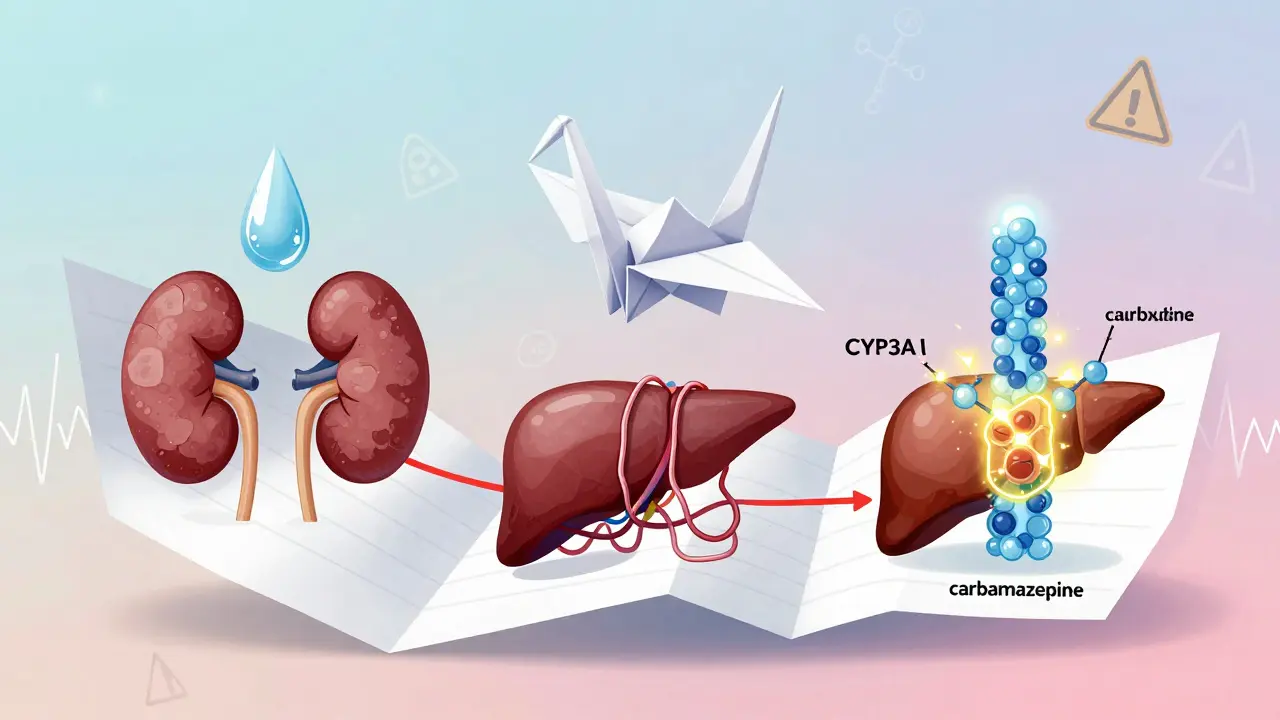
Carbamazepine: The Inducer That Changes Everything
Carbamazepine is the most complicated of the three. It doesn’t just interact - it changes how your body processes other drugs. It’s a strong inducer of CYP3A4, the main liver enzyme that breaks down over 50% of all medications. That means if you’re on carbamazepine, your body gets better at clearing out:- Haloperidol (an antipsychotic) - levels drop by 30-50%
- Risperidone - levels drop by 40-60%
- Oral contraceptives - levels drop by 50-70%, raising pregnancy risk
- Many antidepressants, statins, and even some antibiotics
What Happens When They Combine?
Let’s look at real-world combinations:- Lithium + Valproate: This combo is actually used in tough cases - rapid cycling bipolar disorder. Studies show it can work where single drugs fail. But you need to monitor both levels closely. One 2022 case study followed a patient for 18 months on this combo with no issues, as long as lithium stayed at 0.8 mmol/L and valproate at 95 mcg/mL.
- Lithium + Carbamazepine: Rarely used. Carbamazepine doesn’t affect lithium levels directly, but it can cause sodium loss and dehydration, which indirectly raises lithium risk. Most doctors avoid this combo unless absolutely necessary.
- Valproate + Carbamazepine: The most common and most dangerous combo. As mentioned, it raises CBZ-E levels. About 42% of clinicians report increased dizziness and ataxia in patients on this combo. Many avoid it unless no other option exists.

Monitoring and Safety
There’s no substitute for regular blood tests. Lithium levels should be checked every 3-6 months - and always within a week of starting a new medication. Valproate and carbamazepine levels need checking after any dose change, or if side effects appear. For lithium, remember the acronym LITH:- L - Level: Check serum levels regularly
- I - Instruct: Know the signs of toxicity (tremors, confusion, nausea)
- T - Teach: Stay hydrated, avoid NSAIDs, don’t cut salt intake
- H - Hold: Stop the drug and call your doctor if symptoms appear
Why Usage Is Changing
Prescriptions for these older drugs are falling. Lithium use dropped from 35% of new starts in 2012 to just 15% in 2022. Valproate use fell too - not because it doesn’t work, but because of its risks in pregnancy. Carbamazepine use is stable, but it’s mostly reserved for patients who don’t respond to others. Newer drugs like lamotrigine and lurasidone are rising because they have fewer interactions. Lamotrigine doesn’t affect liver enzymes and doesn’t need routine blood monitoring. That’s why it’s now the most prescribed mood stabilizer - not because it’s better for everyone, but because it’s simpler to use.What’s Next?
Research is moving toward personalization. The NIH is running a trial called the Lithium Precision Medicine Initiative, looking at urinary biomarkers to predict who’s at risk for lithium toxicity. Another study found that a gene called EPHX1 may explain why some people get high CBZ-E levels and others don’t. By 2027, genetic testing before starting carbamazepine may become standard. But for now, the rules are simple:- Lithium = kidney check
- Valproate = liver and protein binding check
- Carbamazepine = enzyme induction check




pradnya paramita
Lithium's narrow therapeutic index makes it a high-risk medication unless meticulously monitored. The renal clearance mechanism means even minor fluctuations in sodium or GFR can precipitate toxicity. NSAIDs inhibit prostaglandin-mediated renal perfusion, reducing lithium excretion-this isn't just theoretical; it's well-documented in the Journal of Clinical Psychopharmacology. Always check eGFR and serum sodium before prescribing concurrent NSAIDs.
Roshan Gudhe
It's funny how we treat these drugs like magic bullets when they're really just tools that require deep understanding. Lithium doesn't just stabilize mood-it reshapes the body's chemistry. And yet, we still treat patients like they're supposed to guess the right balance. Maybe the real issue isn't the drugs-it's how little we teach people to understand their own biology.
Wendy Lamb
Valproate and lamotrigine interactions are critical. Always halve lamotrigine when switching from carbamazepine to valproate. Simple rule. Saves lives.
Antwonette Robinson
Of course the FDA doesn’t warn you about this stuff. Big Pharma wants you on 5 meds so you keep coming back. Lithium? Too cheap. Too old. Too honest.
caroline hernandez
For anyone on carbamazepine: never skip your level checks. Autoinduction is real, and it sneaks up on you. I had a patient whose mood crashed after 6 weeks-turns out their carbamazepine level dropped from 8 to 4 mcg/mL. We doubled the dose and they were stable again. Monitoring isn’t bureaucracy-it’s survival.
Justin Fauth
Why are we still using 70-year-old drugs when we’ve got gene therapy? This is the 21st century. We’re treating bipolar like it’s 1953. Someone needs to wake up the FDA.
Meenal Khurana
Hydration matters. Just drink water.
Joy Johnston
Thank you for this comprehensive breakdown. As a clinical pharmacist, I’ve seen too many patients admitted for lithium toxicity after taking ibuprofen for a headache. The LITH acronym is brilliant-simple, actionable, and exactly what patients need to hear. I’m sharing this with my team.
Shelby Price
So carbamazepine + valproate = more dizziness? Yeah, that’s my life. 😅
Jesse Naidoo
Wait… so if I take lithium and get sick, I could go into a coma? Are you sure this isn’t just a big scam to keep people on meds forever? My cousin’s doctor told her to stop lithium cold turkey and now she’s ‘fine.’
Sherman Lee
They don’t want you to know this, but lithium was originally used to treat gout. The psychiatric use was an accident. And now? It’s the only thing that works. Meanwhile, the FDA is pushing psychedelics like it’s a cult. They’re replacing one dangerous drug with another. Wake up.
Lorena Druetta
This is so important. I’ve watched my sister struggle for years. Knowing what to ask her doctor-like about protein binding and free valproate levels-changed everything. You’re not just giving information. You’re giving hope.
Coy Huffman
carbamazepine autoinduction is wild. first month i felt like a zombie, then after 5 weeks i felt fine… until i got sick and missed a dose and then boom-manic for 3 days. doc said ‘oh yeah, that’s why we check levels every 3 wks’… why didn’t they tell me that before??
Amit Jain
Simple: if you’re on lithium, avoid salt-free diets. Low sodium = high lithium = bad. Drink water, eat normal food. No magic, just common sense.