Doxycycline and Milk: What You Need to Know About Food Interactions
When you take doxycycline, a broad-spectrum tetracycline antibiotic used to treat infections like acne, Lyme disease, and respiratory bugs. Also known as doxycycline hyclate, it works by stopping bacteria from making proteins they need to survive. But if you swallow it with a glass of milk, a common dairy product rich in calcium and other minerals, you might be wasting your dose. Calcium in milk binds to doxycycline in your gut, forming a complex your body can’t absorb. That means the antibiotic never reaches your bloodstream where it’s needed.
This isn’t just a myth—it’s backed by real pharmacokinetic studies. The same problem happens with antacids, medications like Tums or Maalox that contain aluminum, magnesium, or calcium, and even iron supplements. These all interfere with doxycycline’s absorption the same way. You don’t need to avoid dairy forever, but timing matters. Take doxycycline on an empty stomach, at least one hour before or two hours after eating. If you’re taking it with food because it upsets your stomach, pick something low in calcium—like toast or rice. Skip the yogurt, cheese, and milk-based smoothies around dosing time.
Some people think all antibiotics work the same way with food, but that’s not true. Penicillin? Fine with milk. Amoxicillin? No problem. But tetracyclines like doxycycline are picky. Even coffee and orange juice can reduce absorption slightly because of their acidity or mineral content. The key is consistency: take it the same way every time, and stick to water unless your doctor says otherwise.
Why does this even matter? Because if you don’t get enough drug into your system, the infection won’t clear—and you risk making bacteria resistant. That’s not just bad for you. It’s bad for everyone. Antibiotic resistance is already a global crisis, and small mistakes like drinking milk with your pill add up.
You’ll find posts here that dig into how drugs like doxycycline interact with other substances—from alcohol to supplements—and what really happens when you mix them. You’ll also see real-world advice on avoiding common medication errors, how gut health changes after antibiotics, and how to take your pills safely when you’re juggling multiple meds. This isn’t about guesswork. It’s about knowing exactly what to do so your treatment works.
Antibiotics and Dairy: Why Timing Matters for Drug Absorption
Posted by Ian SInclair On 23 Nov, 2025 Comments (12)
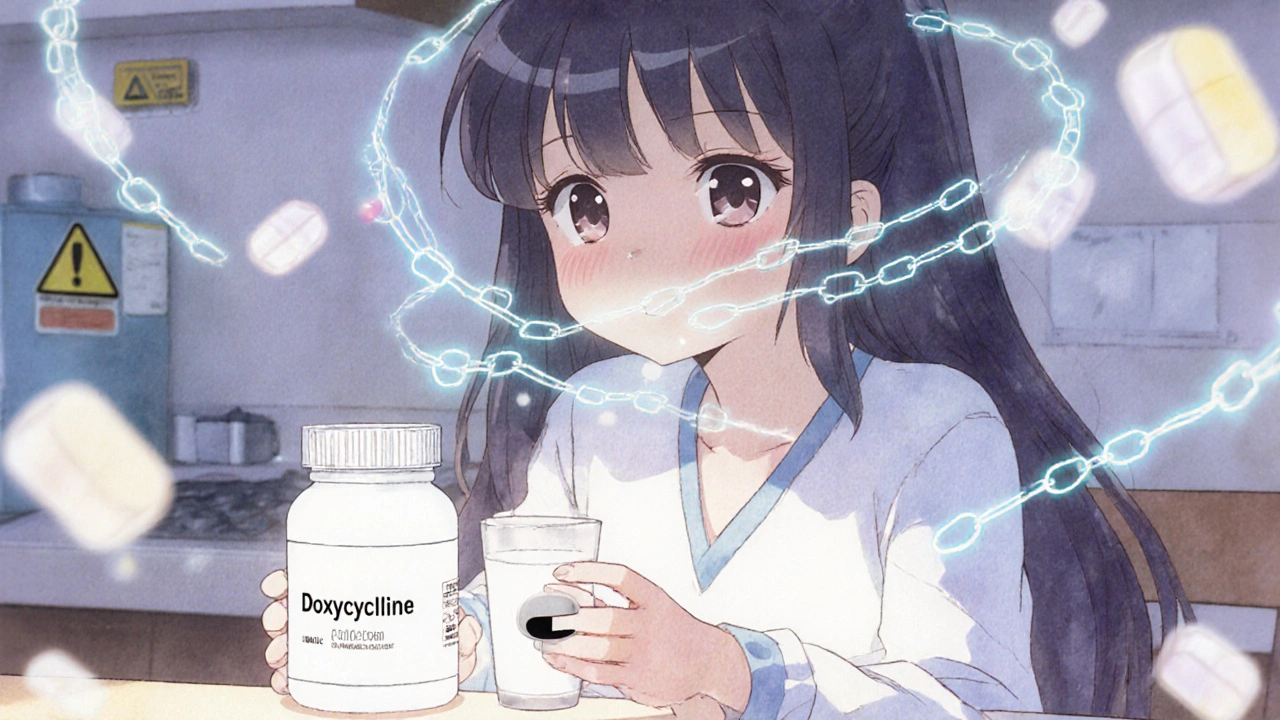
Dairy can block antibiotic absorption, reducing effectiveness by up to 92%. Learn which antibiotics are affected, how long to wait after milk or yogurt, and how to avoid treatment failure.