

Every year, millions of people reach for ibuprofen or naproxen to ease a headache, back pain, or menstrual cramps. These are the two most common over-the-counter NSAIDs in the U.S., sold under brands like Advil, Motrin, and Aleve. But how safe are they when used without a prescription? The answer isn’t simple. While they work well for short-term relief, using them the wrong way can lead to serious problems - even if you’re just taking the recommended dose.
What You’re Actually Taking
OTC ibuprofen comes in 200 mg tablets. That’s the standard dose you’ll find on drugstore shelves. You’re allowed to take one or two tablets every 4 to 6 hours. That means the maximum daily dose is 1,200 mg. Any more than that, and you’re stepping into risky territory.
Naproxen sodium, on the other hand, comes in 220 mg tablets. The label says you can take one tablet every 8 to 12 hours. That adds up to a max of 660 mg per day - but the official safety limit is 600 mg. Why the difference? Because 3 tablets (660 mg) pushes the body closer to dangerous levels, and regulators set the ceiling lower to leave a safety buffer.
Both drugs work the same way: they block enzymes called COX-1 and COX-2 that trigger pain and inflammation. But here’s the catch - those enzymes also protect your stomach lining and help your kidneys manage fluid balance. When you shut them down too much, side effects start piling up.
The Hidden Risks
Most people think NSAIDs are harmless because they’re sold next to aspirin and acetaminophen. But they’re not. The FDA updated its warnings in 2020 after reviewing data from over 1.9 million patients. The message was clear: non-aspirin NSAIDs increase your risk of heart attack and stroke. And this isn’t a long-term risk - it can happen within the first week of use.
One study published in The Lancet in March 2024 found that even short-term use (under 7 days) raised heart attack risk by 20% in people with existing heart conditions. Another study from the British Medical Journal tracked 635,000 people and found high-dose ibuprofen (1,500 mg or more per day) increased heart failure risk by 61%. Naproxen? Only 20%. That’s why many doctors consider naproxen slightly safer for the heart - but it’s not safe.
Then there’s your stomach. NSAIDs double or even quadruple your risk of ulcers and internal bleeding. A 2019 study in Gastroenterology showed naproxen carries a higher risk of bleeding than ibuprofen at equivalent doses. That’s surprising, because naproxen lasts longer. But the longer it stays in your system, the more it irritates your stomach lining. One Reddit user reported being hospitalized after taking 1,600 mg of ibuprofen daily for three weeks - well over the limit. Another user took naproxen for two weeks straight and ended up with acute kidney injury.
Kidneys don’t get as much attention, but they’re just as vulnerable. NSAIDs reduce blood flow to the kidneys. If you’re dehydrated, older, or already have kidney issues, even the OTC dose can cause sudden damage. The FDA’s adverse event database recorded a 68-year-old patient who developed kidney failure after taking the maximum naproxen dose for 14 days - a full 4 days past the 10-day limit recommended by health agencies.
Who Should Avoid These Medications
Not everyone should use OTC NSAIDs. Here are the groups at highest risk:
- People over 65: Older adults process drugs slower. Their stomachs are more fragile, and their kidneys are more likely to be damaged.
- Those with heart disease: The American Heart Association now says to avoid NSAIDs entirely if you’ve had a heart attack, stroke, or have heart failure.
- People with stomach ulcers or bleeding: If you’ve ever had a bleeding ulcer, NSAIDs can trigger another one - sometimes with fatal results.
- Pregnant women: After 20 weeks of pregnancy, NSAIDs can cause low amniotic fluid and kidney problems in the fetus. Even OTC doses aren’t safe.
- People on blood thinners: Mixing NSAIDs with warfarin, aspirin, or clopidogrel increases bleeding risk dramatically.
- Those with high blood pressure or kidney disease: NSAIDs can make both worse. They can also interfere with blood pressure medications.
- People with asthma: Some asthma sufferers have severe reactions to NSAIDs, including life-threatening bronchospasm.
And if you’re taking low-dose aspirin to prevent heart attacks, ibuprofen can block its protective effect. If you need both, take your aspirin at least 30 minutes before ibuprofen - or better yet, skip ibuprofen and use naproxen or acetaminophen instead.

What About Acetaminophen?
Many people turn to acetaminophen (Tylenol) as a safer alternative. And for good reason - it doesn’t affect the stomach, kidneys, or heart the same way NSAIDs do. But it has its own danger: liver damage.
The maximum daily dose is 3,000 mg. That’s less than you might think. If you’re taking multiple products - cold medicine, sleep aids, prescription painkillers - you could easily exceed that limit without realizing it. A 2023 survey found 40% of people don’t check for acetaminophen in combo products. One missed pill can push you over the edge.
So if you have liver disease, drink alcohol regularly, or take other medications, acetaminophen might not be safer. It’s not a magic bullet. It’s just different.
How to Use Them Safely
If you decide to use ibuprofen or naproxen, follow these rules:
- Take the lowest dose that works. Don’t start with two tablets. Start with one.
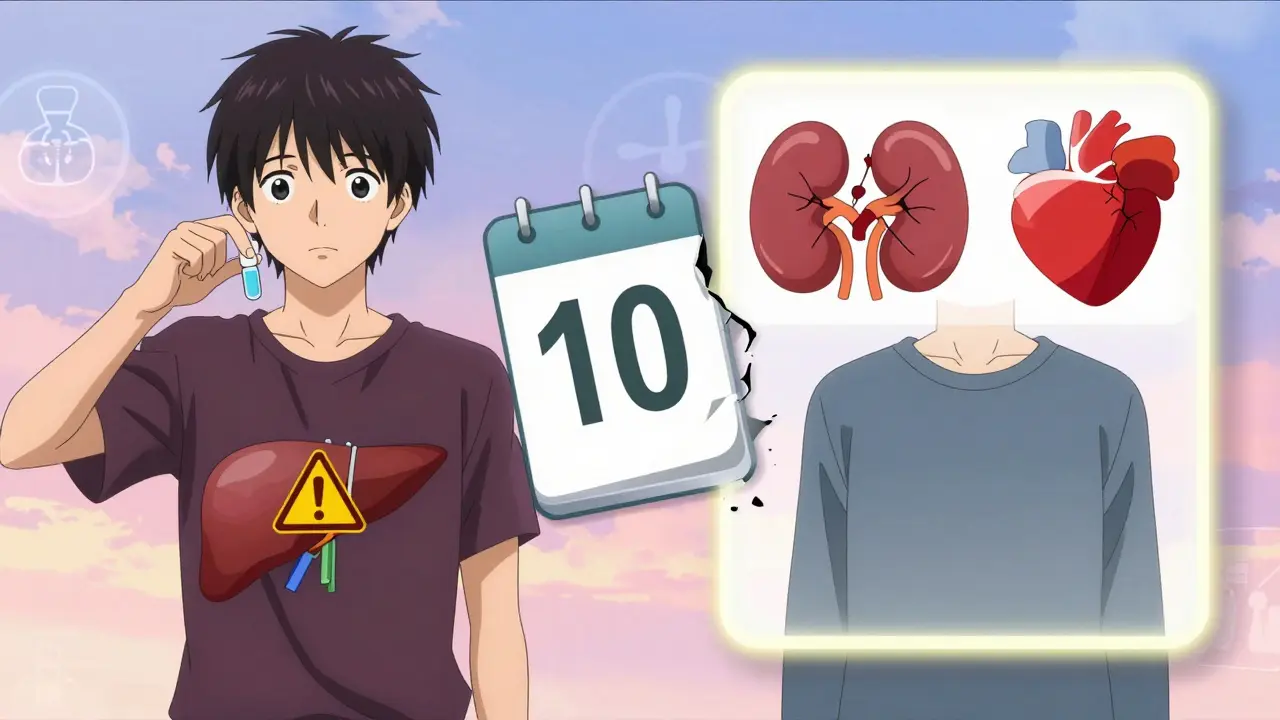
- Use it for the shortest time possible. If pain lasts more than 10 days, see a doctor. Don’t keep reaching for the bottle.
- Always take with food. This reduces stomach irritation. Don’t take it on an empty stomach.
- Don’t mix with alcohol. Alcohol and NSAIDs together increase bleeding risk and liver stress.
- Check all your meds. Cold and flu products often contain NSAIDs or acetaminophen. Read the Drug Facts label.
- Stay hydrated. Drink water, especially if you’re active or in hot weather. Dehydration makes kidney damage more likely.
And if you’re unsure? Talk to your pharmacist. They’re trained to spot dangerous combinations. A 2023 survey found only 28% of people read the entire Drug Facts label. That’s a problem. The label isn’t there to fill space - it’s there to save your life.
What’s Changing
The FDA and other global regulators are pushing for change. Newer topical NSAIDs, like diclofenac gel, are becoming more popular. They deliver pain relief directly to the skin with far less systemic exposure. That means fewer stomach issues, fewer heart risks. Mayo Clinic now recommends them for joint pain like arthritis.
Research is also exploring whether adding protective agents - like proton pump inhibitors - to OTC NSAID packages could reduce stomach damage. But for now, those are only available by prescription.
Meanwhile, the CDC and other health groups are urging doctors to prioritize non-drug options for chronic pain: physical therapy, heat/cold therapy, exercise, and mindfulness. Pain doesn’t always need a pill.
Real Numbers, Real Consequences
Here’s what the data shows:
- NSAIDs cause 20% of all drug-related hospitalizations in people over 60.
- From 2018 to 2023, NSAID-related hospitalizations rose 17% per year.
- Only 37% of consumers know the 10-day limit for OTC NSAIDs.
- Over 1 million Americans are hospitalized each year for NSAID-related complications.
These aren’t rare cases. They’re preventable.
NSAIDs are powerful tools. But they’re not candy. They’re not harmless. They’re medicines with serious consequences if misused. The fact that they’re sold over the counter doesn’t mean they’re safe for everyone - or for long-term use.
If you’re using ibuprofen or naproxen regularly, ask yourself: Why am I still in pain? Maybe it’s time to look beyond the bottle.
Can I take ibuprofen and naproxen together?
No. Taking both together doesn’t give you better pain relief - it just doubles your risk of stomach bleeding, kidney damage, and heart problems. Stick to one NSAID at a time. If one doesn’t work, switch to acetaminophen or see a doctor.
Is naproxen safer than ibuprofen?
For the heart, yes - naproxen has a slightly lower risk of heart attack and stroke based on FDA analyses. But for the stomach, naproxen carries a higher risk of bleeding than ibuprofen at equivalent doses. Neither is truly "safe." The best choice depends on your health history. If you have heart issues, naproxen may be preferred. If you have a history of ulcers, ibuprofen might be less risky - but still dangerous.
How long can I take OTC NSAIDs without seeing a doctor?
No longer than 10 days. That’s the official limit from the FDA and major health agencies. If your pain lasts longer, it’s a sign something else is going on - an injury, arthritis, or another condition that needs diagnosis, not just masking. Keep using NSAIDs past 10 days, and you’re increasing your risk of serious side effects.
Can I use OTC NSAIDs if I’m on blood pressure medicine?
They can interfere. NSAIDs reduce the effectiveness of many blood pressure drugs, especially ACE inhibitors and diuretics. They can also cause fluid retention, which raises blood pressure. If you have high blood pressure, avoid NSAIDs unless your doctor says it’s okay. Acetaminophen is usually a safer option.
Is it safe to take NSAIDs during pregnancy?
No, especially after 20 weeks. NSAIDs can cause low amniotic fluid, kidney problems in the fetus, and even premature closure of a critical blood vessel in the baby’s heart. The FDA requires this warning on all NSAID labels. If you’re pregnant and need pain relief, acetaminophen is the only OTC option considered safe - but still check with your doctor first.
What should I do if I accidentally took too much?
Call Poison Control at 1-800-222-1222 immediately. Symptoms of overdose include nausea, vomiting, dizziness, ringing in the ears, confusion, or trouble breathing. Don’t wait for symptoms to appear. Even if you feel fine, internal damage can be happening. If you’re unsure how much you took, it’s better to get help.





kirti juneja
Yikes, I had no idea naproxen was sneakier than ibuprofen for stomach bleeds! I’ve been popping it like candy for my period cramps-time to rethink this. Thanks for the wake-up call, this post is a gem.
Gabrielle Conroy
YES!!! 😭 I literally just stopped taking ibuprofen after reading this-my mom had a GI bleed last year and I didn’t even connect the dots!!! I always thought OTC meant ‘safe for daily use’-turns out I was living in a fantasyland 🙈
John Smith
So let me get this straight you're telling me the government lets companies sell poison next to gum and candy and we're supposed to be smart enough not to kill ourselves with it amazing capitalism
Nandini Wagh
Oh wow so naproxen is the quiet killer while ibuprofen is the loud one? Classic. I'm just glad I switched to CBD gummies after my last ER trip. Still not convinced they're not just sugar with vibes though.
Nick Hamby
It's fascinating how we've normalized pharmaceutical risk in everyday life. The fact that millions consume these drugs without understanding their mechanism-or their consequences-speaks volumes about our relationship with pain, control, and medical literacy. We treat symptoms like inconveniences, not signals. The real tragedy isn't the drug-it's the silence around why we need it so desperately.
Maranda Najar
I just read this and I’m in tears. 😭 My father died from an NSAID-induced GI bleed at 68-he took two naproxen a day for his arthritis. The label? Never read. The doctor? Never warned him. This isn’t just data-it’s a funeral. If one person stops taking these after reading this, it’s worth it. Thank you for writing this with such heart.
Lou Suito
Wait so acetaminophen is safer? Except for liver failure? Except for 40% of people not checking combo meds? Except for alcohol? Except for every other drug? So we're just swapping one silent killer for another? Brilliant. This whole system is a joke.
Michael FItzpatrick
Man, I used to pop ibuprofen like M&Ms until I got kidney stones. Didn't even know NSAIDs could do that. Now I do yoga, ice packs, and deep breathing. Pain? Yeah, still there. But my kidneys? Still working. Funny how the body screams before it breaks. Listen. Please.
Lillian Knezek
Anyone else think this whole thing is a Big Pharma scam? I mean, who benefits from people getting kidney failure and heart attacks? Hospitals? Insurance companies? The FDA? They knew. They always knew. And they let it happen. The label says '10 days'-but the real limit? Until you're in the ER. That's not safety. That's profit.
Haley Gumm
Oh honey. You think this is bad? Try explaining to your 72-year-old mom why she can't take Aleve anymore after she's been on it for 15 years. She cried. I cried. The pharmacy tech just shrugged and said, 'We sell it because people buy it.' That's not healthcare. That's capitalism with a Band-Aid.