Drug Pricing Differences: Why the Same Medicine Costs So Much More in Some Countries
When you see the same pill priced at $5 in India and $500 in the U.S., it’s not because one is better—it’s because of drug pricing differences, the varying rules and market forces that determine how much pharmaceutical companies can charge for the same drug across borders. Also known as pharmaceutical price control, these differences aren’t random—they’re built into laws, negotiations, and global trade systems. In most high-income countries, governments step in to negotiate prices or set limits. In the U.S., that rarely happens. The result? You’re paying more for the exact same chemical compound, often made in the same factory.
This isn’t just about brand-name drugs. Even generic drug prices, the lower-cost versions of brand-name medications that are chemically identical and FDA-approved. Also known as authorized generics, they’re supposed to drive down costs—but sometimes they’re used to block competition instead. Under the Hatch-Waxman Act, generic makers get 180 days of exclusivity to reward them for challenging patents. But if the original company releases its own generic version right away, that exclusivity becomes meaningless. That’s why you might see two identical pills on the shelf—one labeled as generic, one as the brand—but priced the same. It’s not a mistake. It’s a strategy.
Then there’s international reference pricing, a system where countries look at what other nations pay for a drug and use that as a benchmark to set their own prices. Canada, the UK, Australia, and Germany all use it. They don’t just guess what’s fair—they check what France, Sweden, or Japan are paying and match or beat it. That’s why a 30-day supply of a common blood pressure pill might cost $12 in Germany and $140 in the U.S. It’s not about production cost. It’s about who’s allowed to negotiate.
These systems aren’t perfect. When countries push prices too low, manufacturers sometimes pull out, leading to shortages. That’s why some drugs vanish from shelves overseas even when they’re still available in the U.S. But here’s the truth: the U.S. isn’t paying more because it’s richer—it’s paying more because no one is forcing the price down. No one is negotiating. No one is comparing.
What you’ll find in the posts below isn’t just a list of articles—it’s a map of how pricing gets set, who wins and loses, and how policies meant to help patients often end up helping corporations instead. You’ll see how patent lawsuits delay affordable versions, how pharmacies manage stock when prices swing wildly, and why a drug that works perfectly in one country becomes nearly impossible to get in another. This isn’t about theory. It’s about what ends up in your pill bottle—and why it costs what it does.
Generic Drug Availability: Why Your Medicine Costs Different Around the World
Posted by Ian SInclair On 4 Dec, 2025 Comments (15)
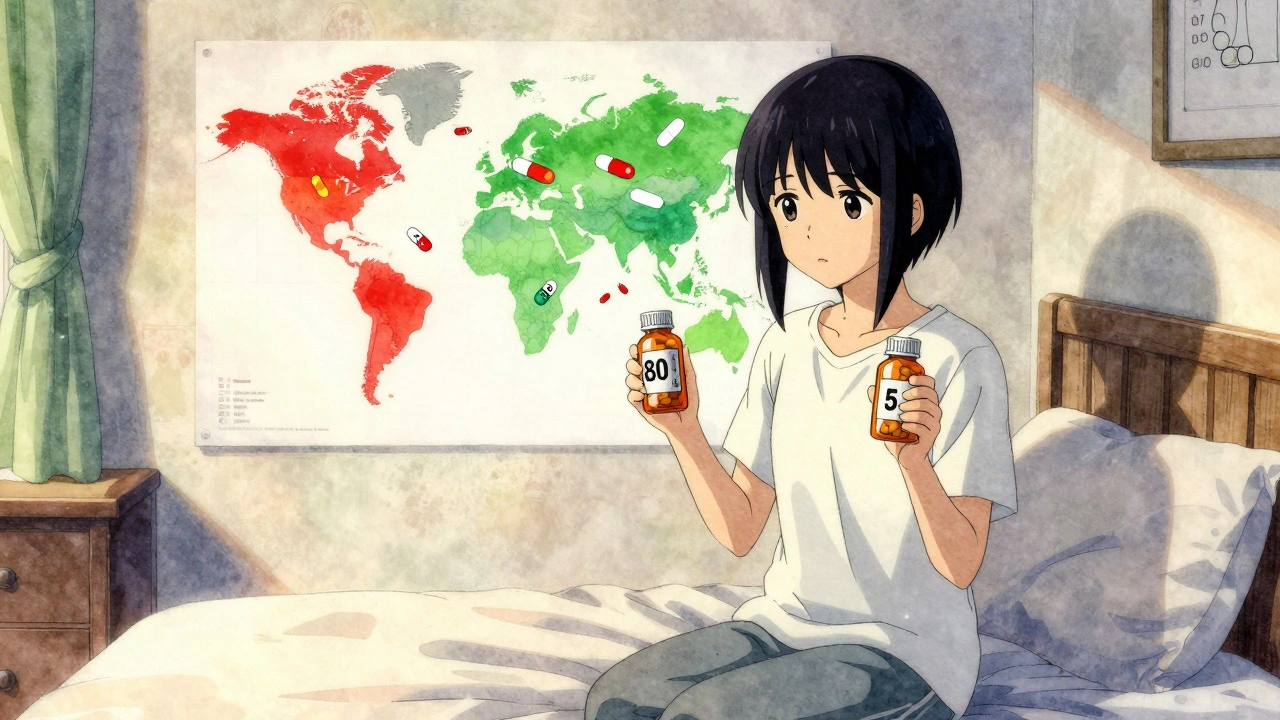
Generic drugs save money - but not everywhere. Why do prices and availability vary wildly across countries? From India's manufacturing dominance to U.S. pricing quirks, here's how global drug access really works.